wayground logo

Free Printable Worksheets

Font size

S
M
L
XL
Worksheets

3rd PE

Total questions: 120

Worksheet time: 1hrs 20mins

Name
Class
Date
1.
A measure of how much mass is contained in a given unit of volume.
a)
mass
b)
density
c)
volume
d)
matter
2.

What is the correct unit for density?

a)

kg/m2

b)

kg/m3

c)

kg m2

d)

kg m3

3.

A substance is heated. What state is it in between A and B

a)

Solid

b)

Liquid

c)

Gas

4.

A substance is heated. What state is it in between C and D

a)

Solid

b)

Liquid

c)

Gas

5.

A substance is heated. What state is it in between E and F

a)

Solid

b)

Liquid

c)

Gas

6.

A substance is heated. What is happening between B and C

a)

Melting

b)

Boiling

c)

Heating up

7.

A substance is heated. What is happening between D and E

a)

Melting

b)

Boiling

c)

Heating up

8.

A substance is heated. At which place is it a solid?

a)

A and B

b)

B and C

c)

C and D

d)

D and E

e)

E and F

9.

A substance is heated. At which place is it a liquid?

a)

A and B

b)

B and C

c)

C and D

d)

D and E

e)

E and F

10.

A substance is heated. At which two points is it changing state? (select 2 options)

a)

A and B

b)

B and C

c)

C and D

d)

D and E

e)

E and F

11.

What is the unit of pressure?

a)

joule, J

b)

watt, W

c)

pascal, Pa

d)

newton, N

12.

At which temperature do all particles stop vibrating?

a)

273 K

b)

-273 K

c)

0 K

d)

None - they will always be vibrating

13.
Temperature of a gas is increased, its kinetic energy would
a)
increase
b)
decrease
c)
remain same
d)
increase and decrease both
14.
What kind of properties can be observed without changing the substance? For example, color, density, size, etc.
a)
physical
b)
chemical
15.
Which particle is not found in the nucleus of an atom? 
a)
proton
b)
electron
c)
neutron
16.
which particle has a positive charge?
a)
proton
b)
neutron
c)
electron
17.
What is the atomic number of an element?
a)
number of neutrons
b)
number of protons
c)
number of electrons
18.
Which particle is not included in the atomic mass of an element?
a)
proton
b)
neutron
c)
electron
19.
How do isotopes of the same atom differ?
a)
different number of neutrons
b)
different number of electrons
c)
different number of protons
20.
What kind of bond is formed when electrons are transferred from one atom to another?
a)
ionic
b)
covalent
21.
What kind of bond is formed when electrons are shared between 2 atoms?
a)
ionic
b)
covalent
22.
Iron + oxygen = rust is an example of a ___________.
a)
physical property/change
b)
chemical property/change
c)
mass
d)
volume
23.
You can measure ______ with grams.
a)
mass
b)
volume
c)
conductivity
d)
melting point
24.
The ability of a metal to allow heat or electricity to pass through it.
a)
conductivity
b)
insulator
c)
mass
d)
density
25.
A description of objects that can be measured and observed.
a)
gas
b)
mustangs
c)
physical properties
d)
melting point
26.
What causes a change in the state of matter?
a)
physical properties
b)
chemical energy
c)
temperature
27.
Which change can occur when  you add heat energy to water?
a)
The water can change from a liquid to a solid
b)
The water can change from a gas to a liquid
c)
The water can change from a liquid to a gas
d)
The water can change from a solid to a liquid
28.
Changing the way matter looks without changing it into NEW matter is a:
a)
Chemical change
b)
Physical change
c)
Energy change
d)
BOTH a chemical and a physical change
29.
Which term means "the ability to cause change?"
a)
Matter
b)
Heat
c)
Energy
d)
physical change
30.
Adding HEAT to matter causes its particles to:
a)
move faster and farther apart
b)
Move slower and farther apart
c)
Move faster and closer together
d)
Move slower and closer together
31.
I am the smallest whole particle of matter. 
a)
atom
b)
compound
c)
molecule
d)
mixture
32.
I am two or more atoms chemically bonded.
a)
atom
b)
compound
c)
molecule
d)
mixture
33.
I am 2 or more elements chemically bonded.
a)
atom
b)
molecule
c)
compound
d)
mixture
34.
I am the fourth largest gas in Earth's Air. If there is too much of me the planet warms up too much. What gas am I?
a)
Krypton
b)
Xenon
c)
Carbon Dioxide
d)
Argon
35.
C6H12O11
a)
Chemical Mixture
b)
Chemical Formula
c)
Chemical Equation
d)
Single Atom
36.
H2O
a)
ratio is 1 to 1 or 1:1
b)
ratio is 2 to 1 or 2:1
c)
there is no ratio
d)
ratio is 4 to 1 or 4:1
37.
Which 2 kinds of particles make up the nucleus of an atom?
a)
electrons and neutrons
b)
electrons and nuclei
c)
protons and neutrons
d)
protons and kryptons
38.
Which particle is equal to the Atomic Number
a)
# of electrons
b)
# of neutrons
c)
# of protons
39.
Which particle carries a negative charge?
a)
protons
b)
neutrons
c)
electrons
40.
A pure substance that cannot be broken down into any other substance by chemical or physical means. There are about 100 of us shown in the Periodic Table
a)
compound
b)
mixture
c)
molecule
d)
element
41.
Which is not a property of matter?
a)
Shape
b)
Mass
c)
Liquid
d)
Volume
42.
When you see steam, fog or clouds, which state of matter is it?
a)
solid
b)
liquid
c)
gas
43.
The amount of matter something contains. 
a)
volume
b)
mass
c)
density
d)
measurement 
44.
A particle that moves around the nucleus is a(n)...
a)
Proton
b)
Neutron
c)
Electron
d)
Quark
45.
What is the location of the electron?
a)
the free floating negatively charged electron cloud
b)
the free floating positively charged electron cloud
c)
the very dense positively charged electron orbital
d)
the positively charged very dense nucleus
46.

What definition best defines an atom?

a)

The smallest piece of matter that still retains properties

b)

A compound

c)

Can easily be seen

47.

Electrons float around in different leveled orbits called...

a)

electron clouds

b)

space

c)

earth

48.

The atomic number is the number of protons in the nucleus.

a)

True

b)

False

49.

Total energy of all particles in a substance

a)

energy

b)

kinetic energy

c)

thermal energy

d)

temperature

50.

Movement of thermal energy from a substance of higher temperature to one of a lower temperature

a)

heat

b)

thermal energy

c)

specific heat

d)

temperature

51.
At higher temperatures
a)
particles in an object have less energy
b)
particles in an object move faster
c)
a gas contracts
52.
The speed of the molecules determines the _____.
a)
volume
b)
density
c)
pressure
d)
temperature
53.
Thermal energy is...
a)
heat energy.
b)
the energy of motion
c)
energy of nuclear processes.
d)
an indication of physical change.
54.
The amount of matter in an object is a measure of the object's ________________.
a)
volume
b)
density
c)
mass
d)
solubility
55.
How did Mendeleev arrange the elements?
a)
alphabetical 
b)
density
c)
melting point
d)
atomic mass
56.
The horizontal row on the periodic table is called a
a)
group
b)
family
c)
period
d)
atomic number
57.
A vertical column is called...
a)
group
b)
tower
c)
period
d)
crew
58.
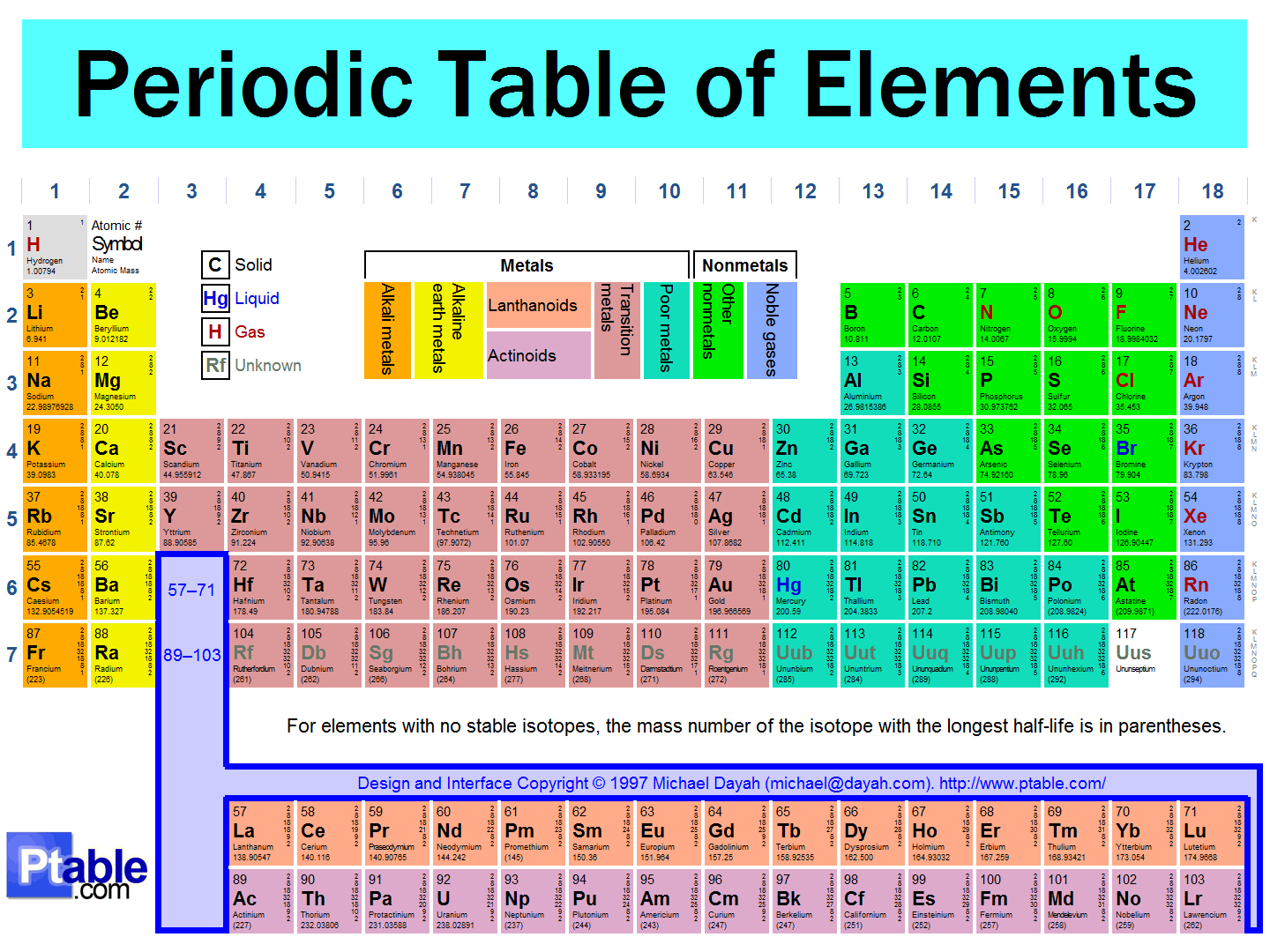
Which of the following is the most metallic element in period 3?
a)
Boron (B)
b)
Sodium (Na)
c)
Argon (Ar)
d)
Silicon (Si)
59.
Which of these element is the least metallic?
a)
Potassium (K)
b)
Carbon (C)
c)
Sulfur (S)
d)
Neon (Ne)
60.
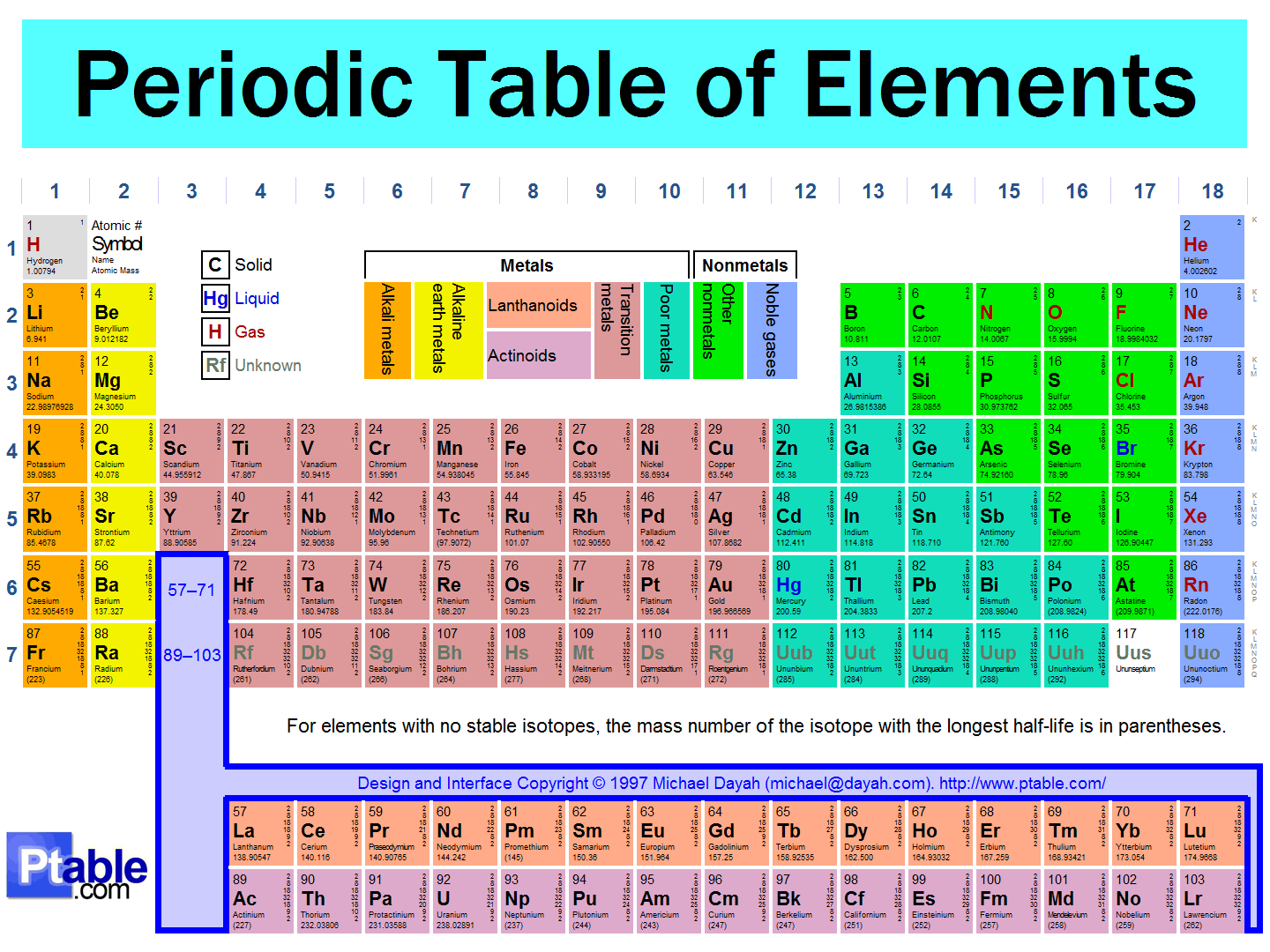
The number at the bottom of each square on the periodic table is the ...
a)
atomic number
b)
atomic mass
c)
chemical symbol
d)
element name
61.
The number at the top of each square on the periodic table is the ...
a)
atomic number
b)
atomic mass
c)
Chemical Symbol
d)
Element Name
62.
How many elements follow the periodic law?
a)
7
b)
98
c)
110
d)
All of them
63.
A rule that states that repeating chemical and physical properties of elements change periodically with the atomic number of the elements is the _________.
a)
periodic law
b)
alkaline-earth metals
c)
actinide
d)
group rule
64.
This class of elements are sometimes called "semiconductors."
a)
Metals
b)
Nonmetals
c)
Metalloids
d)
Groups
65.
Why do some elements have 3 letter chemical symbols?
a)
There are no elements with 3 letter symbols
b)
They are named after scientists
c)
They are named after places
d)
They have a temporary name until scientists agree on a new name.
66.
The atomic number tells you what?
a)
number of electrons
b)
number of protons
c)
number of neutrons
d)
both electrons and protons in an atom.
67.
Which group of the periodic table is composed of inert (not reactive)  gases?
a)
alkali metals
b)
alkaline earth metals
c)
halogens
d)
noble gases
68.
Elements which are shiny, conduct electricity and heat are called
a)
metal
b)
nonmetal
c)
metalloid
d)
nonexistent
69.
Which element is not a metal?
a)
H
b)
Re
c)
Al
d)
B
70.
The atoms along the staircase are called 
a)
metals
b)
nonmetals
c)
metalloids
d)
noble gases
71.
Which is a halogen?
a)
Helium
b)
Chlorine
c)
Oxygen
d)
Neptune
72.
Which is an alkali metal?
a)
Magnesium
b)
Iron
c)
Sodium
d)
Europium
73.
Elements in a ..................have similar chemical properties.  
a)
period
b)
group
c)
row
74.
In the modern periodic table elements are arranged by:
a)
atomic mass
b)
atomic number
c)
valence electrons
d)
number of isotopes
75.
The yellow atoms are called 
a)
metals
b)
nonmetals
c)
metalloids
d)
noble gases
76.
How many electrons does Oxygen need to fill its outer shell?
a)
3
b)
4
c)
1
d)
2
77.
The period for Bromine is ___________.
a)
3
b)
2
c)
4
78.
Beryllium is in group number______.
a)
Group 2
b)
Group 3
c)
Group 4
d)
Group 7
79.
The periodic table has __ periods.
a)
18
b)
8
c)
2
d)
7
80.
Group 18 elements are known as the _____ _____ and have full valence shells.
a)
royal gases.
b)
supreme solids.
c)
noble gases.
d)
legit liquids.
81.
An element's identity is determined by the number of
a)
electrons.
b)
protons.
c)
neutrons.
d)
valence.
82.
Elements in the same ________ are more chemically similar.
a)
group
b)
period
c)
club
d)
table
83.
Which elements have the most similar chemical properties?
a)
K and Na
b)
K and Ca
c)
K and Cl
d)
K and S
84.
What period and group is Silver (Ag)? 
a)
Period 2, Group 1
b)
Period 3, Group 16
c)
Period 5, Group 11
d)
Period 2, 14
85.
The elements in this group have 5 valence electrons and include elements N, P, and As.
a)
Group 5
b)
Group 1
c)
Group 18
d)
Group 15
86.
The elements in this group only have 1 valence electron and include Li, Na, and K. 
a)
Group 11
b)
Group 1
c)
Group 3
87.
Which of the following is not a property of metals?
a)
brittle
b)
malleable
c)
lustrous
d)
conductive
88.
How many electrons do atoms need to be stable?
a)
1
b)
2
c)
6
d)
8
89.
The noble gases have how many valence electrons?
a)
1
b)
2
c)
7
d)
8
90.
Membership in a family is based on the number of 
a)
electrons
b)
valence electrons
c)
protons
d)
neutrons
91.
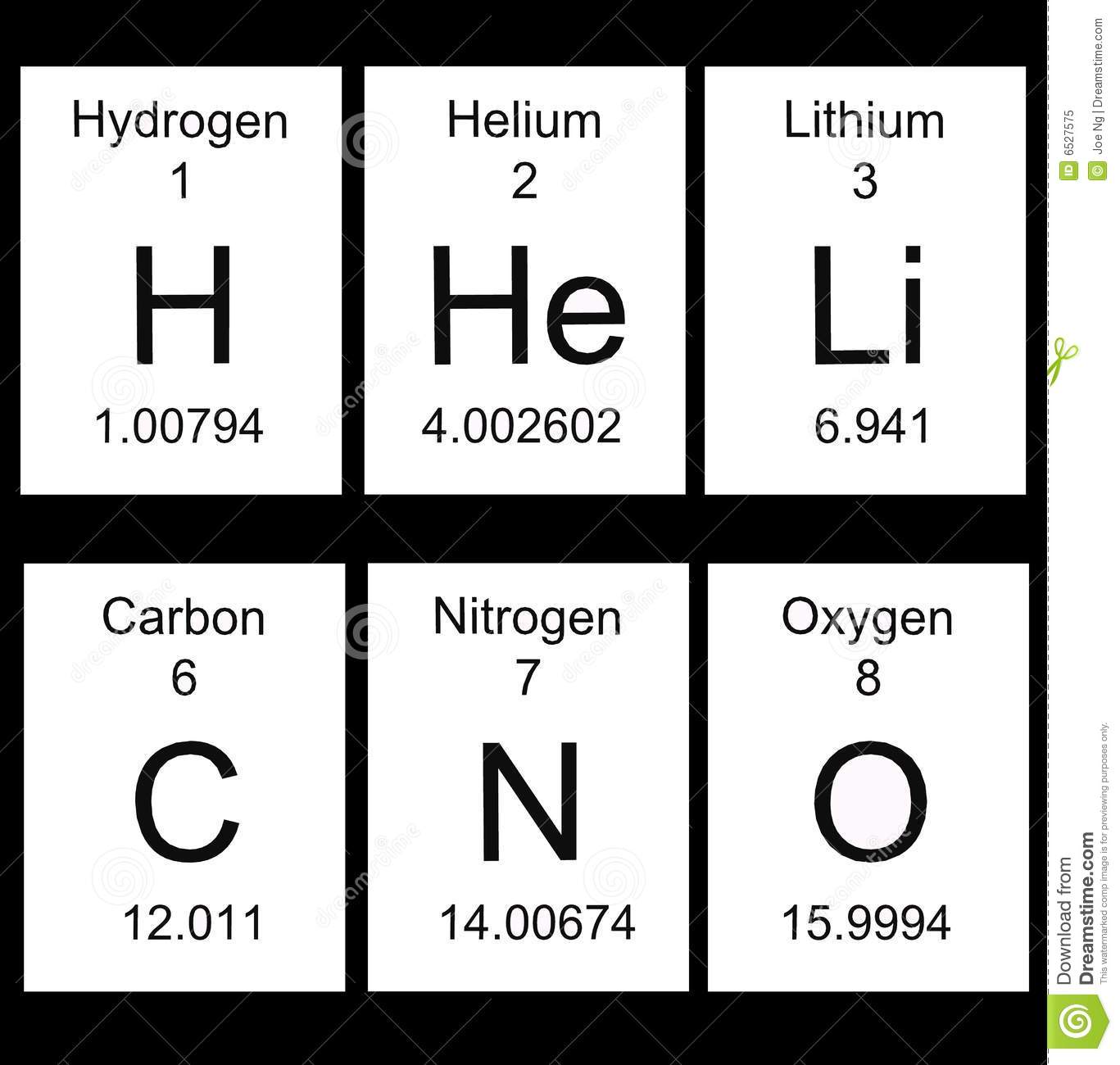
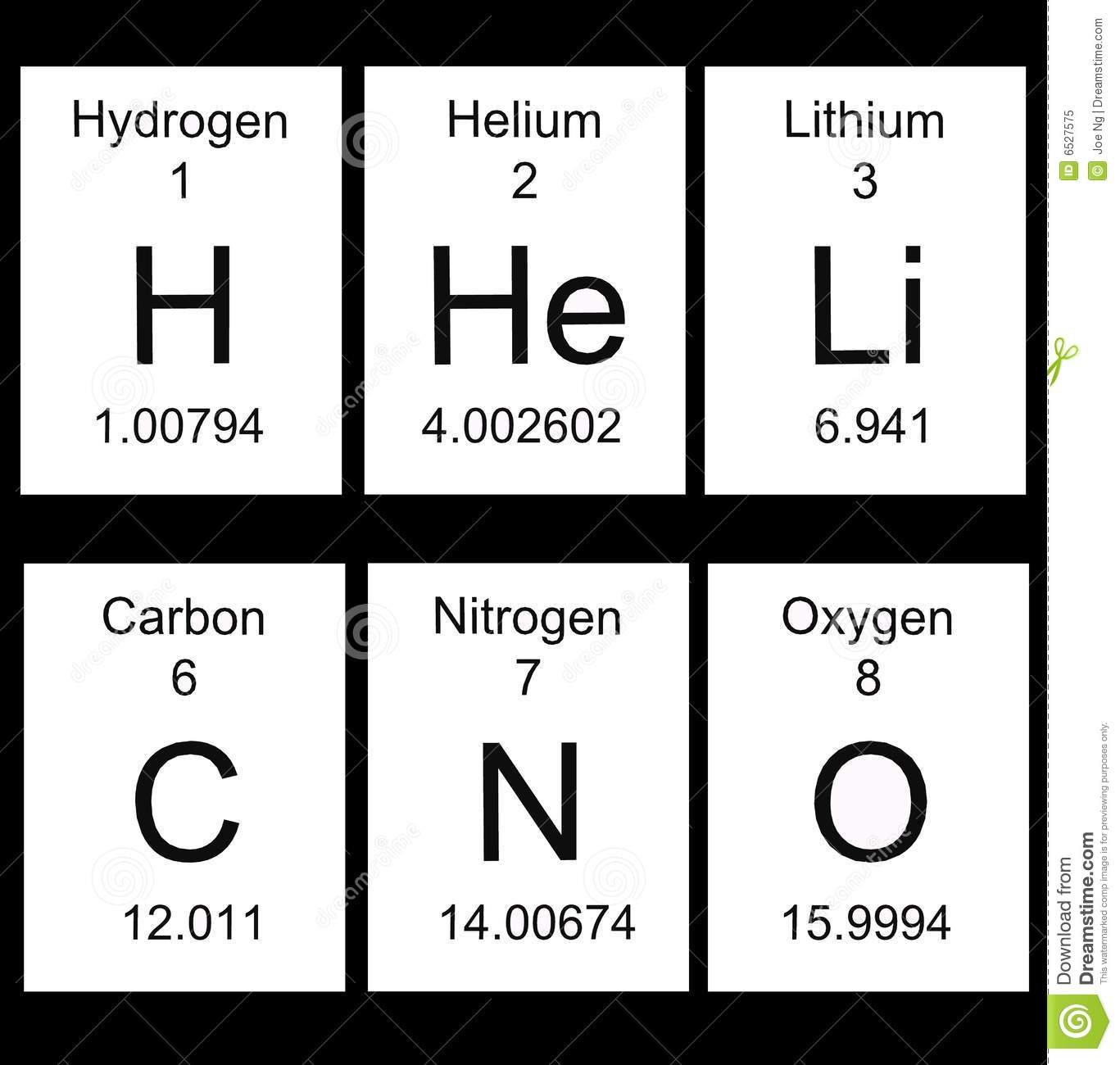
What does the 1.00794 stand for?
a)
Hydrogen
b)
atomic number
c)
atomic mass
d)
atomic explosion
92.
The blue atoms are called 
a)
metals
b)
nonmetals
c)
metalloids
d)
noble gases
93.
Good conductor of heat
a)
Metal
b)
Nonmetal
94.
If a material can easily be drawn into the shape of a wire, it is
a)
Ductile
b)
Magnetic
c)
Malleable
d)
Reactive
95.
All the elements on the right side of the periodic table are called..
a)
Metals
b)
Metalloid
c)
Nonmetals
96.
Which element is not in the Alkali metal family?
a)
Li
b)
H
c)
Fr
d)
Cs 
97.
Which group of METALS is the most reactive?
a)
Group 2- Alkaline Earth
b)
Group 17- Halogens
c)
Group 18- Noble Gases
d)
Group 1- Alkali metals
98.
What is the atomic mass of Neon?
a)
10
b)
20.18
c)
10.18
d)
20.18
99.
How many protons are in Beryllium?
a)
4
b)
9
c)
5
d)
2
100.
What is the atomic mass of Copper?
a)
63
b)
29
c)
34
d)
92
101.
How many neutrons are in a Gold atom?
a)
79
b)
196
c)
118
d)
275
102.
How many electrons does a Copper atom have?
a)
63
b)
29
c)
92
d)
34
103.
What element is represented in this Bohr Model? 
a)
Carbon
b)
Hydrogen
c)
Aluminum
d)
Lithium
104.
What's a valence electron?
a)
electrons in the second energy level
b)
electrons in the outermost energy level
c)
the atomic number
d)
electrons in the first level
105.
Which of the following has a full valence shell?
a)
Oxygen
b)
Neon
c)
Barium
d)
Carbon
106.
The majority of an atom's mass exists where?
a)
In the nucleus
b)
In the electron cloud
c)
In the space between the nucleus and the electrons
d)
In the neutrons
107.
How many protons are in this element?
a)
79
b)
196
c)
117
d)
Cannot be determined
108.
How many neutrons does the isotope of lithium have?
a)
8
b)
3
c)
4
d)
5
109.
How many electrons should Lithium have around its Lewis dot model?
a)
1
b)
2
c)
3
d)
4
110.
Traveling across a period the atomic radii ______________.
a)
Increases
b)
Decreases
c)
Stays the same
111.
How many electrons does potassium K contain? (click to see image)
a)
19
b)
39
c)
20
d)
40
112.

Which phrase best describes the transition metals?

a)

the elements in groups 3 through 12 of the periodic table

b)

the elements that include the noble gases

c)

the elements in groups 13 through 16 of the periodic table

d)

elements that tend to gain electrons

113.

Which of the following pairs of elements are considered to be metalloids?

a)

copper and zinc

b)

lithium and sodium

c)

silicon and germanium

d)

potassium and chlorine

114.

Which pair of elements will have similar properties?

a)

cobalt and copper

b)

hydrogen and neon

c)

oxygen and selenium

d)

bromine and mercury

115.

You are given a sample of an unknown element. What properties would you observe if the unknown is a metal?

a)

shiny luster, conductivity, malleability

b)

brittleness, low melting point

c)

gaseous state at room temperature

d)

a liquid that does not conduct electricity

116.

Which element has the smallest atomic radius?

a)

Cd

b)

F

c)

Hf

d)

Cs

117.
In this picture, the Electrons are found in which color?
a)
Blue
b)
Red
c)
Green
118.
Matter in the universe is made from atoms.  Atoms make up these pure substances that cannot be broken down into a simpler form.  
a)
Compounds
b)
Elements
c)
Molecules
d)
Periodic Table
119.
How many shells/levels does this atom have?
a)
1
b)
2
c)
3
d)
4
120.
Which is an example of a Molecule and NOT a Compound?
a)
CO2
b)
N2
c)
H2O
d)
Fe2O3