
 Worksheets
Chemistry Part 1 Quiz Review
Total questions: 116
Worksheet time: 3hrs 18mins


Find the density of a substance with a mass of 45 grams and a volume of 9 milliliters.
5 kg/L
5 g/ml
45g
36 g/ml
What’s the density of a liquid with a mass of 36kg and a volume of 48L?
0.75 kg/l
1.33 l/kg
36g
48l
What’s the density of a liquid with a mass of 100g and a volume of 25mL?
0.25 ml/g
0.25 g/ml
4 g/ml
0.2 g/ml
What’s the density of a liquid with a mass of 115.2kg and a volume of 96L?
0.83 g/l
0.83 kg/l
1.2 g/l
1.2 kg/l
What’s the density of a liquid with a mass of 50g and a volume of 150ml?
3.0 g/ml
0.83 g/ml
0.33 g/ml
1.2 kg/l
Suppose you have a lead ball with a mass of 454 grams. If lead has a density of 11.35 grams per cubic centimeter what is its volume?
5 kg/l
5 g/ml
0.025 cm3
40 cm3
Mercury has a density of 13.55 g/ml. What would be the mass of a 15 mL sample of mercury?
203.25 g
20.325 g
2.0325 g
1.1 g/ml
Adding more of the same liquid to a container will change that liquids density
True
False
Liquids of different densities will mix together to form a new liquid.
True
False

Which liquid has the greatest density?
Corn oil
Shampoo
Antifreeze
Maple syrup
Which liquid has the least density?
Corn oil
Shampoo
Antifreeze
Maple syrup
Which liquid is less dense than dish detergent?
DIsh detergent
Shampoo
Antifreeze
Maple syrup
Antifreeze has a density less than 1.0 g/ml
True
False

Determine the unknown substance if it has a mass of 525g and a volume of 50ml.
Silver
Mercury
Oxygen
Zinc
What will happen to an object with a mass of 25g and volume of 20ml when placed in water?
It will sink
It will float
It will catch on fire
What’s the density of Mercury?
0.25 ml/g
5.02 g/ml
7.13 g/cm3
13.55 g/cm3
Pyrite is more dense than...
Lead
Oxygen
SIlver
Mercury
The density of silver is....
0.25 ml/g
5.02 g/ml
10.50 g/cm3
13.55 g/cm3
The amount of matter in a given space; mass per unit volume.
Mass
Volume
Inertia
Density
1 milliliter (mL) is equal to how many cubic centimeters?
1
2
10
100
H2SO4
Identify the reactants in the following equation.
3HFe2O →H+2FEH+O
H+2FEH+O
3HFe2O
Identify the products in the following equation.
3HFe2O →H+2FEH+O
H+2FEH+O
3HFe2O
How many Carbon atoms on the Reactant side of the equation?
5C4O8→10C+2C5O20
4
5
10
20
How many Carbon atoms on the Product side of the equation?
5C4O8→2C5O20
4
5
10
20
Identify if the following equation is unbalanced or balanced.
4K+P3→3KP+K
Unbalanced
Balanced
Identify if the following equation is unbalanced or balanced.
O3+2C→3OC
Unbalanced
Balanced
Identify if the following equation is unbalanced or balanced.
2(N)2→4N
Unbalanced
Balanced
Identify if the following equation is unbalanced or balanced.
5C4O8→10C+2C5O20
Unbalanced
Balanced
Identify if the following equation is unbalanced or balanced.
HeC4O8→C4+2HeO
Unbalanced
Balanced

Which of the following can not be used as evidence of a physical change?
A green powder is heated & a gas is given off while it turns to a black solid. This describes
Physical Change
Chemical Change
Change in State
Change in Temperature

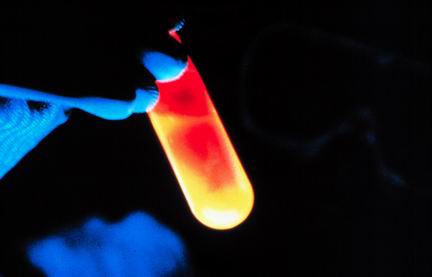
Identify what type of change happening in the picture below...
Chemical Reaction
Physical Change
Change in State
Change in appearance only



Which of the following examples represents a physical change?


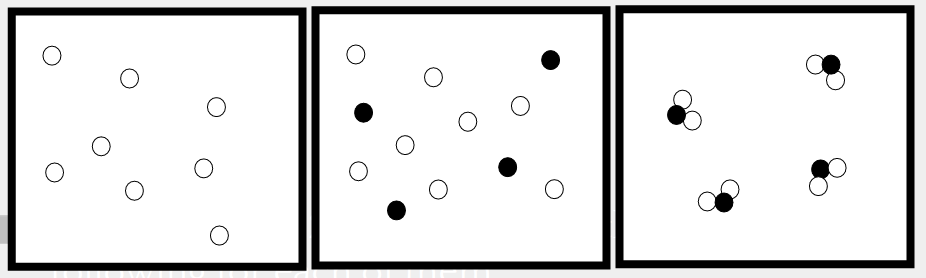
According to this diagram did a physical or chemical change take place?
Physical
Chemical
The ability to be made into thin sheets is referred to as...
density
solubility
malleability
electrical conductivity
The relationship between mass and volume is referred to as...
density
solubility
malleability
electrical conductivity
The ability of a substance to dissolve is referred to as...
density
solubility
malleability
electrical conductivity
What kinds of changes in substances are always physical changes?
changes of state from solid to liquid to gas and back
changes that result in new substances being formed
changes that alter the identity of the substances
changes that alter the density of the substances

Copper, Aluminum, Carbon Steel, and Zinc were all heated using 10,000 JOULES of thermal energy. Which material would be have the LARGEST change in temperature?
Aluminum

The name and symbol of the element in group 5, period 4 is...
Zinc (Zn)
Vanadium (V)
The name and symbol of the element in group 6, period 4 is...
Chromium (Cr)
Hafnium (Hf)
The name and symbol of the noble gas...
Potassium (K)
Calcium (Ca)
Krypton (Kr)
The name and symbol of a metalloid...
Gallium (Ga)
Silicon (Si)
Tin (Sn)
The name and symbol of a liquid metal at room temperature...
Mercury (Hg)
Bromine (Br)
Magnesium (Mg
The name and symbol of elements in the same family...
Hydrogen (H) and Lithium (Li)
Lithium (Li) and Sodium (Na)
The name and symbol of elements with the same number of valence electrons...
Sodium (Na) and Magnesium (Mg)
Sodium (Na) and Potassium (K)
The name and symbol of most reactive alkali metal...
Titanium (Ti)
Magnesium (Mg)
Aluminum (Al)
Lithium (Li)
Name and symbol of transition metal
Titanium (Ti)
Magnesium (Mg)
Aluminum (Al)
Lithium (Li)
Name and symbol of only element in its own group...
Helium (He)
Hydrogen (H)
Uranium (U)
The name and symbol of the element in group 5, period 4 is...
Zinc (Zn)
Vanadium (V)
The name and symbol of the element in group 6, period 4 is...
Chromium (Cr)
Hafnium (Hf)
The name and symbol of the noble gas...
Potassium (K)
Calcium (Ca)
Krypton (Kr)
The name and symbol of a metalloid...
Gallium (Ga)
Silicon (Si)
Tin (Sn)
The name and symbol of a liquid metal at room temperature...
Mercury (Hg)
Bromine (Br)
Magnesium (Mg
The name and symbol of elements in the same family...
Hydrogen (H) and Lithium (Li)
Lithium (Li) and Sodium (Na)
The name and symbol of elements with the same number of valence electrons...
Sodium (Na) and Magnesium (Mg)
Sodium (Na) and Potassium (K)
The name and symbol of most reactive alkali metal...
Titanium (Ti)
Magnesium (Mg)
Aluminum (Al)
Lithium (Li)
Name and symbol of transition metal
Titanium (Ti)
Magnesium (Mg)
Aluminum (Al)
Lithium (Li)
Name and symbol of only element in its own group...
Helium (He)
Hydrogen (H)
Uranium (U)
Which elements are shiny?
metals only
nonmetals only
metals and nonmetals
metals and MAYBE metalloids

Which elements are to the right of the zig zag?
metals
nonmetals
metalloids
You discovered in the lab that silicon is:
metal
metalloid
nonmetal

Sulfur is considered:
malleable
brittle
ductile
a good conductor
How did you find out if an element is a good conductor?
it lit up a light bulb
hit it with a hammer
bubbled in the presence of acid
turned black
ductile means...
can be made into wire
can be bent or hammered
can light up a light bulb
it's shiny
copper can be used to make statues like the statue of liberty
therefore copper is malleable
therefore copper is ductile
therefore copper is shiny
therefore copper is a conductor
Which of the metals was the most reactive?
magnesium
zinc
copper
aluminum
Which of these was NOT a conductor?
sulfur
magnesium
zinc
aluminum
Substances that can be hammered into thin sheets are:
metals
nonmetals
both metals and nonmetals

Which elements are to the LEFT of the zigzag?
metals
nonmetals
metalloids

Which elements are colored red?
nonmetals
metals
metalloids

