wayground logo

Free Printable Worksheets

Font size

S
M
L
XL
Worksheets

iGCSE Chemistry Revision Quiz

Total questions: 113

Worksheet time: 2hrs 56mins

Name
Class
Date
1.

Which particle has a positive charge?

a)

electron

b)

orbital

c)

proton

d)

neutron

2.

Choose the particle that has no charge.

a)

nucleus

b)

neutron

c)

proton

d)

electron

3.

This particle determines what element you have - the elements identity.

a)

electron

b)

proton

c)

neutron

d)

valence shell

4.

What is the mass of a proton and a neutron?

a)

1

b)

2

c)

13

d)

10

5.

This causes the mass of the nucleus to increase.

a)

adding an electron

b)

adding a neutron

c)

more orbitals

d)

adding negatively charged particles

6.

Has a mass of 1/2000th the mass of a proton.

a)

electron

b)

neutron

c)

nucleus

d)

electron cloud

7.

An electron has a _____ charge.

a)

negative

b)

positive

c)

neutral

8.

What are valence electrons?

a)

electrons on the first orbital always

b)

nucleus

c)

the outermost shell

d)

electrons on the outermost orbital

9.
Which particles make up the nucleus of an atom?
a)
protons and neutrons
b)
electrons and protons
c)
electrons, protons, and neutrons
d)
electrons and neutrons
10.
The particles of the atom you can find by knowing the atomic number.
a)
neutrons
b)
protons and electrons
c)
protons and neutrons
d)
atomic mass
11.
The subatomic particle that determines the identity of an element.
a)
neutron
b)
proton
c)
electron
d)
outer shell
12.
What charge does the nucleus have and why?
a)
positive - the neutrons do not have a charge
b)
positive - the neutrons and protons are positively charged particles
c)
neutral - the neutral charge dominates the positive charge
d)
neutral - electrons cancel out the positive charge of the atom
13.
What is the mass number and name of an element with 8 protons and 8 neutrons?
a)
16 - Carbon
b)
16 - Oxygen
c)
24 - Oxygen
d)
8 - Neon
14.
An element with a mass number of 10 and an atomic number of 6 has how many protons?
a)
5
b)
8
c)
6
d)
10
15.
An element with a mass number of 11 and an atomic number of 5 has how many neutrons?
a)
11
b)
5
c)
6
d)
16
16.
An atom has 10 protons, 15 neutrons and 10 electrons what is its mass number.
a)
20
b)
10
c)
5
d)
25
17.
Matter that cannot be broken down into a simpler substance – building blocks of life.
a)
neutron
b)
atom
c)
electron
d)
quarks
18.
An atom has 13 protons, 15 neutrons and ___ electrons what is its mass number?
a)
13
b)
26
c)
28
d)
15
19.
Most of the mass of an atom is contained here.
a)
electron orbitals 
b)
nucleus
c)
shells
d)
atomic #
20.
What is the difference between the atomic mass and the mass number?
a)
the atomic mass is always a whole number
b)
the atomic mass equals the atomic #
c)
mass number is the rounded atomic mass - always a whole number
d)
electrons
21.

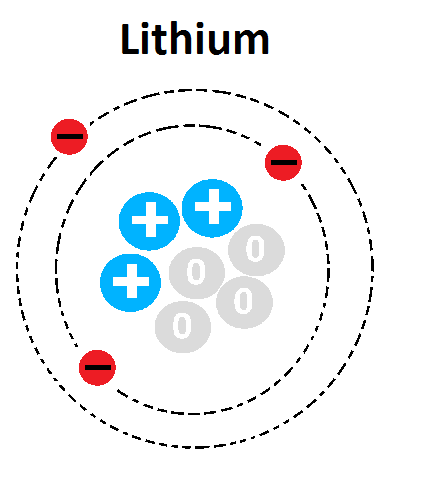
What is the atomic number of this atom?

a)

1

b)

3

c)

4

d)

7

22.

What is the mass number of this atom?

a)

1

b)

3

c)

4

d)

7

23.

What is the atomic number of this atom?

a)

1

b)

3

c)

4

d)

7

24.

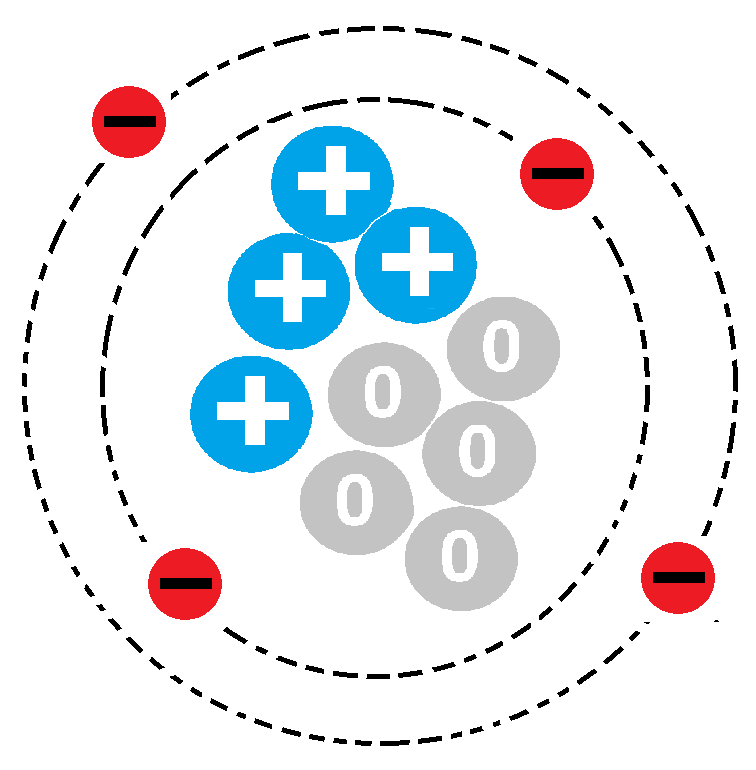
What is the atomic number of this atom?

a)

4

b)

5

c)

9

d)

none of the above

25.

What is the mass number of this atom?

a)

4

b)

5

c)

9

d)

none of the above

26.

What is the atomic number of this atom?

a)

9

b)

10

c)

19

d)

27

27.

How many electrons does it have?

a)

197

b)

79

c)

118

d)

none of the above

28.

What is the mass number of this atom?

a)

1

b)

2

c)

3

d)

4

29.
A fluorine atom has 9 protons and 10 neutrons. What is the atomic number of fluorine?
a)
9
b)
10
c)
19
d)
1
30.
An atom of argon has 18 protons and 22 neutrons. How many electrons does it have?
a)
18
b)
22
c)
40
d)
4
31.
A phosphorus atom has 15 protons and 16 neutrons. What is the mass number?
a)
15
b)
16
c)
31
d)
1
32.

How many protons does it have?

a)

197

b)

79

c)

118

d)

none of the above

33.

How many neutrons does it have?

a)

197

b)

79

c)

118

d)

none of the above

34.

The relative formula mass (RFM) of a compound is equal to the sum of its

a)

Atomic masses

b)

Atomic numbers

c)

Oxidation numbers

d)

Valence electrons

35.
What is the atomic mass of magnesium?
a)
2
b)
4
c)
12
d)
24
36.
What is the relative atomic mass of sodium?
a)
11
b)
23
c)
46
d)
64
37.
What is the relative molecular mass of fluorine gas, F2?
a)
19
b)
38
c)
9
d)
18
38.

What is the relative formula mass of NaOH?

Na= 23

O= 16

H= 1

a)

20

b)

39

c)

40

d)

45

39.

What is the relative molecular mass of CO2?

C= 12

O= 16

a)

12

b)

16

c)

32

d)

44

40.
What is the mass number?
a)
the number of protons
b)
the number of protons and neutrons
c)
the number of neutrons
d)
the number of protons and electrons
41.

What is the RFM of K2S?

K= 39

S= 32

a)

110

b)

120

c)

78

d)

140

42.

What is the RFM of NaCl ?

Na= 23

Cl= 35

a)

58

b)

57

c)

60

d)

62

43.

What is the RFM of C2H6 ?

C= 12

H= 1

a)

60

b)

30

c)

48

d)

110

44.

Isotopes are atoms of the same element...

a)

with the same number of neutrons and different number of electrons

b)

with the same number of neutrons and different number of protons

c)

with the same number of electrons and different number of protons

d)

with the same number of protons and different number of neutrons

45.

What do these isotopes of carbon all have in common?

a)

neutrons & mass number

b)

atomic number and neutrons

c)

atomic number

d)

protons, atomic number, and mass number
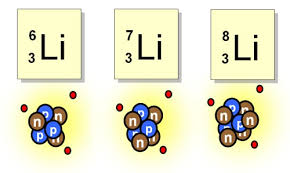
46.

Which atom has 4 neutrons?

a)

Li-6

b)

Li-7

c)

Li-8

d)

they have the same number of neutrons

47.

Is this equation balanced?

a)

yes

b)

no

c)

not enough information

d)

right side is balanced

48.

Which side of a chemical equation is the product side?

a)

Left (before the arrow)

b)

Right (after the arrow)

49.

N2 + H2 --> NH4

a)

Balanced

b)

Unbalanced

50.
What does the Law of Conservation of Mass state?
a)
Matter cannot be gained or lost in a chemical reaction.
b)
Matter can only be lost in a chemical reaction.
c)
Matter can only be gained in a chemical reaction.
d)
Matter can be gained and lost in a chemical reaction. 
51.
Which form of matter has a definite shape like this picture?
a)
liquid
b)
solid
c)
gas
d)
clay
52.
Which form of matter take the shape of a container like this juice?
a)
liquid
b)
solid
c)
glass
d)
gas
53.

Which form of matter fills the space like it does in the balloon?

a)

liquid

b)

string

c)

solid

d)

gas

54.
What is happening when my ice cream changes from a solid to a liquid?
a)
freezing
b)
melting
c)
burning
d)
evaporation
55.
Things that take up space are called?
a)
Toys
b)
Liquids
c)
Matter
d)
Space
56.
How do you change a solid chocolate bar to liquid chocolate?
a)
By freezing it
b)
heat energy
c)
light energy
57.
The steam coming off the pot of boiling water is an example of....
a)
a solid becoming a liquid
b)
a liquid becoming a solid
c)
a liquid becoming a gas
d)
a gas becoming a liquid
58.
Which state of matter does ice start as (before you cool it)?
a)
liquid
b)
solid
c)
gas
59.
On a hot summer day chocolate candy can melt in your pocket.  How can you get the chocolate to return to a solid?
a)
add heat
b)
leave it in your pocket
c)
cool it in the refrigerator
d)
leave it outside
60.
True or False: Matter can changes states by adding heat or cooling.
a)
True
b)
False
61.
In which state of matter do the particles spread apart and fill all the space available to them?
a)
crystal
b)
liquid
c)
gas
d)
solid
62.
Molecules are closest together in a 
a)
Solid
b)
Liquid
c)
Gas
63.
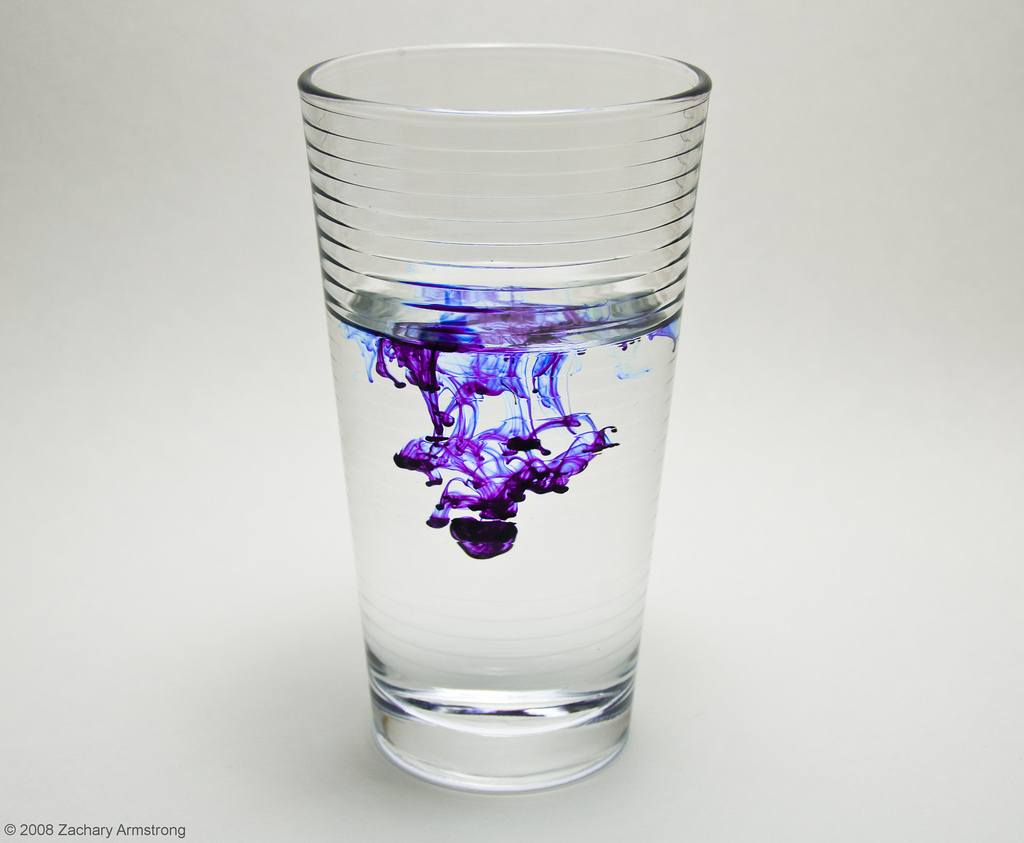
Where is there a low concentration of dye?
a)
at the bottom of cup
b)
in the color
c)
at the top of cup 
d)
no concenteraion gradient
64.
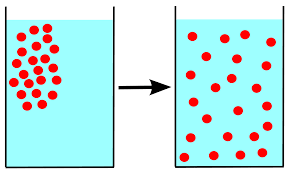
The picture below is an example of _________________.
a)
osmosis
b)
isotonic
c)
diffusion
d)
active transport
65.

What is diffusion?

a)

when molecules move

b)

when molecules move from a high concentration to a low concentration

c)

no movement

d)

molecules move everywhere

66.
The horizontal row on the periodic table is called a
a)
group
b)
family
c)
period
d)
atomic number
67.
A vertical column is called...
a)
group
b)
tower
c)
period
d)
crew
68.

What is the chemical symbol for sodium?

a)

Na

b)

So

c)

NaCl

d)

S

69.

Isotopes are the atoms of the same element with the same number of.............. but different number of............

a)

electrons/neutrons

b)

neutrons/protons

c)

protons/neutrons

d)

electrons/protons

70.

Elements contain only one type of atoms.

a)

True

b)

False

71.
What is a pure substance made of two or more elements that are chemically combined called?
a)
A. element
b)
B. compound     
c)
C. mixture
d)
D. solution
72.
silver spoon
a)
A. MIXTURE
b)
B. COMPOUND
c)
C. ELEMENT
73.
A pure substance...
a)
is an element or a compound
b)
is an element or a mixture
c)
is a compound or a mixture
d)
is a mixture
74.
NaHCO3 is an example of —
a)
an abbreviation
b)
a compound
c)
a mixture
d)
an element
75.
What is an example of an element?
a)
Oxygen
b)
Pure water
c)
Air
d)
Table salt
76.
When an atom loses an electron, it becomes a:
a)
positive ion
b)
negative ion
c)
neutral ion
d)
neutral atom
77.
Elements in Group 1 lose one electron to form ions with a _________________ charge.
a)
1+
b)
2+
c)
0
d)
1-
78.

Nitrogen will ____ electrons to become stable.

a)

gain 1

b)

lose 1

c)

gain 3

d)

lose 3

79.
Is Hydrogen considered a metal or a non-metal?
a)
Metal
b)
Non-metal
80.

How many electrons do the alkali metals have in their outer shell?

a)

1

b)

2

c)

8

d)

7

81.

What is the left part of a chemical equation called?

H2 + O → H2O

a)

the Reactants

b)

the Products

c)

the formula

d)

the Chemical Equation

82.

What is the right part of a chemical equation called?

H2 + O H2O

a)

Reactants

b)

Products

c)

formula

d)

Chemical Equation

83.
2H2 + O2 ----> 2H2O What is the product?
a)
------>
b)
2H2O
c)
2H2+ O2
84.

In the equation,

2Mg + O2 --> 2MgO

which are the reactants?

a)

Mg and O2

b)

MgO

c)

Mg and MgO

d)

O2 and MgO

85.

The following is a:

a)

Compound

b)

Element

c)

Mixture of elements

d)

Mixture of compounds

86.
This picture represents which of the following?
a)
Element
b)
Compound
c)
Mixture
87.
This picture represents which of the following?
a)
element
b)
compound
c)
mixture
88.
This picture represents which of the following?
a)
element
b)
compound
c)
mixture
89.

Milk contains water, fat, salt and protein.


Milk is an example of ....

a)

an element

b)

a mixture

c)

a compound

90.

The Periodic Table is made up of lots of ...

a)

elements

b)

mixtures

c)

compounds

91.

Carbon (C) is an example of a ....

a)

element

b)

mixture

c)

compound

92.
This picture represents which of the following?
a)
element
b)
compound
c)
mixture
93.
What is gold?
a)
element
b)
compound
c)
mixture
94.
What is water?
a)
element
b)
compound
c)
mixture
95.

How many types of elements are in C6H12O6?

a)

1

b)

2

c)

3

d)

4

96.
How many atoms of carbon (C) are in C6H12O6?
a)
3
b)
6
c)
12
d)
24
97.
Element or compound?
H2O
a)
element
b)
compound
98.
How many atoms are there TOTAL in:
H2SO4
a)
6
b)
5
c)
7
d)
3
99.
How many Aluminum are in Al2O3?
a)
3
b)
2
c)
5
100.
Which of these word equations is INCORRECT?
a)
Copper + oxygen → copper oxide
b)
Hydrogen + chlorine → hydrogen chlorine
c)
Iron + chlorine → iron chloride
d)
Magnesium + oxygen → magnesium oxide
101.

what is the formula of water

a)

H2O2

b)

HO2

c)

H2O

d)

HO

102.

what is the chemical formula of this molecule

a)

carbon tetrahydride

b)

C + H --> 4CH

c)

CH4

d)

methane

103.

What is the formula of this molecule

a)

C3H8

b)

3CH8

c)

H8C3

d)

C8H3

104.
Element or compound?
H2O
a)
element
b)
compound
105.
Element or compound?
O2
a)
Element
b)
Compound
106.
Which of the following is a compound?
a)
Co
b)
O2
c)
C
d)
CO2
107.
How many elements are in H2O?
a)
1
b)
2
c)
3
d)
4
108.
Which of the following is NOT an element?
a)
H2O
b)
H2
c)
O2
d)
Au
109.
How many atoms are there TOTAL in:
H2SO4
a)
6
b)
5
c)
7
d)
3
110.

Balanced or unbalanced:

H2 + O2 --> H2O

a)

balanced

b)

unbalanced

111.

Balanced or unbalanced:

2H2 + O2 --> 2H2O

a)

balanced

b)

unbalanced

112.

2H2 + O2 --> 2H2O

a)

Symbol equation

b)

Word equation

113.

hydrogen + oxygen --> hydrogen oxide

a)

Symbol equation

b)

Word equation