wayground logo

Free Printable Worksheets

Font size

S
M
L
XL
Worksheets

Chemistry Review Atoms Matter SigFigs

Total questions: 115

Worksheet time: 2hrs 33mins

Name
Class
Date
1.

Democritus is known for which atomic discovery or idea?

a)

Atoms are the smallest, indivisible parts of matter, earliest description of atoms

b)

Plum Pudding theory, electrons exist

c)

Gold Foil, nucleus exists

d)

Quantum Mechanical Model, Electron Cloud, still used today

e)

Billiard Ball Model, atoms are tiny, indivisible spheres

2.

John Dalton is known for which atomic discovery or idea?

a)

Planetary Model, electrons have energy levels

b)

Plum Pudding theory, electrons exist

c)

Gold Foil, nucleus exists

d)

Quantum Mechanical Model, Electron Cloud, still used today

e)

Billiard Ball Model, atoms are tiny, indivisible spheres

3.

JJ Thompson is known for which atomic discovery or idea?

a)

Planetary Model, electrons have energy levels

b)

Plum Pudding theory, electrons exist, used cathode ray tubes

c)

Gold Foil, nucleus exists

d)

Quantum Mechanical Model, Electron Cloud, still used today

e)

Billiard Ball Model, atoms are tiny, indivisible spheres

4.

Erwin Schrödinger is known for which atomic discovery or idea?

a)

Planetary Model, electrons have energy levels

b)

Plum Pudding theory, electrons exist, used cathode ray tubes

c)

Gold Foil, nucleus exists

d)

Quantum Mechanical Model, Electron Cloud, still used today

e)

Billiard Ball Model, atoms are tiny, indivisible spheres

5.

Rutherford is known for which atomic discovery or idea?

a)

Planetary Model, electrons have energy levels

b)

Plum Pudding theory, electrons exist, used cathode ray tubes

c)

Gold Foil, nucleus exists

d)

Quantum Mechanical Model, Electron Cloud, still used today

e)

Billiard Ball Model, atoms are tiny, indivisible spheres

6.

Niels Bohr is known for which atomic discovery or idea?

a)

Planetary Model, electrons have energy levels

b)

Plum Pudding theory, electrons exist, used cathode ray tubes

c)

Gold Foil, nucleus exists

d)

Quantum Mechanical Model, Electron Cloud, still used today

e)

Billiard Ball Model, atoms are tiny, indivisible spheres

7.
The electron configuration of an atom is 1s22s22p6.  The number of electrons in the atom is 
a)
3
b)
6
c)
8
d)
10
8.
Which electron configuration belongs to Chlorine (Cl)?
a)
1s2s2p3s3p5
b)
1s2s2p3s3p6
c)
1s2s2p3s3p7
9.
What atom matches this electron configuration?
1s22s22p63s23p64s23d10
a)
Zinc
b)
Copper
c)
Nickel
d)
Germanium
10.
What electron configuration matches an oxygen atom?
a)
1s22s22p63s2, 3p64s23d104p5
b)
1s22s22p4
c)
1s22s22p6
d)
1s22s22p63s23p64s23d1
11.
How many electrons can the d sublevel hold?
a)
14
b)
10
c)
2
d)
6
12.
How many electrons can the s sublevel hold?
a)
14
b)
10
c)
2
d)
6
13.
What atom matches this electron configuration?
1s22s22p63s2
a)
Neon
b)
Magnesium
c)
Aluminum
d)
Potassium
14.

Each row on the periodic table represents:

a)

an energy level

b)

a sublevel

c)

an electron

d)

an orbital

15.
What's a valence electron?
a)
electrons in the second energy level
b)
electrons in the outermost energy level
c)
the atomic number
d)
electrons in the first level
16.
How many valence electrons are in Phosphorus?
a)
15
b)
4
c)
5
d)
31
17.
How many electrons are in the outer shell of Sodium (Na)?
a)
3
b)
1
c)
2
d)
4
18.
How many electrons should Beryllium have around its Lewis dot model?
a)
1
b)
2
c)
3
d)
4
19.
How many electrons should Flourine have around its Lewis dot model?
a)
5
b)
6
c)
7
d)
8
20.

This could be the dot diagram of

a)

Mg

b)

Cl

c)

C

d)

O

21.
How many electrons should Lithium have around its Lewis dot model?
a)
1
b)
2
c)
3
d)
4
22.
How many electrons should Aluminium have around its Lewis dot model?
a)
1
b)
2
c)
3
d)
4
23.
This is the correct dot diagram for sodium (Na)
a)
true
b)
false
24.
This is a correct dot diagram for oxygen (O)
a)
true
b)
false
25.
This is a correct dot diagram for fluorine (F)
a)
true
b)
false
26.

How many valence electrons does Argon have

a)

8

b)

11

27.

What is the correct Lewis Dot Structure for ammonia NH3

a)
b)
c)
d)
28.

How many total valence electrons are participating in bonding in the molecule above?

a)

8

b)

4

c)

2

d)

3

29.

NH3 has how many lone pairs (not bonded) of electrons?

a)

0

b)

1

c)

2

d)

3

30.
What is this element? 
1s22s22p63s23p6
4s23d104p6
a)
Argon
b)
Krypton
c)
Selenium
d)
Bromide
31.
Which of the following is the correct Lewis dot structure for the molecule fluorine (F2)?
a)
A
b)
B
c)
C
d)
D
32.
Which of the following is the correct Lewis structure for water?
a)
A
b)
B
c)
C
33.
Three pairs of electrons are shared in a
a)
Single bond
b)
Double bond
c)
Triple bond
34.
What is the correct formula for this molecule?
a)
Si4F
b)
SiF4
c)
SiF
d)
Si4F4
35.

This could be a diagram of which element?

a)

Li

b)

Al

c)

C

d)

Be

36.
Each line in a Lewis Structure represents __________ electron(s).
a)
3
b)
2
c)
1
d)
4
37.
How many neutrons does the isotope of lithium have?
a)
8
b)
3
c)
4
d)
5
38.
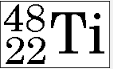
How many protons does this isotope of titanium have?
a)
48
b)
22
c)
26
d)
70
39.
How many neutrons in C-14?
a)
6
b)
7
c)
14
d)
8
40.
How many neutrons does the isotope below have?     89 36Kr
a)
53
b)
36
c)
89
d)
125
41.
How many neutrons does an atom of the isotope Neon-22 have?
a)
12
b)
10
c)
22
d)
20
42.

Isotopes of an element have a different number of...

a)

Protons

b)

Neutrons

c)

Electrons

d)

Mass

43.

Potassium-39 has how many neutrons?

a)

19

b)

18

c)

20

d)

21

44.

Nickel-59 has how many neutrons?

a)

30

b)

31

c)

32

d)

33

45.

Bromine-80 has how many neutrons?

a)

41

b)

42

c)

44

d)

45

46.

12 protons and 13 neutrons

a)

Mg-12

b)

Mg-13

c)

Mg-25

d)

Mg-24.305

47.
Cations are...
a)
Positive
b)
Negative
c)
Neutral
d)
Purring
48.
An atom becomes _________ when it gains electrons.
a)
Positive
b)
Negative
c)
Neutral
d)
Invinsible
49.
An atom becomes _______ when it loses electrons.
a)
Positive
b)
Negative
c)
Neutral
d)
Invinsible
50.
Elements on the LEFT side of the periodic table will most likely form:
a)
Positive ions
b)
Negative ions
c)
Neutral Ions
d)
None of these
51.
Solve and give your answer with the correct number of significant figures
24.28 + 12.5
a)
3.687 x 101
b)
36.8
c)
37
d)
3.70x101
52.
How many significant figures does the following number have: 0.002040
a)
6
b)
4
c)
3
d)
2
53.
Determine the number of Significant Figures in 506020-km.
a)
5
b)
4
c)
3
d)
2
54.
calculate the following to the correct number of sig figs.
0.00401  x  2.00  x  501
a)
4.02
b)
4
c)
4.0
d)
4.0180
55.
calculate the following to the correct number of sig figs.
13.2017/ 17.10
a)
.772
b)
.7720
c)
.772030
d)
.77
56.
calculate the following to the correct number of sig figs.
32.451 - 21.5
a)
11.0
b)
10.951
c)
11
d)
10.95
57.
Solve and round accordingly.
25.0 x 17 = ?
a)
430
b)
425
c)
425.0
d)
430.0
58.
How many sig figs are there?
100.00
a)
1
b)
3
c)
4
d)
5
59.

Mass

a)

Intrinsic

b)

Extrinsic

60.

Volume

a)

Intrinsic

b)

Extrinsic

61.

Color

a)

Intrinsic

b)

Extrinsic

62.

Odor

a)

Intrinsic

b)

Extrinsic

63.

Freezing Point

a)

Intrinsic

b)

Extrinsic

64.

In an ENDOTHERMIC reaction energy is being ________ by the reaction.

a)

released

b)

absorbed

65.

In an EXOTHERMIC reaction energy is being ________ by the reaction.

a)

released

b)

absorbed

66.

Select ALL examples of PHYSICAL PROPERTIES.

a)

Texture

b)

Color

c)

Hardness

d)

Flamability

e)

Ability to rust

67.

Select ALL examples of CHEMICAL PROPERTIES.

a)

Ability to rust

b)

Flamability

c)

Ability to explode

d)

Color

e)

Hardness

68.

Select ALL examples of a PHYSICAL CHANGE.

a)

Chopping wood

b)

Whipping eggs

c)

A match burning

d)

Hand sanitizer evaporating in your hand

e)

Digesting food

69.

Select ALL examples of a CHEMICAL CHANGE.

a)

Baking a cake

b)

Freezing water into ice

c)

Iron rusting

d)

Disolving salt into water

e)

Bread rising

70.
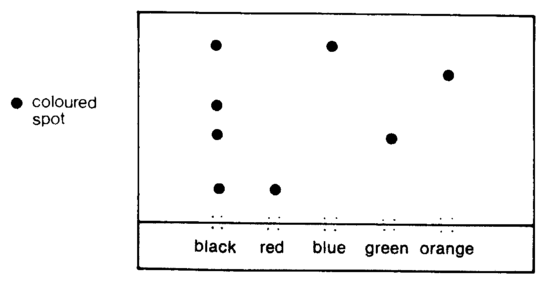
On the chromatogram given -------------- is mixture.
a)
red
b)
orange
c)
green
d)
black
71.
A pure substance shows ------------------ spot on chromat gram
a)
0
b)
1
c)
2
d)
3
72.
Dyes in water soluble markers may be separated by means of..
a)
crystallization
b)
sublimation
c)
chromatography
d)
sedimentation
73.

If you see this pictogram on a bottle it means that you are dealing with a chemical that is:

a)

Should be poured on the first thing you see.

b)

Flammable

c)

Corrosive

d)

Acutely Toxic

74.

If you see this pictogram on a bottle it means that you are dealing with a chemical that is:

a)

Explosive

b)

Flammable

c)

Corrosive

d)

Acts like hair gell.

75.

If you see this pictogram on a bottle it means that you are dealing with a chemical that is:

a)

Explosive

b)

Flammable

c)

Attractive to Pirates

d)

Acutely Toxic

76.

If you see this pictogram on a bottle it means that you are dealing with a chemical that is:

a)

Explosive

b)

Flammable

c)

Dangerous to use in bowling alleys.

d)

Acutely Toxic

77.

If you see this pictogram on a bottle it means that you are dealing with a chemical that is:

a)

Extremely bad smelling

b)

Best used outdoors

c)

A hazard to the envrionment

d)

Attracts Fish

78.

What does this symbol indicate?

a)

This chemical will make your fingers swell.

b)

Potentially explosive - firecracker symbol.

c)

Pressurized gas cylinder.

d)

Clean up with a cotton swab.

79.

What does this symbol indicate?

a)

If you smell this chemical your heart will explode

b)

Don't eat this, it causes acid reflux.

c)

This chemical is a human health hazard

d)

Exposure to this chemical will steal your soul.

80.

What does this symbol indicate?

a)

Surprise! Its your birthday!

b)

Wow! Does this chemical smell good!

c)

This chemical is acutely hazardous/an irritant or is narcotic. Danger!

d)

This chemical will self destruct 10 seconds after opening.

81.

What three hazards are associated with Ammonia?

a)

Flammable

b)

Environmental Hazard

c)

Acutely toxic

d)

Corrosive

82.
A set of data are all close to each other, but they are not close to the actual value.  This set of data can be described as...
a)
accurate
b)
precise
c)
both precise and accurate
83.
A mixture that is NOT evenly distributed is called ....
a)
Compounded
b)
Homogenous
c)
Heterogenous
d)
Salty
84.
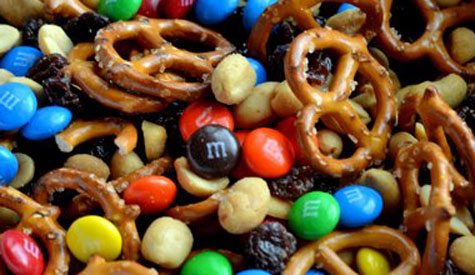
What type of mixture is this?
a)
homogenous mixture
b)
chemical
c)
heterogeneous mixture 
d)
solid mix
85.
Sweet Tea
a)
Element
b)
Compound
c)
Homogeneous Mixture
d)
Heterogeneous Mixture
86.
Sublimation is
a)
when solid turns into gas
b)
when gas turns into plasma
c)
when liquid turns into gas
d)
when gas turns into solid
87.
What is evaporization?
a)
a gas becoming a liquid
b)
a liquid becoming a solid
c)
a gas becoming a solid
d)
a liquid becoming a gas
88.
Which is the opposite of condensation?
a)
runoff
b)
evaporation
c)
precipitation
d)
transpiration
89.
Change from Gas to Solid is called........
a)
Sublimation
b)
Deposition
c)
Fusion
d)
condensation
90.

Select the element most likely to gain an electron

a)

Bromine

b)

Fluorine

c)

Chlorine

d)

Iodine

91.

Select the element with the largest atomic radius

a)

Potassium

b)

Scandium

c)

Gallium

d)

Arsenic

92.

Select the element most likely to lose an electron

a)

Magnesium

b)

Sulfur

c)

Barium

d)

Oxygen

93.

Select the sequence that correctly orders from smallest to largest atomic radius

a)

Sn, Y, Ru

b)

Cu, Ga, Br

c)

Al, S, Na

d)

F, N, Li

94.

Where on the periodic table can nonmetals be found?

a)

Top

b)

Bottom

c)

Left

d)

Right

95.

Select the element with the highest ionization energy

a)

Sodium

b)

Aluminum

c)

Phosphorous

d)

Chlorine

96.

Select the element that is a metalloid

a)

Gallium

b)

Boron

c)

Oxygen

d)

Magnesium

97.

Select the element below that is least reactive

a)

Hydrogen

b)

Chlorine

c)

Lithium

d)

Neon

98.

Select the element with the highest electronegativity

a)

Chlorine

b)

Silicon

c)

Argon

d)

Magnesium

99.

Select the sequence of increasing electronegativity.

a)

Sn, Ag, I

b)

I, Sn, Ag

c)

Ag, Sn, I

d)

Sn, I, Ag

100.

Select the element with the lowest ionization energy.

a)

Barium

b)

Beryllium

c)

Magnesium

d)

Strontium

101.

What happens to the atomic numbers as you move from left to right on the periodic table?

a)

Increase

b)

Decrease

c)

Stay the same

d)

Nothing

102.

Which element is located in period 4?

a)

Zirconium (Zr)

b)

Silicon (Si)

c)

Beryllium (Be)

d)

Iron (Fe)

103.

Which element is located in group 3?

a)

Yttrium (Y)

b)

Carbon (C)

c)

Sodium (Na)

d)

Lithium (Li)

104.

Two elements that have similar physical and chemical properties are most likely in the same...

a)

period

b)

row

c)

group

105.

Which element is most likely to have three electron energy levels?

a)

Argon (Ar)

b)

Lithium (Li)

c)

Boron (B)

d)

Europium (Eu)

106.

Which element is located in period 4 and group 5?

a)

Vanadium (V)

b)

Zirconium (Zr)

c)

Niobium (Nb)

d)

Titanium (Ti)

107.

Which element is most likely to have six electrons in its 4th energy level?

a)

Oxygen (O)

b)

Selenium (Se)

c)

Krypton (Kr)

d)

Potassium (K)

108.
The atoms along the staircase are called 
a)
metals
b)
nonmetals
c)
metalloids
d)
noble gases
109.
What does the atomic number of an atom represent?
a)
Number of neutrons in the atom
b)
Number of protons in the atom
c)
Number of electrons in the atom
d)
Number of shells in the atom
110.

How many PROTONS does Silicon have?

a)

14

b)

28

c)

42

111.

How many NEUTRONS does an atom of Chlorine have?

a)

17

b)

18

c)

19

d)

35

112.
The sum of the protons and neutrons in the nucleus of an atom
a)
Atomic Number
b)
Compound
c)
Electrons
d)
Mass Number (also called Atomic Mass)
113.
An atom has 11 protons, 12 neutrons, and 11 electrons. What is the identity of the element?
a)
Magnesium
b)
Vanadium
c)
Sodium
d)
Titanium
114.
Which of the following groups in the Periodic Table is made from reactive metals?
a)
Group 1
b)
Group 6
c)
Group 17
d)
Group 18
115.
Which of the following groups in the Periodic Table is made from non-reactive elements?
a)
Group 1
b)
Group 4
c)
Group 17
d)
Group 18