
 Worksheets
Chemistry Mid MP
Total questions: 120
Worksheet time: 2hrs 34mins
Name
Class
Date
1.
all matter is made of what
a)
energy
b)
atoms
c)
electrons
d)
compounds
2.
The positive particles of an atom are
a)
electrons
b)
positrons
c)
neutrons
d)
protons
3.
the central region of an atom where its neutrons and protons are is its
a)
nucleus
b)
electron cloud
c)
core
d)
center
4.
an atom with atomic number 6 would have how many protons
a)
6
b)
12
c)
3
d)
cannot be determined
5.
Particles in an atom that are neutral and have no charge are
a)
negatrons
b)
electrons
c)
neutrons
d)
protons
6.
True or False? Neutrons have a negative charge
a)
True
b)
False
7.
What is the atomic number for an element with three protons?
a)
2
b)
1
c)
3
d)
6
8.
A particle that moves around the nucleus is a(n)...
a)
Proton
b)
Neutron
c)
Electron
d)
Quark
9.
In the modern periodic table elements are arranged by:
a)
atomic mass
b)
atomic number
c)
valence electrons
d)
number of isotopes
10.

What does the 1.00794 stand for?
a)
Hydrogen
b)
atomic number
c)
atomic mass
d)
atomic explosion
11.
How many protons are in Boron (B) ?
a)
3
b)
5
c)
10
d)
11
12.
How many electrons are in Manganese (Mn) ?
a)
12
b)
25
c)
55
d)
30
13.
How many neutrons are in Phosphorus (P)-31?
a)
15
b)
31
c)
16
d)
14
14.
How many protons are in Zirconium (Zr) ?
a)
40
b)
91
c)
30
d)
65
15.
How many electrons are in Bromine (Br) ?
a)
35
b)
80
c)
5
d)
11
16.
Which element has 31 protons ?
a)
Gallium
b)
Germanium
c)
Gadolinium
d)
Polonium
17.
Which element has 56 electrons ?
a)
Barium
b)
Boron
c)
Beryllium
d)
Bromine
18.
Which element has 12 neutrons ?
a)
Magnesium-25
b)
Sodium-23
c)
Silicon-28
d)
Sulfur-32
19.
Which element has 4 neutrons ?
a)
Beryllium-9
b)
Lithium-7
c)
Lawrencium-262
d)
Lanthanum-138
20.
Which element has 30 neutrons and 26 electrons?
a)
Iron-56
b)
Nickel-56
c)
Zinc-56
d)
Silver-56
21.
Which element has the most protons?
a)
Ca
b)
N
c)
H
d)
C
22.
Which two subatomic particles are found in the NUCLEUS of at atom?
a)
protons & nuetrons
b)
protons & electrons
c)
neutrons & electrons
d)
electrons & protons
23.
What gives an atom mass?
a)
Protons & electrons in the nucleus
b)
electrons in the cloud
c)
protons & neutrons in the nucleus
d)
Protons & electrons in the cloud
24.
Examples of elements
a)
hydrogen, oxygen, boron
b)
water, oxygen, boron
c)
carbon dioxide, born, lithium
d)
boron, carbon, water
25.

What is the atomic mass?
a)
12
b)
6
c)
C
d)
18
26.

What is the atomic number?
a)
12
b)
6
c)
C
d)
18
27.

How many protons are in Carbon?
a)
12
b)
18
c)
6
d)
2
28.

How many neutrons are in potassium?
a)
39
b)
19
c)
20
d)
58
29.
Where are electrons found?
a)
In the nucleus
b)
On the shells outside of the nucleus
c)
in the atom
d)
in the proton
30.

how many electrons are in potassium?
a)
19
b)
39
c)
58
d)
20
31.
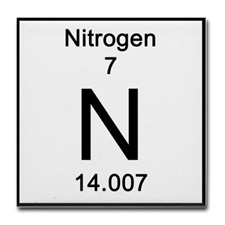
What is the number of protons that the element in this image contain?
a)
14
b)
7
c)
15
d)
18
32.
The first energy level can hold up to how many electrons?
a)
8
b)
4
c)
2
d)
5
33.

What is the atomic mass of "F"
a)
9
b)
18
c)
17
d)
19
34.
What is the atomic symbol for sodium?
a)
Na
b)
So
c)
NaCl
d)
S
35.

What is the number of protons that the element in this image contain?
a)
14
b)
7
c)
15
d)
18
36.
What is the atomic number?
a)
the number of protons
b)
the number of protons and neutrons
c)
the number of neutrons
d)
the number of protons and electrons
37.
What is the mass number?
a)
the number of protons
b)
the number of protons and neutrons
c)
the number of neutrons
d)
the number of protons and electrons
38.
An atom with an unequal number of protons and electrons is said to have (a) ___.
a)
no charge
b)
balance
c)
charge
d)
unbalance
39.
Ions are:
a)
atoms with a positive or negative charge
b)
atoms with no charge
c)
atoms with ONLY a positive charge
d)
atoms with ONLY a negative charge
40.
Two atoms of the same element but with different mass numbers are called________
a)
electrons
b)
isotopes
c)
variables
d)
electron cloud
41.

How many neutrons does the isotope of lithium have?
a)
8
b)
3
c)
4
d)
5
42.

How many protons does this isotope of titanium have?
a)
48
b)
22
c)
26
d)
70
43.
True or False? Isotopes are atoms of the same element that differ in mass number and number of neutrons
a)
True
b)
False
44.
Atoms have no electric charge because they...
a)
have an equal number of charged and non charged particles
b)
have neutrons in their nuclei
c)
have an equal number of electrons and protons
d)
have an equal number of neutrons and protons
45.
Most of the mass in an atom is concentrated in the...
a)
electrons
b)
nucleus
c)
protons
d)
empty space
46.
Electrons are___________
a)
Extremely small even in comparison to protons.
b)
part of the nuclues.
c)
Super Positive, like cheerleaders!
d)
very large
47.

What is the atomic mass of Neon?
a)
10
b)
20.18
c)
10.18
d)
20.18
48.

How many protons are in Beryllium?
a)
4
b)
9
c)
5
d)
2
49.

What is the atomic mass of Copper?
a)
63
b)
29
c)
34
d)
92
50.

How many neutrons are in a Gold atom?
a)
79
b)
196
c)
118
d)
275
51.

How many electrons does a Copper atom have?
a)
63
b)
29
c)
92
d)
34
52.

What element is represented in this Bohr Model?
a)
Carbon
b)
Hydrogen
c)
Aluminum
d)
Lithium
53.

What's a valence electron?
a)
electrons in the second energy level
b)
electrons in the outermost energy level
c)
the atomic number
d)
electrons in the first level
54.
How many electrons do atoms need to be stable?
a)
1
b)
2
c)
6
d)
8
55.
Which of the following has a full valence shell?
a)
Oxygen
b)
Neon
c)
Barium
d)
Carbon
56.

How many protons are in this element?
a)
79
b)
196
c)
117
d)
Cannot be determined
57.

How many neutrons does the isotope of lithium have?
a)
8
b)
3
c)
4
d)
5
58.

How many electrons does potassium K contain? (click to see image)
a)
19
b)
39
c)
20
d)
40
59.

The yellow atoms are called
a)
metals
b)
nonmetals
c)
metalloids
d)
noble gases
60.
Group 18 elements are known as the __________ and have full valence shells.
a)
royal gases.
b)
supreme solids.
c)
noble gases.
d)
legit liquids.
61.
In the modern periodic table elements are arranged by:
a)
atomic mass
b)
atomic number
c)
valence electrons
d)
number of isotopes
62.
Each column in the periodic table is called a
a)
period
b)
group
c)
cluster
d)
unit
63.
How many Valance electrons does Iodine Have?
a)
6
b)
16
c)
7
d)
17
64.

a)
2
b)
8
c)
3
d)
13
65.

a)
2
b)
3
c)
5
66.

a)
2
b)
6
c)
10
d)
16
67.

a)
2
b)
5
c)
10
d)
15
68.

a)
7
b)
8
c)
9
d)
10
69.

a)
1
b)
2
c)
3
d)
4
70.
How many valence electrons does Hydrogen have?
a)
1
b)
2
c)
3
d)
4
71.
How many valence electrons does Lithium have?
a)
1
b)
2
c)
3
d)
4
72.
How many valence electrons does sodium have?
a)
1
b)
2
c)
3
d)
4
73.
How many valence electrons does magnesium have?
a)
1
b)
2
c)
12
d)
24
74.
How many valence electrons does Carbon have?
a)
4
b)
12
c)
6
d)
14
75.
How many valence electrons does Phosphorus have?
a)
31
b)
5
c)
15
d)
4
76.
How many valence electrons does Oxygen have?
a)
8
b)
2
c)
16
d)
6
77.
How many valence electrons does Neon have?
a)
18
b)
8
c)
10
d)
2
78.
How many valence electrons does Sulfur
a)
16
b)
32
c)
6
d)
3
79.
How many valence electrons does Krypton have?
a)
36
b)
18
c)
8
d)
4
80.
How many valence electrons do atoms in group 16 have?
a)
4
b)
5
c)
6
d)
7
81.
What group number has 2 valence electrons for each atom?
a)
group 1
b)
group 2
c)
group 10
d)
group 12
82.
How many total electrons does Fluorine (F) have?
a)
2
b)
7
c)
9
d)
19
83.
How many protons does Fluorine (F) have?
a)
2
b)
7
c)
9
d)
19
84.
How many neutrons does Fluorine (F) have?
a)
7
b)
9
c)
10
d)
19
85.
Choose an element from the list that would have physical and chemical properties the most similar to Aluminum (Al).
a)
Gallium (Ga)
b)
Silicon (Si)
c)
Magnesium (Mg)
d)
Neon (Ne)
86.
Which family of elements have 7 valence electrons?
a)
the alkali metal family
b)
the boron group
c)
the nitrogen group
d)
the halogen family
87.
Which element is a metalloid?
a)
Aluminum
b)
Silicon
c)
Nitrogen
d)
Lead
88.
Because it is already in the most stable form with a full valence shell, which element will not form bonds?
a)
Mercury
b)
Carbon
c)
Hydrogen
d)
Krypton
89.

What is the name of the atom pictured here?
a)
Nitrogen
b)
Nitrogen-15
c)
Nitrogen-7
d)
Nitrogen-8
90.
Silicon-30 has an atomic mass of:
a)
14
b)
15
c)
16
d)
30
91.

The number of neutrons in this atom is:
a)
15
b)
5
c)
Not enough information is available
d)
10
92.

The highlighted elements are called:
a)
alkali gases
b)
actinoids
c)
noble gases
d)
metalloids
93.

The highlighted elements are:
a)
metalloid
b)
transitions metals
c)
alkali metals
d)
lanthanoids
94.
Cesium (atomic number: 55) is:
a)
a transition metal
b)
an alkali metal
c)
an alkaline earth metal
d)
a nobel gas
95.
How many neutrons would Fe-56 have?
a)
56
b)
26
c)
30
d)
33
96.
How many protons does P-30 have?
a)
30
b)
16
c)
12
d)
15
97.
What element has 42 protons?
a)
Ca
b)
Mo
c)
Zr
d)
Po
98.
How many neutrons would V-49 have?
a)
26
b)
49
c)
23
d)
50.94
99.
How many protons does Pb-209 have?
a)
127
b)
209
c)
82
d)
291
100.
Which of the following could have 14 neutrons?
a)
Al-27
b)
Si-29
c)
Mg-25
d)
Na-22
101.
Which of the following could have 82 neutrons?
a)
W-182
b)
Ta-181
c)
Cs-132
d)
Ba-138
102.
Do the following atoms belong to the same element? Explain
Aluminum-27
An atom with 14 protons and 13 neutrons
Aluminum-27
An atom with 14 protons and 13 neutrons
a)
Yes because they have the same number of protons
b)
Yes because they have the same mass
c)
No because they have different number of protons
d)
No because they have different number of neutrons
103.
Isotopes are atoms of the same element that have the same number of __________ but different number of __________ . Therefore, isotopes of the same element have different masses.
a)
protons, neutrons
b)
protons, electrons
c)
neutrons, protons
d)
electrons, protons
104.

which atom has 4 neutrons?
a)
Li-6
b)
Li-7
c)
Li-8
d)
they have the same # of neutrons
105.
What quantities vary between isotopes of an element?
a)
protons, electrons, and atomic mass
b)
protons, electrons, and atomic number
c)
neutrons and electrons
d)
neutrons and atomic mass
106.

What do these isotopes of carbon all have in common?
a)
neutrons & mass number
b)
atomic number and neutrons
c)
atomic number and electrons
d)
protons, atomic number, and mass number
107.
How many neutrons in C-14?
a)
6
b)
7
c)
14
d)
8
108.
How many neutrons does uranium-235 have?
a)
238
b)
92
c)
146
d)
143
109.

In a correctly written symbol what would be located in the "A" position?
a)
number of neutrons
b)
atomic number
c)
number of electrons
d)
mass number
110.
Elements which are shiny, conduct electricity and heat are called
a)
metal
b)
nonmetal
c)
metalloid
d)
nonexistent
111.

The atoms along the staircase are called
a)
metals
b)
nonmetals
c)
metalloids
d)
noble gases
112.
Which is a halogen?
a)
Helium
b)
Chlorine
c)
Oxygen
d)
Neptune
113.
Which is an alkali metal?
a)
Magnesium
b)
Iron
c)
Sodium
d)
Europium
114.
Atoms with similar properties are most likely located...
a)
in the same period.
b)
in the same group.
c)
in different periods.
d)
to the right and left of each other.
115.
If an atom had the same properties as fluorine (F), it would probably be located in
a)
period 1.
b)
period 2.
c)
group 2.
d)
group 17.
116.
As you move from left to right across the periodic table, the atomic number increases.
a)
True
b)
False
117.
How many metalloids are in the Nitrogen family?
a)
0
b)
1
c)
2
d)
8
118.
Most of the nonmetals on the periodic table are located...
a)
on the left side
b)
at the bottom
c)
on the right side
d)
in the middle
119.
Calcium is most like which of the following?
a)
Barium
b)
Potassium
c)
Cesium
d)
Nitrogen
120.

The blue atoms are called
a)
metals
b)
nonmetals
c)
metalloids
d)
noble gases
100 %

