wayground logo

Free Printable Worksheets

Font size

S
M
L
XL
Worksheets

Matter & Change

Total questions: 119

Worksheet time: 1hrs 10mins

Name
Class
Date
1.

1.    Burning of woods

a)

Chemical Change

b)

Physical Change

2.

1.    Rotting of banana

a)

Physical Change

b)

Chemical Change

3.

3. Dissolving sugar in water

a)

Physical Change

b)

Chemical Change

4.

4. Painting a piece of wood

a)

Physical Change

b)

Chemical Change

5.

5. Photosynthesis

a)

Physical change

b)

Chemical change

6.

6. Crushing chunks of ice

a)

Physical Change

b)

Chemical Change

7.

7. Milk turning sour

a)

Physical Change

b)

Chemical Change

8.

8.    Ice cream, melts under the sun

a)

Physical Change

b)

Chemical Change

9.
In physical changes, substances might change in __________ but not in __________.
a)
appearance, composition
b)
volume, state of matter
c)
texture, color
d)
weight, mass
10.
True or False: a physical change may produce a new substance.
a)
True
b)
False
11.
A copper penny turning greenish after a few years is an example of ...
a)
Chemical Change
b)
Physical Change
12.
A change in which NEW substances are formed.
a)
Chemical change
b)
Physical change
c)
Casual change
d)
Formal change
13.
Bubbles form when two or more substances are combined ...
a)
Chemical Change
b)
Physical Change
14.
An explosion occurs ...
a)
Chemical Change
b)
Physical Change
15.
A change in the size, shape, or state of matter.
a)
chemical change
b)
physical change
16.

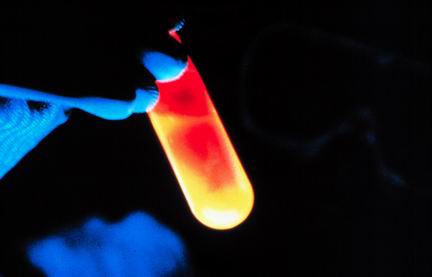
Choose the best description below for the image

a)

physical change

b)

chemical change

17.

Choose the best description below for the image

a)

physical change

b)

chemical change

18.

Choose the best description below for the image

a)

physical change

b)

chemical change

19.

Choose the best description below for the image

a)

physical change

b)

chemical change

20.

Choose the best description below for the image

a)

physical change

b)

chemical change

21.
Four students performed four different investigations by combining different substances. Their results are shown in the table provided. In which experiment are new substances being formed?
a)
Experiment 1
b)
Experiment 2
c)
Experiment 3
d)
Experiment 4
22.
Which of the following is NOT evidence that that a chemical reaction has occurred?
a)
produces light/heat
b)
production of a gas
c)
formation of a precipitate
d)
melting
23.

Water boils

a)

physical property

b)

physical change

c)

chemical property

d)

chemical change

24.

flammability

a)

physical property

b)

chemical property

25.

Identify the reactants in this reaction:

a)

Glucose and oxygen

b)

Water and oxygen

c)

Solar energy and oxygen

d)

Carbon dioxide and water

26.

Identify the products in this reaction:

a)

Glucose and oxygen

b)

Water and oxygen

c)

Solar energy and oxygen

d)

Carbon dioxide and water

27.
Particles of a liquid
a)
are tightly packed together and stay in a fixed position.
b)
have no viscosity.
c)
decrease in volume with increasing temperature.
d)
are free to move around one another but still touch.
28.
Particles (molecules) in a ______________________ have more energy than the other states of matter.
a)
gas
b)
solid
c)
liquid
29.
Which one of the following would you use to separate sand from iron filings?
a)
a bar magnet
b)
filter paper
c)
chromatography paper
d)
alum
30.

This diagram represents...

a)

An element

b)

A molecule

c)

A compound

d)

A mixture of elements and compounds

31.
a)
element
b)
compound
c)
mixture of elements
d)
mixture of compounds
32.
a)
element
b)
compound
c)
mixture of elements
d)
mixture of compounds
33.
What is a mixture?
a)
elements chemically combined
b)
a combination of different things
c)
it is found on the Periodic Table 
d)
it is made of chemical
34.
What type of mixture is this?
a)
heterogeneous 
b)
homogeneous
35.
A substance that contains only one type of atom is a(n)
a)
compound
b)
element
c)
heterogeneous mixture
d)
homogeneous mixture
36.
What is matter?
a)
a pure substance
b)
anything that occupies space and possesses mass
c)
an element
d)
a compound
37.

When all the atoms in a substance have the same identity, it is called a(n)

a)

compound

b)

element

c)

colloid

d)

suspension

38.

Lucky Charms Cereal

a)

Compound

b)

Element

c)

Mixture

39.

Koolaid

a)

Compound

b)

Element

c)

Mixture

40.

Salt (NaCl)

a)

Compound

b)

Element

c)

Mixture

41.

What type of mixture is trail mix?

a)

compound

b)

heterogeneous

c)

homogeneous

42.

What type of mixture is salsa

a)

compound

b)

heterogeneous

c)

homogeneous

43.
A mixture that appears to be evenly mixed throughout:
a)
an atom
b)
a compound
c)
a homogeneous mixture
d)
a heterogeneous mixture
44.

A mixture that does NOT appear to be evenly mixed throughout is ______.

a)

an atom

b)

a compound

c)

a homogeneous mixture

d)

a heterogeneous mixture

45.
Which of the following is an element?
a)
Sugar
b)
Salt
c)
Water
d)
Oxygen
46.
The air is a _________. 
a)
element 
b)
mixture 
c)
compound 
d)
energy 
47.
Examples are milk and gasoline.
a)
elements
b)
mixtures
c)
compounds
48.
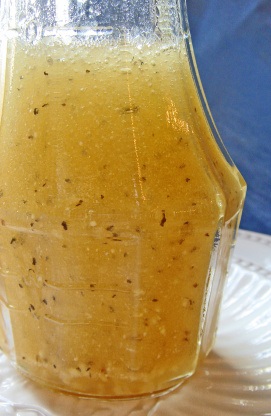
Italian Salad Dressing is a . . .
a)
heterogeneous mixture
b)
homogeneous mixture
c)
Pure Substance
d)
Compound
49.

The periodic table is organized in horizontal rows called...

a)

Groups

b)

Families

c)

Periods

d)

Chemical Symbols

50.

The vertical columns of the periodic table are called...

a)

Periods

b)

Series

c)

Chemical Symbols

d)

Groups

51.

The letter, C, is a ... of carbon.

a)

Name

b)

Chemical Symbol

c)

Nickname

d)

Pseudonym

52.
  What is a pure substance made of two or more elements that are chemically combined called?
a)
A. element
b)
B. compound     
c)
C. mixture
d)
D. solution
53.
Which of the following is not a compound?
a)
HCl
b)
Cl
c)
NaCl
d)
CO2
54.
Which of the following represents an element?
a)
H2O
b)
H2
c)
NaCl
d)
CaCO3
55.

It is a combination of two or more substances in which each substance maintains its physical property.

a)

Solution

b)

Mixture

c)

Solubility

56.
Which of the following is NOT a pure substance?
a)
milk
b)
oxygen
c)
water
d)
carbon dioxide
57.
The smallest particle of any element that still has the properties of that element is called
a)
an atom
b)
a compound
c)
a solution
d)
a mixture
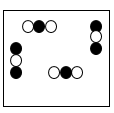
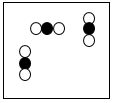
58.
What does the diagram show?
a)
A mixture of two elements
b)
A pure compound
c)
A mixture of two compounds
d)
A mixture of a compound & element
59.
What does the diagram show?
a)
A mixture of two elements
b)
A pure compound
c)
A mixture of two compounds
d)
A mixture of a compound & element
60.
What does the diagram show?
a)
A mixture of two elements
b)
A pure compound
c)
A mixture of two compounds
d)
A mixture of a compound & element
61.
Which description below is a true statement about the diagram?
a)
The diagram can be classified as an element and a molecule
b)
The diagram can be classified as a compound
c)
The diagram can be classified as a mixture of two compounds
d)
The diagram can be classified as a mixture of two elements
62.

Tearing paper into small pieces is a -

a)

chemical change

b)

chemical reaction

c)

nuclear reaction

d)

physical change

63.

How many elements are present in this compound?

NaHCO3

a)

1

b)

2

c)

3

d)

4

64.

A new substance with unique chemical and physical properties formed when two or more elements are chemically bonded during a chemical reaction.

a)

Compound

b)

Periodic Table

c)

Matter

d)

Volume

65.
A mixture that appears to be evenly mixed throughout:
a)
an atom
b)
a compound
c)
a homogeneous mixture
d)
a heterogeneous mixture
66.

A _______ _________ is what we call when the composition is not uniform throughout.

a)

homogeneous mixture

b)

heterogeneous mixture

67.

Properties that DO depend on the amount of matter present.

a)

Mass

b)

Hardness

c)

Extensive

d)

Intensive

68.

Properties that depend on the identity of substance.

a)

Mass

b)

Hardness

c)

Extensive

d)

Intensive

69.

Which of the following is an extensive property?

a)

Hardness

b)

Boiling Point

c)

Density

d)

Weight

70.

Which of the following is an extensive property?

a)

Color

b)

Mass

c)

Odor

d)

Luster

71.

Which of the following is an intensive property?

a)

Color

b)

Mass

c)

Volume

d)

Weight

72.

What kind of physical property is this? Color

a)

intensive

b)

extensive

73.

What kind of physical property is this? Number of Atoms

a)

intensive

b)

extensive

74.

What kind of physical property is this? Hardness

a)

intensive

b)

extensive

75.

What kind of physical property is this? Density

a)

intensive

b)

extensive

76.

What kind of physical property is this? Odor

a)

intensive

b)

extensive

77.

What kind of physical property is this? Volume

a)

intensive

b)

extensive

78.

What kind of physical property is this? Length

a)

intensive

b)

extensive

79.

What kind of physical property is this? Mass

a)

intensive

b)

extensive

80.

1) True or False: Intensive Properties change as the amount of substance changes.

a)

True

b)

False

81.

2) True or False: Extensive Properties change as the amount of substance changes.

a)

True

b)

False

82.

8) Intensive or Extensive Property: Volume

a)

Intensive

b)

Extensive

83.

9) Intensive or Extensive Property: Malleability

a)

Intensive

b)

Extensive

84.

What kind of physical property is this? Energy

a)

intensive

b)

extensive

85.

What kind of physical property is this? Boiling Point

a)

intensive

b)

extensive

86.

What kind of physical property is this? Melting Point

a)

intensive

b)

extensive

87.

What kind of physical property is this? State of Matter

a)

intensive

b)

extensive

88.

Which elements are to the right of the zig zag?

a)

metals

b)

nonmetals

c)

metalloids

d)

metalloids and nonmetals

89.

Helium

a)

metal

b)

nonmetal

c)

metalloid

90.

Boron

a)

metal

b)

nonmetal

c)

metalloid

91.

Au

a)

metal

b)

nonmetal

c)

metalloid

92.
Which of these is a property of metals?
a)
It's malleable
b)
It can't conduct electricity
c)
They are used in food
d)
It's very brittle
93.
Which of these grouping of elements could have the characteristic of brittle?
a)
Metal
b)
Nonmetal
94.
Which of the following is a good conductor of heat?
a)
Metal
b)
Nonmetal
c)
Metalloid
95.
Some characteristics of a metal are that it is malleable and ductile.
a)
TRUE
b)
FALSE
96.
Iron is a good conductor, malleable and magnetic. What type of element is Iron? 
a)
Metal
b)
Nonmetal
c)
Metalloid
d)
Pretty
97.
Which elements are found on the left to middle of The Periodic Table? 
a)
Metals
b)
Nonmetals
c)
Metalloids
d)
Candles
98.
Which elements are found on the right side of The Periodic Table?
a)
Metals
b)
Nonmetals
c)
Metalloids
d)
Water
99.
Non-metals are good conductors of heat and electricity. 
a)
TRUE
b)
FALSE
100.
Silicon is a semiconductor and has properties of both metals and nonmetals. What type of element is Silicon? 
a)
Metal
b)
Nonmetal
c)
Metalloid
d)
Pretty
101.
How would this element be classified?
a)
Metal
b)
Nonmetal
c)
Metalloid
d)
Metamorphic
102.
Aluminum can be hammered into different shapes or rolled into flat sheets. This means Aluminum is 
a)
ductile
b)
malleable
c)
lustrous
d)
high density
103.
I have an object that is dull, brittle, and an insulator, what is it?
a)
metalloid
b)
non-metal
c)
metal
d)
matter
104.
What physical properties are used to classify elements as metals, non-metals, or metalloids?
a)
Color, smell, physical state
b)
Reactivity, streak, hardness
c)
Ability to burn, mass, density
d)
Luster, conductivity, malleability
105.
Metals are ductile, meaning they can be drawn into wire
a)
True
b)
False
c)
Never
106.

The study of the composition, structure, and properties of matter and the changes it undergoes.

a)

Chemistry

b)

Physics

c)

Biology

d)

Social Science

107.

The study of carbon containing compounds.

a)

Organic Chemistry

b)

Inorganic Chemistry

c)

Physical Chemistry

d)

Biochemistry

108.

The study of compounds that do not contain carbon.

a)

Organic Chemistry

b)

Inorganic Chemistry

c)

Biochemistry

d)

Analytical Chemistry

109.

The study of the properties and changes in matter and their relation to energy.

a)

Physical Chemistry

b)

Biochemistry

c)

Organic Chemistry

d)

Inorganic Chemistry

110.

The identification of the components and composition of materials refers to___________________________

a)

Biochemistry

b)

Physical Chemistry

c)

Organic Chemistry

d)

Analytical Chemistry

111.

The study of substances and processes occurring in living things.

a)

Biochemistry

b)

organic Chemistry

c)

inorganic Chemistry

d)

Applied Chemistry

112.

The use of mathematics and computers to understand the principles behind observed chemical behavior and to design and predict the properties of new compounds.

a)

Theoretical Chemistry

b)

Biochemistry

c)

Inorganic Chemistry

d)

Organic Chemistry

113.

The only thing that can separate a compound into parts is

a)

an ionic bond

b)

a chemical formula

c)

a chemical reaction

d)

a salt solution

114.

Metalloids are often

a)

conductors

b)

from outer space

c)

reactive

d)

semiconductors

115.

A homogenous mixture is also called

a)

chemically bonded

b)

a solution

c)

a solute

d)

a compound

116.

A chemical can be defined as

a)

an unnatural additive placed in food

b)

a toxic substance

c)

any substance that has a definite composition

d)

any substance that is not alive

117.

What happens to the energy in a substance when it changes state?

a)

It changes form, but is neither destroyed nor increased

b)

it is changed into matter

c)

It is destroyed

d)

Energy remains unchanged

118.

A measure of the amount of matter is

a)

volume

b)

weight

c)

density

d)

mass

119.

Matter includes all of the following except

a)

smoke.

b)

light.

c)

water vapor.

d)

air.