
 Worksheets
Periodic Table Test Review
Total questions: 124
Worksheet time: 2hrs 46mins
Name
Class
Date
1.
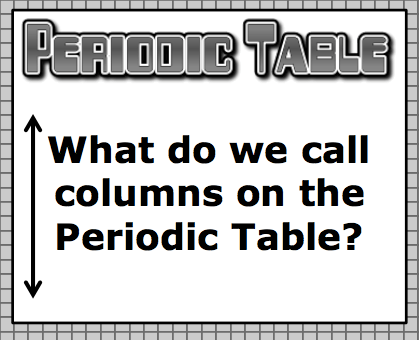
a)
Periods
b)
Groups
2.
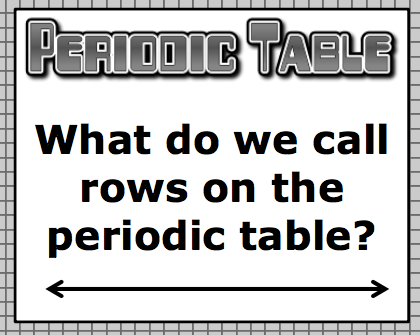
a)
Periods
b)
Groups
3.

a)
energy levels
b)
valence electrons
c)
protons
d)
neutrons
4.
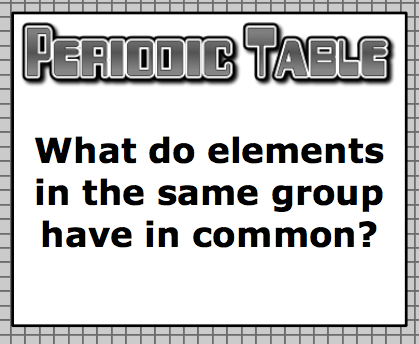
a)
energy levels
b)
valence electrons
c)
protons
d)
neutrons
5.
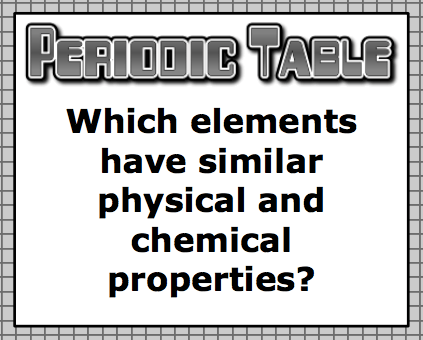
a)
Same group
b)
Same period
6.
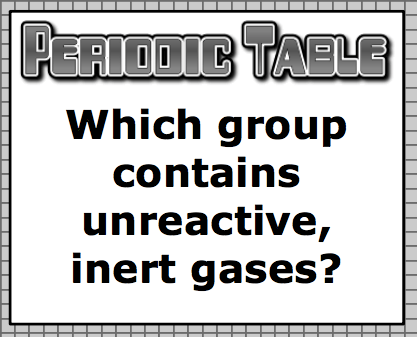
a)
Group 1
b)
Group 17
c)
Group 2
d)
Group 18
7.
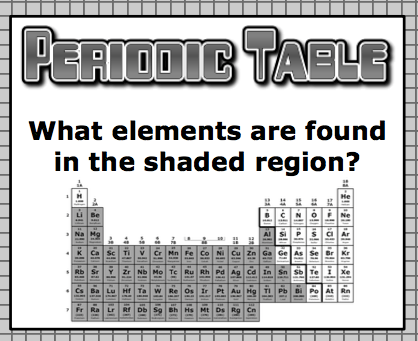
a)
Metals
b)
Nonmetals
c)
Metalloids
8.
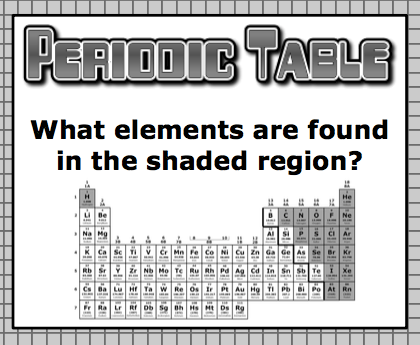
a)
Metals
b)
Nonmetals
c)
Metalloids
9.
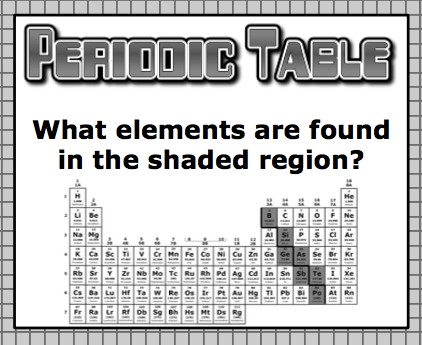
a)
Metals
b)
Nonmetals
c)
Metalloids
10.
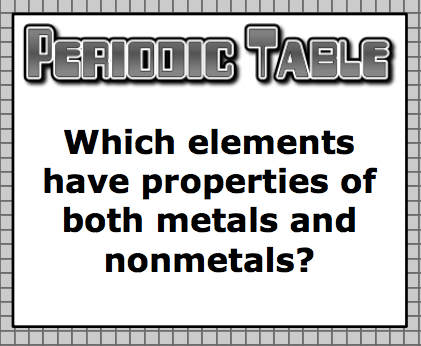
a)
Metals
b)
Nonmetals
c)
Metalloids
11.

How did Mendeleev arrange the elements?
a)
alphabetical
b)
density
c)
melting point
d)
atomic mass
12.
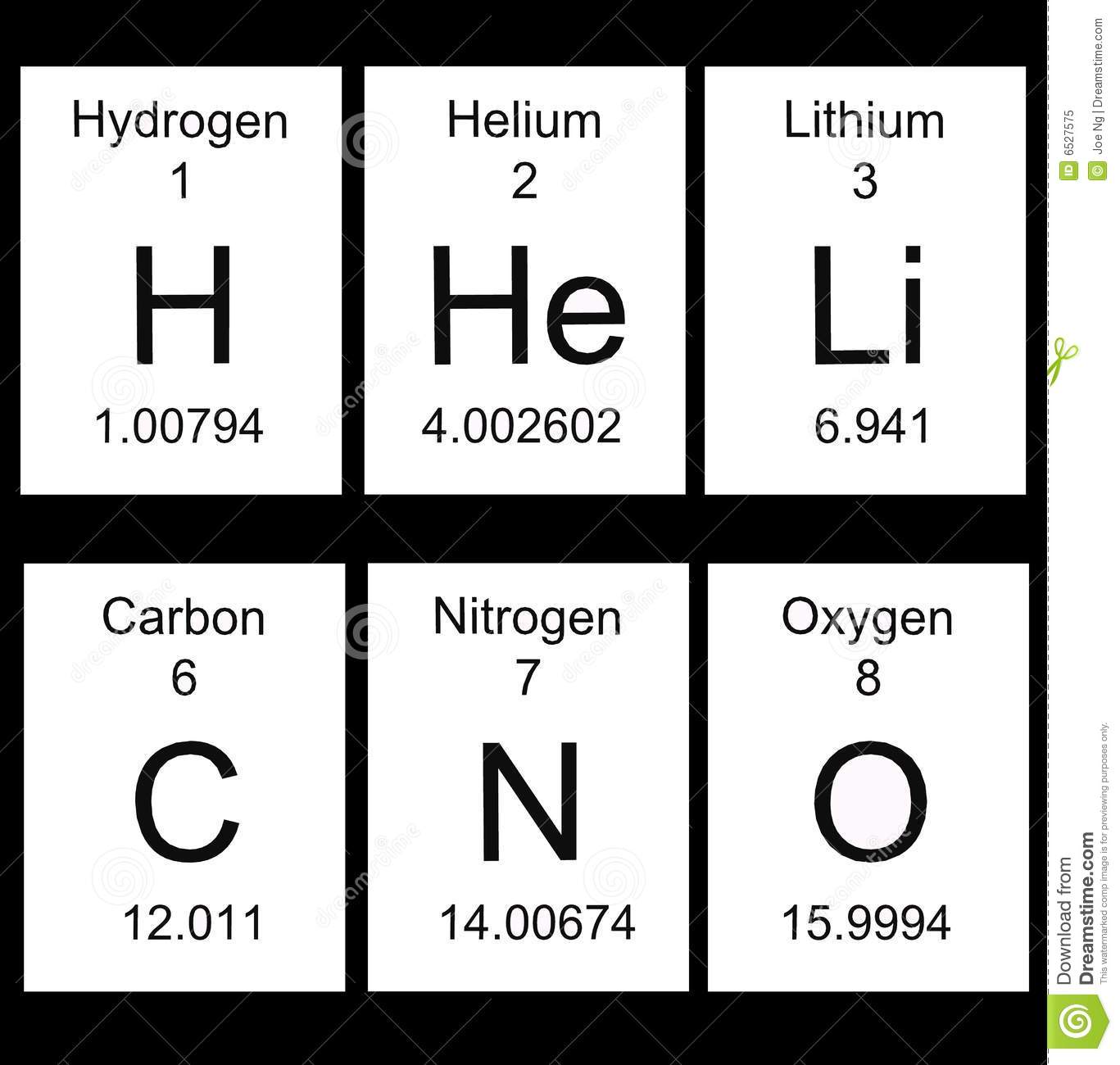
The number at the bottom of each square on the periodic table is the ...
a)
atomic number
b)
atomic mass
c)
chemical symbol
d)
element name
13.
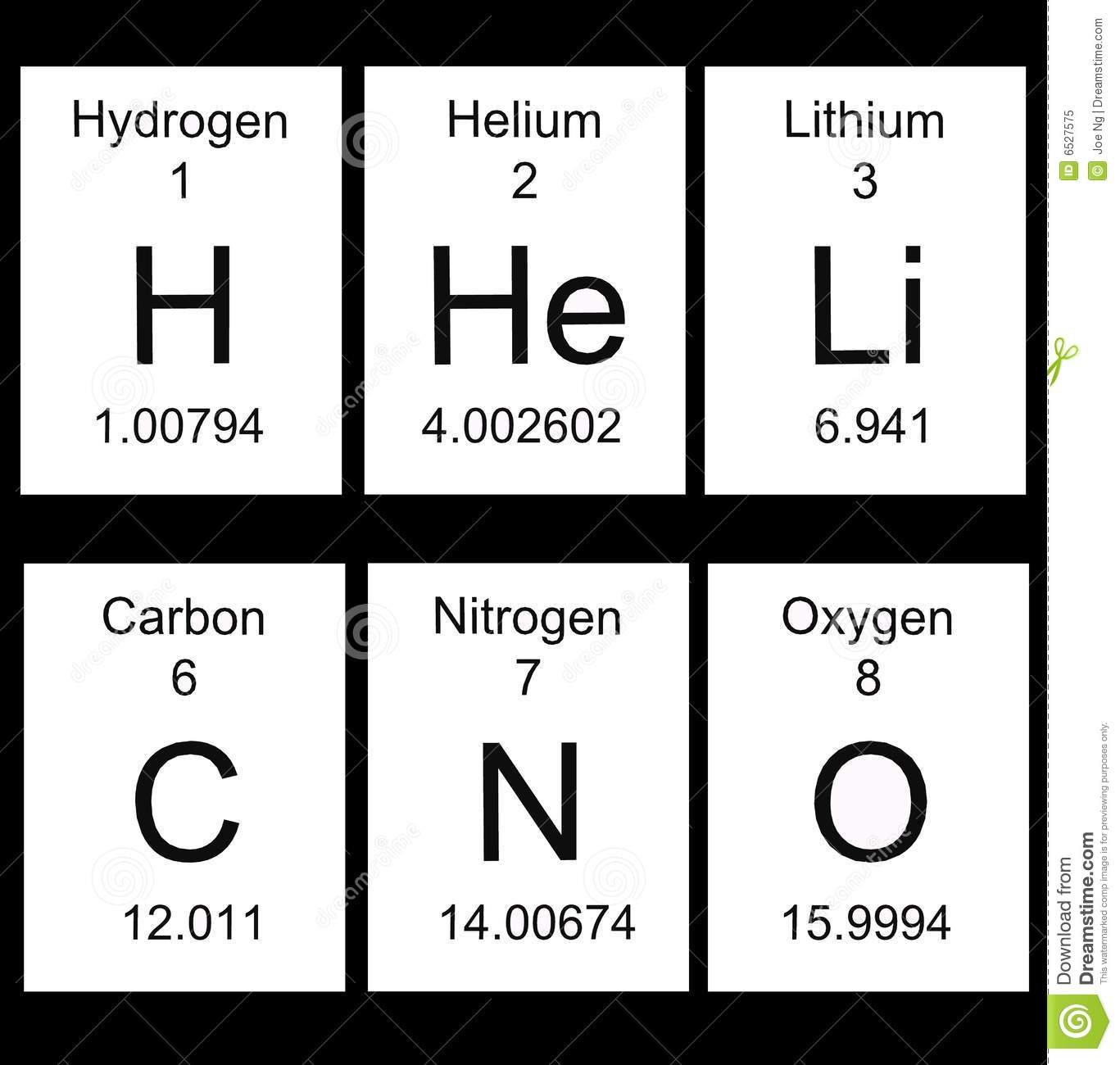
The number at the top of each square on the periodic table is the ...
a)
atomic number
b)
atomic mass
c)
Chemical Symbol
d)
Element Name
14.
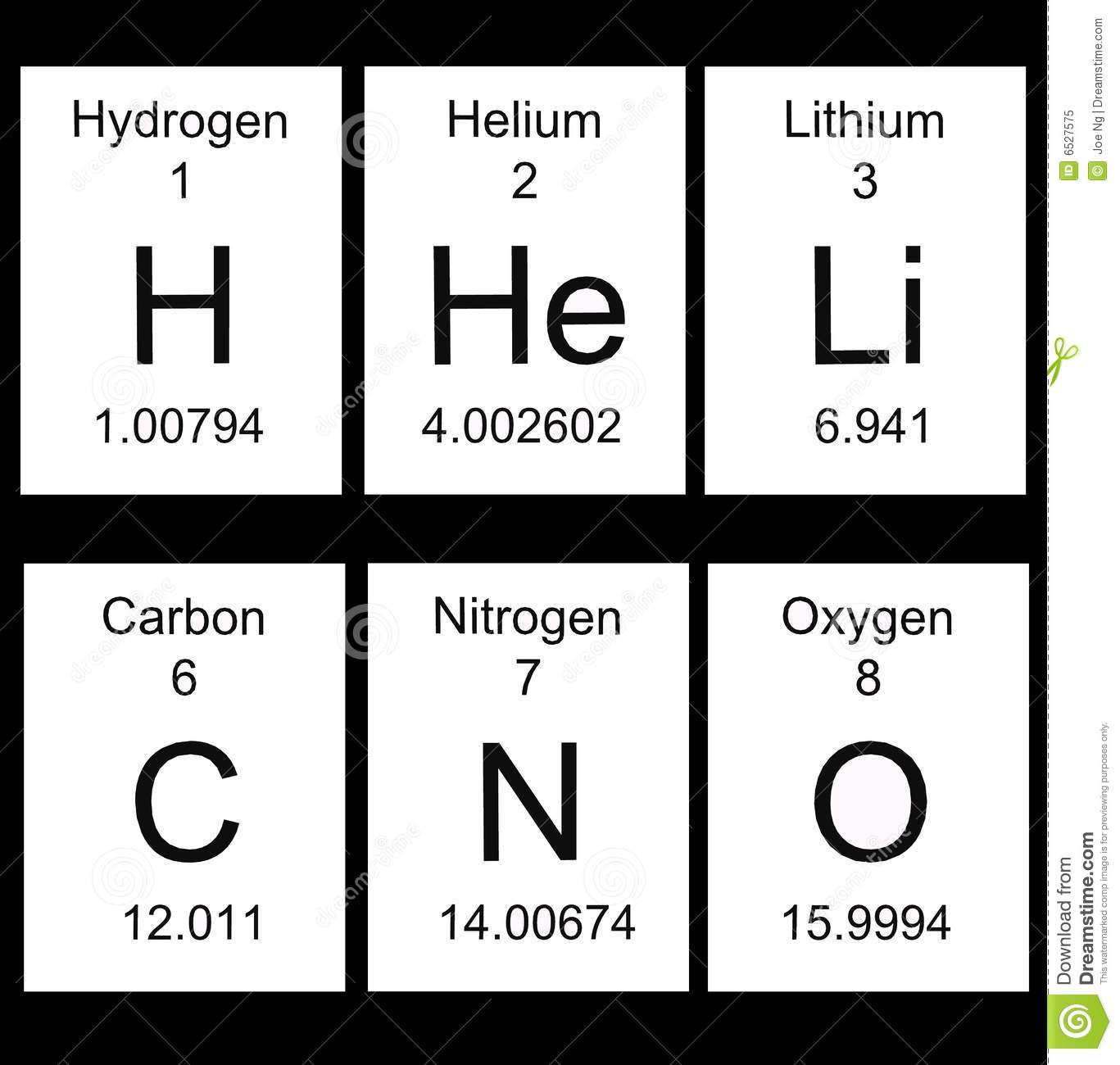
What is the chemical symbol for Lithium?
a)
H
b)
He
c)
Li
d)
N
15.

The months of the year are __________ because they repeat in the same order every 12 months.
a)
periodic
b)
group
c)
period
d)
halogens
16.

How many elements follow the periodic law?
a)
7
b)
98
c)
110
d)
All of them
17.

What group of elements don't have individual names?
a)
Alkaline-earth Metals
b)
Transition Metals
c)
Alkali Metals
d)
Halogens
18.

Most of the elements on the periodic table are classified as _____.
a)
Metals
b)
Nonmetals
c)
Metalloids
d)
Periods
19.
The atomic number tells you what?
a)
number of electrons
b)
number of protons
c)
number of neutrons
d)
both electrons and protons in an atom.
20.

The atoms along the staircase are called
a)
metals
b)
nonmetals
c)
metalloids
d)
noble gases
21.
Which is a halogen?
a)
Helium
b)
Chlorine
c)
Oxygen
d)
Neptune
22.
Which is an alkali metal?
a)
Magnesium
b)
Iron
c)
Sodium
d)
Europium
23.
The simplest substance is..?
a)
Carbon
b)
An element
c)
Water
d)
A simple compound
24.
A proton is....
a)
A negatively charged subatomic particle
b)
A positively charged subatomic particle
c)
A neutrally charged subatomic particle
d)
The only subatomic particle located in the nucleus
25.
A neutron has a charge of
a)
+2
b)
No charge
c)
-1
d)
+1
26.

What are the first two elements on the periodic table?
a)
hydrogen and helium
b)
hydrogen and lithium
c)
hydrogen and carbon
d)
nitrogen and helium
27.
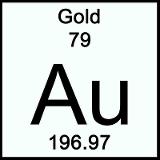
Which number is the atomic mass?
a)
79
b)
196.97
28.
What does the atomic mass tell you?
a)
Basically,the number of electrons and protons
b)
The number of neutrons
c)
Basically, the number of protons and neutrons
d)
The number of protons.
29.
In the modern periodic table elements are arranged by:
a)
atomic mass
b)
atomic number
c)
valence electrons
d)
number of isotopes
30.

How many protons are in Beryllium?
a)
4
b)
9
c)
5
d)
2
31.
Why is water NOT on the periodic table?
a)
It is naturally occuring
b)
It is a compound, not an element
c)
It exists as a solid, a liquid, and a gas
d)
Its chemical formula doesn't fit
32.
which one can be found on the periodic table
a)
Compound
b)
Element
33.
Choose the answer which contains ONLY elements.
a)
carbon dioxide, carbon, boron
b)
water, calcium, bromine
c)
hydrogen, carbon dioxide, paper
d)
gold, silver, iron
34.

What element is represented in this Bohr Model?
a)
Carbon
b)
Hydrogen
c)
Aluminum
d)
Lithium
35.
How many electrons should Magnesium have around its Lewis dot model?
a)
1
b)
2
c)
3
d)
4
36.
How many electrons should Neon have around its Lewis dot model?
a)
5
b)
6
c)
7
d)
8
37.
How many electrons can the second electron shell hold?
a)
2
b)
8
c)
16
d)
18
38.
Where are valence electrons found in an atom?
a)
first electron shell
b)
second electron shell
c)
third electron shell
d)
outermost electron shell for most atoms
39.

What atom is shown in this picture?
a)
Hydrogen
b)
Helium
c)
Lithium
d)
Beryllium
40.

How many valence electrons does this atom have?
a)
2
b)
4
c)
6
d)
8
41.
Which subatomic particles are found in nucleus?
a)
Proton and electron
b)
Proton and neutron
c)
neutron and electron
d)
neutron, electron and proton
42.
1st shell of an atom can hold maximum of
a)
2
b)
4
c)
6
d)
8
43.

What is the biggest difference between an atom of cobalt (Co) and an atom of nickel (Ni) as shown in the periodic table entries?
a)
An atom of nickel has more protons.
b)
An atom of cobalt has more electrons.
c)
An atom of cobalt has a lower number of neutrons.
d)
An atom of nickel has a higher value for atomic mass.
44.
In what order are the regions arranged on the periodic table, reading left to right?
a)
inert gases, metals, nonmetals, metalloids
b)
metalloids, metals, nonmetals, inert gases
c)
metals, metalloids, nonmetals, inert gases
d)
nonmetals, inert gases, metals, metalloids
45.
Fluorine, chlorine, bromine, iodine, and astatine make up Group 17, the halogens. Why are these elements grouped together?
a)
They are all very reactive nonmetals with similar chemical properties.
b)
They are all nonreactive gases with similar physical properties.
c)
Their atoms all have eight electrons in their outer energy levels.
d)
They all have the same atomic number.
46.
What does the number of electrons in the outer level indicate about the element?
a)
how reactive the element is
b)
how malleable the element is
c)
how brittle the element is
d)
how ductile the element is
47.

According to its location on the periodic table, sodium (Na) can be described as
a)
an alkaline-earth metal.
b)
a transition metal.
c)
an alkali metal.
d)
a metalloid.
48.
How many neutrons in C-14?
a)
6
b)
7
c)
14
d)
8
49.
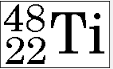
How many protons does this isotope of titanium have?
a)
48
b)
22
c)
26
d)
70
50.

How many neutrons does the isotope of lithium have?
a)
8
b)
3
c)
4
d)
5
51.
How many neutrons does uranium-235 have?
a)
238
b)
92
c)
146
d)
143
52.

What do these isotopes of carbon all have in common?
a)
neutrons & mass number
b)
atomic number and neutrons
c)
atomic number and electrons
d)
protons, atomic number, and mass number
53.

In a correctly written symbol what would be located in the "A" position?
a)
number of neutrons
b)
atomic number
c)
number of electrons
d)
mass number
54.

What element is this? What is the mass number of this atom?
a)
sodium, 23
b)
magnesium, 23
c)
magnesium, 12
d)
sodium, 11
55.
What quantities vary between isotopes of an element?
a)
protons, electrons, and atomic mass
b)
protons, electrons, and atomic number
c)
neutrons and electrons
d)
neutrons and atomic mass
56.
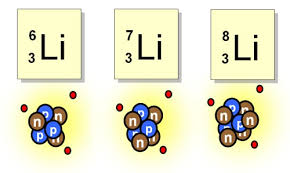
which atom has 4 neutrons?
a)
Li-6
b)
Li-7
c)
Li-8
d)
they have the same # of neutrons
57.

which explanation of this notation is correct?
a)
12 is proton #
b)
6 tells you there are 6 neutrons
c)
6 tells you there are 6 protons
d)
12 is not a mass # here
58.
Which particle does not contribute mass to the atom?
a)
Proton
b)
Neutron
c)
Electron
d)
Nucleus
59.

What is the number of neutrons?
a)
34
b)
79
c)
45
d)
35
60.
Iron-60 (atomic number 26) is an isotope that is often used to study meteorites. How many neutrons does iron-60 have?
a)
26
b)
60
c)
34
d)
86
61.

What is an ion?
a)
A Charged Atom
b)
An atom with different mass numbers
c)
An atom with different numbers of neutrons
d)
An angry atom
62.

What is an isotope?
a)
A charged atom
b)
An atom with different number of neutrons and atomic masses
c)
An atom with different numbers of electrons
d)
An atom with different numbers of protons
63.

Mg+2 is...
a)
an isotope
b)
a cation
c)
an anion
d)
a neutral atom
64.

O-2 is a(n)....
a)
isotope
b)
cation
c)
anion
d)
neutral atom
65.

Barium wants to form a(n)...
a)
anion
b)
cation
c)
neutral atom
d)
halogen
66.

Boron's ionic symbol would be...
a)
B-3
b)
B+3
c)
B-2
d)
B+2
67.

A cation is...
a)
Positive
b)
Negative
c)
Neutral
d)
Pawsitively going to fit in that vase
68.
If X is the symbol for an element, which of the following two symbols represent isotopes of the same element? I. 7735X II. 7733X III. 8137X IV. 8135 X
a)
I and II
b)
III and IV
c)
I and IV
d)
I and III
69.
What particle decides the identity of an atom/element?
a)
proton
b)
neutron
c)
electron
d)
All of the above.
70.

Silicon has how many neutrons?
a)
14
b)
15
c)
28.09
d)
1
71.

How many neutrons does a Carbon 13 atom have?
a)
6
b)
5
c)
7
d)
8
72.

How many neutrons does a Calcium 48 isotope have?
a)
16
b)
20
c)
28
d)
12
73.

How many neutrons does an Iodine-133 isotope have?
a)
80
b)
133
c)
53
d)
77
74.

What is the name of the pictured isotope?
a)
Carbon-12
b)
Carbon-13
c)
Carbon-14
d)
Carbon-15
75.

An Arsenic atom wants to form...
a)
An anion
b)
A cation
c)
An onion
d)
A cuddly kitten friend
76.

Why are ions formed?
a)
To make our lives difficult
b)
Because atoms want 8 valence electrons
c)
Because atoms have the same number of protons and electrons
d)
Because atoms gained neutrons
77.

An atom becomes _________ when it gains electrons.
a)
Positive
b)
Negative
c)
Neutral
d)
Invinsible
78.

An atom becomes _______ when it loses electrons.
a)
Positive
b)
Negative
c)
Neutral
d)
Invinsible
79.

A Radium atom wants...
a)
One more electron
b)
One less electron
c)
Two more electrons
d)
Two less electrons
80.

Which particles change the charge in atoms when ions are formed?
a)
Protons
b)
Electrons
c)
Neutrons
d)
Kittens
81.

What is the ionic symbol for a Gallium atom?
a)
Ga+3
b)
Ga-3
c)
Ga+2
d)
Ga-2
82.
What is the ionic symbol for Selenium?
a)
Se-2
b)
Se+2
c)
Se-3
d)
Se+3
83.

What is the ionic symbol for Krypton?
a)
Kr
b)
Kr+
c)
Kr-
d)
Kr-2
84.
What is the ionic symbol for a Caesium atom?
a)
Cs+
b)
Cs-
c)
Cs+2
d)
Cs-2
85.
If an element has 3 valence electrons, what charge will likely form on its ion ? Hint: It will lose those electrons. What happens to the charge when it loses 3 electrons?
a)
+3
b)
+5
c)
-3
d)
-5
86.
Nitrogen will ____ valence electrons when forming an ionic bond.
a)
gain 1
b)
lose 1
c)
gain 3
d)
lose 3
87.
A chemical symbol that is surrounded by dots that represent elements is a....
a)
electron dot diagram
b)
valence electrons
c)
Bohr Model
88.

Where are metals located on the periodic table?
a)
Blue
b)
Green
c)
Red
89.
Atoms are most stable when their outer shell is filled with electrons.
a)
true
b)
false
90.
What is the charge of an atom that has lost one electron?
a)
-1
b)
-2
c)
+1
d)
+2
91.
What is the charge of an atom that has gained one electron?
a)
-1
b)
-2
c)
+1
d)
+2
92.
What happens when an atom loses an electron?
a)
It becomes Negatively Charged
b)
It remains neutral because the proton also leaves.
c)
It becomes Positively Charged
d)
It stays the same.
93.
What happens when an atom gains an electron?
a)
It becomes Negatively Charged
b)
It remains neutral because the proton also leaves.
c)
It becomes Positively Charged
d)
It stays the same.
94.
This contains most of the mass of an atom
a)
Electron Cloud
b)
Nucleus
c)
Electron
95.
The first person to ever talk about an atom was
a)
Democritus
b)
Rutherford
c)
Dalton
96.
How did Rutherford discover the proton?
a)
Cathode tube ray experiment
b)
Gold Foil Experiment
c)
Planetary Model
d)
Plum Pudding Model
97.
Who stated that all atoms of the same element are excacty alike?
a)
Democritus
b)
Dalton
c)
Thomson
d)
Borh
98.

What scientist is best known for his "Plum Pudding" model of the atom?
a)
J.J. Tomson
b)
Ernest Rutherford
c)
John Dalton
d)
Democritus
99.

What contribution did John Dalton make to atomic theory?
a)
He discovered that every atom was positively charged.
b)
He discovered that every element consisted of one type of atom.
c)
He discovered that atoms had nuclei.
d)
He discovered that atoms could be divided into smaller parts.
100.

J.J. Thomson provided evidence that an atom...
a)
is the smallest particle of matter
b)
contains negatively charged particles
c)
has an overall negative charge
d)
has an overall positive charge
101.

People have always agreed that matter is made of atoms.
a)
True
b)
False
102.
An atom's overall charge is ________.
a)
positive
b)
depends
c)
neutral
d)
negative
103.
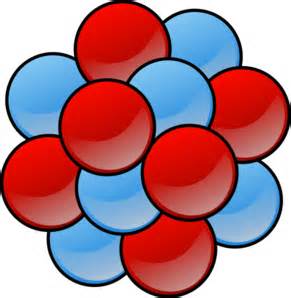
What does the nucleus of an atom contain?
a)
Electrons and neutrons
b)
Protons and neutrons
c)
Neutrinos and positrons
d)
DNA and RN
104.

Who came up with this model of an atom?
a)
J.J. Thompson
b)
Ernest Rutherford
c)
Neils Bohr
d)
James Chadwick
105.
True or False: The majority of an atom is made up of empty space
a)
True
b)
False
106.
Contributes basically no mass to an atom.
a)
protons
b)
neutrons
c)
electrons
d)
protons and neutrons
107.
The majority of an atom's mass exists where?
a)
In the nucleus
b)
In the electron cloud
c)
In the space between the nucleus and the electrons
d)
In the neutrons
108.
Which particle is responsible for the chemical properties of an atom?
a)
Neutron
b)
Protons
c)
Valence Electrons
d)
Nucleus
109.
Neon has an atomic number of 10 and an atomic mass of 20.180. How many protons, electrons, and neutrons will it have?
a)
P=10 E=10 N=11
b)
P=5 E=5 N=10
c)
P=10 E=10 N=10
d)
P=10 E=5 N=5
110.
How many electrons should Lithium have around its Lewis dot model?
a)
1
b)
2
c)
3
d)
4
111.
How many electrons should Beryllium have around its Lewis dot model?
a)
1
b)
2
c)
3
d)
4
112.
How many electrons should Boron have around its Lewis dot model?
a)
1
b)
3
c)
5
d)
7
113.
How many electrons should Carbon have around its Lewis dot model?
a)
1
b)
3
c)
4
d)
5
114.
How many electrons should Nitrogen have around its Lewis dot model?
a)
1
b)
3
c)
4
d)
5
115.
How many electrons should Oxygen have around its Lewis dot model?
a)
5
b)
6
c)
7
d)
8
116.
How many electrons should Neon have around its Lewis dot model?
a)
5
b)
6
c)
7
d)
8
117.
How many electrons should Sodium have around its Lewis dot model?
a)
1
b)
2
c)
3
d)
4
118.
How many electrons should Phosphorus have around its Lewis dot model?
a)
2
b)
4
c)
5
d)
7
119.
How many electrons should Sulfur have around its Lewis dot model?
a)
5
b)
6
c)
7
d)
8
120.
How many electrons should Potassium have around its Lewis dot model?
a)
1
b)
2
c)
7
d)
8
121.
How many electrons should Calcium have around its Lewis dot model?
a)
1
b)
2
c)
7
d)
8
122.
How many electrons should Hydrogen have around its Lewis dot model?
a)
1
b)
2
c)
7
d)
8
123.
How many electrons should Helium have around its Lewis dot model?
a)
1
b)
2
c)
7
d)
8
124.
How many electrons should Boron have around its Lewis dot model?
a)
1
b)
3
c)
5
d)
7
100 %

