
 Worksheets
Chem Fall Final
Total questions: 125
Worksheet time: 5hrs 28mins

1s2 2s2 2p6 3s2
What is the ion charge of Al
+1
+2
+3
-3
-2
What is the ion charge of Sodium
+1
+2
+3
-3
-2
Which charges indicate a cation?
0
-1
+1
+2
Challenge: What is the charge of an atom with 3 protons and 2 electrons?
0 (neutral)
+1
-1
How do you find the number of neutrons in an atom?
It's the same as the atomic #
It's the same as the mass number
Subtract the atomic # from the mass number
Add the mass number and the atomic #
Elements that are nonreactive because their outer level of valence electrons are full:
Halogens
Alkali metals
Noble gases
Transition metals
The amount of energy needed to remove an electron from an atom:
Electronegativity
Ionization energy
Atomic radius
Ionic radius
The trend for ionization energy shows that
Carbon has a lower IE than Boron
Arsenic has a higher IE than Phosphorus
Silicon has a higher IE than Aluminum
Sodium has a higher IE than Chlorine
The amount of attraction of an atom for electrons:
Electronegativity
Ionization energy
Atomic radius
Ionic radius
Which of the following has a larger atomic radius?
Chlorine
Sulfur
Sodium
Magnesium
This subatomic particle plays the greatest part in determining the properties of an element.
proton
neutron
electron
nucleus
How does atomic radius change from bottom to top in a group on the periodic table?
atomic radius decreases
atomic radius increases
atomic radius remains the same
atomic radius fluctuates
What element in the fifth period of the periodic table has the smallest atomic radius?
iodine
xenon
cesium
barium
What element in group 16 has the highest electronegativity?
oxygen
sulfur
tellurium
polonium
Across a period from left to right, ionization energy increases because elements on the right have
more protons
more electrons
more neutrons
more energy levels
Which of the following elements is a transition metal: K, Cl, Mn, B?
potassium
chlorine
manganese
boron
Name the following compound: CaCl2
calcium dichloride
calcium chloride
calcium (II) chloride
carbon chloride
None of these.
Name the following compound: Na2S
sodium sulfide
disodium sulfide
sodium sulfur
sodium monosulfide
None of these.
What is the name of the compound SO2
Monosulfate oxide
Sulfur Dioxide
Monosulfur dioxide
Name the compound CuO
copper (II) oxide
copper oxide
copper (I) oxide
carbon uranium oxide

The correct name for FeO is _____.
iron oxide
iron (II) oxide
iron (III) oxide
iron (IV) oxide
iron (I) oxide

This image shows the bonding between Lithium and Fluorine. What does the red arrow show?
electrons being shared
electrons being transferred to Fluorine
electrons being transferred to Lithium
electrons being destroyed
Al+3 + S-2

What is the correct Lewis Dot Structure for ammonia NH3


Metals tend to
gain electrons and form anions
lose electrons and form anions
gain electrons and form cations
lose electrons and form cations
Nonmetals tend to
gain electrons and form anions
lose electrons and form anions
gain electrons and form cations
lose electrons and form cations

Which type of molecular shape is shown by this molecule?
trigonal pyramidal
tetrahedral
bent
trigonal planar

How many grams are in 7.8 moles of NaCl?
476 grams
456 grams
452 grams
462 grams
Which has more grams, 10.0 moles C or 10.0 moles Ca?
C
Ca
The same
What is the percent composition of C in C4H10?
48.0%
58.0%
17.2%
82.8%
What is the empirical formula for C6H6O2?
C3H3O
C6H6O2
CHO
C12H12O4
How many moles are in 4.5x1024 Silver atoms?
0.747 particles
0.747 mol
2.71x1047 mol
2.71x1047 particles
In a chemical reaction, the mass of reactants ___.
is less than the mass of products
is greater than the mass of products
has no relationship to the mass of products
is equal to the mass of products
Which of the following statements regarding the mole is correct?
A mole is a counting unit equal to 6.02 x 10²³ particles.
The number of particles in a mole is known as Avogadro’s number.
1 mole = Avogdro's number
all of the above
Predict the product(s) of this reaction (don't worry about balancing):
Mg + HCl →
MgHCl
MgCl2 + H2
MgCl2 + H
MgCl + H2
Predict the products of this reaction:
Al2O3 →
Al + O2
O + Al2
Al2 + O3
Al + O
What statement(s) are true about this element: K+1
The element has gained one proton
The element has gained one electron
The element is a positively charged ion
The element lost one electron

Proposed that electrons move around the nucleus in specific paths a fixed distance from the nucleus..
Bohr
Rutherford
Chadwick
Thomson
Which one of these is Dalton's Model?


Who discovered electrons?
Rutherford
Bohr
J.J. Thompson
Democritus
Who proposed that electrons move around the nucleus in circular orbits?
Dalton
Thomson
Rutherford
Bohr

What will this Aluminium atom do to become more stable?
Lose 3 protons
Gain 3 electrons
Lose 3 electrons
Gain 5 electrons
what is the correct order of discovery?
protons, electron, neutrons, energy levels
electron, proton, neutrons, energy levels
neutrons, protons, electrons. energy levels

A physical change to matter can be reversed, whereas a chemical change cannot. In which of the following scenarios is a physical change taking place?
Gas is produced when sodium mixes with water.
A fireplace is burning wood.
Liquid water turns to a vapor at 100°C.
A cracker is being digested in the stomach.
Which of the following is NOT an alkali metal
Li
Mg
K
Cs

How many protons does this atom have?
27
14
13
10

How many electrons does the following ion have?
10
12
14
22
Cooking an egg
Chemical
Physical
Boiling water
Chemical
Physical
Which of the following examples provides evidence of a PHYSICAL change?
Wood is burned and releases ash and smoke
Iron rusts over time
When mixed, baking soda and vinegar form gas bubbles
Boiling water bubbles when heated
Which is the best example of a new substance forming?
lighting a match
cutting a piece of paper
popping a balloon
hitting a nail with a hammer
Which sentence about physical and chemical changes is true?
Both create a new substance.
Neither creates a new substance.
A physical change creates a new substance, but a chemical change does not.
A chemical change creates a new substance, but a physical change does not.
Which is one way that Dalton’s atomic theory has been shown to be incorrect?
Atoms can change identity in chemical reactions.
Atoms can be split into subatomic particles.
Atoms can be destroyed by chemical reactions.
Some atoms of a particular element are identical to atoms of other elements.


What periods down the side tell us about the atoms in each row?

Which color on the image of the periodic table corresponds with the halogens.
red
black
blue
orange

For the highlighted group, what is charge of ion formed?
1-
2-
3-
2+
3+
Electronegativity (a) as you go down a group.

Which sets of elements have similar chemical and physical properties?
1 and 2
1 and 3
2 and 3
2 and 4

Which statement best describes the relationship between elements D and E?
Element D has more valence electrons than Element E
Element D is more reactive than Element E
Elements D and E are metals
Element D has a smaller atomic size than Element E
Which is an alkali metal?
Magnesium
Iron
Sodium
Europium

A scientist needs to use an element that would react to an electric current in the same way as Neon (10) would. Which element below would the scientist choose?
Xenon (54)
Flourine (9)
Sodium (11)
Mercury (80)
According to the periodic table, Which atom is the most reactive?


Which of the following Bohr Models would share similar chemical properties with an atom of Beryllium


Which of the following has the greatest electronegativity?
He
O
N
Cs
Which of the following has the largest atomic radius?
He
O
N
Cs
Which is true regarding the element in period 2, group 8?
small atomic radius, low electronegativity, low ionization energy
small atomic radius, no electronegativity, high ionization energy
small atomic radius, high electronegativity, high ionization energy
large atomic radius, low electronegativity, high ionization energy
HNO2
hydronitrogen
hydrogen nitrogen oxygen
nitrous acid
What's the correct formula for titanium (II) nitrate?
Ti(NO3)2
Ti(NO3)
(NO3)Ti
none of the above

What is the molecular shape of H2S?
linear
trigonal planar
bent
tetrahedral

What molecular shape does this molecule exhibit?
linear
tetrahedral
trigonal pyramidal
trigonal planar
How many molecules are in 100 g of NaCl?
6.02 x 10²³
58.44
1.03 x1024
1.97 x 10²²
How many atoms are in 1.00 mole of Au?
6.02 x 10²³
5.8 x 1024
1.00 x10²³
79
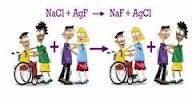

Identify the reaction type:
C2H6 + O2 --> CO2 + H2O
Double replacement
Synthesis
Acid base
Combustion
Identify the reaction type:
NaCl + KOH --> KCl + NaOH
Double replacement
Combustion
Synthesis
Decomposition
Identify the reaction type:
H2O2 --> H2O + O2
Decomposition
Synthesis
Combustion
Acid Base
What is the RXN type?
C4H4 + O2 →
Single Replacement
Double Replacement
Synthesis/Combination
Decomposition
Combustion
What are the products?
NaOH + CaS →
CaOH2 + Na2S
S(OH)2+ Na2Ca
CaOH+ NaS
Ca(OH)2 + Na2S

