wayground logo

Free Printable Worksheets

Font size

S
M
L
XL
Worksheets

Q2 (H. Chem) Midterm Review (Due day of final)

Total questions: 125

Worksheet time: 2hrs 5mins

Name
Class
Date
1.
Phosphorous trichloride
a)
PCl3
b)
P3Cl
c)
P3Cl3
d)
PCL
2.
what is the name of CCl4?
a)
carbon tetrachloride
b)
monocarbon tetrachloride
c)
tetracarbon monochloride
d)
carbon chloride
3.
How many moles are in 462g of CCl4?
a)
154 moles
b)
5.00 moles
c)
462 moles
d)
3.00 moles
4.
What is the name of the compound HgCl2
a)
mercury (II) chloride
b)
mercury chlorite
c)
Monomercury dichloride
5.
Naming a compound that starts with a transition metal requires us to use...
a)
Prefixes
b)
Roman Numeral
c)
Nothing, just name it
6.
Naming a compound of two non-metals requires us to use..
a)
Prefixes
b)
Roman Numerals
c)
Nothing, just name it
7.
Naming a compound that starts with elements from the first two groups (columns) of the periodic table requires us to use...
a)
Prefixes
b)
Roman Numeral
c)
Nothing, just name it
8.
Which of these is covalent?
a)
NaCl
b)
Pb(NO3)2
c)
CO2
d)
AlCl3
9.
What does the prefix Mono mean?
a)
4
b)
6
c)
3
d)
1
10.
+  and  N-3
a)
KN
b)
KN3
c)
K3N3
d)
K3N
11.
Bromine monoflouride
a)
Br1F1
b)
BrF
c)
Br2F
d)
BrF2
12.
A binary covalent bond exists between
a)
2 metals
b)
1 metal and 1 nonmetal
c)
2 nonmetals
d)
Any 2 elements
13.
Ionic or covalent?
Na  F
a)
Ionic
b)
Covalent
14.
Name the prefix associate with:
7
a)
septa
b)
hexa
c)
octa
d)
hepta
15.
Which of these compounds is ionic? 
a)
Carbon dioxide
b)
Dinitrogen trioxide
c)
Silicon tetrachloride
d)
Lithium bromide
16.
Name this formula: 
KNO3
a)
Potassium Nitrogen Oxide
b)
Potassium Nitride
c)
Potassium Nitrate
d)
Potassium (I) Nitrite
17.
Name this formula: 
Fe3PO4
a)
Iron Phosphide
b)
Iron (III) Phosphide
c)
Iron (I) Phosphate
d)
Iron Phosphate
18.
Name the following ionic compound: LiNO3
a)
lithium nitrate
b)
lithium III nitrate
c)
lithium nitride
d)
lithium oxide
19.
How many grams are in 3.75 moles of  LiNO3
a)
69.0g
b)
259g
c)
18.4g
d)
152g
20.
The proper formula for magnesium hydroxide:
a)
MgOH
b)
Mg2OH
c)
Mg(OH)2
d)
Mg2OH2
21.
When naming ionic compounds with transition metals you need to include roman numerals to show the _____ of the metal..
a)
atomic number
b)
mass number
c)
charge
d)
ionization energy
22.
What is the correct formula for barium phosphate?
a)
BaPO4
b)
Ba2(PO4)3
c)
Ba3(PO4)2
d)
BaP
23.

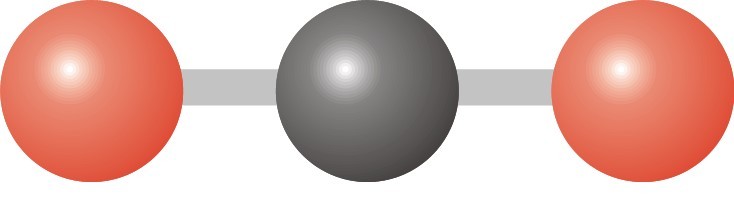
Is this molecule polar or non-polar?

a)

Polar

b)

Non-polar

24.

Is this molecule polar or non-polar?

a)

Polar

b)

Non-polar

25.

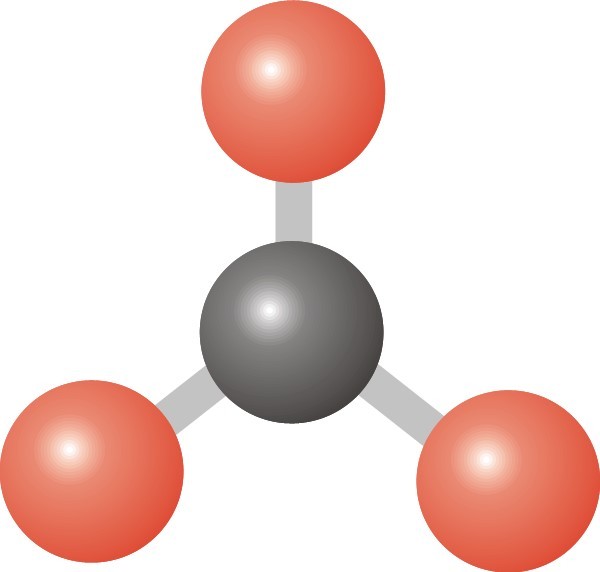
What is the electron geometry of this molecule?

a)

Linear

b)

Bent

c)

Trigonal Planar

d)

Trigonal Pyramidal

e)

Tetrahedral

26.

What is the molecular Geometry for this molecule?

a)

Tetrahedral

b)

Linear

c)

Bent

d)

Trigonal Planar

e)

Trigonal Pyrimodal

27.
In covalent bonds, electrons are ___________.
a)
transferred
b)
gained
c)
lost
d)
shared
28.
In a polar covalent bond, electrons are shared ___________.
a)
equally
b)
unequally
c)
between non-metals with similar electronegativities
d)
between a metal and a non-metal
29.
This is an example of a __________ bond.
a)
non-polar covalent
b)
polar covalent
c)
ionic
d)
metallic
30.
What geometry will this molecular structure have?: PH3
a)
bent
b)
tetrahedral
c)
linear
d)
trigonal pyramidal
31.

The molar mass of carbon tetrafluoride is (a)   g/mol

32.

What electron geometry will this molecular structure have?: H2S

a)

bent

b)

tetrahedral

c)

linear

d)

trigonal pyramidal

33.
What geometry will this molecular structure have?: CCl4
a)
bent
b)
tetrahedral
c)
linear
d)
trigonal pyramidal
34.
Will this molecule be polar or nonpolar? H2S
a)
polar
b)
nonpolar
35.
What two types of atoms make a covalent bond?
a)
2 Nonmetals
b)
1 Nonmetal and 1 Metal
c)
2 Metals
d)
2 Noble Gases
36.

which one of the following molecules could be represented by this molecular shape?

a)

phosphorous trihydride

b)

Trigonal planar

c)

Linear

37.
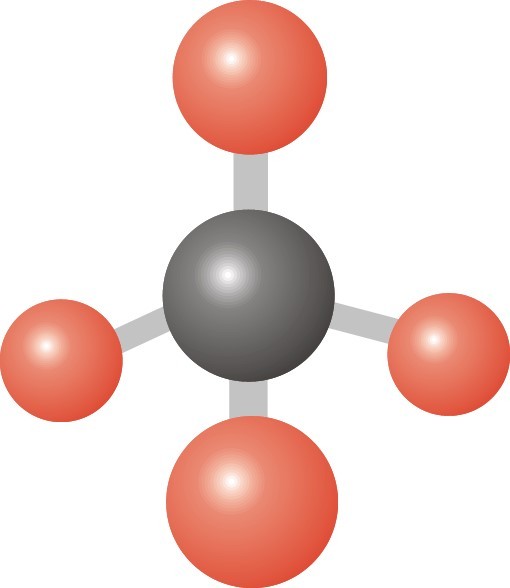
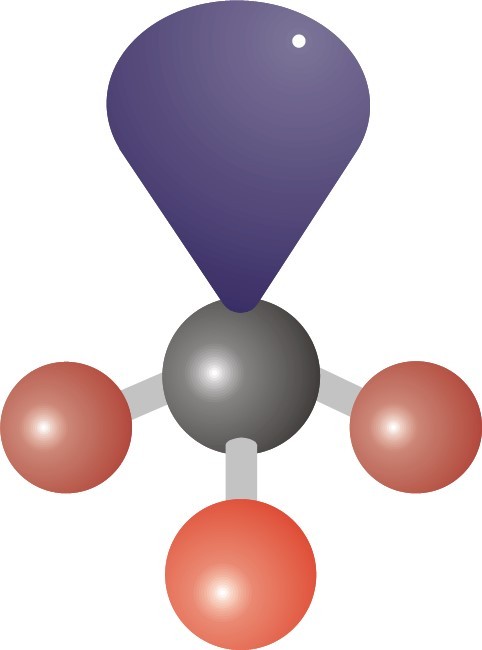
Choose the correct shape for this molecule:
a)
Bent
b)
Linear
c)
Tetrahedral
d)
Trigonal pyramidal
38.

A molecular geometry with 3 bonding pairs is

a)

Trigonal pyramidal

b)

Trigonal planar

c)

Trigonal bipyramidal

d)

T-shaped

39.

A molecular geometry with 2 lone pairs and 2 bonding pairs is

a)

Tetrahedral

b)

Trigonal pyramidal

c)

Bent

d)

Linear

40.
Which molecule would have this molecular geometry?
a)
BF3
b)
CH4
c)
PCl5
d)
CO2
41.
What molecule could this be? 
a)
BF3
b)
CH4
c)
H2O
d)
CO2
42.
Who could this molecule be?
a)
CH4
b)
CO2
c)
PCl5
d)
BF3
43.
Who could this be?
a)
H2O
b)

PH3

c)
CO2
d)
CH4
44.

How many lone pairs of electrons are on the P atom in PF3?

a)
1
b)
2
c)
3
d)
0
45.

Which of the following molecular shapes are always polar molecules? (Choose All that apply)

a)

linear

b)

bent

c)

trigonal planar

d)

trigonal pyramidal

e)

tetrahedral

46.
What is the molar mass of CO2?
a)

12.01 g/mol

b)

16.00 g/mol

c)

32.00 g/mol

d)

44.01 g/mol

47.
What is the mass of one mole of aluminum chloride (remember to determine the correct formula first)?
a)

62.44 g

b)

116.40 g

c)

133.34 g

d)

97.89 g

48.

What is the formula for nitric acid?

a)

HNO2

b)

HNO3

c)

HNO4

d)

H2NO3

49.

What is the formula for hydrochloric acid?

a)

HCl

b)

HClO

c)

H3ClO3

d)

HClO3

50.
HBr
a)
hydrogen bromine acid
b)
hydrobromide acid
c)
hydrobromic acid
51.

H3PO4

a)

hydrophsophorus acid

b)

phosphoric acid

c)

hydrogen phosphorous

d)

phosphori hydroxide

52.

Name the acid that uses an acetate ion: HC2H3O2

a)

Acetic acid

b)

Acetous acid

c)

Hydrogen Acetate acid

d)

Hydrogen Acetatic acid

53.
Select the formula for the following acid: chloric acid
a)
HClO3
b)
HCl
c)
HClO4
54.

When naming oxyacids, change "-ite" to:

a)

-ate

b)

-ic

c)

-ous

d)

-ite

55.

What is the formula for carbonic acid?

a)

HCO3

b)

H2CO3

c)

HCN

d)

HClO2

56.

The nitrate ion is

a)

N3-

b)

NO3-

c)

NO2-

d)

Ni-

57.

Which of the following combinations would need roman numerals in the name?

a)

potassium + fluorine

b)

beryllium + oxygen

c)

boron + iodine

d)

lead + oxygen

58.

What is the name of the compound Na2(SO4)?

a)

Sodium sulfate

b)

Sodium sulfide

c)

Sodium sulfite

d)

Sodium sulfuroxide

59.

What is the correct molecular formula for barium hydroxide?

a)

Ba(OH)2

b)

Ba2OH

c)

BaOH

d)

Ba2OH

60.

Name the compound: (NH4)2S

a)

ammonium sulfide

b)

nitrogen tetrahydrogen sulfide

c)

diammounium sulfate

d)

ammonium sulfate

61.

Write the formula: lead(IV) sulfite

a)

Pb2(SO3)4

b)

Pb(SO3)2

c)

Pb2(SO4)4

d)

Pb(SO4)2

62.
How do covalent bonds form?
a)
Donating & receiving valence e- between atoms.
b)
Opposite slight charges attract each other between compounds.
c)
Scientists are still not sure how they form.
d)
Sharing valence e- between atoms.
63.
What is the correct name for NO?
a)
Mononitrogen Monoxide
b)
Nitrogen Monoxide
c)
Mononitrogen Dioxide
d)
Nitrogen Oxide
64.
What is the name of N2O3
a)
Nitrogen trioxide
b)
Dinitrogen oxide
c)
Dinitrogen trioxide
d)
Nitrogen oxide
65.
Which of the following is a property of an ionic compound?
a)
high melting point
b)
soft
c)
malleable
d)
liquid at room temperature
66.

The following properties are all characteristics of ionic compounds EXCEPT

a)

high melting and boiling points

b)

soft

c)

crystal lattice structure

d)

conduct electricity when dissolved in water

67.

What properties does an ionic compound have?

a)

A low boiling point and it conducts electricity when dissolved in water

b)

A high melting and it conducts electricity when liquid

c)

A high boiling point and it conducts electricity when solid

68.

What part of an atom is involved in chemical bonding?

a)

protons

b)

electrons

c)

valence electrons

d)

nucleus

69.

How many valence electrons does phosphorus have?

a)

3

b)

2

c)

5

d)

1

70.

In a covalent bond, atoms __________ electrons.

a)

share

b)

borrow

c)

transfer

d)

switch

71.

A substance that is a gas at room temperture is which type of compound?

a)

ionic

b)

covalent

c)

chemical

d)

glucose

72.
When dissolved in water, the solution is a good conductor of electricity.
a)
ionic compounds
b)
covalent compounds
73.

Covalent Compounds HAVE a positive (+) or negative (-) charge

a)

True

b)

False

c)

Que onda, Hagerman?

d)

What was that now?

74.

Properties of covalent compounds are due to the

a)

sea of electrons

b)

transference of electrons

c)

sharing of electrons

75.

A metallic bond is a bond between ________.

a)

nonmetals

b)

metals

c)

transition metals

d)

metalloids

76.

Which of the following is NOT a property of metals?

a)

Hard

b)

Can conduct electricity

c)

Very brittle (breaks easily)

d)

Malleable (can bend without breaking)

77.

What do electrons do in a metallic bond?

a)

They stay on the metal atom.

b)

They are transferred from atom to atom.

c)

They form a covalent bond with another atom.

d)

They float around freely.

78.

Why are metals good conductors of electricity?

a)

The electric current can easily travel along the surface of the metal because it is smooth.

b)

A negative charge can easily push the sea of electrons in one direction, making a current.

c)

Metals attract electricity.

d)

Metals are malleable.

79.

What do we call electrons that move freely in a metallic bond?

a)

sea of electrons

b)

lone electrons

c)

unpaired electrons

d)

covalent electrons

80.
What is the noble gas shorthand electron for Sulfur atom?
a)
[Ar] 3p4
b)
[He] 3s23p4
c)
[Ne] 3s23p4
d)
[Na] 3s23p4
81.
What is the electron configuration for this atom?
a)
1s22s22p6
b)
1s22s22p5
c)
1s22s22p3
d)
2s22p3
82.
What atom matches this electron configuration?
1s22s22p63s2
a)
Neon
b)
Magnesium
c)
Aluminum
d)
Potassium
83.
Which element is depicted from this orbital diagram
a)
Fluorine
b)
Neon
c)
Chlorine
d)
Argon
84.
Which is associated with more energy? 
a)
2p
b)
2s
c)
3p
d)
1s
85.
What is the charge of an atom that has lost one electron?
a)
-1
b)
-2
c)
+1
d)
+2
86.
What is the charge of an atom that has gained one electron?
a)
-1
b)
-2
c)
+1
d)
+2
87.
Anions are _______ that form ____________ ions and __________ electrons.
a)
nonmetals, positive, lose
b)
nonmetals, negative, gain
c)
metals, positive, gain
d)
metals, positive, lose
88.
Which element is pictured?
a)
neon
b)
fluorine
c)
magnesium
d)
argon
89.
What atom matches this electron configuration?
1s2s2p3s2
a)
Neon
b)
Magnesium
c)
Aluminum
d)
Potassium
90.
How many electron can be found in a s orbital?
a)
2
b)
3
c)
4
d)
1
91.
How many electron can be found in a p orbital?
a)
2
b)
3
c)
4
d)
6
92.
What is the electronic configuration of sodium?
a)
1s22s22p63s1
b)
[Ne]3s1
c)
1s22s22p7
d)
Both A and B are correct
93.
What is the electronic configuration of iron?
a)
1s22s22p63s23p64s23d6
b)
1s22s22p63s23p63d8
c)
1s22p63s23p64s23d6
d)
1s22s22p63s23p64s13d6
94.
Which is the electron configuration for an oxygen atom?
a)
1s22s22p63s23p64s2
b)
electronic configuration
1s22s22p4
c)
1s22s22p6
d)
1s22s22p63s23p6
95.
As you move down the periodic table atoms get bigger.  This is because ____________.
a)
The atoms have more mass.
b)
The atoms have more protons.
c)
The atoms have more energy levels
d)
The atoms have more nuetrons
96.

What is a cation's charge?

a)

positive

b)

negative

c)

neutral

d)

depends on the element

97.

What is an anion's charge?

a)

positive

b)

negative

c)

neutral

d)

depends on the element's charge

98.
Which of the following will have a lower ionization energy than Scandium (Sc)?
a)
Helium (He)
b)
Titanium (Ti)
c)
Calcium (Ca)
d)
Magnesium (Mg)
99.

The frequency of violet light is 7.5x10¹⁴ s-1. What is its wavelength?

a)

4.0x10⁻⁷ m

b)

4.0x10⁷ m

c)

2.25x10²³m

d)

2.25x10²³ s-1

100.
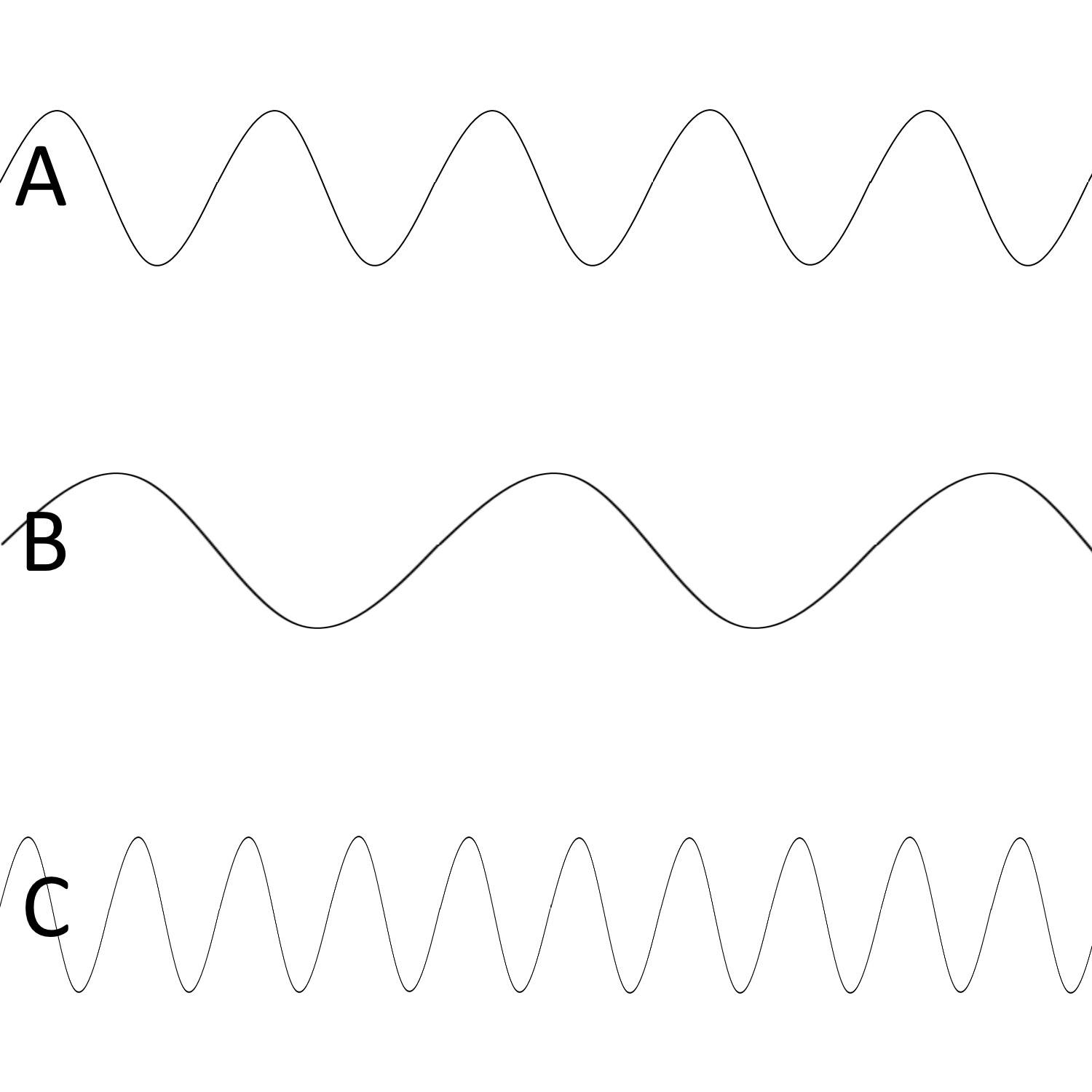
Which wave has the largest wavelength?
a)
A
b)
B
c)
C
d)
None (same wavelength)
101.
Which type of light has the lowest energy of this group?
a)
Radio
b)
Microwave
c)
Infrared
d)
Ultraviolet
102.
When an electron emits a photon of light, it also...
a)
gains positive charge
b)
gains negative charge
c)
increases energy level
d)
decreases energy level
103.
When an electron absorbs a photon of light, it also...
a)
gains positive charge
b)
gains negative charge
c)
increases energy level
d)
decreases energy level
104.
This orbital diagram represents:  
a)
C
b)
B
c)
N
d)
O
105.
What is incorrect about this orbital diagram?
a)
Both arrows in the 2p box should be pointing up
b)
There is nothing incorrect with this diagram
c)
In the 2p box there should only be 1 electron in the first 2p box and one in the 2nd 2p box
d)
All the arrows should be pointing up.
106.
Electrons occupy orbitals of lowest energy first is part of what electron configuration rule?
a)
Hund’s Rule
b)
Aufbau Principle
c)
Pauli Exclusion Principle
107.
What is the Pauli Exclusion Principle?
a)
An atomic orbital can only hold a maximum of 2 electrons, each with opposite spins
b)
An atomic orbital can hold a minimum of 6 electrons, each with opposite spins
c)
An atomic orbital can hold a maximum of 6 electrons, each with the same spin
d)
An atomic orbital can hold a minimum of 2 electrons, each with opposite spins
108.
Which orbital shows a violation of Hund's Rule?
a)
A
b)
B
c)
C
d)
D
109.
Which orbital shows a violation of the Aufbau Principle?
a)
A
b)
B
c)
C
d)
D
110.
When an atom has all of its electrons in the lowest energy orbitals available, the atom is  
a)
in ground state
b)
in excited state
c)
giving off light energy
d)
unstable
111.
The product of nuclear fission includes
a)
neutrons and electrons
b)
several nuclei and neutrons
c)
several nuclei and electrons
d)
several nuclei and protons
112.
What is a chain reaction?
a)
When electrons travel are emitted causing electricity
b)
When a nuclear fission reaction occurs, the protons emitted can strike other nuclei in the sample, and cause them to split
c)
When a nuclear fission reaction occurs, the neutrons emitted can strike other nuclei in the sample, and cause them to split
d)
When a nuclear fission reaction occurs, the electrons emitted can strike other nuclei in the sample, and cause them to split
113.
What is true about nuclear fusion? 
a)
The mass of the product is less than that of the original nucleus
b)
The mass of the product is 100 times less than that of the original nucleus
c)
The mass of the product is the same as that of the original nucleus
d)
The mass of the product is greater than that of the original nucleus
114.
How do nuclear power-plants work?
a)
Fusion
b)
Half-life
c)
Fission
d)
Fusion or fission
115.
The technetium-99 isotope has a half-life of 6.0 hours. If 100.0 mg were injected into a patient how much remains after 18 hours?
a)
33.0 mg
b)
12.5 mg
c)
.33 mg
d)
15.8 mg
116.
The half life of Thorium-234 is 24 days. What fraction of the element remains after 96 days
a)
1/2
b)
1/4
c)
1/8
d)
1/16
117.

Which electron configuration belongs to a Chloride (Cl-) ion?

a)

1s2 2s2 2p6 3s2 3p5

b)

1s2 2s2 2p6 3s2 3p6

c)

1s2 2s2 2p6 3s2 3p7

d)

1s2 2s2 2p6 3p7

118.

An aluminium ion would have which electron configuration?

a)

1s2 2s2 2p6 3s2

b)

1s2 2s2 2p6 3s2 3p1

c)

1s2 2s2 2p6 3s2 3p6

d)

1s2 2s2 2p6

119.

A certain photon of light has a wavelength of 4.22 nm. What is the frequency? (f = c/λ)

a)

7.11 x 10¹⁴ s-1

b)

7.11 s-1

c)

7.11 x10 -16 s-1

d)

7.11 x10¹⁶ s-1

120.
Select the correct order of waves on the EMS 
a)
Radio, Micro, Infra, Visible, Ultra, X-ray, Gamma
b)
Gamma, X-ray, Ultra, Vis, Infra, Micro, Radio
c)
Vis, Micro, Infra, Ultra, X-ray, Gamma, Radio
d)
Micro, Radio, Vis, Infra, Ultra, X-ray, Gamma
121.
What is a photon?
a)
When radiation burst through electric waves
b)
The emission of electrons from a metal caused by light striking the metal
c)
The rate at which a waves energy flows through a given unit of area.
d)
packets of electromagnetic energy
122.
According to the Bohr Model, electrons are only found in specific orbits around the nucleus called __________________________
a)
Energy Levels
b)
Electron Lanes
c)
Electron Places
d)
Atomic Mass
123.

When an electron moves from n=4 to n=1, what wavelength of energy is emitted?

a)

97 nm

b)

410 nm

c)

434 nm

d)

1282 nm

124.

Emission spectra (bright line spectra) are created when electrons move from ___.

a)

higher to lower energy levels.

b)

lower to higher energy levels.

c)

s orbitals to p orbitals.

d)

one atom to a different atom.

125.

In which state does an electron have the least amount of energy?

a)

Excited state

b)

Ground state

c)

Orbital

d)

Bohr model