
 Worksheets
Chemistry Final Exam - Fall 2022
Total questions: 127
Worksheet time: 27hrs 54mins
How many grams of aluminum sulfate would be formed if 250g H2SO4 completely reacted with aluminum?
Complete the nuclear reaction
2760Co = ___ + -10e
2556Mn
2860Ni
2358V
2759Co
Mg + 2HCl --> MgCl2 + H2
94Be + 11H → _____ + 42He
Fe2O3(s) + 3H2(g) → 2Fe(s) + 3H2O(l)
How many moles of iron can be made from 6 moles H2?

2Al + 6HCl --> 2AlCl3 + 3H2
Aluminium reacts with hydrochloric acid. How many grams of aluminum are necessary to produce 11 L of hydrogen gas at STP?
13
8.8
0.99
1.0
When the scientist decides she is finished.
When the quantity of the excess reactant is used up.
When the quantity of the limiting reactant is used up.
Chemical reactions do not stop.
When the scientists sees no more steam or smoke.
In the experiment above, 7.62 g of Fe are allowed to react with 8.67 g of S.
How much FeS is formed?
How many grams of aluminum sulfate would be formed if 250g H2SO4 completely reacted with aluminum?
Using the following equation: Fe2O3(s) + 3H2(g) → 2Fe(s) + 3H2O(l)
How many moles of iron (Fe) can be produced from six moles of H2?
4 moles Fe
6 moles Fe
9 moles Fe
2 moles Fe
In a chemical reaction, the mass of reactants ___.
is less than the mass of products
is greater than the mass of products
has no relationship to the mass of products
is equal to the mass of products
180.18 g/mol
180.12 g/mol
180.24 g/mol
180.06 g/mol
2 NaClO3 (s) --> 2NaCl (s) +3 O2 (g)
If 12.00 moles of NaClO3 are used in this reaction, what mass of O2 is produced?
256 g of O2
576 g of O2
288 g O2
How many grams of aluminum sulfate would be formed if 250g H2SO4 completely reacted with aluminum?
Absolute zero, theoretically the lowest temperature that is possible, has the value of
273 K
273oC
0 K
0 oC
Two 500 mL sealed jars contain gas at STP. Jar A contains carbon monoxide. Jar B contains carbon dioxide.
Jar A has less mass but the same number of particles as Jar B
Jar A has less mass and fewer partilcles than Jar B
Jar A has more mass but fewer particles than Jar B
Jar A has more mass and more particles than Jar B
77oC is the same temperature as
77 K
0 K
350 K
-196 K
According to the kinetic molecular theory, the pressure of a gas
decreases as the temperature increases.
increases if the mass of the gas particles in a container increases.
results from collisions of the gas particles with the container walls.
is inversely related to the volume of the gas.
1Mg + 2H2O --> Mg(OH)2 + H2
What volume of hydrogen will be produced at STP by the reaction 67.3 g of magnesium?
62.0 L
0.12 L
2.77 L
1.15 L
Which of the following is a unit of pressure?
kPa
mm Hg
torr
atmospheres
all of these
When doing gas calculations such as when using the ideal gas equation PV = nRT , temperature must be expressed in
K
oC
oF
Pa
LiOH + KCl → LiCl + KOH
This reaction actually produced 6 grams of lithium chloride. It began with 20 grams of lithium hydroxide. What is the percent yield?
16.9%
5.91%
1.88%
12.3%
If the pressure and temperature of a gas remain constant, the volume will increase if
the molecular mass of the gas increases
the number of moles of the gas increases
the partial pressure of the gas increases
the number of molecules of the gas decreases.
The ideal gas law is least likely to predict the behavior of a real gas at . . .
low temperatures and high pressures.
low temperatures and low pressures.
high temperatures and low pressures.
high temperatures and high pressures.
A mixture of two gases exhibits a total pressure of 1013.25 kPa. The pressure of one gas is 3 atmospheres. What amount of pressure is exerted by the other gas?
5320 torr
13 atm
3 atm
709.275 kPa
The first and fourth options are correct.
What is STP?
0 K and 1 atm
0ºC and 1 kPa
0ºC and 1 atm
0 K and 1 kPa
What phases are present at the triple point?
solid
liquid
gas
all of the above
Sublimation is ____, while condensation is ____. Deposition is ____ and vaporization is ____.
gas to solid, gas to liquid, solid to gas, liquid to gas
solid to gas, gas to liquid, gas to solid, liquid to gas
liquid to gas, gas to solid, gas to liquid, liquid to gas
gas to plasma, liquid to solid, gas to solid, liquid to gas
Which of these has the largest volume at STP - 44 g of CO or 8 g of He?
44 g of CO
8 g of He
they have the same volume
The charge on a lithium ion in its ionic compound is _____.
+1
+2
+3
-1
Varies
A gas passing through a hole is called ...
effusion
diffusion
compression
vaporization
Which one of these statements is false?
The volume of a gas is the volume of its container.
Most gases exist as molecular compounds.
The molecules of a gas are moving quite fast.
Most gases exist as free atoms or as ions.
A gas's pressure changes with temperature or volume.
The symbol for the rubidium ion is . . .
Rb2+
R+
R2+
Ru
Rb+
The substance ClO3– is best described as
a molecule
a polyatomic ion
a polyatomic molecule
a mixture
Ionic compounds are written with . . . .
the cation first and then the anion.
the anion first then the cation.
Either way is acceptable.
the polyatomic ion first.
Pb4+ O2-
NH3 + O2 ----> NO + H2O
Because the overall charge in the compound Fe2O3 must be ____________, the charge of iron in Fe2O3 can be calculated as 3+.
2+
1+
0 or zero
1-
Titanium (IV) oxide has the formula
Ti4O
TiO4
Ti(IV)O
TiO2
Ti4O2
A gas is compressed in a cylinder. Which of these variables does not change?
the volume
the distance between particles
the pressure
the number of gas particles

Fe + O2 -> Fe2O3
How many significant figures are there? 100.00
1
3
4
5
How many significant figures are there? 0.00400
1
3
5
6
Round 1047.78 to three significant figures.
104
105
1050
1050.00
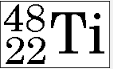
How many protons does this isotope of titanium have? How many neutrons?
48, 26
22, 26
22, 48
22, 70
48, 22
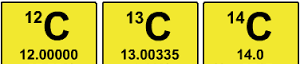
What is the same when considering these electrically neutral isotopes of carbon?
They all have the same mass number.
The atomic number is 6.
They have the same number of electrons.
They have the same number of protons, electrons, and neutrons.
The second and third choices are correct.
If X is the symbol for an element, which of the following two symbols represent isotopes of the same element?
I. 7735X
II. 7733X
III. 8137X
IV. 8135 X
I and II
III and IV
I and IV
I and III
Which of these is not an alloy?
bronze
copper
brass
stainless steel
The isotopes of lead include lead-204, lead-206, lead-207, and lead-208.
The average atomic mass of lead is 207.2.
Which isotope of lead is likely to be the most abundant?
204
206
207
208
76 protons and 114 neutrons
Osmium-114
Osmium-76
Osmium-190
Osmium-190.23
What elements generally make a covalent bond? An ionic bond?
a metal and a nonmetal, two nonmetals
two nonmetals, two transition metals
two metals, two nonmetals
nonmetals, metal and nonmetal
none of these
Predict the bonds that will form between Se and Cl and between Be and F.
ionic, covalent
covalent, ionic
covalent, metallic
ionic, metallic
Which of the pair of elements form an ionic bond?
Magnesium and Oxygen
Magnesium and Sodium
Iron and Zinc
Nitrogen and Hydrogen

Using electronegativity values, determine the type of bond is formed by sulfur and bromine. The electronegativity of sulfur is 2.58, while the electronegativity of bromine is 2.96.
ionic
polar covalent
non-polar covalent
neutrons
protons
valence electrons
electrons in the innermost shell
isotopes
1s22s22p63s2

How many valence electrons are shown in the Lewis dot diagram?
33
27
6
9
3


Examine the image: How many bonds are formed looking at the model of the compound? And also indetify what type of bond is formed.
2 bonds; covalent
4 bonds; metallic
2 bonds; ionic
4 bonds; covalent
Which of the following is true for ionic bonding and ionic compounds?
They must be made of ions with like charges.
The negative ion must be written first.
Compounds must have an overall charge of zero.
They are made of metals and nonmetals.
The positive ion must be written first.

Which was Niels Bohr's contribution to atomic theory?
He documented the existence of neutrons.
He proved that atoms include a nucleus.
He showed that electrons exist in energy levels
He performed the gold foil experiment and therefore demonstrated the existence of electrons.
Bohr demonstrated that protons exist.
Which part of the atomic theory did JJ Thomson prove?
there are electrons
electrons are in energy levels
there is a nucleus
cathode ray tube
John Dalton wrote postulates to make the idea of the atom useful. Which postulate below was proven wrong?
Elements are built from tiny indivisible and indestructible particles called atoms.
The atoms of one element are different from the atoms of another element.
Atoms of different elements chemically combine to form chemical compounds.
During chemical reactions, atoms are rearranged.
What determines the identity of the atom? What determines the reactivity of the atom?
protons, protons
neutrons, electrons
electrons, electrons
protons, electrons
protons, neutrons
___________ are the smallest unit of an element that maintains the properties of that element.
Atoms
Elements
Compounds
Mixtures
A ____ contains a variety of elements and compounds that are not chemically combined with each other, while a ____ is a substance that has definite physical and chemical properties such as appearance, melting point, and reactivity.
compound, mixture
compound, pure substance
mixture, compound
pure substance, element
Fruit Loops, pizza, and Skittles are examples of ____ mixtures, while coffee, mouthwash, and blood are examples of ____mixtures.
homogeneous, heterogeneous
heterogeneous, homogeneous
homogeneous, pure
heterogeneous, pure
As you move across the Periodic Table from left to right, the atomic radius decreases. This is because . . .
the number of protons increases, so attraction to electrons increases
the number of energy levels increases
the number of electrons increases
the atomic mass increases
The number of neutrons increases, which means that there is more attraction between subatomic particles with opposite electrostatic charges.
The atom with the largest atomic radius in Period 4 is ____ and the atom with the largest atomic radius in Group 18 (far right) is ____.
K, Rn
Kr, Rn
Fe, Kr
Fe, He
The element in Period 6 of the Periodic Table that has the lowest ionization energy is . . .
Rn
Cs
Os
Tm
The term used to describe the amount of energy required to remove electrons from an atom is . . .
electronegativity
atomic number
radioactivity
ionization energy
gravitational energy
What is the name of the elements in group I, group II, group VII (second from right), and group VIII (farthest to the right) on the Periodic Table? What word do we use to describe elements that have characteristics of both metals and non-metals?
alkaline earth metals, alkali metals, chalcogens, noble gases, metalloids
noble gases, halogens, alkaline earth metals, alkali metals, transition metals
alkali metals, alkaline earth metals, halogens, noble gases, metalloids
alkaline earth metals, alkali metals, halogens, noble gases, metalloids
alkali metals, alkaline earth metals, halogens, noble gases, transition metals
We define electronegativity as the tendency of an atom to ____ electrons.
Its magnitude ____ increases as you move from left to right across a period on the Periodic Table of Elements and ____ as you move down a group on the Periodic Table.
repel, decreases, increases
attract, increases, increases
attract, increases, decreases
repel, stays the same, increases
Consider the following equations.
Mg(s) + O2(g) → MgO(s) ∆H = –602 kJ
H2(g) + O2(g) → H2O(g) ∆H = –242 kJ
What is the ∆H value (in kJ) for the following reaction?
MgO(s) + H2(g) → Mg(s) + H2O(g)
-844 kJ/mol
-360 kJ/mol
+360 kJ/mol
+844 kJ/mol
Hess' Law makes use of which principle to calculate the enthalpy change of a reaction?
energy is conserved
mass is conserved
heat cannot be lost
heat cannot be retained
energy is not conserved
contraction
expansion
temperature
heat
cooling
-80,371.2 J
44,938.6 J
80,371.2 J
112,575.9 J
A sample of iron receives 50. J of heat energy that raises the temperature of the iron by 25.0 °C.
If iron has a specific heat of 0.10 J/g°C, what is the mass of the iron sample?
25 g
30 g
20 g
50 g
The process of adding an impurity to an intrinsic semiconductor is called
Doping
Ionization
Recombination
Atomic modification
What is a semiconductor?
A non-metal with strong covalent bonds that oppose the flow of current.
A person who directs the performance of an orchestra or choir.
A substance with an electrical conductivity that can act as either a conductor or an insulator depending on the circumstance.
A substance that conducts only some types of electricity.
A substance that is shiny but that can dissolve in water.
What explains the very high melting and boiling point of water?
Strong dipole-dipole bonds between water molecules
Strong hydrogen bonds between water molecules
Dispersion forces that are present in all molecules
Asymmetrical shape of the polar bonds
London dispersion forces
Which substance has the weakest intermolecular forces?
Substance A, boiling point of 75 °C
Substance B, boiling point of 105 °C
Substance C, boiling point of 25 °C
Substance d, boiling point of 45 °C
Which type of solid has very strong covalent bonds between neighboring atoms? What is an example of this type of solid?
ionic crystal, NaF
covalent molecular crystal, ice
metallic, zinc
covalent network crystal, graphite
none of these
a. Very hard, very high melting point, nonconductors of electricity, low density.
b. High melting points, good conductors of electricity in the solid state, does not dissolve in water.
Describe the solids.
ionic, metallic
metallic, ionic
covalent network, metallic
covalent molecular, ionic
covalent network, covalent molecular
If I have 5600 mL of gas in a piston at a pressure of 1.5 atm and compress the gas until its volume is 4.8 L, what will the new pressure inside the piston be?
1.8 atm
3.27 atm
1.8 L
3.27 atm

A weather balloon has a volume of .105 KL at 98.3 kPa when the temperature is 318 K. What is the volume at 293 K and 106.4 kPa?
89.4 L
0.32 L
93.8 L
3.13 L
Determine the temperature (K) required for 0.0470 mol of gas to fill a balloon to 1.20 L under .998 atm pressure.
0 K
107 K
207 K
307 K
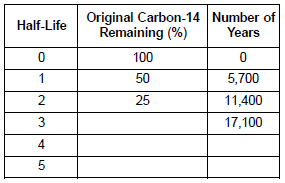
After 22,800 years, approximately what percentage of the original carbon-14 remains?
15%
12.5%
6.25%
3.125%
Pb(NO3)2 + KI --> PbI2 + KNO3
2H2O2 ----> 2H2O + O2
What types of chemical reactions are these?
synthesis, single replacement
decomposition, double replacement
single replacement, combustion
double replacement, decomposition
double replacement, combustion
Light acts as...
a wave
both a wave and a particle
a particle
neither a wave or a particle
at atom
What is the energy of a quantum of light that has a frequency of 7.39 x 10¹⁴ Hz?(E=Hv)
4.88 x 10¹⁹ J
4.88 x 10⁻¹⁹ J
2.22 x 10²³ J
2.22 x 10⁻²³ J
Certain blue lights have a frequency of 6.91 x 10¹⁴ Hz. What is the wavelength of the photons? (λ=c/v)
4.34 x 10²¹ m
4.34 x 10⁻²¹ m
4.34 x 10⁻⁷ m
2.07 x 10²³ m

A light has a wavelength of 5.06x10⁻⁵ cm. What is the frequency of the light? What is the color of the light? (v=c/λ)
16.87 Hz, red
5.93 Hz, orange
5.93x10⁻¹⁴ Hz, blue
5.93x10¹⁴ Hz, green
none of these are correct

Which of these electron configurations describes a chlorine atom?
1s2 2s2 2p6 3s2 3p5
1s2 2s2 2p6 3s2 3p6
1s2 2s2 2p6 3s2 3p7
none of these
What element has this abbreviated electron configuration?
[Xe] 6s24f145d9
Mercury
Gold
Platinum
Thallium
Which element would have an electron configuration that ends in s1? Which element would have an electron configuration that ends in p3?
Al, Br
Sc, K
K, P
Th, Al
What numbers correctly fill in the missing spaces:
As: [Ar]__s2__d10__p3
4, 3, 2
2, 3, 4
4, 4, 4
4, 3, 4
What is an amorphous solid?
It is a solid that does not have an ordered internal structure.
It is a solid that has a crystal lattice.
It is a solid that cannot change its phase.
It is a solid that cannot be identified.
It is a solid that has a clear unit cell and lattice structure.
The smallest repeating structure of solids is the ____, which are linked in a network called a ____.
unit cell, crystal
unit cell, lattice
crystal, pattern
atom, molecule
crystal, compound

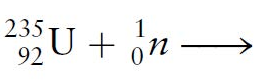
This is an example of...
fission chain reaction
fusion nuclear reaction
decomposition nuclear reaction
radioactive decay
none of these
underwater
On planet Krypton
in radioactive waste
on the sun
What occurs in both fusion and fission reactions?
Small amounts of energy are converted into large amounts of matter.
Small amounts of matter are converted into large amounts of energy.
Heavy nuclei are split into lighter nuclei.
Light nuclei are combined into heavier nuclei.
Which reaction represents fission?




Which reaction represents fusion?





The graph shows the radioactive decay of a 50-gram sample of a radioactive isotope. What is the half-life of this isotope?
100 years
150 years
200 years
300 years

The graph shows the decay of a radioactive material over time. How long does it take for this radioactive material to decay through two half-lives?
1 x 10³ years
5 x 10³ years
10 x 103 years
40 x 103 years
The energy required to break a bond between two atoms in a diatomic molecule is known as ________ energy.
valence
bond
ionization
molecular

What is the formal charge on the oxygen atom at the top of this Lewis dot structure?
0
+1
-1
-2
According to the Octet Rule, atoms of elements react with each other in order to get ______ electrons in their outermost energy level or shell.
2
4
8
10

This is a correct dot diagram for neon (Ne)
true
false
Matter is anything that . . .
emits heat or light
takes up space and the quantity of it can be measured
is solid or can be be condensed
is a gas or a liquid and can be vaporized or condensed
moves in photons and can be used to do work
The reaction of magnesium with hydrochloric acid carried out in a calorimeter caused the temperature of water to change from 25.0 degrees Celsius to 36.0 degrees Celsius. In this reaction 3,760 J of energy was released . What mass of water was present?
(a)
Given the following equations and ∆Ho values, determine the heat of reaction (kJ) at 298 K for the reaction:
B2H6(g) + 6 Cl2(g) -----> 2 BCl3(g) + 6 HCl(g)
BCl3(g) + 3 H2O(l) -----> H3BO3(g) + 3 HCl(g) ∆Ho/kJ = -112.5
B2H6(g) + 6 H2O(l) -----> 2 H3BO3(s) + 6 H2(g) ∆Ho/kJ = -493.4
1/2 H2(g) + 1/2 Cl2(g) ----> HCl(g) ∆Ho/kJ = -92.3
(a)

