
 Worksheets
Grade 9 4th quarter
Total questions: 122
Worksheet time: 2hrs 53mins
Water (H2O), is not found on the periodic table because water is a...
atom
liquid
mixture
compound
When the elements copper (Cu) and oxygen (O) chemically combine, they form...
an ion
a gas
a compound
a mixture

This image is a model of...
an element
a compound
a homogenous mixture
a heterogeneous mixture

This picture is a model of...
an element
a compound
a homogenious mixture
a heterogeneous mixture.


What were John Dalton three contributions to atomic history?
Created the atomic theory
Discovered that the atom is mostly empty space
Believed that atoms of a given element are identical
Hypothesized that the atom is a tiny, hard sphere
Believed that the universe was made of tiny "uncuttable" particles
Who was the first contributor to the atomic theory?
John Dalton
Ernest Rutherford
JJ Thompson
Democritus
Neils Bohr

states that, regardless of the amount, a compound is always composed of the same elements in the same proportion by mass
law of definite proportions
law of conservation of mass
law of multiple proportions
periodic table
He claimed that matter was made of small, hard particles that he called “atomos.”
Democritis
Dalton
Moseley
Einstein
Periods are ___________ on the periodic table.
horizontal rows
vertical columns
left to right diagona
right to left diagonals

Consider the table below. In a sample of 100.0 grams of sucrose, what would be the expected mass of hydrogen?
42.20 grams
51.30 grams
6.50 grams
100.0 grams

In the table below, why are the mass ratios of copper to chlorine not the same for compound I and compound II?
experimental error
the two compounds are not the same
there is another element not shown
the copper changes to chlorine in compound II
A material that cannot be broken down further by chemical means is a(n):
substance
element
mixture
compound
Fe2O3 is a(n) _____________.
compound
element
heterogeneous mixture
homogeneous mixture
As water or hydrogen peroxide break down to hydrogen and oxygen, they change from ____________ to ____________.
homogeneous mixtures: heterogeneous mixtures
elements : compounds
compounds : elements
heterogeneous mixtures : compounds
Sucrose is composed of carbon, hydrogen, and oxygen. Which of the following data is NOT needed in order to determine the percent by mass of the three elements?
mass of carbon in sucrose sample
mass of hydrogen in sucrose sample
total mass of the sucrose sample
atomic numbers of the elements
Which is a compound?
sodium
sea water
carbon dioxide
brass
A 20.0-gram sample of sucrose contains 8.4 g of carbon. What is the mass percentage of carbon in sucrose?
28.4 %
42 %
100 %
238 %
Sucrose is 51.5 % oxygen. How many grams of oxygen are in 20.0 gram of sucrose?
2.57 %
10.3 %
38 %
50 %
A 2-gram sample of sucrose is 6.50% hydrogen. What is the mass percentage of hydrogen in 300 gram of sucrose?
4 %
6.5 %
10 %
50 %
A 25.0-gram sample of magnesium oxide contains 10.8 grams of magnesium. What is the percent of oxygen by mass in this compound?
89.2 %
14.2 %
43.2 %
56.8 %
Which of the following substances is an element?
Baking soda
Iron
Salt
Sugar
A chemical composition of two or more different elements joined together in fixed proportions is known as a(n) ____________.
compound
element
homogeneous mixture
heterogeneous mixture
The law of ________ states that a compound is always composed of the same elements in the same proportion by mass.
conservation of energy
conservation of mass
definite proportions
multiple proportions
All of the following compounds applied the Law of “Multiple proportions” EXCEPT:
H2O , H2O2
CO , CO2
NO , NO2
HCl , HBr
Democritus believed that matter was made up of:
earth
fire
atoms
water
Which of the following parts of John Dalton's atomic theory were NOT correct?
matter is composed of atoms
atoms are indivisible
atoms of one element differ from atoms of another
atoms combine to form compounds
Which of the fallowing was NOT a feature of John Dalton's atomic research?
careful observations and measurements
discovery of the atom's internal structure
mass ratios of elements involved in chemical reactions
experiments that refined and supported his hypothesis
What can you conclude from the deflection of a cathode ray in a magnetic field?
The ray must be composed of charged particles.
The ray must be composed of iron.
The ray must have a positive charge
The ray must need to travel in a vacuum
What properties did Rutherford use in the design of the gold foil experiment?
alpha particle's negative charge and random distribution of protons
alpha particle's negative charge and gold foil's positive charge
alpha particle's positive charge and electron's negative charge
positively charged electrons distributed in a uniform negative charge
Which of the following particles has a mass that is almost the same as the mass of a proton?
neutron
electron
positron
beta particle
Which scientist determined that almost all of an atom's mass of is located in its nucleus?
Dalton
Democritus
Rutherford
Thomson
In the plum pudding model of the atom, where is most of the mass of the atom?
in the electrons
in the matter between the electrons
in the nucleus
in the protons
Which scientist determined the mass of electron?
Dalton
Thomson
Millikan
Rutherford
What is the negatively charged particle in an atom?
proton
positron
neutron
electron
Which of the following statements is correct?
an electron is about 2000 times more massive than a proton
a proton is about 2000 times more massive than an electron
a neutron will always be found orbiting the nucleus
the nucleus is negatively charged
A substance that cannot be separated into simpler substances by physical or chemical means is a(n)
compound
mixture
element
period
A chemical combination of two or more different elements is a(n)
solution
compound
element
period
Which of the following is an example of an element?
water
air
sugar
oxygen
Which of the following is an example of a compound?
gold
silver
aspirin
copper
What are the horizontal rows in the periodic table called?
block elements
groups or families
grids
periods
What are the vertical columns in the periodic table called?
block elements
groups or families
grids
periods


A) Ernest Rutherford
B) J.J. Thomson
C) John Dalton


Which part of the atomic theory did JJ Thomson prove?
there are electrons
electrons are in energy levels
there is a nucleus
cathode ray tube
What experiment did JJ Thomson use?
gold foil experiment
cathode ray tube experiment
John Dalton wrote postulates to make the idea of the atom useful. Which postulate below was proven wrong?
All elements are made up of tiny indivisible particles called atoms.
The atoms of one element are different from the atoms of another element.
Atoms of different elements chemically combine to form chemical compounds.
During chemical reactions, atoms are rearranged.
JJ Thomson came up with which model for the atom?
planetary model
electron cloud model
plum pudding model
nuclear model
The number of protons is equal to the number of electrons for an atom. This means an atom is-
electrically neutral
electrically positive
electrically negative
Which subatomic particle has a neutral charge?
protons
neutrons
electrons
isotope
After Rutherford discovered the nucleus, which model is believed to be true?
protons, neutrons, and electrons are evenly distributed
the nucleus is made of protons, neutrons, and electrons
the nucleus is made of protons and electrons
the model is mostly empty space with a central nucleus
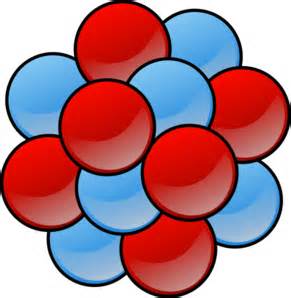


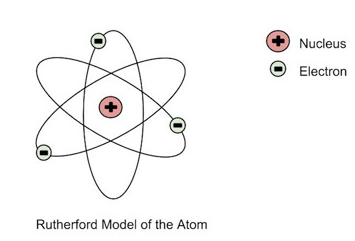

Subatomic particles with a negative charge
Electrons
Neutrons
Protons
Quarks
He claimed that matter was made of small, hard particles that he called “atomos.”
Democritis
Dalton
Moseley
Einstein
John Dalton stated:
Atoms are tiny, invisible particles.
Atoms of one element are all the same.
Atoms of different elements are different.
Compounds form by combining atoms.
All of the statements listed.

how Rutherford discovered that the atom consists of a small, massive, positively charged nucleus
reading quantum mechanics books
by mixing substances
thanks to the The gold-foil experiment
exposing it to the heat
how is structured Rutherford atom?
composed by elements beingg a single and indivisable matter
a sphere of uniform positive mass, in which the negative charges were inserted
electrons revolve in circular orbits around the nucleus, occupying the lowest energy orbit
nucleous in the middle sorrunded by electrons circuling at some distance
From his experiments, J. J. Thomson concluded that
cathode ray particles can move at very fast speeds.
cathode ray particles can be moved by electric current.
atoms contain small positively charged particles that are called protons.
atoms contain small negatively charged particles that are called electrons.
Which particle is J.J. Thomson credited with discovering?
electron
neutron
proton
photon
Which conclusion could be made from Ernest Rutherford’s gold foil experiment?
Atoms are made up of mostly empty space.
Atoms are mainly solid and block alpha particles.
The volume of the nucleus is large compared to the rest of the atom.
The mass of the nucleus is small compared to the rest of the atom.
What did Ernest Rutherford’s gold foil experiment demonstrate about atoms?
Their positive charge is located in a small region that is called the nucleus.
Their negative charge is located in small particles that are called electrons.
Their nucleus makes up the majority of the volume of the atom.
Their electrons are floating in a sea of positive charges.
Which statement best summarizes the importance of Ernest Rutherford’s gold foil experiment?
It proved that all of John Dalton's postulates were true.
It verified J.J. Thomson's work on the atomic structure.
It showed that an electron circles a nucleus in a fixed-energy orbit.
It showed that a nucleus occupies a small part of the whole atom.
Which activity BEST demonstrates Ernest Rutherford's creativity?
questioning the correctness of the plum pudding model
designing an experiment to test the plum pudding model
making observations about the gold foil experiment.
Summarizing the conclusions from the gold foil experiment as a theory.
Whose work directly resulted in the development of an atomic model that has negative electrons stuck within a sea of positive material?
Democritus
Rutherford
Thomson
Dalton
Early ideas of matter being composed of earth, wind, water, and fire were proposed by
Democritus
Zeus
Einstein
Aristotle
Democritus was a philosopher who opposed Aristotle; his idea of the atom was that it was made of indivisible particles called
atomos
matter
indivison
stuff
Which device did JJ Thomson use to discover the electron?
X-ray machine
scanning tunneling electron microscope
spectrometer
cathode ray tube
The atomic model associated with Thomson is the
plum pudding model
nuclear mode.
planetary model
the electron cloud model
In what location did Rutherford suggest the electrons were located?
in the nucleus.
outside the nucleus.
only where the alpha particles were deflected.
outside the atom after they collided with the alpha particle.
What is the electrical charge of the anode?
positive
negative
neutral
unknown
Rutherford used what type of radiation to bombard the gold foil?
alpha particles.
beta particles.
gamma radiation.
neutrinos.

