
 Worksheets
Science 9 Chp. 4 Practice Test
Total questions: 120
Worksheet time: 6hrs 0mins
The first person to ever talk about an atom was
Democritus
Rutherford
Dalton
Thomson
All matter is made of what?
Energy
Atoms
Electrons
Compounds
Who stated that all atoms of the same element are excacty alike?
Democritus
Dalton
Thomson
Bohr


A) Ernest Rutherford
B) J.J. Thomson
C) John Dalton


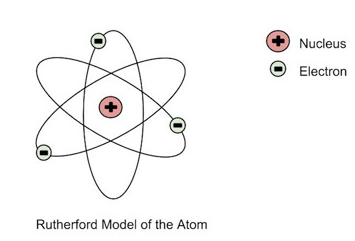

An atom's overall charge is ________.
positive
negative
neutral
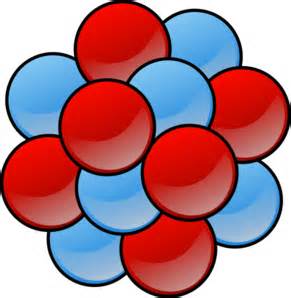

Contributes basically no mass to an atom.
Protons
Neutrons
Electrons
A isotope of Neon has an atomic number of 10 and an mass number of 20. How many protons, electrons, and neutrons will it have?
P=10 E=10 N=11
P=5 E=5 N=10
P=10 E=10 N=10
P=10 E=5 N=5

The atomic number for Oxygen is 8, so
there are 8 protons in the atom.
the atomic mass is less than 8.
the mass of the atom is 8.
the atom is decaying.
Which of the following statements does not correspond to Dalton’s atomic theory?
Matter is made of atoms
Atoms are indestructible
Atoms combine in whole number ratios
Atoms contain protons, neutrons, and electrons
What did J. J. Thomson discover?
Proton
Neutron
Electron
Positron


This scientist experimented with the electron in hydrogen. He will excite the electron with different amounts of energy and discovered that electrons orbit in shells around the nucleus of an atom, the shells having discrete energy levels.
Rutherford
Thomson
Bohr
Dalton


This particle determines what element you have - the elements identity.
Electron
Proton
Neutron
Valence shell
The particles of the atom you can find by knowing the atomic number.
Neutrons
Protons and electrons
Protons and neutrons
Atomic mass
The subatomic particle that determines the identity of an element.
Neutron
Proton
Electron
Outer shell

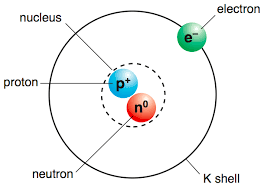


How many grams is 1.2 moles of Neon?
0.05 grams
16.6 grams
21.2 grams
24.22 grams

How many neutrons does the isotope above have?
53
36
89
125
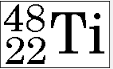
Two atoms of the same element but with different mass numbers are called________
Electrons
Isotopes
Variables
Electron cloud
Who was the Greek philosopher who first suggested that the universe was made of indivisible units called atoms?
Aristotle
Democritus
Dalton
Thomson
According to Dalton, what is true about all atoms of a given element?
They are different from each other
They are exactly alike
They are always radioactive
They cannot form compounds
What experimental evidence did Dalton use to support his atomic theory?
Law of definite proportions
Law of gravity
Law of conservation of energy
Law of motion
What did Thomson’s cathode-ray tube experiment suggest about the nature of cathode rays?
They are made of positively charged particles
They are made of light waves
They are made of negatively charged particles from inside atoms
They are made of neutral particles
Dalton’s atomic theory did not fit all observations. Based on this, what can you infer about scientific theories?
They are always perfect and never change
They may need to be revised as new evidence is found
They are based only on opinions
They do not require experimental evidence
Explain how Thomson’s experiment contributed to the understanding of atomic structure.
It proved atoms are indivisible
It showed atoms are made of only positive charges
It provided evidence for the existence of electrons inside atoms
It demonstrated that atoms are made of molecules
Who developed the plum-pudding model of the atom?
Rutherford
Thomson
Bohr
Dalton
What did Thomson discover in his cathode-ray tube experiment?
Protons
Neutrons
Electrons
Nucleus
According to Thomson’s plum-pudding model, how are electrons distributed in the atom?
Electrons are concentrated in the nucleus
Electrons orbit the nucleus in fixed paths
Electrons are spread throughout the atom like blueberries in a muffin
Electrons are only found on the surface of the atom
What is the charge of an electron?
Positive
Negative
Neutral
Both positive and negative
Which experiment did Rutherford conduct to develop his atomic model?
Oil-drop experiment
Gold-foil experiment
Cathode-ray tube experiment
Double-slit experiment
What did Rutherford discover about the atom?
The electron
The neutron
The nucleus
The proton
According to Rutherford’s atomic model, where is most of the mass of the atom concentrated?
In the electrons
In the nucleus at the atom’s center
Spread evenly throughout the atom
In the outer shell
What particles make up the nucleus of an atom?
Electrons and protons
Protons and neutrons
Neutrons and electrons
Protons and electrons
Explain how Rutherford’s gold-foil experiment led to the discovery of the nucleus.
The experiment showed that atoms are solid throughout.
The experiment showed that electrons are spread evenly in the atom.
The experiment showed that most particles passed through, but some were deflected, indicating a dense center.
The experiment showed that atoms are made only of electrons.
Compare the main differences between Thomson’s plum-pudding model and Rutherford’s atomic model.
Both models state that electrons are in the nucleus.
Thomson’s model has electrons spread throughout, while Rutherford’s model has a central nucleus.
Both models state that atoms are solid spheres.
Rutherford’s model does not include a nucleus.
Which of the following is a subatomic particle found in atoms?
Proton
Molecule
Compound
Cell
What is the charge of an unreacted atom?
Positive
Negative
Neutral
Double positive
What force holds the atom together?
Gravitational force
Electric force
Magnetic force
Nuclear force
Atoms of each element have the same number of which subatomic particle?
Neutrons
Electrons
Protons
Quarks
What is the atomic number of an atom?
The number of neutrons in the nucleus
The number of electrons in the atom
The number of protons in the nucleus
The total number of subatomic particles
Explain why unreacted atoms have no overall charge.
Because they have more protons than electrons
Because they have more electrons than protons
Because the number of protons equals the number of electrons, so charges cancel out
Because they have no subatomic particles
Describe how the electric force contributes to the structure of an atom.
It repels protons from the nucleus
It attracts positive protons to negative electrons, holding the atom together
It causes atoms to split apart
It only affects neutrons
If two atoms have the same number of protons but different numbers of neutrons, what can you infer about them?
They are atoms of different elements
They are isotopes of the same element
They have different atomic numbers
They have the same mass number
A scientist discovers two atoms with 6 protons each. One atom has 6 neutrons, and the other has 7 neutrons. What is true about these atoms?
They are different elements
They have different atomic numbers
They are isotopes of the same element
They have the same mass number
What does the mass number of an atom represent?
The sum of the numbers of protons and neutrons in the nucleus
The number of electrons in the atom
The atomic number of the element
The total number of atoms in a molecule
Why do isotopes of the same element have different atomic masses?
Because their numbers of neutrons differ
Because their numbers of protons differ
Because their numbers of electrons differ
Because their chemical properties differ
What is a radioisotope?
An unstable isotope that emits radiation and decays into other isotopes
A stable isotope that does not emit radiation
An isotope with more protons than neutrons
An isotope found only in radioactive materials
How can the number of neutrons in an atom be calculated?
Mass number minus atomic number
Atomic number minus mass number
Mass number plus atomic number
Atomic number divided by mass number
What unit is commonly used to express atomic mass?
Unified atomic mass unit (u)
Kilogram (kg)
Gram (g)
Mole (mol)
Which statement best describes the unified atomic mass unit?
It is exactly 1/12 the mass of a carbon atom with mass number 12
It is the mass of a single proton
It is the mass of a single electron
It is the mass of a hydrogen atom
Why is average atomic mass considered a weighted average?
Because it takes into account the relative abundance of each isotope
Because it is the average of the atomic numbers
Because it is the average of the number of neutrons
Because it is the average of the number of electrons
What is the SI base unit used to measure the amount of a substance whose number of particles is the same as the number of atoms of carbon in exactly 12 g of carbon-12?
Mole
Gram
Liter
Kelvin
What is Avogadro’s number?
6.022×10²³
1.01×10²
12.00×10⁶
16.00×10³
What is the molar mass of carbon-12?
12.00 g/mol
16.00 g/mol
1.01 g/mol
18.02 g/mol
How do you find the molar mass of a compound?
Add up the molar masses of all of the atoms in a molecule of the compound
Divide the mass of the compound by the number of atoms
Multiply the number of atoms by Avogadro’s number
Subtract the mass of hydrogen from the total mass
If the molar mass of oxygen is 16.00 g/mol and the molar mass of hydrogen is 1.01 g/mol, what is the molar mass of H₂O?
18.02 g/mol
12.00 g/mol
17.01 g/mol
2.02 g/mol
Explain the relationship between moles and grams in terms of molar mass.
Molar mass is the mass in grams of one mole of a substance
Moles and grams are unrelated
Molar mass is the number of moles in one gram of a substance
Moles are always heavier than grams
A student has 24.00 grams of carbon-12. How many moles of carbon-12 does the student have?
2 moles
12 moles
0.5 moles
24 moles
Why is the mole useful in chemistry?
It is useful for counting small particles
It measures temperature
It is used to measure volume
It is only used for liquids
Which statement best describes the modern atomic model?
Electrons can be found only in certain energy levels, not between levels.
Electrons can be found anywhere around the nucleus.
Electrons are always at the center of the atom.
Electrons move randomly without any energy levels.
In Bohr’s model, what happens when an electron gains energy?
It moves to a higher energy level.
It disappears from the atom.
It becomes a proton.
It moves to the nucleus.
What is an orbital in an atom?
A region where there is a high probability of finding electrons.
The center of the atom.
A path where protons move.
A shell where neutrons are stored.
How are the energy levels of an atom filled?
The number of energy levels filled depends on the number of electrons.
All energy levels are always filled.
Energy levels are filled randomly.
Only the first energy level is filled.
What is a valence electron?
An electron found in the outermost shell of an atom that determines the atom’s chemical properties.
An electron found in the nucleus.
An electron that has no effect on chemical properties.
An electron found only in the innermost shell.
Why can't the exact location of an electron be determined?
Because electrons act like waves.
Because electrons are always stationary.
Because electrons are larger than protons.
Because electrons are only found in the nucleus.
Explain how electrons move between energy levels in an atom and what causes this movement.
Electrons gain energy to move to a higher energy level or lose energy to move to a lower energy level.
Electrons move randomly without gaining or losing energy.
Electrons only move to lower energy levels.
Electrons never change energy levels.
Which of the following is NOT a type of orbital?
s
p
d
g
How many electrons can each orbital hold?
1
2
4
8
What determines the number of electrons that each energy level can hold?
The atomic number
The type of atom
The orbitals
The number of protons
What is the lowest state of energy of an electron called?
Excited state
Photon state
Ground state
Atomic state
What happens when an electron absorbs a photon?
It moves to a lower energy level
It moves to an excited state
It releases energy
It becomes a proton
What is a photon?
A unit or quantum of light
A type of atom
A type of orbital
A chemical element
Why do photons have different energies?
Because they are different colors
Because the energy of a photon corresponds to the size of the electron jump
Because they are emitted by different atoms
Because they are absorbed by electrons
How can the wavelengths emitted by atoms be used?
To measure temperature
To identify the substance, as they are a type of "atomic fingerprint"
To determine the number of protons
To calculate atomic mass
Explain how the unique atomic structure of each element affects the wavelengths of light emitted. (DoK Level 3)
All elements emit the same wavelengths because their atomic structures are identical.
The unique atomic structure of each element causes it to emit specific wavelengths, which can be used to identify the element.
The atomic structure does not affect the wavelengths emitted.
Only elements with more electrons emit different wavelengths.
Describe the process of an electron jumping between energy levels and the role of photons in this process. (DoK Level 3)
Electrons jump randomly and photons have no role.
Electrons jump between energy levels when an atom gains or loses energy; when an electron absorbs a photon, it moves to a higher energy level, and when it falls back, it releases a photon.
Electrons only move to lower energy levels and photons are not involved.
Photons are only released when atoms are destroyed.

