
 Worksheets
IGCSE CHEMISTRY: ORGANIC CHEMISTRY 2
Total questions: 125
Worksheet time: 1hrs 26mins

To which homologous series does this hydrocarbon belong?
Alkanes
Alkenes
Alkynes
Alcohols

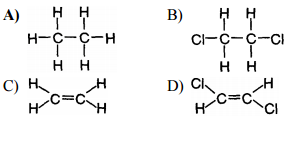
Check all that apply: Which of the following molecules are ISOMERS?
A and B
A and C
C and D
B and D

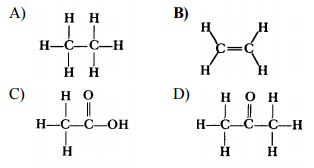
Which of the following molecules is an example of an unsaturated hydrocarbon?
A
B
C
D
What is the IUPAC name of this hydrocarbon? *IUPAC is the naming system taught in class.
1-butene
2-butene
1-pentyne
2-pentyne

To which class of organic compound does this molecule belong?
halide
ether
alcohol
amide
What is the IUPAC name of this organic molecule?
3-chlorobutane
2-chlorobutane
3-chloropentane
2-chloropentane

This reaction is an example of which type of organic reaction?
addition
fermentation
polymerization
substitution

This reaction is an example of which type of organic reaction?
addition
fermentation
polymerization
substitution
What is a hydrocarbon?
A compound that contains Hydrogen and carbon
A compound that contains Hydrogen and carbon only
A fuel that contains hydrogen and carbon
A misture of Carbon and water
What does the following sentence describe:
A compound in which there are only single bonds between the atoms in the molecule
Saturated compound
Polar compound
Flamable compound
Aromatic compound

This molecule is an example of an
Alkene
Alkyne
Alkane
Alcohol
Name this molecule
Methane
Ethane
Propane
Butane
This molecule is an example of
A saturated compound
An unsaturated compound
A molecule with hydrogen bonds
A molecule with a very low octane number
Which of the following is the general formula for the alkanes
CnH2n+2
CnH2n
CnHn
CH4
As the chain length of an alkane increases, the boiling point.....
Increases
Decreases
Is not affected

The molecules in the example are examples of
Isomers
Isotopes
Alkenes
Alkynes

The molecule shown is an isomer of:
Butane
Butene
Propene
Propane

Name the molecule shown
Heptane
Octane
2,3-dimethylpentane
Pentane
3,4-dimethylpentane
To which homologous series does this hydrocarbon belong?
Alkanes
Alkenes
Alkynes
Alcohols
What is the IUPAC name of this hydrocarbon? *IUPAC is the naming system taught in class.
1-butene
2-butene
1-pentyne
2-pentyne
What is the IUPAC name of this organic molecule?
3-chlorobutane
2-chlorobutane
3-chloropentane
2-chloropentane
Which of these are alkanes?
Methane
Ethene
C2H6
C2H4
How many carbons does butane have?
1
2
3
4
What is the general formula of an alkane?
C4H10
CnH(2n)
Cn H(2n+2)
C2nH2n
Which of these is the displayed formula of butane?
C4H10
CH2


Which of these is the empirical formula of butane?
C4H10
CH2
What is an alkene?
A hydrocarbon with double bonds
An unsaturated hydrocarbon
A saturated hydrocarbon
A hydrocarbon without double bonds
What is the general formula of an alkene?
C4H10
CnH(2n)
Cn H(2n+2)
C2nH2n
What kind of reactions do alkenes do?
Substitution
Addition
Neutralisation
Explosions
When bromine water is added to an alkene what do we see?
The bromine water remains orange
the solution turns cloudy
A squeaky pop
The bromine water decolorises (orange to colorless)
Crude oil is a mixture of hydrocarbons. What property do we use to separate them?
Boiling point
Colour
Flammability
Filtration
What is kerosene used for?
Cars
Planes
Roads
Power stations
What is produced when a hydrocarbon is burned?
Carbon dioxide and hydrogen
Carbon dioxide
Oxygen and Chlorine
Carbon dioxide and water
What happens to the viscosity as we increase the number of carbons?
Increases
Decreases
What happens to the boiling point as we increase the number of carbons?
Increases
Decreases
Which is a dangerous product of incomplete combustion?
Carbon dioxide
Carbon monoxide
Water
Hydrogen
What is a functional group?
Group of atoms that give specific characteristics to a molecule
Group of molecules that give specific characteristics to an atom
Group of molecules that make up a group of atoms
Group of atoms that give specific characteristics to an element
What functional group is -OH
Hydroxyl
Carboxyl
Amino
Carbonyl Ketone


Classify the compound based on the functional group present.
alkane
alkene
alkyne

Classify the compound based on the functional group present.
aldehyde
ketone
alcohol
carboxyl
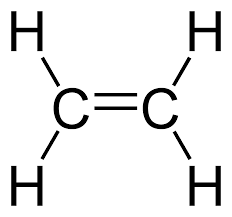

Classify the compound based on the functional group present.
alkane
alkene
alkyne
aromatic
Large molecules made up of small monomers are called
polymers
monomer
allotrope
functional group
Small molecules that make up larger molecules
polymer
monomer
allotrope
functional group
Hydrocarbons, the simplest family of carbon compounds, are made from these two elements:
Hydrogen and Copper
Helium and Carbon
Hydrogen and Carbon
Pentane is an alkane with____ carbon atoms
3
5
15
50
Name the compound CH4
(a)
Name the compound CH2=CH2
(a)
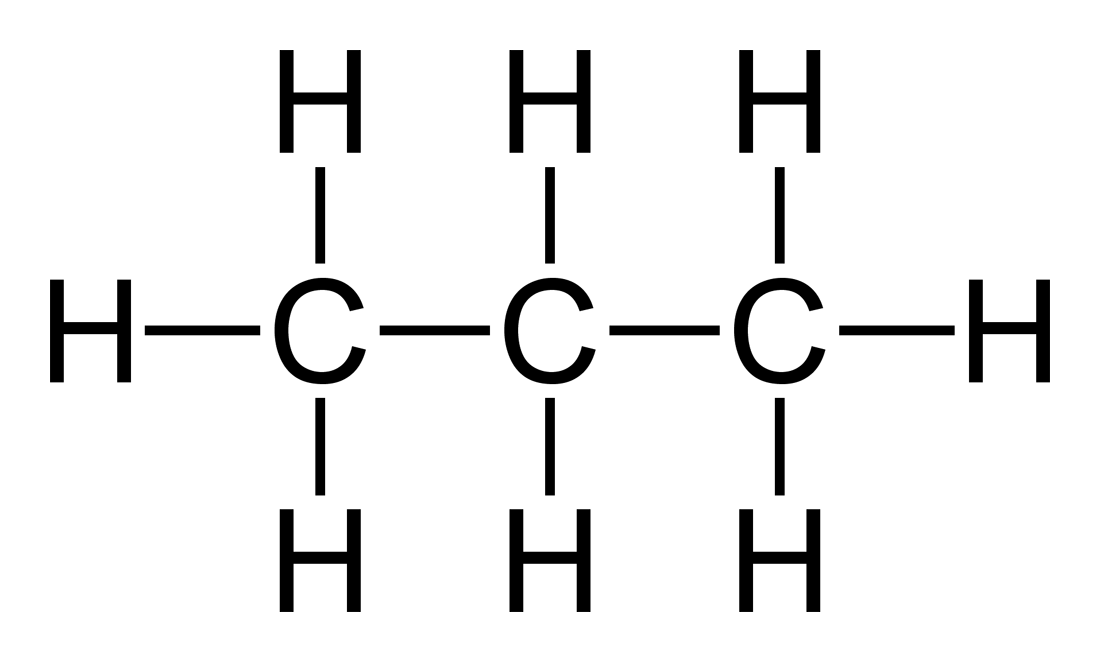
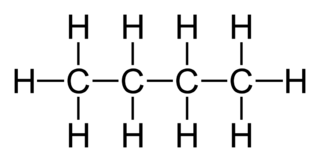

What is fractional distillation?
a process used to separate crude oil
a process used to burn up fuels
a way to make different products
how oil is extracted from the ground
What is fractional distillation?
a process used to separate crude oil
a process used to burn up fuels
a way to make different products
how oil is extracted from the ground
Fractional distillation separates crude oil based on the different __________ of the molecules in the mixture
melting point
boiling point
freezing point
chemical reactivity
A fraction of crude oil is made up of:
Hydrocarbons of similar chain lengths
Numbers
Large hydrocarbons
Alkenes only
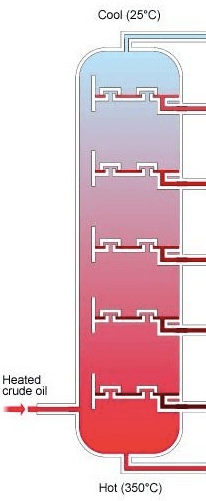
What process happens at each level in the fractionating column?
Evaporation
Condensation
Combustion
What process happens as the crude oil enters the fractionating column?
Evaporation
Condensation
Combustion

Where do short chain hydrocarbons collect?
At the top
In the middle
At the bottom

Where do long chain hydrocarbons collect?
At the top
In the middle
At the bottom
Shorter hydrocarbons have:
Higher boiling points
Lower boiling points

Is this hydrocarbon saturated or unsaturated? HINT: Look at the bonds.

Hydrocarbon that contains at least one carbon-carbon double covalent bond.
alkane
alkene
alkyne


What chemical is this? (C5H10)
Pentene
Pentane
Hexane
Heptene
Complete the equation C16H34 ---> __________ + C2H4
C16H34
C2H30
C10H20
C14H30
Compounds that are composed of the same number and type of atoms but have them arranged in different ways are ___________.
isomers
isotopes
polymers
alkanes
Oil fraction with the longest molecules
refinery gases
bitumen
oil fuel
diesel
For surfacing roads and roofs
petrol
bitumen
fuel oil
kerosene
Oil fraction with the highest boiling point
refinery gases
bitumen
oil fuel
diesel
The darkest oil fraction
fuel oil
diesel
bitumen
kerosene
CH4 + O2 --> CO + 2H2O
complete combustion
incomplete combustion
Carbon monoxide is a colourless, odourless toxic gas. It
is poisonous because it reduces the capacity of blood to
transport:
carbon dioxide
nitrogen
oxygen
water vapour
What is a polymer?
a very light material that is highly flammable
a fossil fuel
a large molecule made from many monomers joined together
a molecule made up of only polar bonds
What type of formula is represented in this picture?
molecular formula
displayed formula
structural formula
CH3CH2CH2CH3
molecular formula
displayed formula
structural formula
What is the molecular formula of the hydrocarbon in the picture?
C4H10
CH3CH2CH2CH3
C4H8
What is the structural formula of the hydrocarbon in the picture?
C4H10
CH3CH2CH2CH3
C4H8

Which letter would turn bromine water colourless?
A
B
C
D
F
Which letter represents propene?
A
B
C
D
F

Which number represents polymerisation?
1
2
3
4
Ethene is an unsaturated hydrocarbon. What is the molecular formula of ethene?
CH4
C2H4
C3H6
C4H8
Alkane to halogenoalkane
excess oxygen and heat
halogen at room temperature
halogen and UV light
hydrogen halide at room temperature
Alkane to carbon dioxide and water
excess oxygen and heat
limited oxygen and heat
halogen and UV light
water, warm mixture
The products of incomplete combustion of a hydrocarbon are
carbon dioxide and water
water only
carbon monoxide
carbon monoxide and water
A series of compounds with the same functional group is called
homologous series
structural isomers
alkanes
functional group
Alkanes are
unsaturated hydrocarbons
saturated hydrocarbons
polymers
monomers
Thermal cracking is when
a slight pressure and high temperature with a zeolite catalyst produces aromatic hydrocarbons and motor fuels
a high pressure and high temperature produce a high percentage of alkenes
initiation, propogation and termination occur.
polymers are made
Esters are formed through what type of reaction?
hydrolysis
condensation
hydration
dehydration

Name this compound
propanol
propanoic acid
butanoic acid
butanol

Esters are known for......
the bright colours
flammability
exploding
fruity smell
What catalyst is used in making esters?
sodium hydroxide
iron
sulfuric acid
lithium oxide

What is this compound called?
propyl ethanoate
ethyl ethanoate
ethyl propanoate
methyl ethanoate

The functional groups shown from left to right are
hydroxyl, carboxyl, ester
carboxyl, hydroxyl, ester
ester, carboxyl, hydroxyl
hydroxyl, ester, carboxyl

Esters are formed from a reaction between
two carboxylic acids.
an alkane and an alcohol.
an alkane and a carboxylic acid.
an alcohol and a carboxylic acid.

Which reagents would you use to make the following molecule?
methanol and propanoic acid
methanoic acid and butanol
methanol and butanoic acid
methanol acid and propanol

The name of the ester shown is
ethyl pentanoate
pentyl ethanoate
methyl hexanoate
hexyl methanoate
The number of carbon atoms in propyl butanoate is
3
4
7
6

The ester shown can be made by reacting
ethanol and propanol.
ethanoic acid and propanoic acid.
ethanol and propanoic acid.
propanol and ethanoic acid.
How can a carboxylic acid be made?
By reducing an alcohol
By combusting an alcohol
By oxidising an alcohol
Which ester would be made by reacting ethanoic acid and methanol together....
ethyl methanoate
methyl methanoate
methyl ethanoate
ethyl ethanoate
What gas is produced when potassium carbonate reacts with ethanoic acid?
hydrogen
carbon dioxide
oxygen
chlorine

Name this compound...
methane
methene
methanol
methoxymethane

Choose the correct IUPAC name of the structural formula shown in the diagram.
but-1-ol
butan-1-ol
but-1-ene
butan-1-ene
Which is not the isomer of pentanol?



