wayground logo

Free Printable Worksheets

Font size

S
M
L
XL
Worksheets

Unit 8 and 9 Test. Physical Science (Atoms and Compounds)

Total questions: 120

Worksheet time: 2hrs 0mins
Name
Class
Date
1.
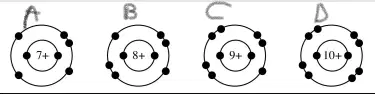
Oxygen is a gas important for life and represents about 21% of Earth’s atmosphere. Which of the following illustrations below best represents a Bohr diagram of an oxygen atom?
a)
A
b)
B
c)
C
d)
D
2.
ALL atoms of the same element have:
a)
same number of protons
b)
same number of electrons
c)
different number of neutrons
d)
different number of electrons
3.
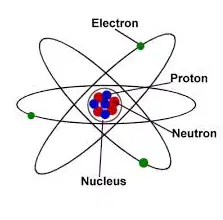
What are atoms composed of?
a)
Protons and electrons.
b)
Protons, neutrons, and electrons.
c)
Neutrons and electrons.
d)
Ions, elements, and compounds.
4.
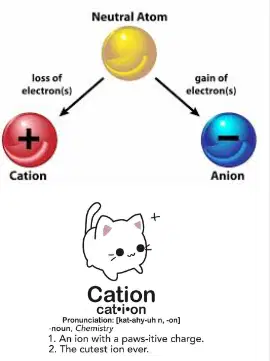
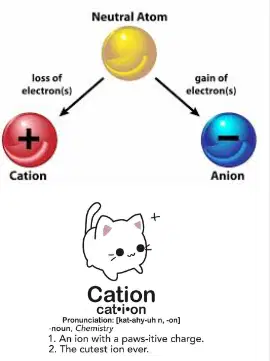
What charge does an atom have when it GAINS electrons?
a)
Positive
b)
Negative
c)
Neutral
5.
Sodium has an atomic number of 11, how many protons does this atom have?
a)
23
b)
11
c)
12
d)
3
6.
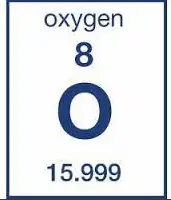
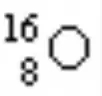
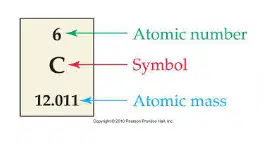
The following element key shows how many protons?
a)
16
b)
15.999
c)
Oxygen
d)
8
7.
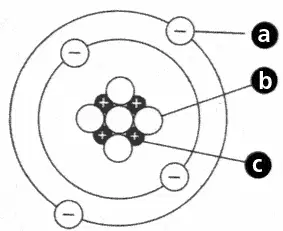
Which is an electron?
a)
a
b)
b
c)
c
8.
What is the mass number and name of an element with 8 protons and 8 neutrons?
a)
16 - Carbon
b)
16 - Oxygen
c)
24 - Oxygen
d)
8 - Neon
9.
A tiny but very dense, positively charged portion of the atom that holds most of the atomic mass
a)
Electron Shells
b)
Orbitals
c)
Electron Cloud
d)
Nucleus
10.
When two atoms of the same element have different masses, they are called ______, and have a different number of ______.
a)
Neutrons; Isotopes
b)
Atoms; Isotopes
c)
Isotopes; Protons
d)
Isotopes; Neutrons
11.
Calcium has the atomic number 20. If it has a mass number of 46, how many neutrons are present?
a)
46
b)
20
c)
26
d)
We cannot tell
12.
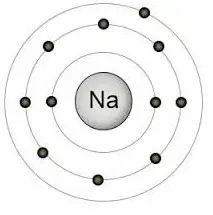
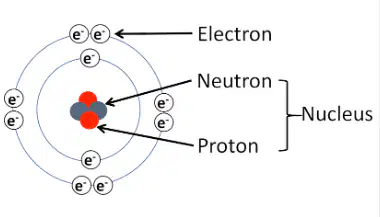
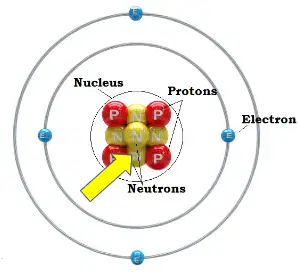
How many electrons does this atom have?
a)
2
b)
4
c)
6
d)
10
13.
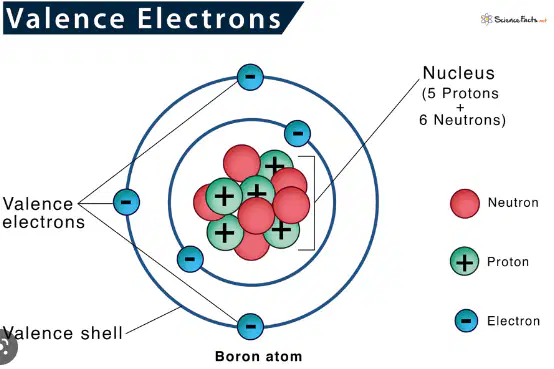
What is a valence electron?
a)
Electrons in the first energy shell
b)
Electrons in the second energy shell
c)
Electrons in the outer shell
d)
Total number of electrons
14.
What type of atom is this?
a)
Neutral atom
b)
Cation
c)
Anion
d)
Isotope
15.
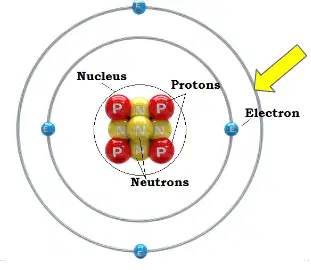
An ion forms when an atom gains or loses
a)
Protons
b)
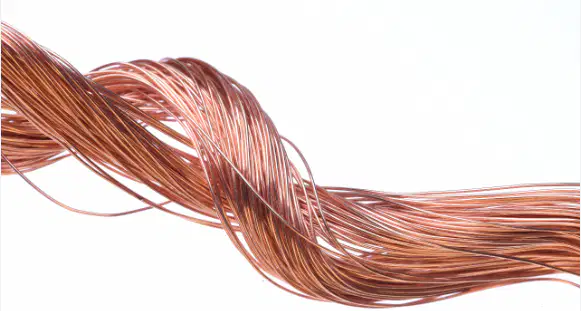
Neutrons
c)
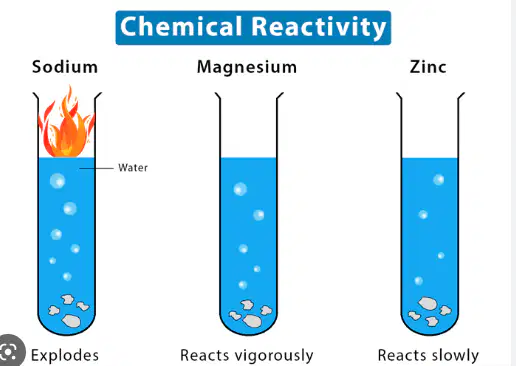
Electrons
16.
A neutral atom would become an ion that has a charge of 2+ by
a)
Gaining two protons
b)
Losing two protons
c)
Losing two electrons
d)
Gaining two electrons
17.
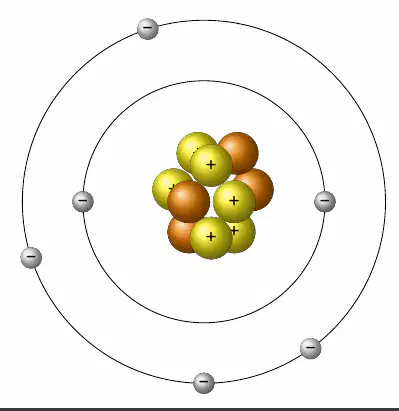
What is the mass number of this atom?
a)
10
b)
3
c)
4
d)
7
18.
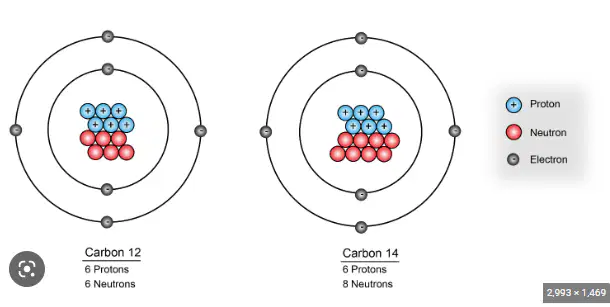
Which of these pairs of atoms are isotopes?
a)
pair A
b)
pair B
c)
pair C
19.
If an atom has a charge of +3 and an atomic number of 5 it should have _______ electrons.
a)
1
b)
2
c)
3
d)
4
20.
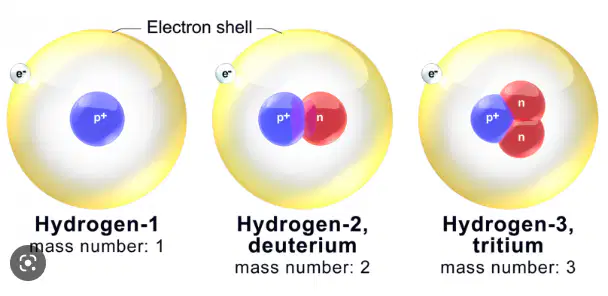
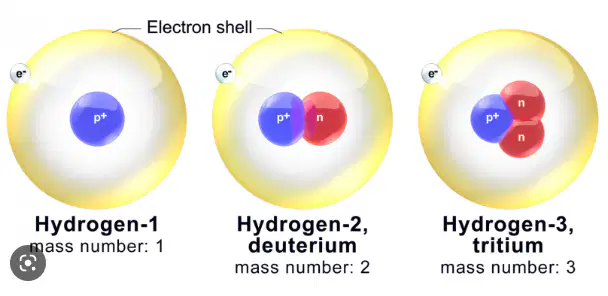
Which atom has the same number of neutrons as the isotope in the picture?
a)
Option 1
b)
Option 2
c)
Option 3
d)
Option 4
21.
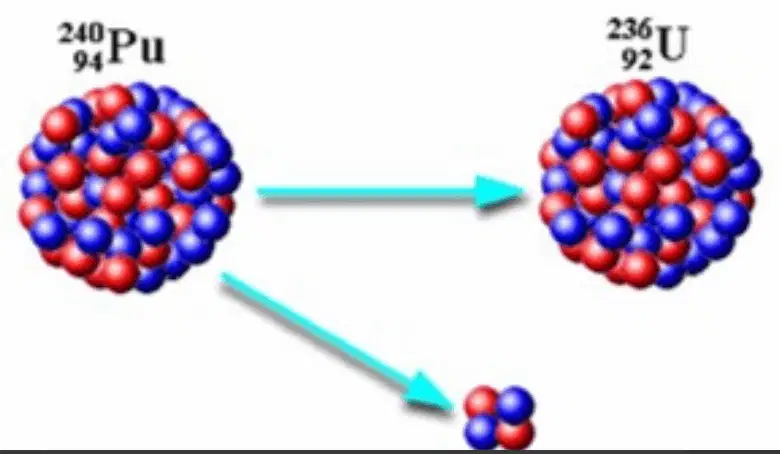
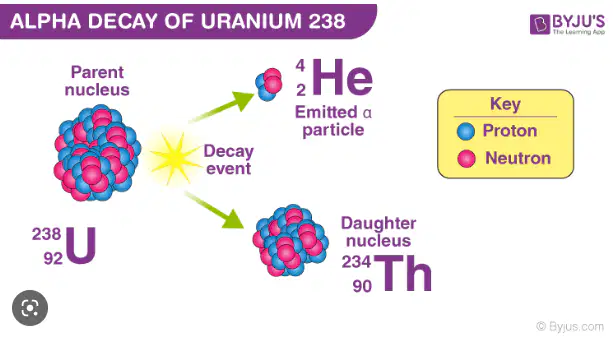
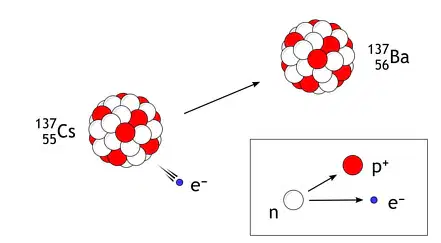
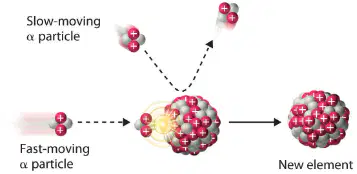
Equation shows the radioactive decay process. Identify the type of decay.
a)
Gamma Decay
b)
Alpha Decay
c)
Beta Decay
22.
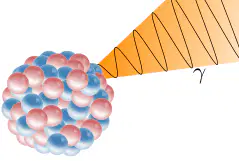
Diagram shows the radioactive decay process. Identify the radioactive radiation produced?
a)
Alpha particle
b)
Beta particle
c)
Gamma Ray
23.
The diagram shows the equation for radioactive decay. Identify X and Y in the decay.
a)
X: alpha particle, Y: beta particle
b)
X: alpha particle, Y: gamma ray
c)
X: beta particle, Y: gamma ray
24.
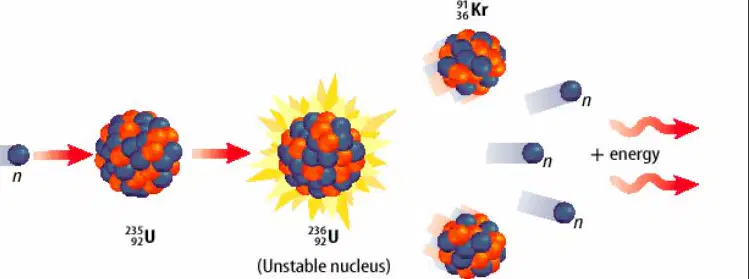
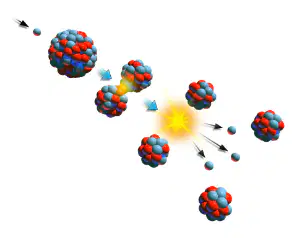
This is an example of...
a)
Fission reaction
b)
Fusion reaction
c)
Decomposition reaction
d)
Decay
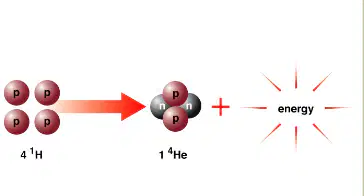
25.
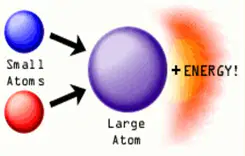
Two nuclei with low masses are combined to form one nucleus of larger mass is called what?
a)
Nuclear fission
b)
Nuclear fusion
c)
Nuclear half-life
d)
Half-life
26.
This could be the dot diagram of
a)
P
b)
Ar
c)
Na
d)
B
27.
______________ = an element that has properties of both metals and nonmetals.
a)
Metalloid (Semimetal)
b)
Periods
c)
Group
28.
______________ = mass of an average atom based on the number of protons and neutrons.
a)
Atomic mass (mass number)
b)
Atomic mass unit
c)
Chemical symbol
d)
Isotopes
29.
______________ = one or two letters that represent an element.
a)
Atomic mass (mass number)
b)
Atomic mass unit
c)
Chemical symbol
d)
Isotopes
30.
______________ = atoms of the same element with different numbers of neutrons.
a)
Atomic mass (mass number)
b)
Atomic mass unit
c)
Chemical symbol
d)
Isotopes
31.
______________ = an atom or molecule with a net electrical charge.
a)
Ion
b)
Luster
c)
Dull
d)
Malleability
32.
______________ = the quality of reflecting light from their surface (a shiny appearance).
a)
Ion
b)
Luster
c)
Dull
d)
Malleability
33.
______________ = substance does not have luster which means they do not have a shining surface.
a)
Ion
b)
Luster
c)
Dull
d)
Malleability
34.
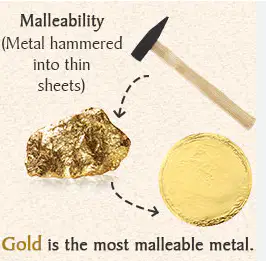
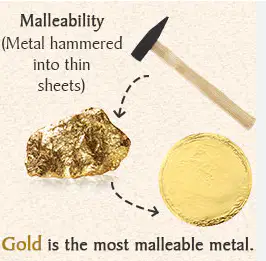
______________ = the ability to withstand hammering and can be made into thin sheets known as foils.
a)
Ion
b)
Luster
c)
Dull
d)
Malleability
35.
______________ = an uncharged particle in the nucleus of an atom.
a)
Neutron
b)
Electron
c)
Orbit
d)
Positive
36.
______________ = a particle in an atom outside the nucleus with a negative electric charge. It carries electricity.
a)
Neutron
b)
Electron
c)
Orbit
d)
Positive
37.
______________ = the path followed by an electron within an atom.
a)
Neutron
b)
Electron
c)
Orbit
d)
Positive
38.
______________ = the ability to be drawn into wires.
a)
Ductility
b)
Reactivity
c)
Metals
d)
Nonmetals
39.
______________ = a substance shows chemical change when mixed with another substance.
a)
Ductility
b)
Reactivity
c)
Metals
d)
Nonmetals
40.
______________ = elements that form positive ions by losing electrons during chemical reactions. They are lustrous, malleable, ductile, good conductors of heat and electricity.
a)
Ductility
b)
Reactivity
c)
Metals
d)
Nonmetals
41.
______________ = Elements that tend to gain electrons to form anions during chemical reactions. They are non-lustrous, brittle and poor conductors of heat and electricity.
a)
Ductility
b)
Reactivity
c)
Metals
d)
Nonmetals
42.
What is the symbol for Chlorine?
a)
Ce
b)
Cl
c)
Ch
d)
C
43.
What is the symbol for Lithium?
a)
L
b)
Lm
c)
Li
d)
LM
44.
The chemical symbol for Carbon is
a)
C
b)
Cb
c)
Ca
d)
Cn
45.
What element is S the symbol for?
a)
Silicon
b)
Sulfur
c)
Selenium
d)
Scandium
46.
What is the name of Hg?
a)
Hydrogen
b)
Helium
c)
Mercury
d)
Gold
47.
The chemical symbol for Silicon is
a)
S
b)
Sn
c)
Sc
d)
Si
48.
Which of the following is a physical characteristic of a metal?
a)
insulator
b)
malleable
c)
brittle
d)
semiconductor
49.
Which of the following is a physical characteristic of a nonmetal?
a)
conductor
b)
malleable
c)
brittle
d)
semiconductor
50.
Which of the following is a common physical characteristic of a metalloid?
a)
texture
b)
malleable
c)
brittle
d)
semiconductor
51.
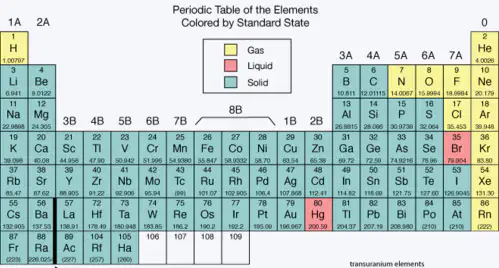
An element has properties of both metals and nonmetals. Where would it be found in the periodic table?
a)
To the right
b)
To the left
c)
on the zigzag (staircase) line
52.
What does brittle mean?
a)
easily broken, cracked
b)
can be hammered into thin sheets
c)
no shine
d)
reflects light shiny
53.
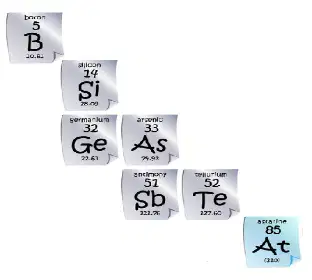
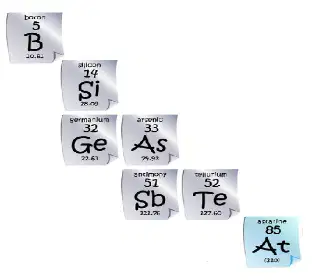
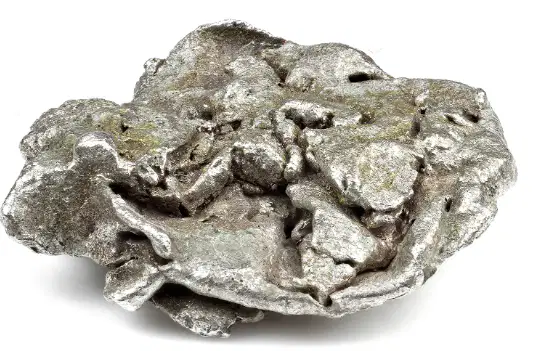
How would this element be classified?
a)
Metal
b)
Nonmetal
c)
Metalloid
54.
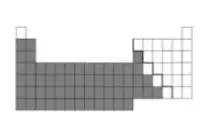
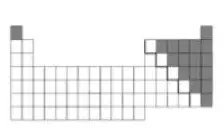
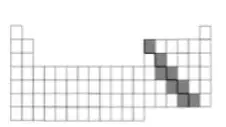
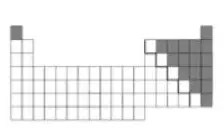
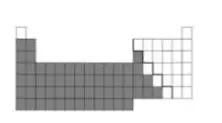
Elements in the shaded area can best be described as -
a)
Malleable
b)
Brittle
c)
Dull
d)
Insulators
55.
Elements in the shaded area can best be described as -
a)
Semiconductors
b)
Insulators
c)
Ductile
d)
Shiny
56.
Elements in the shaded area can best be described as -
a)
Shiny and brittle
b)
Insulators
c)
Good conductors
57.
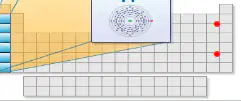
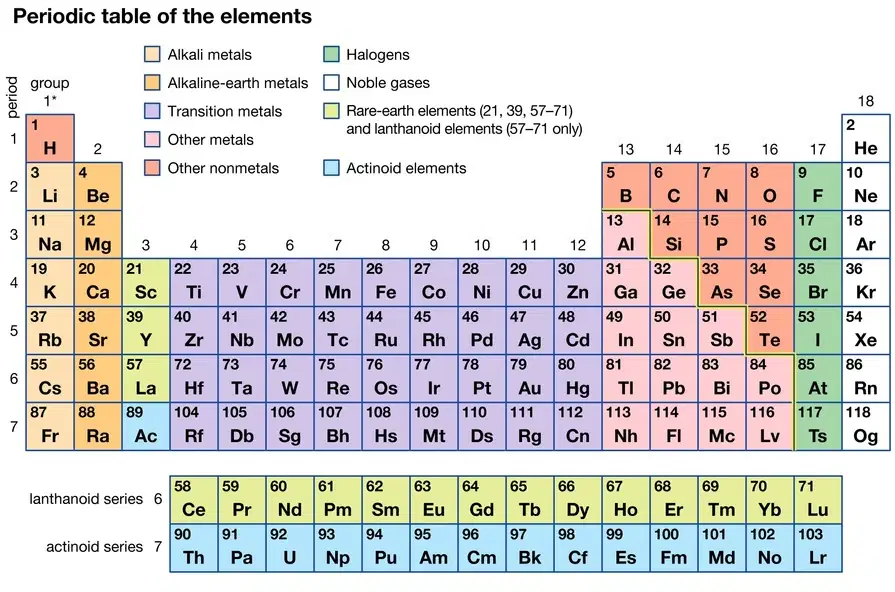
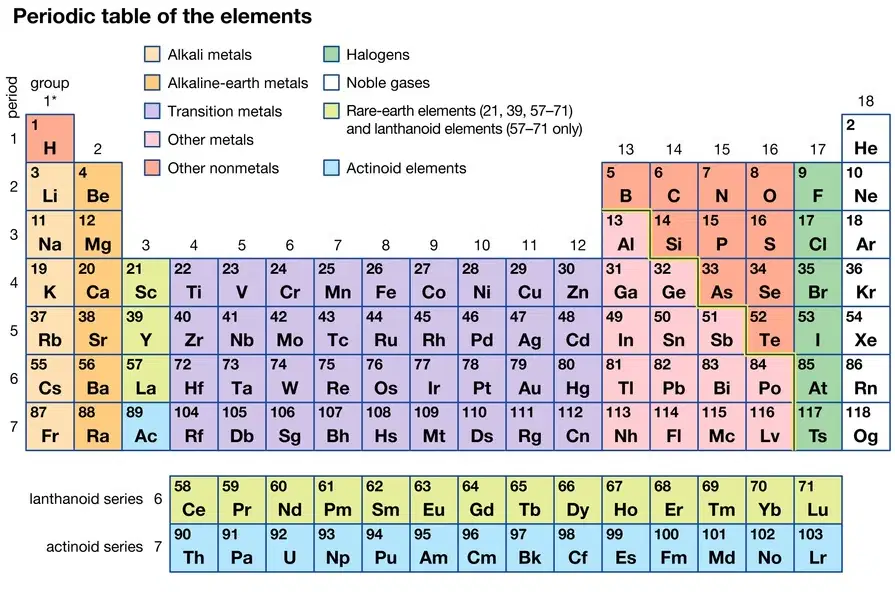
Look at the periodic table that is provided. Where would metals be located?
a)
to the left of the table
b)
to the right of the table
c)
in the zigzag (staircase) line
58.
Look at the periodic table that is provided. Where would nonmetals be located?
a)
to the left of the table
b)
to the right of the table
c)
in the zigzag (staircase) line
59.
Heat and electricity flow through me
a)
Malleable
b)
Ductile
c)
Luster
d)
Conductor
60.
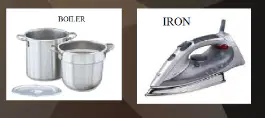
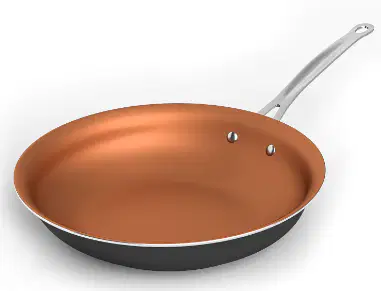
What property must a pan have to be used for cooking?
a)
Malleability
b)
Ductility
c)
Luster
d)
Conductivity
61.
Sometimes I conduct heat and electricity, sometimes I do not
a)
Dull
b)
Brittle
c)
Nonconductor
d)
Semiconductor
62.
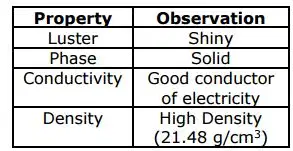
A student is examining the physical properties of a sample. The sample is malleable, but does not conduct electricity nor have luster. This sample would be a...
a)
metal
b)
nonmetal
c)
metalloid
63.
If a student observes a silvery solid that is malleable, good conductor, and ductile it is a...
a)
nonmetal
b)
metal
c)
metalloid
64.
Which of the following describes a nonmetal?
a)
reflects light
b)
breaks into pieces (brittle)
c)
conducts heat and electricity
d)
ductile
65.
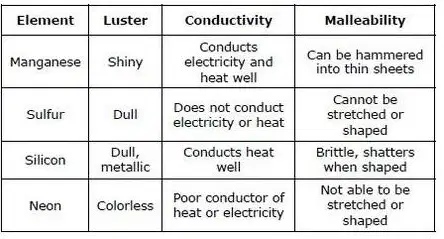
The table shows the properties of four elements. Which element in the table is classified as a metal?
a)
Manganese
b)
Sulfur
c)
Silicon
d)
Neon
66.
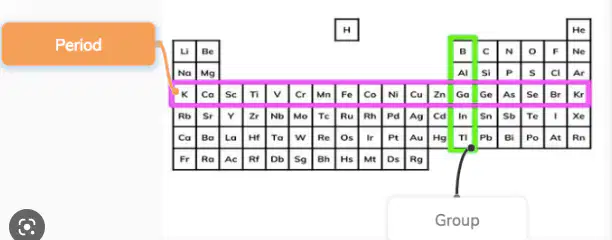
The Periodic Table is organized into _________ and __________.
a)
Atoms, things
b)
Groups, Periods
c)
Groups, metals
d)
Nonmetals, Periods
67.
Alkali Metals are in group # __.
a)
2 (IIA)
b)
15 (VA)
c)
1 (IA)
d)
18 (VIIIA)
68.
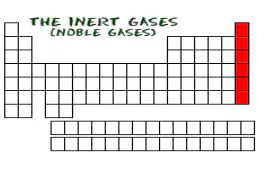
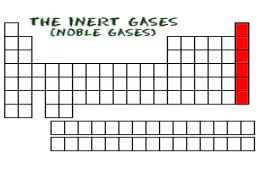
Noble Gases are in group # ___.
a)
12 (IIB)
b)
18 (VIIIA)
c)
8 (VIIIB)
d)
3 (IIIB)
69.
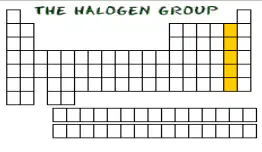
Halogens are in group #___.
a)
17 (VIIA)
b)
7 (VIIB)
c)
6 (VIB)
d)
18 (VIIIA)
70.
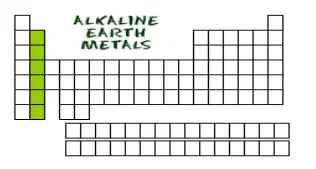
Alkaline Earth Metals are in group #___.
a)
1 (IA)
b)
17 (VIIA)
c)
12 (IIB)
d)
2 (IIA)
71.
This group does NOT react with anything ever, they are already happy.
a)
Metals
b)
Transition Metals
c)
Noble Gases
d)
Halogens
72.
This group is made of the MOST reactive metals.
a)
Transition metals
b)
Metalloids
c)
Alkali Metals
d)
Alkaline Earth Metals
73.
These elements are really bad at conducting heat/electricity.
a)
Non-metals
b)
Transition Metals
c)
Metals
d)
Metalloids
74.
These are normally gases at room temperature.
a)
Metals
b)
Alkali Metals
c)
Non-metals
d)
Transition Metals
75.
These are normally solid at room temperature.
a)
Metals (except Mercury)
b)
All Halogens
c)
Noble Gases
d)
All Nonmetals
76.
Elements that are in the same group have ______________.
a)
properties that are similar to each other and behave the same.
b)
nothing in common at all.
c)
the same number of protons.
d)
very different properties.
77.
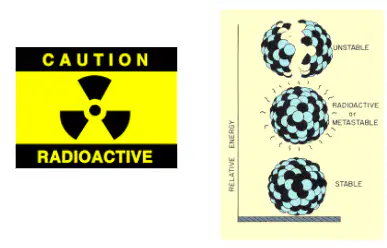
___________ = Having or making a dangerous form of energy called radiation.
a)
RADIOACTIVE
b)
RADIATION
c)
ALPHA PARTICLE
d)
BETA PARTICLE
e)
GAMMA RAYS
78.
___________ = a type of powerful energy that is produced by radioactive elements and nuclear reactions.
a)
RADIOACTIVE
b)
RADIATION
c)
ALPHA PARTICLE
d)
BETA PARTICLE
e)
GAMMA RAYS
79.
___________ = two protons and two neutrons together from a radioactively decaying atomic nucleus. It is the same as the nucleus of a helium atom (He).
a)
RADIOACTIVE
b)
RADIATION
c)
ALPHA PARTICLE
d)
BETA PARTICLE
e)
GAMMA RAYS
80.
___________ = A high-speed electron emitted by an atomic nucleus undergoing radioactive decay.
a)
RADIOACTIVE
b)
RADIATION
c)
ALPHA PARTICLE
d)
BETA PARTICLE
e)
GAMMA RAYS
81.
___________ = Powerful lines of electromagnetic radiation with very short wavelengths.
a)
RADIOACTIVE
b)
RADIATION
c)
ALPHA PARTICLE
d)
BETA PARTICLE
e)
GAMMA RAYS
82.
___________ = changing one element into another.
a)
Transmutation
b)
Half-life
c)
Fission
d)
Fusion
83.
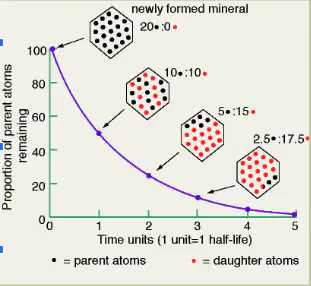
___________ = how much time it takes for half of the atoms to decay.
a)
Transmutation
b)
Half-life
c)
Fission
d)
Fusion
84.
___________ = dividing the nucleus of an atom.
a)
Transmutation
b)
Half-life
c)
Fission
d)
Fusion
85.
___________ = melting things together, merging atoms to make energy.
a)
Transmutation
b)
Half-life
c)
Fission
d)
Fusion
86.
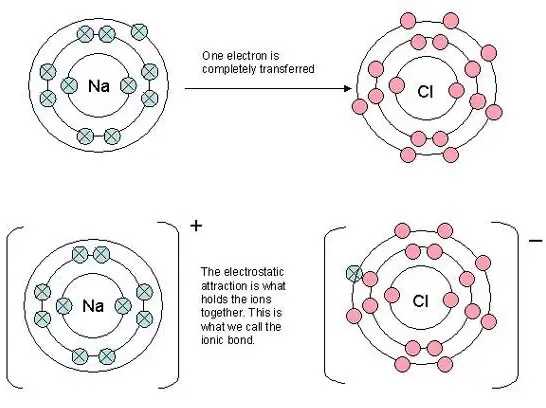
What type of bond is formed when electrons are transferred (stolen, or given) from one atom to another?
a)
Ionic Bond
b)
Covalent Bond
c)
Metallic Bond
d)
Acidic Bond
87.
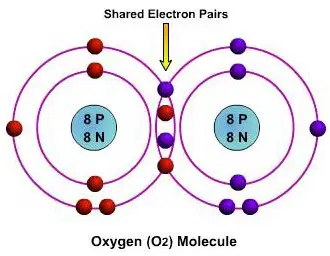
What type of bond forms when atoms share electrons?
a)
Ionic Bond
b)
Covalent Bond
c)
Metallic Bond
88.
Neutral atoms covalently bonded together form a _________________.
a)
Molecule
b)
Ion
c)
Cation
d)
Anion
89.
What are the only parts of atoms that make chemical bonds?
a)
Protons in the nucleus
b)
Neutrons in the nucleus
c)
All Electrons
d)
Valence Electrons
90.
What type of bond forms when metals react with nonmetals?
a)
ionic
b)
covalent
c)
metallic
d)
James
91.
What type of bond forms when a nonmetal reacts with a nonmetal?
a)
ionic
b)
covalent
c)
metallic
d)
James
92.
What type of bond forms when a metal reacts with another metal?
a)
ionic
b)
covalent
c)
metallic
d)
James
93.
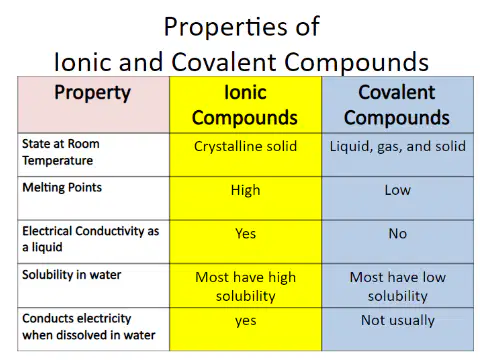
Which type of compound usually has lower conductivity, boiling point, and melting point?
a)
Ionic
b)
Covalent
c)
Metallic
94.
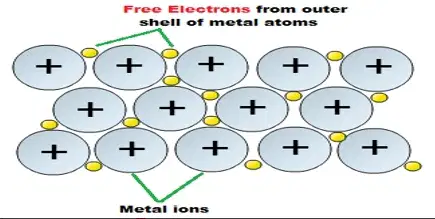
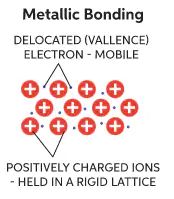
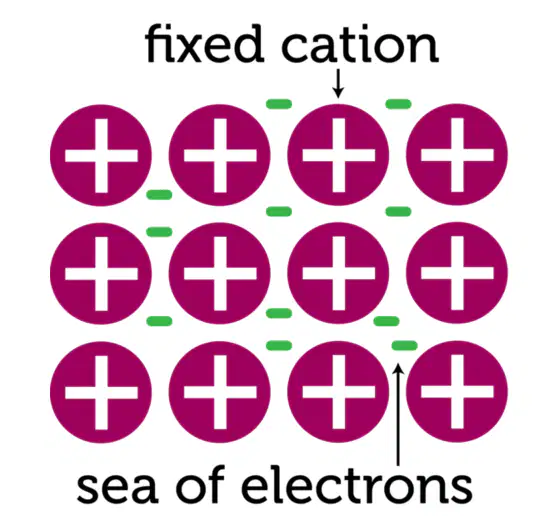
What analogy best describes the valence electrons in a metallic bond?
a)
A sea
b)
A city
c)
A family
d)
A flowerbed
95.
The reason for the properties displayed by metals is they have________
a)
a sea of delocalized electrons (mobile valence electrons)
b)
very weak intermolecular forces
c)
strong ionic bonds
d)
their valence electrons are frozen in place
96.
Which of these represents a formula with ionic bonds?
a)

I2

b)

AlCl3

c)

NH3

d)

CO

97.
Which of these represents a molecule with covalent bonds?
a)

NaCl

b)

MgBr2

c)

CaO

d)

NH3

98.
Which of these has the highest boiling point because it is ionic?
a)

PH3

b)

CH4

c)

NaCl

d)

CO2

99.
A substance that does not conduct electricity as a solid but does conduct electricity when melted (or dissolved in water) is most likely classified as
a)
a nonmetal
b)
an ionic compound
c)
a molecular compound
d)
a metal
100.
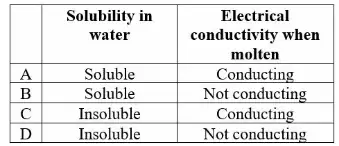
The following statements are physical properties of compounds A-D. Which substance is compound A?
a)

NaCl

b)

C2H5OH

c)

Fe

d)

C6H6

101.
Which type of bond usually makes a substance malleable, ductile, and lustrous (shiny)?
a)
Metallic
b)
Ionic
c)
Covalent
102.
Predict the bond that will form between Be and F.
a)
Ionic
b)
Covalent
103.
Predict the bond that will form between S and Cl.
a)
Ionic
b)
Covalent
104.

What is the name for Li2O?

a)

Dilithium oxide

b)

Lithium oxide

c)

Lithium dioxide

d)

Lithium monoxide

105.

Name the ionic compound, CaCO3

a)

calcium carbide

b)

calcium carbon trioxide

c)

calcium carbon oxide

d)

calcium carbonate

106.
What is the name for CO?
a)
Copper Oxide
b)
Carbon monoxide
c)
monocarbon oxide
d)
Copper monoxide
107.

Name the compound: SO3

a)

sulfur trioxide

b)

sulfite ion

c)

sulfur oxide

d)

sodium trioxide

108.
What is the correct formula for aluminum nitrate?
a)

Al2(NO3)3

b)

Al(NO3)3

c)

Al(NO3)2

d)

AlNO3

109.
What is the formula for magnesium chloride?
a)

MgCl

b)

Mg2Cl

c)

MgCl2

d)

Mg(ClO3)2

110.
What is the formula for Hexaboron Monosilicide?
a)

B6Si

b)

BSi

c)

BSi6

d)

B6Si6

111.

What is the name of N2O3?

a)

Nitrogen trioxide

b)

Dinitrogen oxide

c)

Dinitrogen trioxide

d)

Nitrogen oxide

112.
The Law of Conservation of Matter
a)
tells how many atoms of an element are contained in one molecule or formula unit.
b)
the starting materials in a chemical reaction
c)
the new substances that are formed in a chemical reaction
d)
A law stating that atoms are not created or destroyed during a chemical reaction.
113.

How many HCl molecules do you need to balance this equation? Mg + __HCl ---> MgCl2 + H2

a)

1

b)

2

c)

3

d)

4

114.

Which of the coefficients could be used to balance this equation? __Ag2O →__ Ag +___O2

a)

2,4,1

b)

1,1,1

c)

2,1,2

d)

2,2,2

115.

Determine the coefficients to balance the equation. __Al +__HCl --> __H2 +__AlCl3

a)

2,6,3,2

b)

it's already balanced

c)

4,12,3,4

d)

2,1,4,5

116.

The following is what type of reaction: PbCl2 + 2AgNO3 → Pb(NO3)2 + 2AgCl

a)

Synthesis

b)

Decomposition

c)

Single Replacement

d)

Double Replacement

117.

The following is what type of reaction: NH3 + HCl → NH4Cl

a)

Synthesis

b)

Decomposition

c)

Single Replacement

d)

Double Replacement

118.

What type of chemical reaction is this? 2Al(OH)3 → Al2O3 + 3H2O

a)

Decomposition

b)

Combustion

c)

Synthesis

d)

Single Replacement

119.

What type of chemical reaction is this? 2C4H10 + 13O2 → 8CO2 + 10H2O

a)

Synthesis

b)

Combustion

c)

Single Replacement

d)

Double Replacement

120.

What type of chemical reaction is this? 3Ca + 2AlCl3 --> 3CaCl2 + 2Al

a)

Synthesis

b)

Decomposition

c)

Single Replacement

d)

Double Replacement