
 Worksheets
Chemistry Final Review
Total questions: 120
Worksheet time: 2hrs 0mins
The following footwear is best in the laboratory:
Flats/boat shoes
Flip-flops
Sneakers
Sandals
When heating a test tube with a Bunsen Burner, the open end of the test tube should be:
Sealed with a rubber stopper
Pointed towards your chest
Pointed away from your face
Over flowing with liquid
Which of the following is unsafe?
Wearing goggles at all times
Placing a beaker on near the edge of a lab table
Wafting a chemical's smell toward your nose
Carrying a microscope with two hands
When should you look over the experiment instructions?
After starting the lab
After your lab partner has gathered the materials
Before starting the lab
Instructions can be read at any time

What does this symbol mean?
Burn
Corrosive Chemical
Gloves
Spill

What does this symbol mean?
Biohazard
Goggles
Toxic
Hot

What does this symbol mean?
Flammable
Caution
Heat Hazard
Biohazard


A metal pole with a solid base, used to hold or clamp glassware and other equipment in place
Pole clamp
Metal spatula
Ring stand
Iron clamp stand

A small, cup-shaped container capable of sustaining high temperatures
Erlenmeyer flask
Crucible
Ceramic jar
Evaporating Dish

It's attached to a gas line and lit to provide heat for your experiments
Sparker
Benson Burner
Nichrome wire
Bunsen Burner

Used for obtaining the masses of solid and liquid samples
Spectrometer
Condenser
Balance
Thermometer

It's commonly used to measure the volume of a liquid
Condenser
Beaker
Pipette bulb
Graduated cylinder

They're used together to prepare substances by crushing and grinding them into a fine powder
Mortar and pestle
A beaker and flask
Ceramic bowl and ladle
Crucible and spoon

Used with a ring stand to hold glassware, such as a beaker or a funnel
0-ring
Crucible tongs
Iron Ring
Wax ring

This is used to light your bunsen burner
Striker
Winger
Flame Maker
Bunsen Burner
One kilogram is how many GRAMS?
1000
100
10
0.001
64 cm = ____ mm
6,400
0.64
640
6.4
What is the measuring SI unit for mass?
The formula for Density is:
(Mass x Volume)
(Volume ÷ Mass)
(Mass ÷ Volume)
(Mass - Volume)
How many significant figures are in 127.500?
(a)
How many significant figures are in 9700?
(a)
How many significant figures are in 0.08300?
(a)
Give the answer to the correct number of significant figures to
3.419 + 3.912 + 7.0518 + 0.00013
14.383
14.382
14.3829
14.38293
Give the answer to the correct number of significant figures to
109.3758 ÷ 7.813
(a)
What is 6.457 rounded to two significant figures?
6.5
6.4
6.46
6.0
6.45
Round 509.96 to 4 significant figures
509.9
509.0
510.0
510
Change from standard form to scientific notation: 0.000497
49.7 x 10⁻⁵
4.97 x 10⁻⁵
4.97 x 10⁻⁴
49.7 x 10⁻⁶
Convert the number back to standard form: 6.79 x 10⁴
How many significant figures does this number have: 3.20 x 10⁸
6
5
2
3
Alchemy can be described as the:
Foundation of chemistry
Foundation of biology
Precursor to physics
Precursor to astronomy
What are the two types of Pure Substances in chemistry?
Solutions
Mixtures
Elements
Suspensions
Compounds
Anything that has mass and takes up space is called:
Atom
Matter
Proton
Element
The smallest building block of all matter in the universe is a(n):
Atom
Cell
Proton
Element

Matter is defined as:
composed of energy
having mass and volume
travels at light speed
anything that has constant weight
What term refers to "two or more substances combined physically, but are still able to be separated?"
Mixture
Solution
Matter
Combination
Which of the following is NOT an example of matter?
Sunlight
Air
Tree trunk
Sponge
Grams and kilograms measure...
capacity
length
time
mass

What type of substance does this picture represent?
Compound
Mixture of elements and compounds
Mixture of elements
Mixture of compounds

What type of substance does this picture represent?
Element
Compound
Mixture of elements
Mixture of compounds
What is a pure substance made of two or more elements that are chemically combined called?
element
compound
mixture
solution
Milk
Pasta salad
cup of coffee
water
Which of the following is a type of Homogeneous mixture?
Trail mix
Sand
Oil & water
Orange Juice
Any characteristic of matter that you can observe without changing the identity of the substance is called a:
physical property
chemical property
exothermic property
conglomeration

This picture represents which type of change?
Physical Change
Chemical Change
Which event always involves a chemical change?
boiling
melting
conducting
burning
Which of these are intensive properties of matter?
Mass
Volume
Density
Boiling Point
Size
Which of these are extensive properties of matter?
Mass
Volume
Density
Freezing Point
Size
Will an object with a density of 0.87g/mL sink or float in water?
sink
float

Silver has a Density of 10.5g/mL. You measure the mass of your silver piece to be 5.8g. What is the Volume of this silver piece?
60.9 mL
0.97 mL
0.55 mL
4.7 mL
A SOLUTION is what type of substance?
Heterogeneous mixture
Compound
Homogenous mixture
Plasma
A state of matter in which high temperatures cause atoms to lose most of their electrons is called:
solid
liquid
gas
plasma
Plasma can be found in which of the following?
Fire
Lightning
LED light bulbs
Stars
Moons

Which of the following choices best represents the length reading from the metric ruler pictured?
0.9 cm
80 mm
0.75 cm
8 mm

What mass does this object have?
151.7
152.7
51.7
151.5

25 mL
36.5 mL
24.3 mL
19 mL

Which of the following choices best represents the volume reading from the graduated cylinder pictured?
61 mL
61.5 mL
62 mL
60.5 mL
The particle of an atom without a charge that contributes 1 amu to the atomic mass.
Atoms
Protons
Neutrons
Electrons
Nucleus
The negatively charged particle of an atom.
Atoms
Protons
Neutrons
Electrons
Nucleus
The positively charged particle of an atom.
Atoms
Protons
Neutrons
Electrons
Nucleus

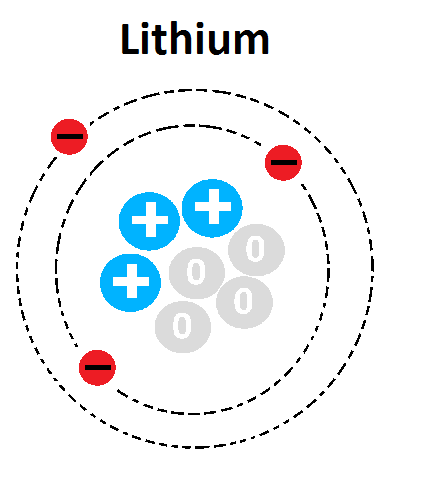
How many neutrons does Boron have?
7
5
10
6
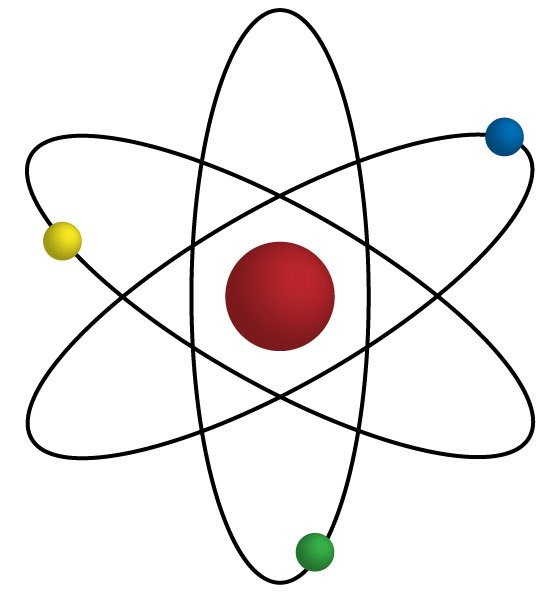
Inside the center Nucleus
Within the Electron Cloud space
Some are in the nucleus and some in the electron cloud.
Rotating in specific orbitals around the nucleus
10
20
30
40

If the mass number of this chlorine atom is 36, how many neutrons does it have?
17
18
19
can't be determined
Who discovered electrons?
Aristotle
John Dalton
J.J. Thomson
Democritus
Who was Ernest Rutherford?
English Science teacher who developed the first Atomic Theory
English physicist and chemist who discovered an electron
German physicist who discovered protons using cathode tubes
New Zealand physicist who discovered the positively charged nucleus in an atom
Choose one of the conclusions that Ernest Rutherford made based on the experimental results of his Gold-Foil experiment
He concluded that the atom is indivisible
He concluded that the atom is mostly empty space
He concluded that the atom has neutrons
He concluded that the atom is tightly packed with subatomic particles all mixed together

J.J. Thomson
Ernest Rutherford
John Dalton
Democritus
Who was the first person to write and publish a theory that said all matter was composed of tiny bits called "atoms"?
John Dalton
J. J. Thompson
Isaac Newton
Albert Einstein
This scientist definitively proved the existence of atoms by using mathematical calculations and the movement of pollen grains:
Democritis
Dalton
Moseley
Einstein
What does "amu" stand for?
atomic mass uhers
atomic mass units
atomic messenger units
accelerated mass units
Isotopes of an element have a different number of:
Protons
Neutrons
Electrons
Mass
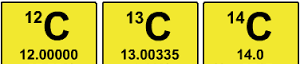
neutron number and mass number
atomic number and neutron amount
atomic number and electron number
protons, atomic number, and mass number
Which isotope has 76 protons and 114 neutrons?
Osmium-114
Osmium-76
Osmium-190
Osmium-190.23
Isotopes are atoms of the same element with different #’s of __________ & therefore, different __________.
neutrons ; atomic numbers
protons ; atomic numbers
electrons ; mass numbers
neutrons ; mass numbers
Which of these places radiation types in order from the most penetrating to least penetrating:
Alpha , Beta, Gamma
Beta , Gamma , Alpha
Gamma, Beta, Alpha
Gamma, Alpha, Beta
A nuclear reaction where an atomic nucleus splits into two smaller nuclei is called:
Fission
Fusion
Gamma decay
Beta decay

The nuclear process occurring at a nuclear power plant is:
Nuclear fusion
Nuclear fission
Combustion
Nuclear fishing
This type of decay releases high-energy photons emitted by a radioisotope:
positron decay
alpha decay
gamma decay
beta decay
What is a huge advantage of nuclear energy?
Large amounts of radioactive waste
No CO2 air pollution
It uses renewable Uranium fuel
It is the safest way to make energy
Which of the following is considered to be the worst nuclear disaster in history?
Fukushima
Three Mile Island
Chernobyl
Hiroshima
The was the site of the worst nuclear accident in the United States:
Chernobyl
Three Mile Island
Fukushima
Cuyahoga
Which is a common isotope used in radioactive dating of organic matter?
Carbon-14
Uranium-235
Carbon-12
Iodine-43
Isotopes that are "unstable" are considered to be:
Charged
Radioactive
Extensive
Proactive
The isotopes of the atoms having an atomic number of _____ or higher are all Radioactive.
62
50
80
84
What is the proper scientific name for radiation that can effect other atoms and damage cells?
ionizing radiation
toxic radiation
non ionizing radiation
radioisorade
Which of the following types of radiation are Ionizing?
Infrared
Radio waves
Microwaves
Ultraviolet
X-Rays


The "groups" of the periodic table indicate the:
Number of electron shells
Number or electrons
Number of protons
Number of valence electrons
A "row" on the Periodic Table of Elements is called a(n):
family
period
group
isotope
Which of the following atoms will have a larger radius than Zinc?
Gallium
Aluminum
Magnesium
Strontium
What is the name of group number 1?
halogens
noble gases
alkali metals
alkaline earth metals
The Halogens are which group number on the periodic table?
18 (8A)
1
2
17 (7A)

Which element is found in group 2, period 6?
Oxygen (O)
Barium (Ba)
Selenium (Se)
Carbon (C)
Henry Moseley arranged what we now know as the "modern periodic table". How did he arrange it?
By increasing atomic mass
By increasing atomic number
By decreasing valence electrons
By increasing number of isotopes

The yellow elements (right side) are called
A substance that has luster, is malleable, and is a good conductor would be classified as a:
nonmetal
metalloid
metal
semiconductor
A substance that is dull, brittle, and a nonconductor would be classified as a
metal
nonnmetal
metalloid
semiconductor
A shiny and slightly malleable substance that is not always a good conductor of electricity would be a:
metal
nonmetal
metalloid
lanthanide

Which elements are located on the "stair-step" line of the periodic table?
metals
nonmetals
metalloids
noble gases
This scientist:
- Demonstrated a connection between atomic mass and element's properties
- Arranged the elements in order of increasing atomic mass
- Predicted the existence and properties of undiscovered elements
John Newlands
David Meyer
Dmitri Mendeleev
Henry Moseley
Which of the following elements are "Diatomic?"
Hydrogen
Boron
Sulfur
Carbon
Iodine
Which of the following elements would be the MOST reactive?
Radon
Carbon
Silver
Potassium
Helium

