wayground logo

Free Printable Worksheets

Font size

S
M
L
XL
Worksheets

3.4 Chemistry NCEA

Total questions: 123

Worksheet time: 2hrs 33mins

Name
Class
Date
1.
For an exothermic reaction, the heat is on the ____ side
a)
reactant
b)
product
c)
either side
2.
For an endothermic reaction, the heat is on the ____ side.
a)
reactant
b)
product
c)
either side
3.

In an endothermic reaction, energy is _________.

a)

absorbed

b)

released

4.

_____ reactions usually feel hot!

a)

endothermic

b)

exothermic

5.

____ reactions usually feel cold.

a)

endothermic

b)

exothermic

6.
In an exothermic reaction, heat is ...
a)
taken in
b)
given out
7.

In an endothermic reaction, heat is ...

a)

taken in

b)

given out

8.
During an endothermic reaction in a beaker if we are part of the surroundings and touched the beaker, it would feel _______. 
a)
Warm
b)
Cold
9.
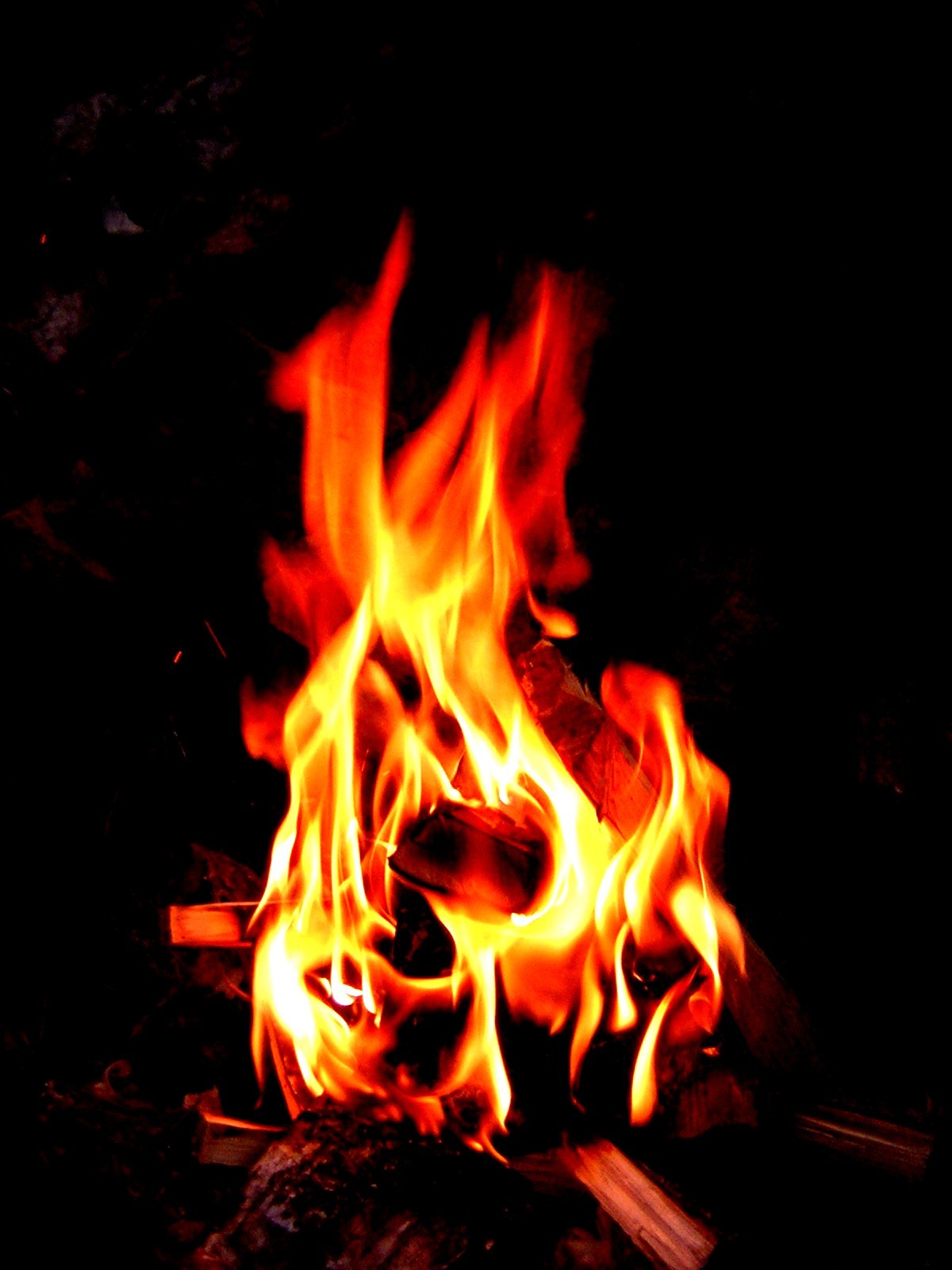
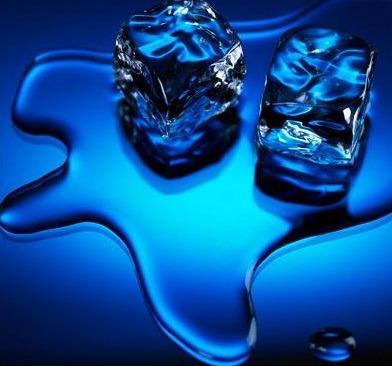
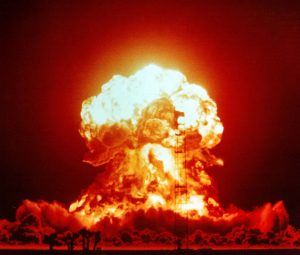
What type of reaction is shown in the photo?
a)
Exothermic
b)
Isothermic
c)
Endothermic
d)
None of the  above
10.
Which type of orbital is shaped like a sphere?
a)
s orbital
b)
p orbital
c)
d orbital
d)
f orbital
11.

Which of the following is NOT a possible pair of quantum numbers?

a)

2p

b)

2d

c)

4p

d)

4f

12.
What is the electron configuration for F?
a)
1s2 2s2 3p5
b)
1s2 2s2 3d5
c)
1s2 2s2 2p5
d)
1s2 2p5
13.
What is the electron configuration for V?
a)
[Ne] 4s2 4d3
b)
[Ar] 4s2 4d3
c)
[Ne]4s2 3d3
d)
[Ar] 4s2 3d3
14.

What element has the electron configuration 1s2 2s2 2p6 3s2 3p5?

a)

Chlorine

b)

Argon

c)

Fluorine

d)

Sulfur

e)

Bromine

15.

What does the 1 in "1s" stand for?

a)

energy level

b)

s orbitals

c)

p orbitals

d)

the number of electrons

16.

How many electrons are in 1s2 2s2 2p4?

a)

5

b)

6

c)

8

d)

13

17.
Which of the following is the correct electron configuration for a sodium atom?
a)
1s1   2s1  3s1 
b)
1s2   2s2  2p6  3s1 
c)
1s2 2s2 2p3s2 3p6 4s1
d)
1s2   2s1
18.
Which of the following is the correct electron configuration for a phosphorus  atom?
a)
1s2 2s2 2p3s2 3p3
b)
1s2   2s2   3p3 
c)
1s2 2s2 2p3s2 3p6 
d)
1s2 2s2  3s2 2p3p3
19.
Which of the following is the correct electron configuration for a carbon atom?
a)
1s2 2s2 2p6 3s2 3p2
b)
1s2 2s2 2p6 3s2 3p6
c)
1s2 2s2 2p2
d)
1s2 2s2 2p6 3s2 3p6 4s2 4p2
20.
Which of the following is the correct electron configuration for a neon atom?
a)
1s2 2s2 2p3
b)
1s2 2s2 2p6 3s1
c)
1s2 2s2 2p6 3s2 3p6 4s2 3d8
d)
1s2 2s2 2p6 
21.
Which of the following elements is a noble gas?
a)
1s2 2s2
b)
1s2 2s2 2p5
c)
1s2 2s2 2p6 3s2 3p6
d)
1s2 2s2 2p6 3s1
22.
Which of the following elements is a transition metal?
a)
1s2 2s2 2p3s2 3p6 4s2 3d10 4p6
b)
1s2 2s2 2p3s2 3p6 
c)
1s2 2s2 2p3s2 3p6 4s2 
d)
1s2 2s2 2p3s2 3p6 4s2 3d4
23.
What atom matches this electron configuration?
1s22s22p63s23p64s23d10
a)
Zinc
b)
Copper
c)
Nickel
d)
Germanium
24.
What atom matches this electron configuration?
1s22s22p63s2
a)
Neon
b)
Magnesium
c)
Aluminum
d)
Potassium
25.
What electron configuration matches an oxygen atom?
a)
1s22s22p63s2, 3p64s23d104p5
b)
1s22s22p4
c)
1s22s22p6
d)
1s22s22p63s23p64s23d1
26.
How many electrons can the first energy level hold?
a)
1
b)
2
c)
8
d)
0
27.
What electron configuration matches an oxygen atom?
a)
1s22s22p63s2, 3p64s23d104p5
b)
1s22s22p4
c)
1s22s22p6
d)
1s22s22p63s23p64s23d1
28.
This orbital diagram represents:  
a)
C
b)
B
c)
N
d)
O
29.
What is incorrect about this orbital diagram?
a)
Both arrows in the 2p box should be pointing up
b)
There is nothing incorrect with this diagram
c)
In the there should only be 1 orbital in the first 2p box and one in the 2nd 2p box
d)
All the arrows should be pointing up.
30.
Which element is pictured?
a)
neon
b)
fluorine
c)
magnesium
d)
argon
31.
Which is associated with more energy? 
a)
2p
b)
2s
c)
3p
d)
1s
32.
How many electrons can the d sublevel hold?
a)
14
b)
10
c)
2
d)
6
33.
How many electrons can the s sublevel hold?
a)
14
b)
10
c)
2
d)
6
34.
Which element is pictured?
a)
neon
b)
fluorine
c)
magnesium
d)
argon
35.
Which orbital has the least amount of energy? 
a)
p orbital
b)
d orbital
c)
s orbital 
d)
What is an orbital?
36.
Which orbital shows a violation of Hund's Rule?
a)
A
b)
B
c)
C
d)
D
37.
Which orbital shows a violation of the Aufbau Principle?
a)
A
b)
B
c)
C
d)
D
38.
Which orbital shows a violation of the Pauli Exclusion Principle?
a)
A
b)
B
c)
C
d)
D
39.

How many orbitals does a d sublevel have?

a)

1

b)

3

c)

5

d)

7

40.

In an electron configuration, what follows 4s?

a)

4p

b)

3d

c)

4s

d)

2f

41.
 The diagram above represents two electrons with 
a)
a. opposite spins.
b)
 b. the same spin.
c)
c. different energies.
d)
d. different energy levels.
42.
What is the correct electron configuration for a ground-state atom with 7 electrons? 
a)
 a. 1s2 2s2 2p3
b)
 b. 1s2 2s2 2p2 3s1
c)
c. 1s2 2s3 2p2
d)
 d. 1s2 2s5
43.
The blue section of the wave is measuring _________________.
a)
wavelength
b)
crest
c)
trough
d)
amplitude 
44.

Ionisation energy is ___________.

a)

maximum energy required to remove 1 electron from 1 mol of gaseous atom

b)

minimum energy required to remove 1 electron from 1 mol of gaseous atom

c)

first ionisation energy

d)

second ionisation energy

45.

When across a period, the atomic size decreases so the first IE ___________.

a)

increases

b)

decreases

c)

constant

d)

i am not sure

46.

When going down a group, the atomic size increases so the first IE __________.

a)

increases

b)

decreases

c)

constant

d)

I am not sure

47.

Factors affecting the ionisation energy:

a)

Atomic radius

b)

Effective nuclear charge

c)

Shielding effect

d)

All of the above

48.
Energy is required to remove an electron from the atom.
a)
True
b)
False
c)
Not sure
49.
Which of the following is true about a sulfur atom and a chlorine atom?
a)
Sulfur is larger and has higher ionization energy.
b)
Sulfur is larger and has lower ionization energy.
c)
Sulfur is smaller and has higher ionization energy.
d)
Sulfur is smaller and has lower ionization energy.
50.
Which element has the greater ionization energy?
a)
Lead
b)
Silicon
51.
Put the following in order of increasing ionization energy:Neon, Lithium, Carbon
a)
Lithium, Carbon, Neon
b)
Carbon, Lithium, Neon
c)
Neon, Carbon, Lithium
d)
Lithium, Neon, Carbon
52.
Put the following in order of increasing ionization energy:Sodium, Oxygen, Boron
a)
Sodium, Boron, Oxygen
b)
Oxygen, Boron, Sodium
c)
Sodium, Oxygen, Boron
d)
Oxygen, Sodium, Boron
53.
Which of the following is true about a sulfur atom and a chlorine atom?
a)
Sulfur is larger and has higher ionization energy.
b)
Sulfur is larger and has lower ionization energy.
c)
Sulfur is smaller and has higher ionization energy.
d)
Sulfur is smaller and has lower ionization energy.
54.

Which atom has the largest atomic radius?

a)

potassium

b)

rubidium

c)

francium

d)

cesium

55.
As you move down the periodic table atoms get bigger.  This is because ____________.
a)
The atoms have more mass.
b)
The atoms have more protons.
c)
The atoms have more energy levels
d)
The atoms have more nuetrons
56.
As you move across the periodic table atoms tend to get smaller because, ______________.
a)
the atoms have more mass.
b)
the atoms have less mass
c)
the atoms have more protons.
d)
the atoms have less electrons.
57.
Metals are good conductors of heat and electricity.
a)
true
b)
false
58.

Which statement correctly and completely identifies a trend?

a)

Atomic radius decreases across a period and increases down a group.

b)

Electronegativity decreases across a period and decreases down a group.

c)

Ionization energy increases across a period and increases down a group.

d)

Ionic radius increases across a period and increases down a group.

59.
Which periodic group has the smallest atomic radius?
a)
Alkali metals
b)
Halogens
c)
Noble Gases
d)
Transition metals
60.
Atomic radius generally increases as we move __________.  
a)
down a group and from right to left across a period 
b)
up a group and from left to right across a period 
c)
down a group and from left to right across a period 
d)
up a group and from right to left across a period 
61.
Which of the following will have a larger radius than Zinc?
a)
Gallium
b)
Aluminum
c)
Magnesium
d)
Strontium
62.
Order the following in increasing atomic radii: 
Ra, Be, Ca, Rb, H
a)
Ra, Be, Rb, H, Ca
b)
Rb, H, Ca, Be, Ra
c)
Ra, Rb, Ca, Be, H
d)
H, Be, Ca, Rb, Ra
63.
The more protons there are, the  ____ .
a)
Weaker the pull
b)
Smaller the electrons
c)
Stronger the pull
d)
The bigger the electrons
64.
Which one has the largest radius?
a)
Lithium (Li, atomic #3)
b)
Boron (B, atomic #5)
c)
Neon (Ne, atomic #10)
d)
Nitrogen (N, atomic #7)
65.

When across a period, the atomic size decreases so the first IE ___________.

a)

increases

b)

decreases

c)

constant

d)

i am not sure

66.

After an atom is ionised, it then requires more energy to remove a second electron because the second electron is nearer to the nucleus.

a)

False

b)

True

c)

Not sure

67.
After the atom is ionised, it then requires more energy to remove a second electron because the second electron experiences less shielding from the nucleus.
a)
True
b)
False
c)
Not sure
68.
The element with the largest electronegativity in the halogens is - 
a)
At
b)
F
c)
Cl
d)
Br
69.
The element with the lowest electronegativity in Period 3 is - 
a)
Na
b)
Cl
c)
Ar
d)
Mg
70.
 Which of the following generally applies to the noble gases? 
a)
high ionization energy, low electronegativity, high reactivity
b)
high ionization energy, high electronegativity, high reactivity
c)
low ionization energy, low electronegativity, low reactivity
d)
high ionization energy, low electronegativity, low reactivity 
71.
Elements closer to the noble gases have stronger attraction for electrons.
a)
True
b)
False
72.
Chlorine and Fluorine are both very electronegative, as they are both missing a single electron from their valence energy level.  Why is Fluorine more electronegative than Chlorine? 
a)
Fluorine has less energy levels.
b)
Chlorine has more electrons in its outer shell
c)
Fluorine has more protons.
d)
None of these
73.
What elements have zero electronegativity?
a)
metals
b)
nonmetals
c)
metalloids
d)
noble gases
74.
What is ionization energy?
a)
Energy needed to destroy an atom
b)
Energy required to remove an electron
c)
Energy needed to split an electron
d)
Energy required to add an electron
75.

As you look down a group, ionization energy and electronegativity

a)

increases

b)

decreases

76.

As you look from left to right across a period, ionization energy and electronegativity both

a)

increase

b)

decrease

77.

What type of bond is depicted in the image?

a)

Covalent

b)

Polar Covalent

c)

Ionic

78.

What type of bond is depicted in the image?

a)

Covalent

b)

Polar Covalent

c)

Ionic

79.

What type of bond is depicted in the image?

a)

Covalent

b)

Polar Covalent

c)

Ionic

80.

Electronegativity is...

a)

how strongly an atom attracts electrons

b)

the ability of an atom to lose electrons

c)

the energy required to remove an electron from a specific atom

d)

not liking electricity or saying bad things about electricity

81.

Which of the following elements GAINS 1 electron in order to attain an octet?

a)

sodium

b)

calcium

c)

helium

d)

boron

e)

chlorine

82.

Which of the following elements LOSES 2 electrons in order to attain an octet?

a)

lithium

b)

magnesium

c)

helium

d)

sulfur

e)

bromine

83.

Definition - The electrostatic attraction between positive nuclei and negatively charged pair of electrons shared between them.

a)

Ionic Bond

b)

Hydrogen Bond

c)

Covalent Bond

d)

Inter-molecular bond

84.

This form of bonding has very high melting points when elemental, and is insoluble.

a)

Ionic Lattice

b)

Covalent Network

c)

Covalent Molecular

d)

Metallic Lattice

85.

The measure of attraction an atom has for the electrons in a bond

a)

Dipole Dipole moment

b)

Ionisation energy

c)

Ionic Radius

d)

Electronegativity

86.

The affect caused as more shells of inner electrons reduce the force experienced by outer electrons.

a)

Blocking

b)

Hiding

c)

Shielding

d)

Screening

87.

Electrostatic attraction between the permanent dipoles of two polar molecules

a)

Permanent Dipole polar interactions

b)

Permanent Dipole - Permanent Dipole interactions

c)

Dipole interactions

d)

Polar Dipole interactions

88.

The name of any force acting between a molecule and neighbouring molecules.

a)

Intra-molecular force

b)

Van der Waals

c)

Dipole-Dipole

d)

Electrostatic bonding.

89.

The unequal distribution of charge creating a temporary dipole is known as a...

a)

Spontaneous Dipole

b)

Random Dipole

c)

Instantaneous Dipole

d)

London Dispersion Dipole

90.
If a pair of atoms that are covalently bonded have the same electronegativity, will the electrons be...
a)
unequally shared
b)
equally shared
91.
A dipole is...
a)
something that can be thought of as a probability map of where an electron may be found at any one time
b)
the Coulombic attractions between opposite charges
c)
The creation of opposite charges at either end of the molecule
92.
What are intermolecular forces?
a)
forces of attraction or repulsion which act between neighboring particles
b)
forces which keep a molecule together.
c)
forces which keep electrons together
d)
forces of attraction or repulsion which act between neighboring electrons
93.
Which type of force is this?
a)
Intramolecular
b)
Intermolecular
c)
Hydrogen
d)
Chlorine
94.
Which type of force is this?
a)
Hydrogen
b)
Intramolecular
c)
Intermolecular
d)
Oxygen
95.
What type of interaction does this represent?
a)
non-polar covalent
b)
dipole
c)
dipole-dipole
d)
none that I know of
96.
What type of interaction does this represent?
a)
dipole-dipole
b)
none that I know of
c)
non-polar covalent
d)
dipole
97.
When Hydrogen forms a bond with a highly electronegative element like Fluorine, Oxygen, or Nitrogen, then there is a largely electrostatic attraction.
a)
True
b)
False
98.

A reaction that gives out energy to the surroundings causes the

a)

temperature to drop

b)

temperature to rise

c)

temperature to remain constant

d)

temperature to vary

99.

A reaction that causes the temperature of the surrounding to drop is

a)

endothermic

b)

exothermic

c)

displacement

d)

oxidation

100.

Standard conditions are;

a)

273 K 1 atm

b)

20 oC 1 atm

c)

25 oC 2 atm

d)

298 K 1 atm

101.

The enthalpy change when 1 mole of a compound is formed from its elements in their standard states under standard conditions. This is the enthalpy of.....

a)

Combustion

b)

Formation

c)

Lattice breaking

d)

Ionisation

102.

The enthalpy change when 1 mole of a compound is completely burned in excess oxygen forming combustion products in their standard states. This is the enthalpy of ....

a)

Combustion

b)

Formation

c)

Ionisation

d)

Atomisation

103.

Na+ (g) + Cl- (g) --> NaCl (s)

a)

Lattice breaking

b)

Combustion

c)

Lattice formation

d)

Atomisation

104.

Mg (g) --> Mg+ (g) + e-

a)

Ionisation

b)

Combustion

c)

Formation

d)

Hydration

105.

½ H2 (g) + ½ Cl2 (g) --> HCl (g)

a)

Formation

b)

Combustion

c)

Atomisation

d)

Ionisation

106.

O- (g) + e- --> O2- (g)

a)

1st electron affinity

b)

2nd electron affinity

c)

3rd electron affinity

d)

4th electron affinity

107.

C (g)+ O2 (g)--> CO2 (g)

a)

Ionisation

b)

Combustion

c)

hydration

d)

solution

108.

How do you calculate Enthalpy of a reaction?

a)

ΔH = ΔHproducts - ΔHreactants

b)

ΔT = q / mC

c)

ΔG = ΔH -TΔS

d)

E = mc2

109.

What is standard enthalpy of formation, ΔHfo?

a)

Heat change when 1 mole of gaseous ions is hydrated in water at 25oC and 1 atm

b)

Heat change when 1 mole of compound is formed from its elements in their standard states at 25oC and 1 atm

c)

Heat change when 1 mole of gaseous atom is formed from its elements at 25oC and 1 atm

d)

Heat change when 1 mole of electrons is removed from 1 mole of gaseous atoms at ground state at 25oC and 1 atm

110.

Which of the following has a ΔHfo value of 0?

a)

Br2(g)

b)

N(g)

c)

CO(g)

d)

Ne(g)

111.
ΔH value in an endothermic reaction is a positive number.
a)
True
b)
False
112.

which of the following represent the lattice enthalpy of formation of sodium flouride

a)

2Na(g) + F2(g) → 2NaF(g)

b)

Na(s) + 1/2F2(g) → NaF(s)

c)

2Na(s) + 1/2F2(g) → NaF(g)

d)

2Na(s) + F2(g) → 2NaF(g)

113.

What does the circle mean in ΔH°?

a)

Standard Conditions (T=298.15 K P=1 atm)

b)

Standard Temperature and Pressure (T=273.15 K P=1 atm)

c)

Degree K

d)

Degree C

114.
Which is an example of an endothermic physical reaction? 
a)
a) Ice melting 
b)
b) Combustion 
c)
c) Steam condensing 
d)
d) Photosynthesis
115.
Describe the energy change that takes place when bonds are broken. 
a)
a) Energy is given out 
b)
b) Energy is taken in 
c)
c) Energy is taken in and then given out 
d)
d) Energy is given out and then taken in
116.
Heat is measured in 
a)
joules
b)
grams
c)
degrees celcius
117.
Define 'Enthalpy'
a)
a) Energy stored in the movement of molecules in a substance
b)
b) The opposite of temperature
c)
c) The temperature of a molecule
d)
d) Energy stored in the chemical bonds in a substance
118.
Endothermic reactions feel
a)
warm
b)
cold
119.

Heat of Reaction

a)

The heat released after burning 1 mole of a substance.

b)

The amount of heat needed to melt 1 mole of a solid.

c)

The heat released by 1 mole of a substance as it changes from a liquid to a solid.

d)

The heat released or absorbed during a chemical reaction.

120.

The enthalpy change for the reaction, ∆Hr , is equal to

a)

∆H1 + ∆H2

b)

-∆H1 - ∆H2

c)

∆H1 - ∆H2

d)

-∆H1 + ∆H2

121.

The standard enthalpy changes of combustion of carbon, hydrogen and methane are shown in the table.

Which one of the following expressions gives the correct value for the standard enthalpy change of formation of methane in kJ mol–1?

C(s) + 2H2(g) → CH4(g)

a)

394 + (2 × 286) – 891

b)

–394 – (2 × 286) + 891

c)

394 + 286 – 891

d)

–394 – 286 + 891

122.

Hess's Law states that...

a)

all reactions are reversible

b)

the enthalpy change of a reaction is independent of the route taken

c)

the direct route results in a greater enthalpy change

d)

the indirect route results in a lower enthalpy change as energy is lost in the second step

123.

Match Definition to Term:

Heat of Vaporization

a)

The difference in energy between the solid and liquid states for a given amount of substance

b)

The difference in energy between the liquid and gas states for a given amount of substance

c)

The energy associated for a 1 degree temperature change for a given amount of a substance