
 Worksheets
CHM 1 midterm exam Review
Total questions: 118
Worksheet time: 2hrs 18mins
Name
Class
Date
1.
How many sig figs are there?
100.00
100.00
a)
1
b)
3
c)
4
d)
5
2.
How many sig figs are there?
0.000008
0.000008
a)
1
b)
2
c)
6
d)
7
3.
How many sig figs are there?
100000000
100000000
a)
1
b)
9
c)
10
4.
How many sig figs are there?
0.0009009090000
0.0009009090000
a)
3
b)
10
c)
14
5.
Calculate 12.34 + 1.234 + 0.1234
a)
13.6974
b)
13.697
c)
13.70
d)
13.7
6.
Calculate 12.34 × 1.234 × 0.1234
a)
1.87908
b)
1.879
c)
1.9
d)
1.8790809
7.
Round 0.010229 to four sig figs
a)
1022
b)
1023
c)
0.01023
d)
0.01022
8.

What is the volume of Object X?
a)
10.0 cm3
b)
15.0 cm3
c)
20.0 cm3
d)
25.0 cm3
9.
What is the density of an object having a mass of 8.0 g and a volume of 25 cm3?
a)
0.32 g/cm3
b)
2.0 g/cm3
c)
3.1 g/cm3
d)
200 g/cm3
10.

The density of this material is 2 g/cm3.
There are 24 cm3 Find the total mass.
There are 24 cm3 Find the total mass.
a)
12 grams
b)
48 grams
c)
12 g/cm3
d)
48 g/cm3
11.
5 gallons to ? L
1gal = 3.785 L
1gal = 3.785 L
a)
18.95
b)
.1895
c)
1895
d)
1895000
12.
Convert 23 cm to m
a)
2.3
b)
0.23
c)
2,300
d)
230
13.
convert 9 km to mm
a)
900,000
b)
9,000,000
c)
9,000
d)
90,000
14.

Which box has a higher density?
a)
Box A
b)
Box B
c)
cannot be determined
d)
they are the same
15.
True or False: The density of a specific type of material never changes.
a)
True
b)
False
16.

Ernst Rutherford discovered which part of the atom through the use of gold foil?
a)
Proton
b)
Neutron
c)
Electron
d)
Orbitals
17.
Who stated that all atoms of the same element are exactly alike?
a)
Democritus
b)
Dalton
c)
Thomson
d)
Borh
18.

What scientist is best known for his "Plum Pudding" model of the atom?
a)
J.J. Tomson
b)
Ernest Rutherford
c)
John Dalton
d)
Democritus
19.
An atom's overall charge is ________.
a)
positive
b)
depends
c)
neutral
d)
negative
20.
The first person to ever talk about an atom was
a)
Democritus
b)
Rutherford
c)
Dalton
21.
The weighted average of the masses of all naturally occurring isotopes of an element is
a)
Atomic number
b)
Atomic Mass
c)
Atomic weight
d)
Protons
22.
This contains most of the mass of an atom
a)
Electron Cloud
b)
Nucleus
c)
Electron
d)
Isotope
23.
What is the amu of an electron
a)
Almost zero
b)
1
c)
2
d)
3
24.

Who came up with this model of an atom pictured?
a)
J.J. Thompson
b)
Ernest Rutherford
c)
Neils Bohr
d)
James Chadwick
25.
Which word would closely define the term "atomos"?
a)
Incredible
b)
Indivisible
c)
Indelible
d)
Independent
26.
Neon has an atomic number of 10 and an atomic mass of 20.180. How many protons, electrons, and neutrons will it have?
a)
P=10 E=10 N=11
b)
P=5 E=5 N=10
c)
P=10 E=10 N=10
d)
P=10 E=5 N=5
27.
If two atoms have the same atomic number but different numbers of neutrons, they are
a)
Ions of that element
b)
Different elements
c)
Isotopes of the same atom
d)
Isotopes of different elements
28.

What element is pictured?
a)
Hydorgen
b)
Boron
c)
Beryllium
d)
Arsenic
29.
Copper used in electric wires comes in two isotopes: 63Cu and 65Cu. 63Cu has an an abundance of 69.09%. The other isotope, 65Cu, has an abundance of 30.91%.
a)
64.8
b)
65
c)
63.54
d)
128
30.

How many neutrons does the isotope of lithium have?
a)
8
b)
3
c)
4
d)
5
31.
How many neutrons does uranium-235 have?
a)
238
b)
92
c)
146
d)
143
32.
Atoms of the same element must always have the same number of _________
a)
electrons
b)
neutrons
c)
isotopes
d)
protons
33.
Found in the nucleus of the atom
a)
electrons only
b)
protons only
c)
neutrons and protons
d)
neutrons and electrons
34.
Charge of an electron
a)
Positive
b)
Negative
c)
Neutral
35.
Charge of a neutron
a)
Positive
b)
Negative
c)
Neutral
36.
# neutrons + # protons = ___
a)
Atomic number
b)
Atomic Mass
c)
Mass Number
d)
Valence Electrons
37.
What is the charge of the nucleus?
a)
positive
b)
negative
c)
neutral
38.
Nitrogen has three occurring isotopes: Nitrogen-13, Nitrogen-14, Nitrogen-15. Which isotope is the most abundant?
a)
Nitrogen-13
b)
Nitrogen-14
c)
Nitrogen-15
d)
Based on the information given, it cannot be determined
39.

In a correctly written symbol what would be located in the "A" position?
a)
number of neutrons
b)
atomic number
c)
number of electrons
d)
mass number
40.
vertical columns in the periodic table are _________ of elements with similar properties.
a)
groups
b)
periods
41.
_______ are horizontal rows of elements that contain increasing numbers of protons and electrons.
a)
groups
b)
periods
42.

How did Mendeleev arrange the elements?
a)
alphabetical
b)
density
c)
melting point
d)
atomic mass
43.
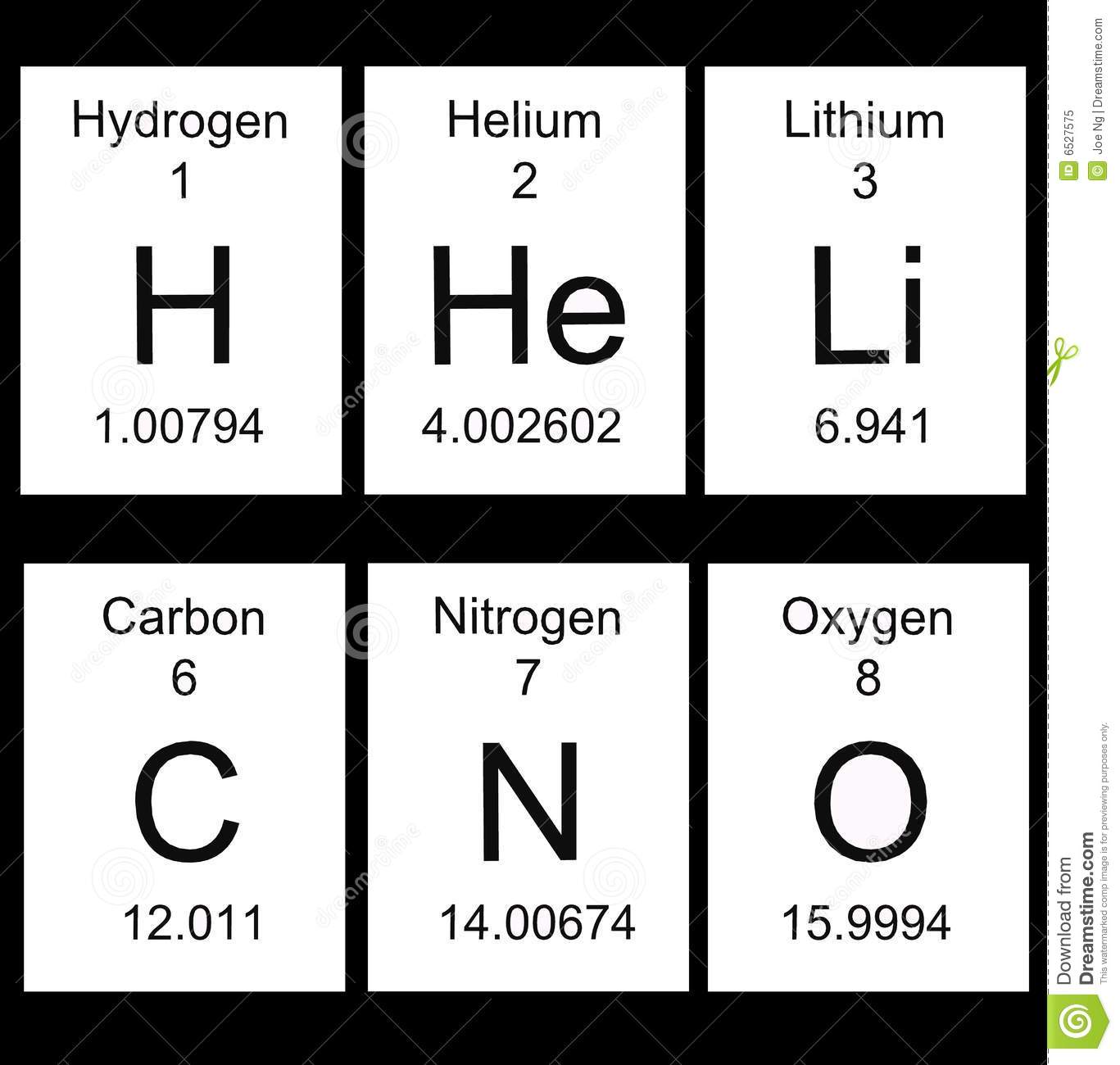
The number at the bottom of each square on the periodic table is the ...
a)
atomic number
b)
atomic mass
c)
chemical symbol
d)
element name
44.
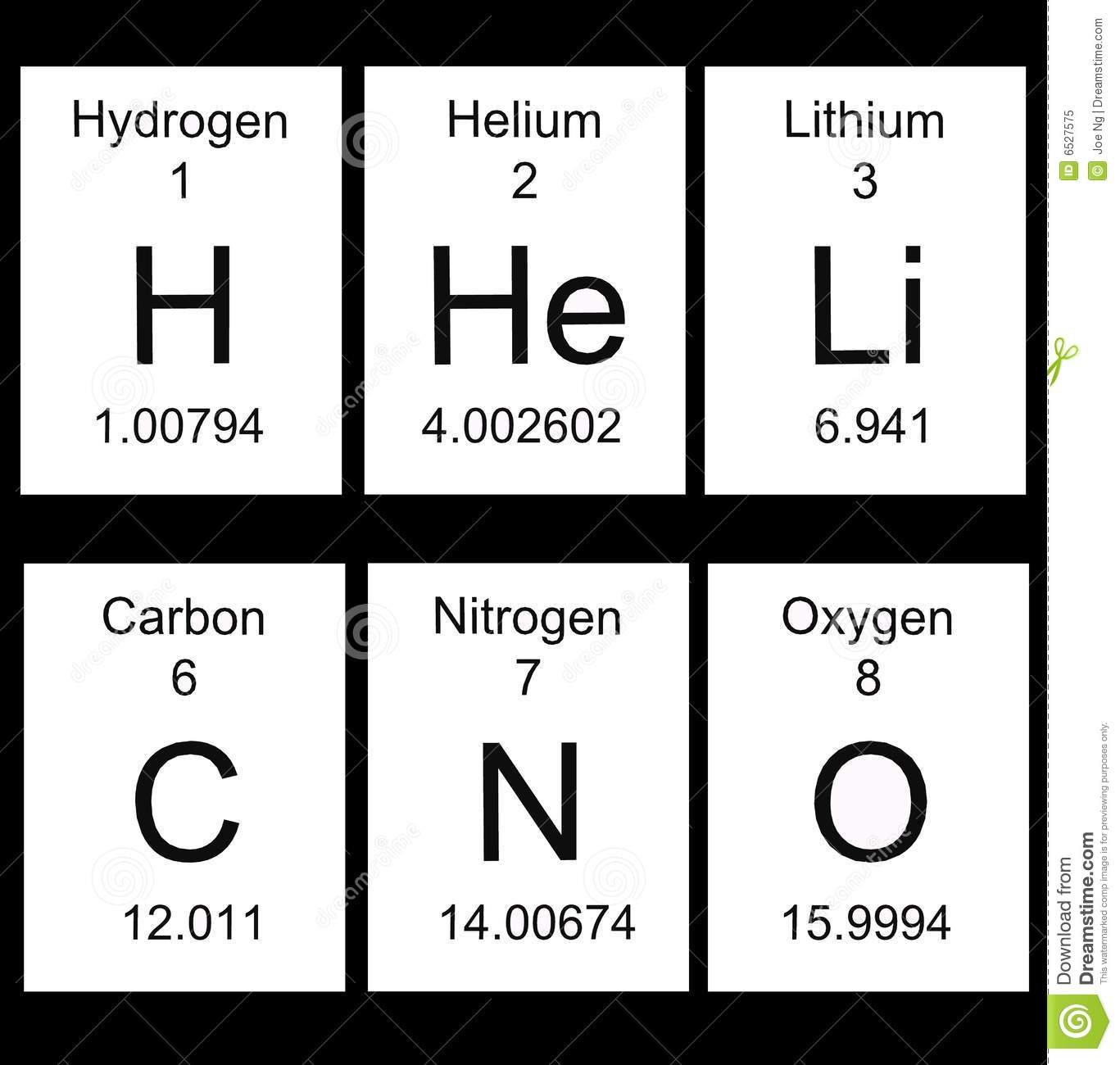
The number at the top of each square on the periodic table is the ...
a)
atomic number
b)
atomic mass
c)
Chemical Symbol
d)
Element Name
45.

A rule that states that repeating chemical and physical properties of elements change periodically with the atomic number of the elements is the _________.
a)
periodic law
b)
alkaline-earth metals
c)
actinide
d)
group rule
46.

Pure forms of these elements are stored in oil so they won't react with oxygen and water in the air.
a)
Alkali Metals
b)
Alkaline-earth metals
c)
Halogens
d)
Noble Gases
47.

Most of the elements on the periodic table are classified as _____.
a)
Metals
b)
Nonmetals
c)
Metalloids
d)
Periods
48.
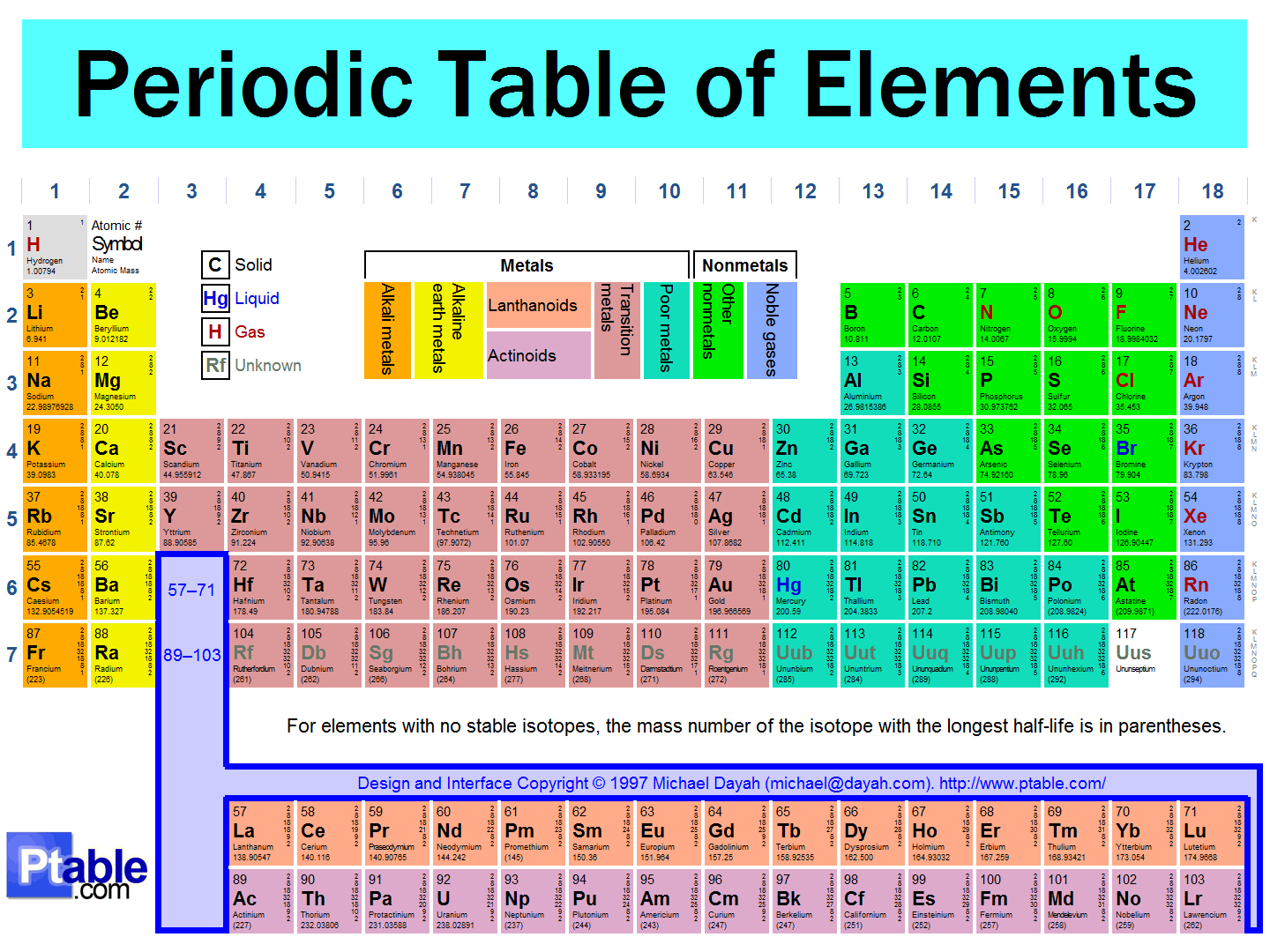
This class of elements are sometimes called "semiconductors."
a)
Metals
b)
Nonmetals
c)
Metalloids
d)
Groups
49.

Why do some elements have 3 letter chemical symbols?
a)
There are no elements with 3 letter symbols
b)
They are named after scientists
c)
They are named after places
d)
They have a temporary name until scientists agree on a new name.
50.
Which is a halogen?
a)
Helium
b)
Chlorine
c)
Oxygen
d)
Neptune
51.
Which elements have the most similar chemical properties?
a)
K and Na
b)
K and Ca
c)
K and Cl
d)
K and S
52.
Group 18 elements are known as the _____ _____ and have full valence shells.
a)
royal gases.
b)
supreme solids.
c)
noble gases.
d)
legit liquids.
53.

Beryllium is in group number______.
a)
Group 2
b)
Group 3
c)
Group 4
d)
Group 7
54.

The period for Bromine is ___________.
a)
3
b)
2
c)
4
55.

The yellow atoms are called
a)
metals
b)
nonmetals
c)
metalloids
d)
noble gases
56.
In the modern periodic table elements are arranged by:
a)
atomic mass
b)
atomic number
c)
valence electrons
d)
number of isotopes
57.
What is the correct electron configuration for Boron
a)
1s22s22p1
b)
1s22s22p2
c)
1s22s11p1
d)
1s22s12p1
58.
The energy of an electron __________ as it moves further away from the nucleus
a)
increases
b)
decreases
c)
remains the same
59.

Which element is depicted from this atomic orbital diagram?
a)
Carbon
b)
Nitrogen
c)
Oxygen
d)
Phosphorus
60.
What is the correct electron configuration for Selenium
a)
1s22s22p63s23p64s24d104p4
b)
1s22s22p63s23p64s23d104p4
c)
1s22s22p63s23p64s23d104p3
d)
1s22s22p63s23p64s24d104p43
61.

Which element is depicted from this orbital diagram
a)
Fluorine
b)
Neon
c)
Chlorine
d)
Argon
62.

1. What is the shape of an s orbital?
a)
sphere
b)
dumbbell
c)
double dumbbell
d)
TOO COMPLEX TO KNOW IT.
63.

What is the shape of a p orbital?
a)
sphere
b)
it's just too complex to thing about it
c)
dumbbell
d)
I don't know this stuff.
64.

How many d orbitals are there in a given sublevel?
a)
1
b)
3
c)
5
d)
7
65.

How many p orbitals are there in a sublevel?
a)
2
b)
1
c)
4
d)
3
66.

How many electrons can the d sublevel hold?
a)
8
b)
10
c)
2
d)
4
67.

How many total electrons can the f orbitals in a sublevel hold?
a)
2
b)
14
c)
6
d)
10
68.

What is this element?
1s22s22p63s23p6
4s23d104p6
1s22s22p63s23p6
4s23d104p6
a)
Argon
b)
Krypton
c)
Selenium
d)
Bromide
69.
What is the noble gas shorthand for Sulfur?
a)
[Ar] 3p4
b)
[He] 3s2 3p4
c)
[Ne] 3s2 3p4
d)
[Na] 3s2 3p4
70.
What is this element?
[Ne] 3s23p64s2
[Ne] 3s23p64s2
a)
Calcium
b)
Sodium
c)
Scandium
d)
Titanium
71.
Valence electrons are:
a)
ALL electrons.
b)
only the first 2 electrons.
c)
electrons on the highest energy level.
d)
electrons in the "d" orbital.
72.
Anions are elements that have:
a)
gained electrons.
b)
lost electrons.
c)
gained neutrons.
d)
have positive charges.
73.
Metals lose electrons to form:
a)
anions.
b)
cations.
c)
negative ions.
d)
isotopes.
74.
S-2
a)
lost 2 electrons.
b)
gained 1 electron.
c)
gained2 electrons
d)
gained 2 protons.
75.
Ions are:
a)
atoms with a positive or negative charge
b)
atoms with no charge
c)
atoms with ONLY a positive charge
d)
atoms with ONLY a negative charge
76.
Nitrogen will ____ valence electrons when forming an ionic bond.
a)
gain 1
b)
lose 1
c)
gain 3
d)
lose 3
77.
A chemical symbol that is surrounded by dots that represent elements is a....
a)
electron dot diagram
b)
valence electrons
c)
Bohr Model
78.
This is the force of attraction that holds atoms together
a)
force of the universe
b)
gluey bond
c)
chemical bond
79.
Ionic bonds form between two ions that have
a)
ionic compounds
b)
negative charges
c)
positive charges
d)
opposite charges
80.
The force of attraction between two oppositely charged ions
a)
ionic bond
b)
strong force
c)
positive/negative force
81.
Which is the correct name for AlBr3?
a)
Aluminum bromine
b)
Bromine aluminide
c)
Aluminum bromide
d)
Aluminum (III) bromide
82.
What is the oxidation number (charge) of Ca in Ca(OH)2?
a)
+2
b)
-1
c)
+1
d)
-2
83.
What is the oxidation number of O in TiO2?
a)
+2
b)
-4
c)
+4
d)
-2
84.
If Nitrogen and Silver chemically bond, which will be named first?
a)
Silver
b)
Nitrogen
c)
Unknown
d)
Iodine
85.
Which of the following elements does NOT have an oxidation number of +2?
a)
Ca
b)
Zn
c)
K
d)
Ba
86.
How many electrons are needed in the outer energy levels of most atoms to be stable?
a)
2
b)
4
c)
6
d)
8
87.
Which group of elements are most likely to need a Roman numeral in an ionic compound name?
a)
alkaline earth metals
b)
transition metals
c)
halogens
d)
noble gases
88.
What is the oxidation number of nickel in Ni2S3?
a)
2+
b)
2-
c)
3+
d)
3-
89.
Which of the following contains a polyatomic ion?
a)
Cu2CO3
b)
MnO
c)
CrN
d)
BeCl2
90.
Which of the following is the correct formula for Cesium sulfate?
a)
CsS2
b)
Cs(SO4)2
c)
Cs2SO4
d)
Cs2S
91.
Which is the correct name for Ag2O?
a)
Silver (II) oxide
b)
Silver (I) oxide
c)
Silver oxide
d)
Silver oxygen
92.
What is the correct name for RbClO2?
a)
Rubidium chlorite
b)
Rubidium (II) chloride
c)
Rubidium chlorate
d)
Rubidium chlorine oxide
93.
What is the correct formula for Iron (III) nitrate?
a)
Fe3N
b)
Fe(NO3)3
c)
Fe3(NO3)
d)
Fe(NO2)3
94.
How many valence electrons does nitrogen have?
a)
3
b)
2
c)
5
d)
1
95.
What can be generalized about covalent bonds?
a)
They will form between two metalloids.
b)
They are ionic.
c)
They will form between two metals.
d)
They will form between two nonmetals.
96.
What is it called if there are three-pairs of electrons being shared?
a)
Triple bond
b)
Bond length
c)
Tribond
d)
Chocolate Mousse
97.

Which of the following is the correct Lewis dot structure for the molecule fluorine (F2)?
a)
A
b)
B
c)
C
d)
D
98.
How many electrons should Carbon have around its Lewis dot structure?
a)
1
b)
3
c)
4
d)
5
99.
How are covalent bonds explained?
a)
When one atom takes the other atom's electron
b)
When an atom shares electrons with an another atom
c)
When an atom shares neutrons with an another atom
d)
When one atom takes the other atom's nuetrons
100.
What is a diatomic element?
a)
a metal bonded with a nonmetal
b)
2 or more nonmetals bonded together
c)
2 or more metals bonded together
d)
2 atoms of the same element bonded together
101.
Which element is not diatomic?
a)
Br
b)
He
c)
H
d)
O
102.
How many electrons are shared in a double bond?
a)
2
b)
4
c)
6
d)
8
103.

The compound formed between lithium and chlorine is _________.
a)
ionic
b)
covalent
104.
Most covalent compounds are do not exist in which state?
a)
solid
b)
liquid
c)
gas
105.
The number of bonds an element will form in a covalent compound will be equal to
a)
the number of valence electrons
b)
eight electrons
c)
the number of electrons needed to reach an octet
d)
the group number
106.
What is it called when elements can only exist in molecules of two atoms?
a)
polyatomic
b)
diatomic
c)
monatomic
d)
bipolar
107.
Which element below is not diatomic?
a)
hydrogen
b)
oxygen
c)
nitrogen
d)
sulfur
108.
What is the correct name for C4H6?
a)
Carbon Hexahydride
b)
Pentacarbon Pentahydride
c)
Hexacarbon Tetrahydride
d)
Tetracarbon Hexahydride
109.
What is the correct chemical formula for Nitrogen Triiodide?
a)
NI3
b)
N3I3
c)
NOI
d)
NeI3
110.
What is the formula for Tricarbon Octahydride?
a)
Ca3O
b)
C2H8
c)
C3H8
d)
Ca3H8
111.

As4O10
a)
arsenic oxide
b)
quadarsenic decoxide
c)
tetraarsenic decoxide
d)
arsenic decoxide
112.
Name the following compound:
BF3
BF3
a)
boron fluoride
b)
boron difluoride
c)
monoboron trifluoride
d)
boron trifluoride
113.
Which type of radioactive decay gives off energy only?
a)
alpha
b)
beta
c)
gamma
114.
If Gadolinium-150 goes through alpha decay, the resulting element has a new atomic mass of _____.
a)
150
b)
148
c)
146
115.
What isotope was used to determine the age of the earth?
a)
Carbon-14
b)
Uranium-238
c)
Lead
116.
The beta particle has a charge of ...........
a)
+1
b)
-1
c)
-2
d)
+4
117.
When nuclei decay, massive amounts of __________ is released.
a)
energy
b)
jello
c)
protons
d)
neutrons
118.
What makes an element radioactive?
a)
When it's nuclei expands
b)
When it's electrons explode
c)
When it's nuclei behave
d)
When it's nuclei decay
100 %

