
 Worksheets
unit 4 Ecology EES
Total questions: 121
Worksheet time: 5hrs 34mins

Is wind a biotic or abiotic factor?
biotic
abiotic

Is soil a biotic or abiotic factor?
biotic
abiotic

Are rocks biotic or abiotic factors?
biotic
abiotic

Is water a biotic or abiotic factor?
biotic
abiotic

Is temperature a biotic or abiotic factor?
biotic
abiotic

Is pH a biotic or abiotic factor?
biotic
abiotic

Is precipitation a biotic or abiotic factor?
biotic
abiotic

Are producers biotic or abiotic factors?
biotic
abiotic

Are consumers biotic or abiotic factors?
biotic
abiotic

Are decomposers biotic or abiotic factors?
biotic
abiotic

Is sunlight a biotic or abiotic factor?
biotic
abiotic
Abiotic factors are ___________.
non-living parts of an ecosystem
living parts of an ecosystem
things that once were alive, but now are dead
not important parts of ecosystems.
Biotic factors are ___________.
non-living parts of an ecosystem
living parts of an ecosystem or the parts of an ecosystem that are/were made of cells and contain DNA
things that once were alive, but now are dead
not important parts of ecosystems.
An ecosystem is made up of __________.
living things only
non-living things only
both living and non-living things
What does the word root 'bio-' mean?
living
dead
science
study
Abiotic means
living
nonliving
What is the difference between the biotic and abiotic factors?
Biotic factors are living things and abiotic factors are nonliving things.
Biotic factors are nonliving things and abiotic factors are living things.
What is a example of a abiotic factor?
Panda
Bacteria
Butterfly
Weather
Temperature is an example of what kind of factor?
biotic
abiotic
dead
living
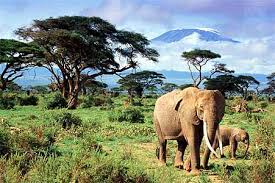
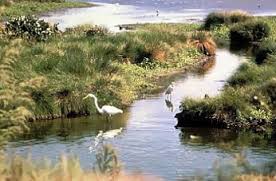
What are the abiotic factors in this image?
water, sunlight, dirt, air
birds, trees, and sunlight
water, trees, and birds
What is an example of a biotic factor?
bear
rocks
soil
water
An organisms in an environment is a
abiotic factor
biotic factor
Which of the following is a biotic factor?
sun
temperature
soil
grass
Which gas do plants release, that humans depend on for survival?
Water
Carbon Dioxide
Oxygen
Sugar
Plants use ____________ to make their own food
Water
Sunlight
Carbon dioxide
All of these
Which statement is an example of how carbon moves through a food chain as part of the cycle?
Producers release carbon dioxide, and consumers take it it.
Producers take in carbon dioxide, and consumers release it.
Producers take in carbon from the soil, and they release it when they decompose.
Producers release carbon into the soil, and consumers take it in from the soil.
Which process(es) release carbon dioxide into the atmosphere?
respiration
combustion
photosynthesis
feeding
What type of organism receives carbon present in dead plants and animals?
producer
primary consumer
secondary consumer
decomposer
Which process removes carbon dioxide from the atmosphere?
deforestation
tree farms
burning fossil fuels
cellular respiration
When organisms die, what process returns their carbon back into the atmosphere?
Respiration
Decomposition
Combustion
Erosion

Choose all the items made out of carbon
Food
Animals
Plants
Tennis Racket
Pretty much everything

What do 'plants' do with the carbon they receive?
They turn it into water
They don't need carbon
They turn it into food by photosynthesis
They keep it forever

How does carbon get from animals and back into the atmosphere? (CHOOSE ALL THAT APPLY)
Respiration (breathing)
After they die, they are broken down by decomposers
Photosynthesis
None of these

How do animals get carbon?
Photosynthesis
They absorb it from the atmosphere
The sun
They eat other plants and animals

What is CO2?
Air
Oxygen
Carbon Dioxide
Dioxide

All things are made out of carbon or need carbon to live.
True
False

What is causing global warming? (Choose All That Apply)
The earth is too close to the sun
There is too much carbon dioxide in the atmosphere
Because we're running out of water
Because we're cutting down all the trees and not planting more

Why can't life live on Venus?
Way too hot
Too small
Too far away
Not enough gravity

What made Venus way too hot for anything to live on it? (Choose All That Apply)
Global Warming
Too much Carbon Dioxide in the Atmosphere
Too close to the sun
It's just hot

How is carbon recycled?
The carbon cycle
At the recycle plant
It can't be recycled
Through water
Choose the things that take carbon dioxide (CO2) out of the air.
Plants
Water
Trees
Humans

What are the top things that contribute to global warming? (Choose more than one)
Cow Farts
Burning Gas in cars and factories
Cutting down Trees
Solar Power

What are some ways we can fight global warming? (Choose all that apply)
Eat chicken instead of beef
Plant trees
Recycle
Tell others to help fight
Organize these options into the right categories
volcanoes
Forest Fires
Combustion
Human Activities
Industrial processes
Agriculture
Fossil Fuels
Deforestations
marine life
oceans
wetlands
forests
Overall tendency (for example, a consistent increase) in a set of data over time.
fluctuation
climate change
trend
absorb
Variations in a set of data.
trend
fluctuation
climate
climate change
What is climate?
What's happening in space at a time and place.
What's happening in our atmosphere at a time and place
The average weather over many years
The average temperature over many years.
On a climograph the Line Graph measures?
Precipitation
Temperature
Three Characteristics that make up climate
weather, humidity
seasons, precipitation, temperature
wind, latitude, pollution
nearness to a desert
Label the Parts of the Graph.
Right Vertical Axis
Title
Key
Horizontal Axis
Left Vertical Axis

Match the following
Title
Location
Key
What each line means
Horizontal Axis
Time
Vertical Axis
What is being measured

The maximum temperature is (a) , which happens in (b) .
The minimum temperature is (c) , which happens in (d) .

"The maximum temperature is (a) , which happens in (b) .
The minimum temperature is (c) , which happens in (d) ."
A change over time is called a ___.
maximum
minimum
Match the trend to its graph.

Increasing

Decreasing

Constant
Match the trend to its graph.

Increasing

Decreasing

Constant

The temperature has a (a) trend from March to July,
and a (b) trend from August to November.

The temperature has a (a) trend from March to July,
and a (b) trend from August to November.
What is an invasive species?
An organism that is new to an environment that has positive effects on the environment.
An organism that is native to an environment that has negative effects on the environment.
An organism that is new to an environment that has negative effects on the environment.
An organism that is native to an environment that has positive effects on the environment.
Invasive species can have a major impact on the ecosystem.
TRUE
FALSE
Invasive species can crowd out native species.
TRUE
FALSE
Invasive species don't harm native species that are beneficial to the environment.
TRUE
FALSE
What does the word Invade mean?
To walk into a room and ask directions
To move into and sit down quietly
To move into and harm
To stay put

Click on the map to help answer this question: What can we predict about the population of Feral Swine for the year 2016?
There will be less feral swine in 2016 than there were in 1982.
There will be more feral swine in 2016 than there were in 2010
There were fewer feral swine in 2004 than 1982.
There will be no change in feral swine population.
What caused the lionfish to end up in the Atlantic Ocean?
The lionfish swam there from The Pacific Ocean.
Pet owners dumped their unwanted fish into the ocean.
Pet owners lost them and found them in the Atlantic Ocean.
The lionfish migrate there every winter.
It's hard to reduce lionfish numbers because _______.
they often live in spots where divers can't reach them.
they have spines that keep predators from eating them.
they reproduce quickly.
all of the above.

Which do you think has a higher species diversity biodiversity, a food chain or a food web?
Food Chain
Food Web

What has a higher biodiversity: a rain forest or a desert?
Rain forest
Desert
They have a similar biodiversity

Why is biodiversity in an ecosystem so important?
Because it can help humans where to determine good places to develop farm land.
Because places that have a healthy biodiversity are unaffected by major disturbances.
Because having a high biodiversity allows ecosystems to withstand major changes.
Because having a high biodiversity allows for fewer opportunities of competition for similar resources.

What is another term for traits that a species helps them survive major changes in an ecosystem?
Resiliency
Adaptation
Disturbances
None of the above

What is happening to the biodiversity of the aquatic ecosystem as a result of the Great Barrier Reef dying?
Increased
Decreased
Stayed the same
Which of the following terms describes an ecosystems ability to survive or rebound from a major change?
Distubance
Resiliency
Adaptations
Biodiversity
Which factor is most likely to cause the number of rabbits living in an area to increase?
less water
fewer predators
lack of shelter
limited food
Biodiversity, aka biological diversity, usually refers to
the number of people on Earth
the variety of species on Earth
the number of animal species in a specific area
the number of plant species in a specific area
Which of the following would be most effective in slowing the loss of biodiversity?
creating large parks/preserves in biodiversity hotspots
requiring every country to maintain a seed bank
Why is biodiversity important to ecosystems?
It helps populations adapt to ecological changes.
It increases at each level of the food chain.
The lionfish is a venomous fish found primarily in the Red Sea and the Indian Ocean. In the 1990s, lionfish were accidentally released into the Atlantic Ocean, where they found abundant resources and favorable environmental conditions. Which of the following scenarios is most likely to result in the lionfish having a major impact on the communities into which they were introduced?
With no natural predators, the lionfish population will become very large.
Some native species of invertebrates will develop a resistance to lionfish venom.
When you consume an organism, you only receive 10% of the energy, but how much of the toxins do you receive?
All of the toxins
10% toxins
1% toxins
None of the toxins
What are examples of toxins? (choose all that apply)
water
salt
pesticides
mercury
insecticides

In which organism would biomagnification be the most concentrated? (Remember the lab: Rabbits eat the grass, the snake eats the rabbit, the hawk eats the snake--the hawk is the apex predator)
grass
rabbit
snake
hawk

Which organism would have the most bioaccumulation?
eucalyptus tree
wombats
kookaburras
koalas

In what year were the most toxins present in smallmouth bass?
2000
2002
2004
2005
Pesticides and herbicides eventually show up in higher-level consumers (i.e. as you go up the food chain) due to
biomagnification
climate change
habitat destruction
bioaccumulation
Toxin concentrations _____________ as you go up the food chain.
do not change
increase
decrease
Which consumer is the most affected by toxins like mercury?
Primary Consumer
Secondary Consumer
Apex Predator
Producers
"Only humans make waste nature cannot digest." What did the captain mean by this?
Nature cannot recycle or reuse much of the trash humans produce.
Nature is great at recycling or reusing most of the trash humans produce.
Humans are poor at recycling.
Humans are poor at disposing of trash.
Which statement best reflects the reality of human recycling and trash disposal.
Recycling and proper trash disposal are not my responsibility. We have sanitation workers.
Recycling and trash disposal are way too expensive. Polluting nature is just a sad reality we can't really do anything about.
If humans put their minds to it, we could solve most of our recycling and trash disposal problems. Maybe not all, but anything is better than doing nothing.
There really is no point in trying to recycle or dispose of trash properly. There is no way to solve the problem or make it better.

What is a biotic factor that affects the lives of humans?
The increase in global temperature
Chemical air pollution from vehicles
The risk of lightning strikes
Spread of bacterial infections
Which example best illustrates the relationship between an abiotic and biotic factor in an ecosystem?
A shark consuming a smaller fish for food
Flowers providing a food source for bees
Water currents carrying rocks downstream
Available sunlight affecting how fast a plant grows
Which example illustrates the relationship between two biotic factors in an ecosystem?
A frog catching a fly to consume for energy
Warm water rising to the surface of a river which creates water movement
Rocks providing shelter for fish to protect themselves from predators
A storm with strong winds causes the soil to be displaced



