
 Worksheets
Chem 1 Fall Semester NHS
Total questions: 125
Worksheet time: 2hrs 30mins
Name
Class
Date
1.
Which of the following best describes the particles in a gas?
a)
Vibrate, they do not move much at all and stay close together
b)
They break up and come together to form different types of particles. .
c)
They move fast and spread apart.
d)
They can slide past one another, but stay close together.
2.
Which of the following best describes the particles in a liquid?
a)
Vibrate, they do not move much at all and stay close together
b)
They break up and come together to form different types of particles. .
c)
They move fast and spread apart.
d)
They can slide past one another, but stay close together.
3.
Which of the following best describes the particles in a solid?
a)
Vibrate, they do not move much at all and stay close together
b)
They break up and come together to form different types of particles. .
c)
They move fast and spread apart.
d)
They can slide past one another, but stay close together.
4.
Which of the following best describes sublimation?
a)
A liquid changing to a gas.
b)
A gas changing to a solid.
c)
A solid changing to a gas.
d)
A liquid changing to a solid.
5.
Which of the following best describes freezing?
a)
A solid changing to a liquid.
b)
A gas changing to a solid.
c)
A solid changing to a gas.
d)
A liquid changing to a solid.
6.
Which of the following best describes a gas changing to a liquid?
a)
Evaporation
b)
Condensation
c)
Sublimation
d)
Deposition
7.
Which of the following best describes a liquid changing to a gas?
a)
Evaporation
b)
Condensation
c)
Sublimation
d)
Deposition
8.
Which of the following substances have an indefinite shape but a definite volume?
a)
Solid
b)
Liquid
c)
Gas
9.
Which of the following substances has a definite shape and a definite volume?
a)
Solid
b)
Liquid
c)
Gas
10.
Which of the following substances has an indefinite shape and an indefinite volume?
a)
Solid
b)
Liquid
c)
Gas
11.
Which of the following is the best example of evaporation?
a)
Puddles disappearing
b)
Water forming on a soda bottle
c)
Frost forming on a window
d)
Candle wax turning to a liquid
12.
A measure of the motion of the atoms and molecules in a substance.
a)
Temperature
b)
Thermal energy
c)
Potential energy
d)
Kinetic energy
13.

Rotting fruit
a)
Chemical
b)
Physical
14.

Erase a pencil mark
a)
Chemical
b)
Physical
15.

Salt + water
a)
Chemical
b)
Physical
16.

A nail gets rusty
a)
Chemical
b)
Physical
17.

Frying an egg.
a)
Chemical
b)
Physical
18.

Cut up a piece of wood.
a)
Chemical
b)
Physical
19.

A change in phase
a)
Chemical
b)
Physical
20.

Bubbles form
a)
Chemical
b)
Physical
21.

Fire is produced
a)
Chemical
b)
Physical
22.

Can't easily go back to what you started with
a)
Chemical
b)
Physical
23.

Causes a change in temperature, as a result of a reaction
a)
Chemical
b)
Physical
24.
How many significant figures does the following number have: 0.002040
a)
6
b)
4
c)
3
d)
2
25.
How many significant figures does the following number have: 0.998005
a)
9
b)
10
c)
6
d)
5
26.
Round 0.010229 to four sig figs
a)
1022
b)
1023
c)
0.01023
d)
0.01022
27.
What is the measurement 1042 Liters rounded to 2 significant figures?
a)
1040 L
b)
1.1 x 10³ L
c)
1.0 x 10³ L
d)
1050 L
28.
What is 0.658 rounded to 1 significant figure?
a)
0
b)
0.66
c)
0.6
d)
0.658
29.
How many Significant Figures in the number below?
4.56 x 10³
4.56 x 10³
a)
5
b)
4
c)
6
d)
3
30.
Determine the number of Significant Figures in 13410000-m.
a)
4
b)
3
c)
2
d)
1
31.
This particle is found in the nucleus and has no charge
a)
Neutron
b)
Proton
c)
Electron
32.
This particle is found in the nucleus and has a positive charge
a)
Electron
b)
Proton
c)
Neutron
33.
This is a negatively charged particle found outside the nucleus
a)
Electron
b)
Proton
c)
Neutron
34.
This is the simplest of all atoms and contains only one proton and one electron
a)
Oxygen
b)
Hydrogen
c)
Water
35.
The first person to ever talk about an atom was
a)
Democritus
b)
Rutherford
c)
Dalton
36.
All matter is made of what?
a)
energy
b)
atoms
c)
electrons
d)
compounds
37.
How did Rutherford discover the proton?
a)
Cathode tube ray experiment
b)
Gold Foil Experiment
c)
Planetary Model
d)
Plum Pudding Model
38.

What scientist is best known for his "Plum Pudding" model of the atom?
a)
J.J. Tomson
b)
Ernest Rutherford
c)
John Dalton
d)
Democritus
39.

J.J. Thomson provided evidence that an atom...
a)
is the smallest particle of matter
b)
contains negatively charged particles
c)
has an overall negative charge
d)
has an overall positive charge
40.
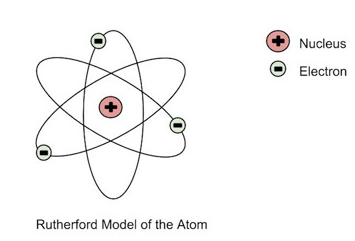
Rutherford's gold foil experiment provided evidence that...
a)
negative and positive charges are spread evenly throughout the atom.
b)
alpha particles have a positive charge.
c)
gold is not a dense as previously thought.
d)
there is a dense positively charged nucleus at the center of an atom.
41.
This particle determines what element you have - the elements identity.
a)
electron
b)
proton
c)
neutron
d)
valence shell
42.
What is the mass of a proton and a neutron?
a)
1amu
b)
2grams
c)
13amu
d)
10cm
43.
What are valence electrons?
a)
electrons on the first orbital always
b)
nucleus
c)
the outermost shell
d)
the number of electrons on the outermost orbital
44.
Which particles make up the nucleus of an atom?
a)
protons and neutrons
b)
electrons and protons
c)
electrons, protons, and neutrons
d)
electrons and neutrons
45.
What is the mass number and name of an element with 8 protons and 8 neutrons?
a)
16 - Carbon
b)
16 - Oxygen
c)
24 - Oxygen
d)
8 - Neon
46.
An element with a mass number of 10 and an atomic number of 6 has how many protons?
a)
5
b)
8
c)
6
d)
10
47.
An element with a mass number of 11 and an atomic number of 5 has how many neutrons?
a)
11
b)
5
c)
6
d)
16
48.
Elements on the periodic table increase by...
a)
atomic mass
b)
size
c)
mass number
d)
atomic #
49.
Most of the mass of an atom is contained here.
a)
electron orbitals
b)
nucleus
c)
shells
d)
atomic #
50.
What is the number that gives you the element and the number of protons contained in each elemental atom?
a)
atomic mass
b)
mass number
c)
symbol
d)
atomic #
51.
What is the difference between the atomic mass and the mass number?
a)
the atomic mass is always a whole number
b)
the atomic mass equals the atomic #
c)
mass number is the rounded atomic mass - always a whole number
d)
electrons
52.
Each column in the periodic table is called a
a)
period
b)
group
c)
cluster
d)
unit
53.
The atomic number tells you what?
a)
number of electrons
b)
number of protons
c)
number of neutrons
d)
both electrons and protons in an atom.
54.
Which group of the periodic table is composed of inert (not reactive) gases?
a)
alkali metals
b)
alkaline earth metals
c)
halogens
d)
noble gases
55.

The atoms along the staircase are called
a)
metals
b)
nonmetals
c)
metalloids
d)
noble gases
56.
Elements which are shiny, conduct electricity and heat are called
a)
metal
b)
nonmetal
c)
metalloid
d)
nonexistent
57.
What atom matches this electron configuration?
1s22s22p63s23p64s23d10
1s22s22p63s23p64s23d10
a)
Zinc
b)
Copper
c)
Nickel
d)
Germanium
58.
What electron configuration matches an oxygen atom?
a)
1s22s22p63s2, 3p64s23d104p5
b)
1s22s22p4
c)
1s22s22p6
d)
1s22s22p63s23p64s23d1
59.

How many electrons does Si contain? (click to see image)
a)
14
b)
28
c)
2
d)
4
60.
How many electrons can the first energy level hold?
a)
1
b)
2
c)
8
d)
0
61.
The electron configuration of an atom is 1s22s22p6. The number of electrons in the atom is
a)
3
b)
6
c)
8
d)
10
62.
There are 4 different types of subshells s,p,d,f
a)
true
b)
false
63.
Electrons occupy orbitals of lowest energy first is part of what electron configuration rule?
a)
Hund’s Rule
b)
Aufbau Principle
c)
Pauli Exclusion Principle
64.
What is the maximum number of electrons that an orbital can have?
a)
1 electron
b)
2 electrons
c)
3 electrons
d)
4 electrons
65.
How many p orbitals are there in a sublevel?
a)
2
b)
1
c)
4
d)
3
66.
How many electrons can the d sublevel hold?
a)
8
b)
10
c)
2
d)
4
67.

Which element is pictured?
a)
neon
b)
fluorine
c)
magnesium
d)
argon
68.
Electron arrangement that uses arrows
a)
Electron configuration
b)
Shorthand configuration
c)
Lewis dot structure
d)
Orbital diagram
69.

Which orbital has the least amount of energy?
a)
p orbital
b)
d orbital
c)
s orbital
d)
What is an orbital?
70.
Maximum number of electrons that can be placed in an s orbital.
a)
2
b)
6
c)
10
d)
14
71.

What is incorrect about this orbital diagram?
a)
Both arrows in the 2p box should be pointing up
b)
There is nothing incorrect with this diagram
c)
In the there should only be 1 orbital in the first 2p box and one in the 2nd 2p box
d)
All the arrows should be pointing up.
72.
Which of the following does not exist?
a)
2d
b)
5f
c)
4d
d)
6p
73.

Which orbital shows a violation of Hund's Rule?
a)
A
b)
B
c)
C
d)
D
74.
This orbital fill after the s, the shape is a dumbbell.
a)
s
b)
p
c)
d
d)
f
75.

What line segment represents only the solid state?
a)
A-B
b)
B-C
c)
C-D
d)
D-E
76.

In which segment is the kinetic energy remaining constant?
a)
A-B
b)
B-C
c)
C-D
d)
E-F
77.

What state(s) of matter are present at D-E?
a)
Solid-liquid
b)
Liquid
c)
Liquid-gas
d)
Gas-Solid
78.

Between which points is the temperature of the substance increasing?
a)
A-B only.
b)
A-B, C-D, E-F
c)
B-C only.
d)
B-C, D-E
79.
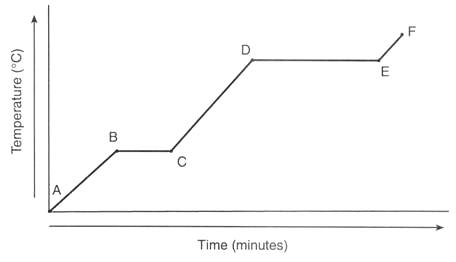
Between which points is the substance changing state?
a)
A-B only.
b)
A-B, C-D, E-F
c)
B-C only.
d)
B-C, D-E
80.

What phase change occurs at D-E?
a)
melting
b)
condensing
c)
boiling
d)
freezing
81.

What type of process is happening as one moves along line segment B toward the right?
a)
An endothermic Process
b)
An exothermic Process
c)
The calorimetry process
d)
Nuclear fusion
82.
How many states of matter are present during line segment BC?
a)
One
b)
Two
c)
Three
d)
Depends on the temperature
83.
Density: Chemical or Physical Property
a)
Chemical Property
b)
Physical Property
84.
Flammability (burns): Chemical or Physical Property
a)
Chemical Property
b)
Physical Property
85.
Reacts with Acid: Chemical or Physical Property
a)
Chemical Property
b)
Physical Property
86.
Blue Color: Chemical or Physical Property
a)
Chemical Property
b)
Physical Property
87.
Melting Point: Chemical or Physical Property
a)
Chemical Property
b)
Physical Property
88.
Boiling Point: Chemical or Physical Property
a)
Chemical Property
b)
Physical Property
89.

Ability to rust is this type of property:
a)
Physical property
b)
Chemical property
90.

Which box has a higher density?
a)
Box A
b)
Box B
c)
cannot be determined
d)
they are the same
91.
Physical properties are
a)
properties that can be observed without changing the identity of the substance
b)
properties that describe how a substance changes into a completely different substance
92.
A magnet being able to pick up nails is an example of a
a)
Chemical property
b)
Physical property
93.
Kool-aid powder dissolving into water is an example of
a)
Chemical change
b)
Physical Change
c)
Chemical property
d)
Physical Property
94.
Can an element be broken down into a simpler substance
a)
yes
b)
No
95.
Is salt (NaCI) a compound or a element
a)
Compound
b)
element
96.
What is made up two or more elements that are chemically combined?
a)
Element
b)
Mixture
c)
Compound
d)
Solids
97.
Which of the following represents an element?
a)
H2O
b)
H2
c)
NaCl
d)
CaCO3
98.

This picture represents which of the following?
a)
element
b)
compound
c)
mixture
99.

This picture represents which of the following?
a)
element
b)
compound
c)
mixture
100.

This picture represents which of the following?
a)
element
b)
compound
c)
mixture
101.
The horizontal rows on the periodic table are known as
a)
periods.
b)
atoms.
c)
groups or families.
d)
valence electrons.
102.
A combination of substances that are not chemically combined is called a(n)____________.
a)
mixture
b)
compound
c)
physical
103.
How does filtration separate a mixture?
a)
by separating with your hands
b)
by evaporating
c)
by running the mixture through a filter and removing a solid from a liquid
d)
pouring off
104.
How does evaporation separate a mixture?
a)
pouring the mixture through a filter
b)
evaporating the liquid part of the solution, leaving the solid part behind
c)
separating materials by hand
d)
pouring off
105.

Another example of a mixture is
a)
Water and oil
b)
Cereal and Milk
c)
Sand and water
d)
All of the above
106.

What will happen to these molecules if they were put into a colder environment?
a)
They would speed up
b)
They would move further apart
c)
They would slow down
d)
They would multiple
107.
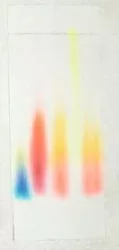
Dyes in water soluble markers may be separated by means of..
a)
crystallization
b)
sublimation
c)
chromatography
d)
sedimentation
108.
Which of the substances below is a mixture?
a)
Carbon Dioxide
b)
Water
c)
Soil
d)
Hydrogen
109.
Abigail would like to separate saltwater and get the water. What separation method is appropriate for this?
a)
Evaporation
b)
Filtration
c)
Distillation
d)
Chromatography
110.
These kind of observation use your senses to observe results.
a)
Qualitative
b)
Quantitative
c)
Scientific
111.
These kind of observations are made using instruments such as rulers, balances and thermometers.
a)
Qualitative
b)
Quantitative
c)
Scientific
112.
The leaf is 5mm wide.
a)
Qualitative
b)
Quantitative
113.
The mass of the chocolate cake is 250 g.
a)
Qualitative
b)
Quantitative
114.
The barn contains pigs, cows, and horses.
a)
Qualitative
b)
Quantitative
c)
Both
d)
Neither
115.

Your teacher has asked you to explain the difference between quantitative and qualitative observations. Which statement is correct?
a)
Quantitative observations use numbers, qualitative uses the senses.
b)
Quantitative observations use the senses, qualitative uses numbers.
c)
Quantitative observations use measurement, qualitative uses numbers.
d)
Quantitative observations use colors, qualitative uses the senses.
116.
Dolphin colors range from gray to white.
a)
qualitative
b)
quantitative
117.
A possible explanation to a problem that has not yet been tested.
a)
data
b)
theory
c)
hypothesis
d)
fact
118.
This variable in an experiment is the one being deliberately changed by the scientist.
a)
dependent variable
b)
independent variable
c)
data
d)
control group
119.
A series of steps used by scientists to solve a problem or answer a question.
a)
scientific method
b)
recipe
c)
data collection
d)
metric system
120.
In a controlled experiment, how many independent variables can be worked with at a time?
a)
one
b)
none
c)
two or more
d)
how ever many makes sense.
121.
Mr. S. sets up an experiment to see how the mass of a ball affects the distance it rolls off a ramp. Identify the independent variable.
a)
distance traveled by the ball
b)
height of the ramp
c)
mass of the ball
d)
weight of the ball
122.
If I study for my scientific method quiz, then I will have a better test score. What is the dependent variable?
a)
Scientific Method
b)
Studying
c)
Independent variable
d)
Test score
123.
Which is NOT a step in the scientific method?
a)
Make observation
b)
Form a theory
c)
Collect data
d)
Form a hypothesis
124.
This part of the experiment serves as a basis of comparison; the one variable being tested has been omitted.
a)
experimental group
b)
control group
c)
data
d)
variables
125.
True or False: Your hypothesis can never be wrong.
a)
True
b)
False
100 %

