
 Worksheets
Physical Science Unit 3 Test Review
Total questions: 125
Worksheet time: 2hrs 1mins

When an atom loses an electron, it becomes a
positive ion
negative ion
neutral ion
neutral atom


What is the charge on a lithium atom that loses 1 electron?

What type of ion is shown in the image? (Calcium - atomic number 20)
cation with +1 charge
cation with +2 charge
anion with -1 charge
anion with -2 charge

An ion of Chlorine gains one extra electron. What is its new charge?
An ion of Sodium loses one electron. What is its new charge?
An ion has 3 protons and 5 electrons. What is its total charge?

How many valence electrons does the atom shown contain?

How many valence electrons does the atom shown contain?

How many valence electrons does the atom shown contain?

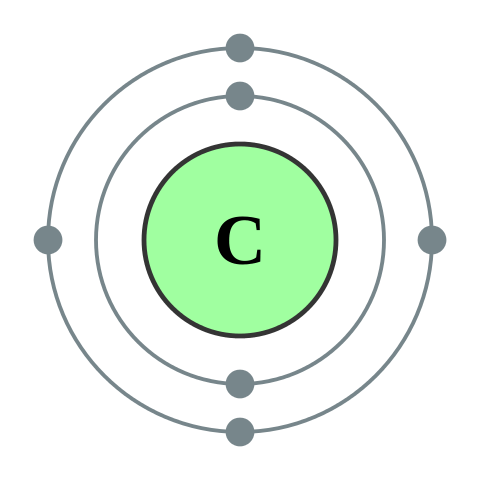
How many valence electrons does carbon have?
4
5
6
7

This is a correct dot diagram for neon (Ne)
true
false

This is a correct dot diagram for carbon (C)
true
false

This is a correct dot diagram for nitrogen (N)
true
false
When an atom loses a valence electron, it becomes a(n) _____________ ion.
positive
negative
neutral
When an atom gains a valence electron, it becomes a(n) _____________ ion.
positive
negative
neutral

Is this the correct Lewis Dot Structure for Boron?
Yes
No, missing electrons
No, too many electrons
No, dots are in wrong place.

Is this correct way to draw the Lewis Dot Structure for Carbon?
Yes
No, too many electrons
No, not enough electrons
No, dots are in wrong places
Which ones are acceptable?


This could be the dot diagram of
Mg
Cl
C
O
How many valence electrons does Phosphorus have?
4
5
6
7
8
How many valence electrons does Oxygen have?
4
5
6
7
8
How many valence electrons does Chlorine have?
4
5
6
7
8
How would you draw a Lewis dot diagram for Magnesium?


What are valence electrons?
The total number of electrons in an atom
The number of electrons in the outermost shell
The number of electrons in the second shell
The number of protons in the outermost shell
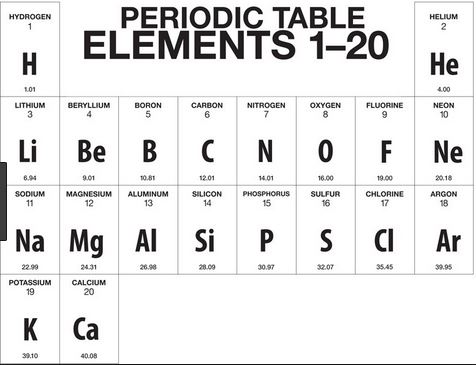
How many valence electrons does Hydrogen Have?
1 Valence electron
2 Valence electron
3 Valence electron
4 Valence electron
5 Valence electron
How many valence electrons does Helium Have?
1 Valence electron
2 Valence electron
3 Valence electron
4 Valence electron
5 Valence electron
How many valence electrons does Nitrogen Have?
1 Valence electron
2 Valence electron
3 Valence electron
4 Valence electron
5 Valence electron
How many valence electrons does Magnesium Have?
1 Valence electron
2 Valence electron
3 Valence electron
4 Valence electron
5 Valence electron
How many valence electrons does Aluminum Have?
1 Valence electron
2 Valence electron
3 Valence electron
4 Valence electron
5 Valence electron
How many valence electrons does Phosphorus Have?
1 Valence electron
2 Valence electron
3 Valence electron
4 Valence electron
5 Valence electron
How many valence electrons does Silicon Have?
1 Valence electron
2 Valence electron
3 Valence electron
4 Valence electron
5 Valence electron
What is a cation?
A negatively charged ion
An atom with no charge
A positively charged ion
A stable atom on the periodic table
Atoms from family 2 on the Periodic Table are likely to form ions of what charge?
+1
+2
0
−1
−2
Atoms from family 16 on the Periodic Table are likely to form ions of what charge?
+1
+2
0
−1
−2
Look at the periodic table. What should be the charge on the ion formed by calcium?
+1
+2
-1
-2
Most elements are most stable when their outermost energy levels contain ________ electrons.
2
6
8
18
Which of the following elements is an exception to the octet rule?
helium
oxygen
chlorine
magnesium
Anions have
gained electrons.
lost electrons.
gained protons.
lost protons.

Which of the elements in the picture has correct electron dot notation?
1
2
3
4
How many electrons would a Nitrogen ion gain/lose?
lose 5
gain 5
lose 3
gain 3
How many electrons would a Calcium ion gain/lose?
lose 1
gain 1
lose 2
gain 2
What is the ion formed from Sulfur?
S+2
S-2
S+6
S-6
If an atom loses electrons, the charge will be positive.
true
false
A Bromine ion gains 1 electron, which of the following is the correct symbol for a Bromine ion?
Br-1
Br+1
Br+7
Br-7

What ion will this atom form?
3-
2+
3+
1-
2-

What ion will this atom form?
3-
2+
3+
1-
2-

What ion will this atom form?
3-
2+
1+
1-
2-

What ion will this atom form?
3-
2+
3+
1-
2-

What ion will this atom form?
3-
2+
3+
1-
2-

What ion will this atom form?
1+
2+
3+
1-
2-

What ion will this mystery atom form?
3-
2+
3+
1-
2-

What ion will this mystery atom form?
3-
2+
3+
1-
2-

What ion will this mystery atom form?
3-
2+
3+
1-
2-

What ion will this mystery atom form?
3-
2+
3+
1-
2-

What ion will this mystery atom form?
3-
2+
3+
1-
2-
The Lewis Dot structure for aluminum would have ______ electrons.
13
3
8
27
Which of the following best describes the correct arrangement of the electrons in a Lewis dot structure for phosphorus?
five single electrons
two pairs of electrons and one single electron
three pairs of electrons and one single electron
three single electrons and one pair of electrons
Which of the following groups on the Periodic Table will only form ions with positive charges?
Group 2
Group 15
Group 17
Group 18
A student is answering the question "What charge ion does Aluminum form?"
The student's answer is "Aluminum forms a 3 ion"
What is the error in the student's answer?
There is no error, his answer is correct
He did not say that the ion was positive
He did not say that the ion was negative
Aluminum does not form an ion with a charge of +3 or -3

How many valence electrons does this atom have?
2
3
5
What is an anion?
A negatively charged ion
An atom with no charge
A positively charged ion
A stable atom found on the periodic table

Which of the following statements is true?
In a neutral atom, there are always an equal amount of protons and neutrons
In a neutral atom, all subatomic particles are always equal in number
In a neutral atom, there are always an equal amount of neutrons and electrons
In a neutral atom, there are always an equal amount of protons and electrons

Which of the following statements about the model is true?
This model represents Argon with 8 valence electrons
This model represents Argon with 18 valence electrons
This model represents Silver with 8 valence electrons
This model represents Silver with 18 valence electrons


Choose the TWO most reactive families on the periodic table with correct reasoning.
Alkali metals because they only need to lose 1 valence electron
Noble gases because they have full valence electron shells
Halogens because they only need to gain 1 valence electron
Halogens because they only need to lose 1 valence electron
Alkali metals because they only need to gain 1 valence electron
Which of the following elements is most likely to have similar properties to those of sodium (Na)?
Magnesium (Mg) because it's in the same period as Na
Magnesium (Mg) because it's in the same group as Na
Francium (Fr) because it's in the same period as Na
Francium (Fr) because it's in the same group as Na
Which of the following elements is most likely a poor conductor of electricity?
Beryllium (Be)
Gold (Au)
Phosphorus (P)
Copper (Cu)
_____________ ______________ are things you can observe and describe about matter without it changing chemically.
Chemical properties
Luster
Physical properites
Ductile
______________ refers to the way most metals can be stretched into wires.
Luster
Ductile
Malleable
Metal
______________ refers to the way a metal can be hammered or rolled into thin sheets.
Luster
Malleable
Metalloids
Solid
Metals are found on the ______________ side of the periodic table.
nonmetals
left
right
metals
Most metals are ____________ at room temperature.
gas
liquid
solid
left
This group of elements have properties that are opposite those of metals. ______________________
luster
nonmetals
metalloids
metals
This group of elements sit along a stair step line on the periodic table and have properties of both metals and nonmetals. _________________________
luster
metals
nonmetals
metalloids
_______________ is the first element at the top of the stair step.
hydrogen
boron
silicon
carbon
Copper is a common metal. Which of the following properties does this metal most likely have?
High conductivity, high malleability, and low luster
Low conductivity, low malleability, and low luster
High conductivity, high malleability, and high luster
Low conductivity, high malleability, and high luster

The elements in this family are soft, silvery, and very reactive with water.
Alkaline Earth Metals
Alkali Metals
Transition Metals
Lanthanides
Which of the following element is an example of Halogen
Sodium
Magnesium
Fluorine
Carbon

