
 Worksheets
CFE Review Standard
Total questions: 127
Worksheet time: 12hrs 24mins
Name
Class
Date
1.
which force produces a change in motion?
a)
unbalanced force
b)
balanced force
c)
gravitational force
d)
frictional force
2.
What is the difference between mass and weight?
a)
mass is how much matter is in an object, and weight is the gravitational pull on that object
b)
mass and weight are the same
c)
weight affects how much mass is in an object
d)
weight is determined by how many atoms make up an object
3.
Which example shows NO acceleration?
a)
going straight at a constant speed
b)
going straight while slowing down
c)
speeding up
d)
circling at at constant speed
4.
What do you need to measure to find the speed of a moving car?
a)
distance and time
b)
speed and direction
c)
direction and time
d)
distance and momentum
5.
How is gravity affected by mass?
a)
the larger the mass of the object, the greater the gravity
b)
small objects have no gravity
c)
gravity is not affected by mass of objects, whether large or small
6.
James and Alex are kicking a ball back and forth. Alex kicks the ball in James’s direction, but the ball stops just before it reaches James. Which most likely caused the ball to stop?
a)
friction
b)
gravity
c)
change in mass of the ball
d)
change in shape of the ball
7.

During which interval is the object slowing down?
a)
A to B
b)
D to E
c)
E to F
d)
G to H
8.
What happens when you increase the amplitude of a sound?
a)
it makes the sound louder
b)
it makes the sound travel faster
c)
it increases the wavelength of the sound
d)
it increases the frequency of the sound
9.
What is frequency?
a)
any disturbance that transmits energy through a medium
b)
the distance from any point on a wave to an identical point on the next wave
c)
the number of waves produced in a given amount of time
d)
when the particles in a longitudinal wave are spread apart
10.

High frequency waves have _________ wavelength.
a)
varying
b)
high
c)
the same
d)
low
11.
which of the following does NOT belong in the electromagnetic spectrum:
a)
X-ray
b)
sound wave
c)
ultra violet rays
d)
microwaves
12.

What is the smallest particle of matter that has the properties of that matter?
a)
atom
b)
matter
c)
molecule
d)
physical property
13.

Which is more dense?
a)
left cube
b)
right cube
14.

Which statement is true?
a)
Oil is the most dense substance.
b)
Corn syrup is less dense than water.
c)
Oil is less dense than water.
d)
Oil and corn syrup have the same density but different masses.
15.

What is happening to the water on the glass?
a)
Condensation
b)
Deposition
c)
Sublimation
d)
Evaporation
16.

What is this?
a)
Mixture of compounds
b)
Mixture of elements
c)
Compound
d)
element
17.

What is this?
a)
Compound
b)
Element
c)
Mixture of elements
d)
Mixture of compounds
18.

What is this?
a)
Compound
b)
Element
c)
Mixture of compounds
d)
Mixture of compounds and elements
19.
An atom has 64 protons and 93 neutrons. How many electrons does it have?
a)
32
b)
64
c)
93
d)
157
20.
An atom has 5 protons and 6 neutrons. What is its mass number?
a)
5
b)
6
c)
11
d)
16
21.

How many neutrons does Barium have?
a)
137
b)
56
c)
79
d)
33
22.

The shaded area on the periodic table represents the
a)
family
b)
period
c)
metals
d)
nonmetals
23.

The shaded black area on the periodic table shows the following
a)
nonmetals
b)
metals
c)
period
d)
metalloids
24.

The shaded area on the periodic table indicates which of the following?
a)
halogens
b)
noble gases
c)
alkali metals
d)
alkaline earth metals
25.
Top of a wave
a)
crest
b)
trough
c)
wavelength
d)
origin
26.
Which of the following lists contains only nonrenewable energy resources?
a)
coal, biofuel, hydropower
b)
coal, petroleum, uranium
c)
coal, biofuel, petroleum
d)
hydropower, wind, geothermal
27.
Fossil fuels are made from:
a)
melted rock
b)
old bones
c)
decayed plants and animals
d)
slime
28.
Which particle carries a positive charge?
a)
Protons
b)
electrons
c)
atom
d)
neutrons
29.

Beryllium is in group number______.
a)
Group 2
b)
Group 3
c)
Group 4
d)
Group 7
30.

The period for Bromine is ___________.
a)
3
b)
2
c)
4
31.
What is a valence electron?
a)
An electron in the highest occupied energy level of an atom
b)
An electron that has properties similar to a transition metal
c)
Electrons with high reactivity
d)
Noble gases
32.
What group of elements has a "full octet"?
a)
Group IIA
b)
Group VIIA
c)
Halogens
d)
Noble gases
33.
How many valance electrons are in group 2A?
a)
4
b)
6
c)
1
d)
2
34.
Most of the mass in an atom is concentrated in the
a)
electrons.
b)
nucleus.
c)
protons.
d)
empty space.
35.
A(n) _______ electron is _______ the nucleus.
a)
spinning, closest to
b)
valence, attached to
c)
valence, farthest from
d)
negative, inside
36.

What is the net force on the block? (click on the words to view the picture)
a)
5 Newtons up
b)
5 Newtons down
c)
15 Newtons up
d)
15 Newtons down
37.

a)
The boat came to a stop after it traveled for 10 minutes.
b)
The boat was at rest from 20 to 40 minutes.
c)
The boat traveled the fastest in the last 20 minutes.
d)
The boat traveled the shortest distance in the first 20 minutes.
38.

a)
Cars 1 and 2 traveled the same distance before coming to a stop.
b)
Car 2 traveled a greater distance in the first 4 seconds than Car 1.
c)
Car 1 traveled a greater distance in the first 4 seconds than Car 2.
d)
Cars 1 and 2 came to a stop after traveling for the same amount of time.
39.

a)
box 1
b)
box 2
c)
box 3
d)
box 4
40.

During which interval is the object traveling at a constant velocity?
a)
B to C
b)
D to E
c)
F to G
d)
it traveling at a constant velocity during all of the intervals shown.
41.

Describe the motion in segment B
a)
Constant velocity; Moving
b)
Constant velocity; Not moving
c)
Speeding up
d)
Slowing down
42.

Describe the motion in segment C
a)
Slowing down; Positive direction
b)
Slowing down; Negative direction
c)
Speeding up; Negative direction
d)
Constant velocity; Negative direction
43.

Look at the diagram. Which point does the ball have the maximum potential energy?
a)
A
b)
B
c)
C
d)
D
44.

Which skier will have a greater potential energy?
a)
Skier 1
b)
Skier 2
45.
What is the definition of Heat Energy?
a)
Transfer of thermal energy from object to object.
b)
Energy due to its position.
c)
Energy flowing in a circuit.
d)
None of above
46.
Which procedure BEST represents the law of conservation of mass?
a)
Evaporating salt water leaves 5 grams of salt
b)
Burning 2 kilograms of wood leaves 0.4 kilograms of ash
c)
Using filter paper to separate 2 grams of solid from 10 grams of water
d)
Combining 2 grams of copper and 4 grams of sulfur to produce 6 grams of copper sulfate
47.

Which substance is acidic?
a)
banana
b)
seawater
c)
ammonia
d)
bleach
48.

Which letter represents the wave trough?
a)
A
b)
B
c)
C
d)
D
49.

Which wave has a greater frequency?
a)
A
b)
B
50.

Which term explains the path of the light ray in this diagram?
a)
Convection
b)
Scattering
c)
Absorption
d)
Refraction
51.

Which letter shows reflection?
a)
Pathway A
b)
Pathway B
c)
Pathway C
d)
Pathway D
52.
What is the name of a material in which waves, like sound waves, seismic waves, and waves in a slinky
a)
Vacuum
b)
Medium
c)
Mechanical
d)
Space
53.

What is anything that has mass and takes up space?
a)
atom
b)
matter
c)
molecule
d)
physical property
54.

What is a characteristic of matter that can be measured or observed without changing matter into something new?
a)
matter
b)
molecule
c)
physical property
d)
states of matter
55.
What charge does a Proton have?
a)
Negative
b)
Positive
c)
Neutral
d)
Contrated
56.
A molecule is________
a)
a glob of gelatinous goo
b)
smaller than an atom
c)
filled with raisons
d)
more than one atom bonded together
57.

What is this?
a)
Compound
b)
Mixture of compounds and elements
c)
Mixture of compounds
d)
Mixture of elements
58.
What charge does an electron have?
a)
negative (-)
b)
positive (+)
c)
neutral or no charge (0)
59.
What is a measure of the average Kinetic energy of a substance
a)
mass
b)
volume
c)
density
d)
temperature
60.
Matter is anything that has mass and takes up space.
a)
True
b)
False
61.
Two magnets with like poles will _________ each other.
a)
attract (pull together)
b)
repel (push apart)
62.
Things that stay the same throughout the whole experiment are called
a)
controls
b)
conclusions
c)
independent variables
d)
constants
63.
I want to see how the amount of water affects plant growth. What is the independent variable?
a)
amount of water
b)
plant growth
c)
type of plant
d)
soil type
64.
Dr. Smith wants to examine whether a new drug increases the maze running performance of older rats. Dr. Smith teaches two groups of older rats to find a piece of tasty rat chow in the maze. One group of rats is given the new drug while they are learning the maze. The second group is not given the drug. One week after having learned the maze he retests the rats and records how long it takes them to find the rat chow.
What is the control?
What is the control?
a)
The new drug
b)
The tasty rat chow
c)
How long it takes the rats to find the food
d)
The second group not given the drugs
65.
What two quantities must I know to calculate something's speed?
a)
time and weight
b)
position and distance
c)
distance and time
d)
distance and speed
66.

What is happening in this graph from point A to B?
a)
The object is accelerating.
b)
The object is not moving.
c)
The object is decelerating.
d)
The object is moving at a constant speed.
67.

What is happening in this graph from point B to C?
a)
The object is going down a hill.
b)
The object is returning to its starting location.
c)
The object is slowing down.
d)
The object is staying still.
68.

The blue section of the wave is measuring _________________.
a)
wavelength
b)
crest
c)
trough
d)
amplitude
69.

The acronym (letters) used to remember visible light is____________
a)
KTPERRY
b)
ROYGBIV
c)
DOGPOUND
d)
ROMERO
70.

The orange line is measuring the _________________________.
a)
wavelength
b)
amplitude
c)
crest
d)
trough
71.
Where does light move the fastest?
a)
Solid
b)
Vacuum
c)
Liquid
d)
Gas
72.

Which picture best shows the law of reflection?
a)
A
b)
B
c)
C
d)
D
73.
The Law of Conservation of Matter means
a)
it can be created or destroyed
b)
it can be created but not destroyed
c)
it can't be created or destroyed
74.
This rule says that all atoms want a full outer orbital.
a)
pentet rule
b)
hextet rule
c)
octet rule
d)
quartet rule
75.

The atoms along the staircase are called
a)
metals
b)
nonmetals
c)
metalloids
d)
noble gases
76.
Evidence of a chemical reaction include:
a)
Phase change
b)
No new substance
c)
Bubbles forming
d)
Shape change
77.
In the modern periodic table elements are arranged by:
a)
atomic mass
b)
atomic number
c)
valence electrons
d)
number of isotopes
78.
If a mixture is NOT uniform throughout, it is ______________.
a)
heterogeneous
b)
heterogenius
c)
homogeneous
d)
a compound
79.
If a mixture is uniform throughout, it is _______.
a)
heterogeneous
b)
salt
c)
homogeneous
d)
a compound
80.
Define a liquid.
a)
Indefinite shape, indefinite volume
b)
Definite shape, definite volume
c)
Found in stars
d)
Definite volume, indefinite shape
81.
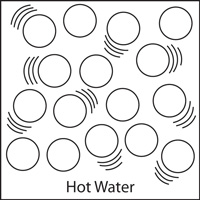
The speed of the molecules determines the _____.
a)
volume
b)
density
c)
pressure
d)
temperature
82.
Water is considered the universal solvent because...
a)
it dissolves to many solutes.
b)
the Earth is mostly made of it.
c)
humans are mostly comprised of it.
d)
it's so useful.
83.
Energy of motion is which type of energy?
a)
Potential
b)
Kinetic
c)
Sound
d)
Gravitational
84.
Specific heat is....
a)
The measure of kinetic energy of an objects particles
b)
A measure of the energy needed to increase the average kinetic energy of the particles
c)
The heating caused by the motion of flluid due to temperature difference
d)
The transfer of energy by electromagnetic radiation
85.
A runners races in the 100 meter dash. It takes her 10 seconds to finish. What is her average speed?
a)
10 m/s
b)
1000 m/s
c)
100 seconds
d)
10 seconds
86.
If the mass of an object decreases, what property will decrease as well?
a)
Acceleration
b)
Force
c)
Inertia
d)
Velocity
87.
The number of wavelengths that pass a point each per second is:
a)
frequency
b)
period
c)
longitudinal
d)
transverse wave
88.
Which two factors affect the gravitational attraction between two objects?
a)
Density and Friction
b)
Mass and Distance
c)
Density and Distance
d)
Mass and Friction
89.
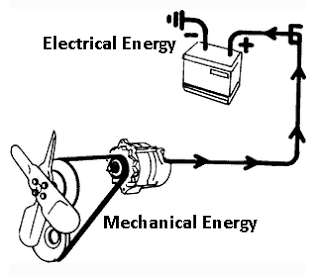
In an electric motor, the energy transformation begins as ----
a)
electrical and becomes chemical
b)
mechanical and becomes electrical
c)
electrical and becomes mechanical
d)
mechanical and becomes chemical
90.
Charges that are different _____________ each other.
a)
attract
b)
repel
c)
equal
d)
move opposite to
91.
Imagine one end of a rope is tied to a door handle. The other end is caused to vibrate vertically(up & down). The wave that travels along the rope is an example of a(n)...
a)
Electromagnetic Wave
b)
Microwave
c)
Transverse Wave
d)
Longitudinal Wave
92.
Which of the following best explains the difference between transverse and longitudinal waves?
a)
Only transverse waves vibrate.
b)
Only longitudinal waves can travel through a solid.
c)
Particles only travel in a circular pattern along a longitudinal wave.
d)
Particles only travel perpendicular to the direction the energy travels in a transverse wave.
93.
Which solution is most acidic?
a)
cranapple juice, pH= 5.0
b)
salad dressing, pH= 4.5
c)
pickle juice, pH= 3.0
d)
lye water, pH= 10.0
94.

The pH of several solutions is listed.
Which solution is the most basic?
Which solution is the most basic?
a)
1
b)
2
c)
3
d)
4
95.

Two metal pipes are placed together as shown below.
How does heat most likely spread from the aluminum (Al) pipe to the copper (Cu) pipe
How does heat most likely spread from the aluminum (Al) pipe to the copper (Cu) pipe
a)
convection
b)
conduction
c)
radiation
d)
refraction
96.
In an endothermic reaction, heat is ,,,
a)
taken in
b)
given out
97.
In an exothermic reaction, heat is ...
a)
taken in
b)
given out
98.

Which of these processes occurs along the BC line in the diagram?
a)
boiling
b)
condensing
c)
vaporizing
d)
melting
99.

At higher temperatures
a)
particles in an object have less energy
b)
particles in an object move faster
c)
a gas contracts
100.

Segment A? (Notice it is the coldest!)
a)
solid
b)
liquid
c)
freezing
d)
melting
101.

Segment C?
a)
gas
b)
liquid
c)
boiling
d)
melting
102.
Segment E? (Notice it is the hottest!)
a)
gas
b)
liquid
c)
boiling
d)
melting
103.
Segment D?
a)
gas
b)
liquid
c)
boiling/condensation
d)
melting/freezing
104.

The average kinetic energy of the particles of a substance is...
a)
Heat
b)
Heat Capacity
c)
Temperature
d)
Radiation
105.
Select the correct order of waves on the EMS
a)
Radio, Micro, Infra, Visible, Ultra, X-ray, Gamma
b)
Gamma, X-ray, Ultra, Vis, Infra, Micro, Radio
c)
Vis, Micro, Infra, Ultra, X-ray, Gamma, Radio
d)
Micro, Radio, Vis, Infra, Ultra, X-ray, Gamma
106.
All electromagnetic waves have the same...
a)
frequency
b)
speed
c)
wavelength
d)
energy
107.
Charge of a proton
a)
Positive
b)
Negative
c)
Neutral
108.
Charge of a neutron
a)
Positive
b)
Negative
c)
Neutral
109.
Location of the proton
a)
Nucleus
b)
Outside the nucleus
c)
Electron cloud
d)
Energy level
110.

"For every action, there is an equal and opposite reaction."
a)
Newton's 1st Law
b)
Newton's 2nd Law
c)
Newton's 3rd Law
d)
Newton's 4th Law
111.

Force = Mass x Acceleration
a)
Newton's 1st Law
b)
Newton's 2nd Law
c)
Newton's 3rd Law
d)
Newton's 4th Law
112.

"An object in motion (or at rest) will to stay in motion (or at rest) until an outside force acts upon it."
a)
Newton's 1st Law
b)
Newton's 2nd Law
c)
Newton's 3rd Law
d)
Newton's 4th Law
113.

The combination of all the forces acting on an object is the...
a)
net force
b)
action force
c)
reaction force
d)
balance force
114.

When all the forces on an object are equal and opposite, & the net force is zero, that's...
a)
balanced forces
b)
unbalanced forces
c)
terminal velocity
d)
reaction forces
115.

The tendency of an object to resist changes in its motion is...
a)
inertia
b)
force
c)
acceleration
d)
velocity
116.

The attraction that causes water and other liquids to form drops on thin films is called ________________. This is also water’s ability to be attraction to other water molecules.
a)
adhesion
b)
capillary action
c)
cohesion
d)
surface tension
117.
Replication is described as...
a)
the action of someone else reproducing an experiment
b)
the action of copying or reproducing something.
c)
the act of doing an experiment at the park
d)
the act of combining items to become one item
118.
Repetition is described as...
a)
the action of repeating something that has already been said or written.
b)
the action of taking many items and becoming one
c)
the act of copying
d)
the act of using more than one variable in an experiment
119.
Why should you keep all variables constant besides the independent variable?
a)
You wouldn't be able to determine which variable is having the effect on your results
b)
You would get confused and measure something other than your dependent variable
c)
It isn't important to keep other variables constant
d)
None of the above
120.
If you are burned with a strong base, what should you use to safely neutralize it
a)
vinegar (pH = 4)
b)
water (pH = 7)
c)
ammonia (pH = 9)
d)
baking soda (pH = 10)
121.
A solution contains the same number of H+ ions as it contains OH- ions, what will it be?
a)
Acid
b)
Base
c)
Neutral
122.

A box attains a velocity of 27 m/s in 3 seconds from 0m/s. Find the acceleration.
a)
30 m/s
b)
24 m/s2
c)
9 m/s2
d)
81 km/hr
123.
Thermal energy ALWAYS moves from _____ to _____.
a)
solid to liquid
b)
ice to water
c)
hot to cold
d)
solid to gas
124.
What do all waves transfer?
a)
Light
b)
Sound
c)
Heat
d)
Energy
125.

You can't hear sounds in outer space because there is no
a)
matter
b)
light
c)
energy
d)
heat
126.
A
student is sitting in her chair, taking a test. Gravity pulls her downward with
a force of 15 N. Which of the following does her chair do?
a)
Push
downward with a force of 15 N
b)
Push
upward with a force of 15 N
c)
Push
downward with a force of 0 N
d)
Push
upward with a force of 0 N
127.
On the moon, a bag of sugar has a weight of 3.7 Newtons (N) and a
mass of 2.26 kilograms (kg). Which of the following describes the mass of the
sugar on Earth?
a)
More than it's mass on the Moon
b)
same as it's mass on the Moon
c)
Less than it's mass on the Moon
d)
Same as it's weight on the Moon
100 %

