wayground logo

Free Printable Worksheets

Font size

S
M
L
XL
Worksheets

Summative Exam Mixed Practice

Total questions: 132

Worksheet time: 6hrs 20mins

Name
Class
Date
1.

What is the mass of one mole of silver?

a)

32.06 g

b)

107.87 g

c)

14.01 g

d)

22.99 g

2.

48.86 g of cobalt is equal to how many moles of cobalt?

a)

2879 moles

b)

8.291 moles

c)

.8291 moles

d)

.829 moles

3.

How many molecules of water are in a 821.3 g sample?

a)

45.58 molecules

b)

8.232 x 1025 molecules

c)

8.909 x 1027 molecules

d)

2.744 x 1025 molecules

4.

What is the mass of 4.98 x 1024 atoms of Zn?

a)

541 g

b)

8.27 g

c)

.122 g

d)

4.59 x 1046 g

5.

How many moles of sodium chloride are in a 321.8 g sample?

a)

18810 moles

b)

3.315 x 1024 moles

c)

5.507 moles

d)

4.767 moles

6.

How many formula units of calcium chloride are in a 25.69 g sample?

a)

1.394 x 10²³ F.U.'s

b)

2851 F.U.'s

c)

.2315 F.U.'s

d)

3.845 x 1025 F.U.'s

7.

Convert 86.235 g of diphosphorus pentaoxide to moles.

a)

12240 moles

b)

1.8747 moles

c)

.608 moles

d)

.60755 moles

8.

how many atoms are contained in a 456 g sample of carbon dioxide?

a)

10.34 atoms

b)

6.237 x 1024 atoms

c)

1.871 x 1025atoms

d)

2.079 x 1024 atoms

9.

What would be the mass of 9.76 x 10²² formula units of SrCl2?

a)

.1622 g

b)

25.7 g

c)

20.0 g

d)

.3589 g

10.

A sample of AlCl3 contains a total of 4.515 x 1027 atoms of chlorine. What must be the mass of this sample?

a)

2.500 x 10⁵ g

b)

1.000 x 10⁶ g

c)

18.75 g

d)

3.333 x 10⁵ g

11.

This could be the dot diagram of

a)

Mg

b)

Cl

c)

C

d)

O

12.

What is the goal of the Lewis Dot Structure?

a)

To determine the electron position.

b)

To show the element's valence electrons & bonding capabilities.

c)

To find the atomic mass of an element.

d)

To search for the number of electrons in an individual atom.

13.

How many valence electrons should Lithium have in its Lewis dot model?

a)

1

b)

2

c)

3

d)

4

14.

This is a correct dot diagram for nitrogen (N)

a)

true

b)

false

15.

This is a correct dot diagram for carbon (C)

a)

true

b)

false

16.

This is a correct dot diagram for neon (Ne)

a)

true

b)

false

17.

How many valence electrons does Aluminum Have?

a)

1 Valence electron

b)

2 Valence electron

c)

3 Valence electron

d)

4 Valence electron

e)

5 Valence electron

18.

How would you draw a Lewis dot diagram for Magnesium?

a)
b)
c)
d)
19.

Which of the following shows a correct Lewis dot structure?

a)
b)
c)
d)
20.
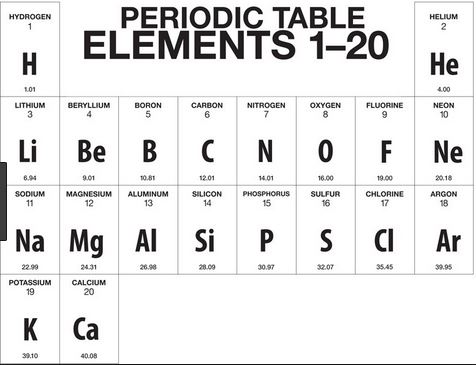
How many electrons does potassium K contain? 
a)
19
b)
39
c)
20
d)
40
21.

How many valence electrons does this element have?

a)

2

b)

3

c)

5

d)

10

22.

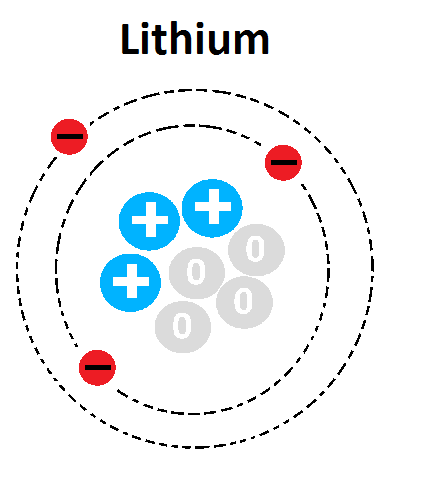
Which element is shown in the Bohr-Rutherford model in the picture?

a)

Lithium

b)

Boron

c)

Carbon

d)

Neon

23.
What is the mass number of this atom?
a)
1
b)
3
c)
4
d)
7
24.
What is the atomic number of this atom?
a)
2
b)
4
c)
6
d)
none of the above
25.

How many electrons can go in the first energy level?

a)

2

b)

8

c)

18

d)

32

26.

Why do carbon, silicon, and tin all react similarly?

a)

They are located in the same period

b)

They have an even atomic number

c)

They have the same number of energy levels

d)

They are located in the same group

27.

Which of these is in group 2?

a)
b)
c)
d)
28.
What is the name of this element?
a)
Helium
b)
Hydrogen
c)
Argon
d)
Silver
29.

Which element does this Bohr model represent?

a)

Aluminum

b)

Silicon

c)

Magnesium

d)

Cobalt

30.
What do the numbers down the side tell us about the atoms in each row?
a)
number of protons
b)
number of electrons
c)
number of energy levels
d)
absolutely nothing
31.
In covalent bonds, electrons are ___________.
a)
transferred
b)
gained
c)
lost
d)
shared
32.
What geometry will this molecular structure have?: H2S
a)
bent
b)
tetrahedral
c)
linear
d)
trigonal pyramidal
33.

What two types of atoms make a covalent bond?

a)

2 Nonmetals

b)

1 Nonmetal and 1 Metal

c)

2 Metals

d)

2 Noble Gases

34.
This is a correct dot diagram for fluorine (F)
a)
true
b)
false
35.
This is a correct dot diagram for oxygen (O)
a)
true
b)
false
36.
Choose the correct shape for this molecule:
a)
Trigonal planar
b)
Trigonal pyramidal
c)
Tetrahedral
d)
Linear
37.
Choose the correct shape for this molecule:
a)
Trigonal planar
b)
Trigonal pyramidal
c)
Bent
d)
Linear
38.
Choose the correct shape for this molecule:
a)
Bent
b)
Trigonal pyramidal
c)
Trigonal planar
d)
Linear
39.
Choose the correct shape for this molecule:
a)
Trigonal planar
b)
Trigonal pyramidal
c)
Bent
d)
Tetrahedral
40.
Choose the correct shape for this molecule:
a)
linear
b)
Trigonal pyramidal
c)
Bent
d)
Tetrahedral
41.
Choose the correct shape for this molecule:
a)
Tetrahedral
b)
Trigonal pyramidal
c)
Bent
d)
Trigonal planar
42.

What is the correct shape of CHCl3?

a)

Bent

b)

Trigonal pyramidal

c)

Tetrahedral

d)

Trigonal planar

43.
Choose the correct shape for this molecule:
a)
Bent
b)
Linear
c)
Tetrahedral
d)
Trigonal pyramidal
44.
*
a)
linear
b)
trigonal planar
c)
trigonal pyramid
d)
bent of angular
45.
According to the octet rule most elements need _______ valence electrons.
a)
2
b)
8
c)
6
d)
18
46.

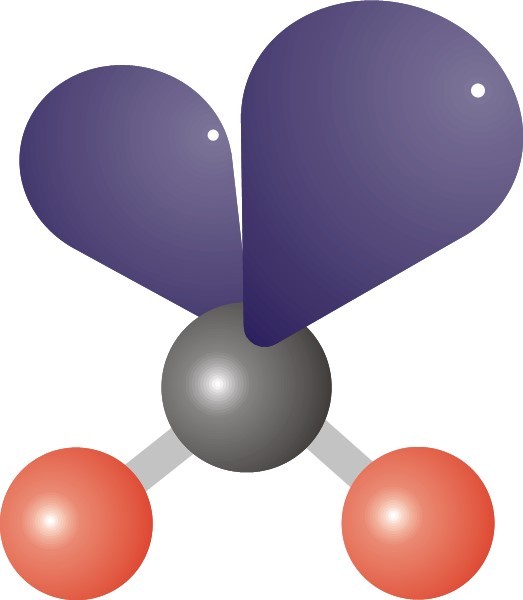
What molecule could this be? (Each purple cloud represents a lone pair of electrons.)

a)

CO2

b)

NH3

c)

H2S

d)

CH4

47.

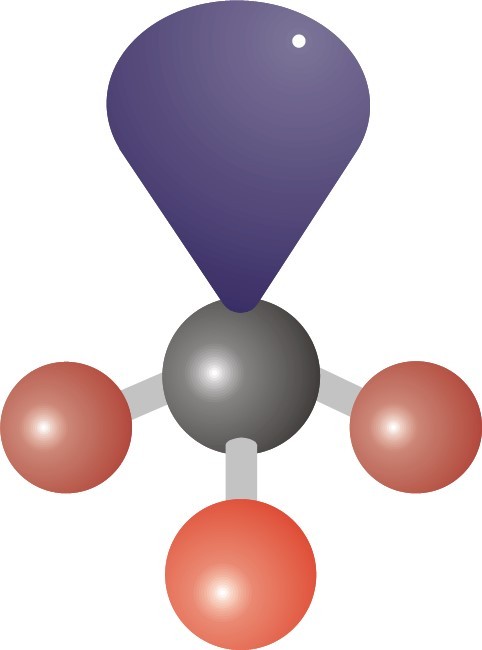
What molecule could this be? (The purple cloud represents a lone pair of electrons.)

a)

H2O

b)

NH3

c)

CO2

d)

CH4

48.
 A lone pair is defined as
a)
A pair of bonding electrons
b)
One non-bonding electron
c)
A pair of non-bonding electrons
d)
A pair of electrons on the central atom
49.
What is the VSEPR theory used to predict?
a)
Bond Strength
b)
Polarity
c)
Molecular Shape
d)
Electronegativity
50.
According to VSEPR, molecules adjust their shapes to keep which of the following as far away as possible?
a)
Pairs of valence electrons
b)
Inner shell electrons
c)
Mobile Electrons
d)
Electrons closest to the nucleus
51.

For a solution, pH + pOH =

a)

7

b)

14

c)

1.0 x 10⁻¹⁴

d)

-log (1.0 x 10 -14)

52.

If the pH of a solution is 4.0, what is the pOH?

a)

4.0

b)

10.0

c)

1.0 x 10 -4

d)

cannot be determined from the information

53.

The pH of a solution is 8.43. What is the [H3O+]concentration?

a)

3.7 x 10 -9

b)

1.0 x 10-8.43

c)

2.7 x 10⁻⁶

d)

1.0 x 10⁻¹⁴

54.

If the [H3O+] of a solution is 1 x 10⁻³ M, the pH is

a)

11

b)

-3

c)

3

d)

1

55.

If the pH of a solution is 8 the [H3O+] is

a)

1.0 x 10⁶ M

b)

8.0 x 101 M

c)

1.0 x 10⁸ M

d)

1.0 x 10⁻⁸ M

56.

If the [OH-] of a solution is 2.7 x 10⁻⁴ M, the pOH of the solution is

a)

10.44

b)

1.00

c)

3.57

d)

-4.43

57.

Oranges have a [H3O+] of 1.7 x 10⁻² M. Their pOH is

a)

1.77

b)

12.23

c)

10.91

d)

3.09

58.

Ammonia has a pOH of 2. Ammonia is a(n) __________.

a)

acid

b)

base

c)

neutral

d)

metal

59.

Find the pH of a solution with [OH-] = 8.41 x 10⁻⁴.

a)

3.08

b)

10.92

c)

9.88

d)

11.23

60.

What is the pOH of a solution with [H+] = 1.24 x 10 -2?

a)

1.91

b)

1.61

c)

12.09

d)

12.39

61.

What is the [OH-] if the [H+] is 1.0 x 10⁻³M?

a)

1.0 x 10⁻³ M

b)

1.0 x 10⁻¹⁴ M

c)

6.02 x 10⁻²³ M

d)

1.0 x 10⁻¹¹ M

62.

A solution has a pH of 6.9. This solution is _____.

a)

an acid

b)

a base

c)

neutral

63.

If a solution has a very low pH, the hydroxide concentration is _______.

a)

very high

b)

very low

c)

zero

64.

If a solution has a very high pH, the hydroxide concentration is _______.

a)

very high

b)

very low

c)

zero

65.

If a solution has a very high hydrogen ion concentration, the hydroxide concentration is _______.

a)

very high

b)

very low

c)

zero

66.
A compound consists of 72.2% magnesium(Mg) and 27.8% nitrogen(N) by mass. What is the empirical formula?
a)
Mg4N3
b)
MgN2
c)
Mg3N
d)
MgN
67.
You are given the following percentages: 40.05% S and 59.95% O. Find the empirical formula for these elements.
a)
SO
b)
SO2
c)
SO3
d)
SO4
68.
Given the following: 42.07% Na, 18.89% P, and 39.04% O, determine the empirical formula.
a)
 NaPO2
b)
Na2PO3
c)
Na3PO4
d)
NaPO4
69.
What is the molecular formula for a compound with the empirical formula: K2SOand a molecular mass of 696g.
a)
K2SO
b)
K8SO16
c)
K8S4O
d)
K8S4O16 
70.
What is the percent by mass of sodium in NaCl?
a)
39%
b)
61%
c)
35%
d)
65%
71.
A formula with the lowest whole # ratio of elements in a compound is called
a)
Molecular Formula
b)
Chemical Formula
c)
Empirical Formula 
d)
Distance Formula
72.

Si2F6

Choose the correct empirical formula...

a)

SiF

b)

Si2F6

c)

SiF3

d)

Si6F2

73.

What is the empirical formula for N2S3?

a)

NS

b)

N3S2

c)

N2S3

d)

N1S1.5

74.

C2F6

Choose the correct empirical formula...

a)

CF

b)

C2F6

c)

C6F2

d)

CF3

75.
A chemical formula that shows the actual # and kinds of atoms present in one molecule of a compound is called_________
a)
ionic formula
b)
covalent formula
c)
empirical formula
d)
molecular formula
76.
What is the best definition for subscript?
 
a)
The big number that tells you the number of molecules.
b)
The atomic number
c)
The little number that tells the number of atoms for each element.
77.

How many "C" are in CO2

a)

2

b)

1

c)

0

d)

3

78.

How many Carbons "C" are in C18H34O3

a)

18

b)

34

c)

3

d)

37

79.
Which pair has the same empirical formula?
a)
NaCrO4 and Na2Cr2O7
b)
C2H4O2 and C6H12O6
c)
C3H6Oand C2H6O2
d)
CH4 and C2H6
80.
What is the molecular formula if the empirical formula is CH2O and the molecular molar mass is 180.18?
a)
CH2O
b)
C2H4O2
c)
C4H8O4
d)
C6H12O6
81.
What is the percent by mass of oxygen in MgO?
a)
20%
b)
40%
c)
50%
d)
60%
82.
Which one is an empirical formula?
a)
H2O2
b)
C2H6O12
c)
CaCl2
d)
N2O8
83.

Which of these is NOT an empirical formula?

a)

CH2

b)

C2H5

c)

C6H4

d)

C3H7

e)

C5H17

84.

Which of the following could be a molecular formula with the empirical formula of CH2O?

a)

CH2O2

b)

CHO

c)

C3H5O3

d)

C2H4O2

85.

What is the empirical formula of K2SO4?

a)

K2SO4

b)

KSO2

c)

K2SO2

d)

KSO8

86.
What is the molecular formula if the empirical formula is C2H5 and the molecular molar mass is 58.14 g/mol?
a)
C2H5
b)
C4H10
c)
C1H2.5
d)
C4H8
87.

Subatomic particles with a negative charge

a)

Electrons

b)

Neutrons

c)

Protons

d)

Quarks

88.
Most of the mass in an atom is made up of _____________________?
a)
protons and electrons
b)
protons and neutrons
c)
neutrons and electrons
d)
electrons and quarks
89.
Water is an element
a)
true
b)
false
90.
DIFFERENT kinds of atoms chemically combined to form a substance are
a)
Mixture
b)
Element
c)
Compound
d)
Substance
91.

In which way are protons and electrons the same in an atom?

a)

same mass

b)

same number of particles

c)

same charges

92.
The mass number of an isotope is equal to the number of ______ in an atom.
a)
Protons
b)
Neutrons
c)
Protons + Neutrons
d)
 Electrons
93.

Which subatomic particle determines the identity of an element?

a)

protons

b)

neutrons

c)

electrons

94.

Which subatomic particle determines the charge of an atom?

a)

protons

b)

neutrons

c)

electrons

95.

The electron is not included in the calculations for the atomic mass because

a)

It has negative charge

b)

It is located in the outer energy levels of the atom

c)

Its mass is basically zero

d)

It attracts neutral particles

96.
What is the number of protons that the element in this image contain?
a)
14
b)
7
c)
15
d)
18
97.
The specific heat of aluminum is 0.21 cal/g°C.  How much heat(Q) is released when a 10 g piece of aluminum foil is taken out of the oven and cools from 100° to 50°?
a)
105 J
b)
10.5 J
c)
1.05 J
98.
20 g of water. specific heat of water is 4.18 J/x°C.  temperature changes from 25° C to 20° Chow much heat energy (Q) moves from the water to the surroundings?
a)
418 Joules
b)
209 J
c)
83 J
d)
4.18 J
99.
A material was cooled from 100ºC to 40ºC.  What is the temperature change?
a)
60ºC
b)
40ºC
c)
-60ºC
d)
-40ºC
100.
The specific heat of aluminum is 0.21 cal/g°C.  How much heat(Q) is released when a 10 g piece of aluminum foil is taken out of the oven and cools from 100° to 50°?
a)
105 J
b)
10.5 J
c)
1.05 J
101.
The specific heat(c) of copper is 0.39 J/g °C. What is the temperature change(∆t) when 100 Joules of heat(Q) is added to 20 grams?
a)
12.82 °C
b)
24.12°C
c)
351 °C
102.
The specific heat is the amount of energy needed to raise the temperature one degree Celsius of a substance.
a)
True
b)
False
103.
Calculate the heat needed to raise the temperature of 0.25 kg of aluminum 7°C (c=900 J/kg°C)
a)
1575 J
b)
-1575 J
c)
514 J
d)
-514 J
104.
The amount of energy required to raise the temperature 1ºC for every kilogram is called____?
a)
Thermal Energy
b)
Specific Heat
c)
Temperature
d)
Kinetic Energy
105.
Water has a specific heat of 4184 J/KgºC.  Wood has a specific heat of 1760 J/KgºC.  What material needs more energy to raise the temperature 1ºC
a)
Wood
b)
Water
c)
Both are the same
106.
How does heat flow?
a)
Always from cold to warm
b)
Always from warm to cold
c)
Both warm to cold & cold to warm
d)
It depends on the temperature
107.
When a  piece of aluminum foil is taken out of the oven and cools from 100° to 50°, What is the change in temperature?
a)
50°
b)
c)
100°
d)
150°
108.
A pot of 2400g of water at a temperature of 25˚C is heated on a stove until the water boils (100˚C).  The specific heat of water is 4.18 J/(g˚C).
Determine the heat energy needed to heat the water in the pot to boiling.
a)
133.76J
b)
43,062.2J
c)
752,400J
d)
1,003,200J
109.
The temperature of an unknown piece of metal with a mass of 30.00 g changes from 25.0 °C to 35.0 °C when the metal absorbs 350.0 J of energy. What is the specific heat of the metal?
a)
1.17 J/g°C
b)
-1.17 J/g°C
c)
0.857 J/g°C
d)
-0.857 J/g°C
110.
How many Joules of energy are required to change 10 gram of water from 20 C to 90 C?
a)
1476 J
b)
2926 J
c)
210,050 J
d)
1,404,500 J
111.

What law deals with temperature and volume?

(a)  

112.

A gas has a volume of 45 liters at a pressure of 90.8 kPa. If the volume is increased to 55 liters, what will be the new pressure? Round answer to one decimal place.

(a)  

113.

A gas occupies a volume of 5.6 liters at a temperature of 100 degrees Celsius. To what temperature must the gas be lowered, if it is to occupy 4.0 liters? Answer in Kelvin to one decimal place.

(a)  

114.

What law deals with pressure and temperature?

(a)  

115.

Pressure and volume are (a)   proportional.

116.

What law deals with pressure and volume?

(a)  

117.

A gas has a pressure of 98kPa at 30 degrees Celsius. What will be the new pressure if the temperature is increased to 35 degrees Celsius. Round answer to one decimal place.

(a)  

118.

Volume and temperature are (a)   proportional.

119.

Hydrogen gas has a pressure of 14.2 psi at a temperature of 28 degrees Celsius. If the pressure is increased to 18.4 psi, what will be the new temperature in degrees Celsius? Round answer to one decimal place.

(a)  

120.

A sample of sulfur hexafluoride gas occupies a volume of 5.10 liters at 198 degrees Celsius. What temperature is needed to reduce the volume to 2.50 liters? Round answer to one decimal place.

(a)  

121.

A gas filled weather balloon with a volume of 55.0 liters is released at sea-level conditions of 755 torr. The balloon can expand to a maximum volume of 835 liters. What is the pressure at which this volume is reached? Round answer to one decimal place.

(a)  

122.

Temperature and pressure are (a)   proportional.

123.

Convert: 253 °C to K:

a)

526 K

b)

625 K

c)

0 K

d)

186 K

124.

100 °C = _____ K

a)

173 K

b)

373K

c)

273 K

d)

0 K

125.

Convert: 0 K to °C

a)

-273 °C

b)

-273 K

c)

273 °C

d)

273 K

126.

Convert: 175 K to °C:

a)

-98 °C

b)

79 K

c)

230.9 °C

d)

-48.2 °C

127.

A liquid's freezing point is -38°C and its boiling point is 357°C. How many Kelvins are there between the boiling point and the freezing point of this liquid?

a)

319

b)

357

c)

395

d)

592

128.

Which temperature is equal to 20 K?

a)

-253°C

b)

-293°C

c)

253°C

d)

293°C

129.
Convert 180oC to K
a)
453 K
b)
-93 K
c)
93 K
130.
Convert 300 K to oC
a)
27oC
b)
0oC
c)
-27oC
d)
573oC
131.
Convert -89 oC to K
a)
184K
b)
362K
c)
-362K
d)
-184K
132.
If a glass of water warms to 78 degrees celsius, what is it's temperature in Kelvin?
(Kelvin = C + 273)
a)
-195
b)
78
c)
350
d)
351