
 Worksheets
Atomic Structure, Waves, & Periodicity
Total questions: 134
Worksheet time: 2hrs 52mins
What is the atomic number?
the number of protons in the nucleus
the number of protons and neutrons in the nucleus
the number of neutrons in the nucleus
the number of protons in the energy levels
What is the mass number?
the number of protons in the nucleus
the number of protons and neutrons in the nucleus
the number of neutrons in the nucleus
the number of protons and electrons in the atom
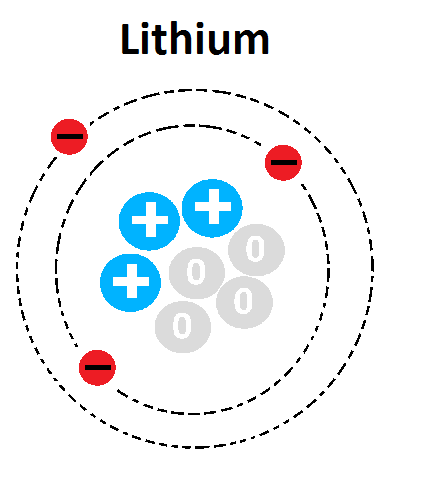
What is the atomic number of this atom?
1
3
4
7
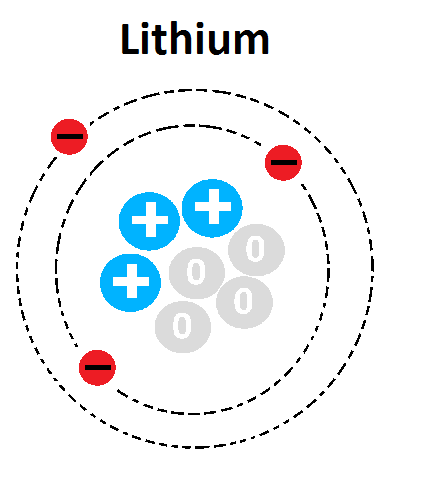
What is the mass number of this atom?
1
3
4
7
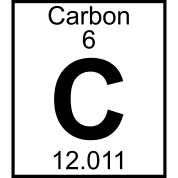

What does the 6 represent?
Atomic mass
atomic number
chemical symbol
element name
An atom has 10 protons, 15 neutrons and 10 electrons what is its mass number.
20
10
35
25
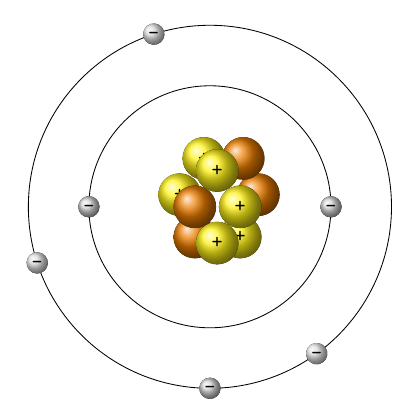
How many electrons does this atom have?
2
4
6
10


Which of the following determines the identity of an element?
number of protons
atomic mass
number of neutrons
number of shells
Subatomic particles with a negative charge
Electrons
Neutrons
Protons
Quarks


What is the mass number?
the number of protons in the nucleus
the number of protons and neutrons in the nucleus
the number of neutrons in the nucleus
the number of protons and electrons in the atom
What does the 6 represent?
Atomic mass
atomic number
chemical symbol
element name
An atom has 10 protons, 15 neutrons and 10 electrons what is its mass number.
20
10
35
25
Which of the following determines the identity of an element?
number of protons
atomic mass
number of neutrons
number of shells

How many protons does indium have?
49
66
114
115
Cations have what charge?
+
-
Anions are what charge?
+
-

Noble gases are...
Happy and stable because they have full valence electrons
Happy BUT UNSTABLE because they are gases
Not happy because they don't want to be noble
Not happy but stable because they are group number 18
Valence electrons means..
Electrons inside the atoms
Electrons on the outer most energy level
Electrons with no charge
Electrons that are stable

Element Chlorine [Cl] at group #17 have how many valence electrons?
6
7
17
5

Element Chlorine [Cl] will make a(n)...
Cation
Anion

Anions will
lose electrons
gain electrons
Cations will
Lose electrons
Gain electrons
Isotopes behave chemically the same as other same elements
True
False
Isotopes behave physically same with other same elements
True
False

This isotope have how many neutrons?
26
12
14
16

Which of the Chlorine [Cl] is heavier?
Cl-37
Cl-35
For Cl 37, what does the 37 represent?
Number of Protons
Number of Neutrons
Number of Electrons
Atomic Mass Number

Which element is located at period 4 group 6? [click the picture to zoom in]
Cr
Sg
Hf
Ta

What is the planetary model also known as?
Thomson model
Plum pudding model
Bohr model
Nuclear model
Which scientist proposed the Nuclear Model by doing the Gold Foil Experiment?
Rutherford
J.J. Thomson
Bohr
Dalton
Protons are...
Positive charge
Negative charge
Neutral/No charge
Electrons are...
Positive charge
Negative charge
Neutral/No charge
Neutrons are...
Positive charge
Negative charge
Neutral/No charge
Which particles are NOT inside the nucleus of atoms?
Protons
Electrons
Neutrons
What particles determine the mass number?
Protons and electrons
Electrons and neutrons
Protons and neutrons
Protons, neutrons, and electrons

What is the mass number of bromine?
35
45
80
79.904
The atomic number is equal to _.
the number of protons
the number of neutrons only
the total number of protons and neutrons
the number of protons, neutrons, and electrons

How many neutrons does this bromine atom have?
35
45
80
115

What is the mass number of this Neon atom?
10
11
21
20

How many electrons does this magnesium ion have?
24
12
10
14
What changes when an atom becomes an ion?
The number of electrons
The number of protons
The number of neutrons
Both the number of neutrons and electrons

How many neutrons does this Neon atom have?
21
11
10
12

What happened to this Magnesium atom to make it an ion?
It LOST electrons
It GAINED electrons
It GAINED protons
It LOST protons

What is the atomic number of this element?
12
24
23
35
Adding or subtracting neutrons makes the element change into
an ion
a mixture
an isotope
a neutral atom

What is the charge on a lithium atom that loses 1 electron?
+1
0
-1
-2

What is the atomic number of Fe? (click to see image)
26
55.845
56
30


State whether true or false.
Every element has its own unique atomic line spectra.
True
False
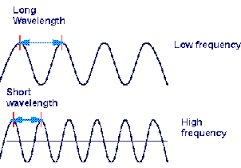
Wavelength and Frequency are related in that...
they are always the same
when one increases, the other decreases (inversely proportional)
there is no correlation
they both vary in an irregular pattern
What particles in the heated compounds are responsible for the production of the colored light?
proton
neutron
electron
proton and neutron

What subatomic particle is responsible for the spectral lines seen in emission spectra diagrams?
electrons
protons
neutrons

Each element on the periodic table can be identified by its
classification as a solid, liquid or gas.
location on the table.
ability to react to form compounds.
unique spectral "fingerprint."


Which element(s) is/are found in the star's spectra below?
Hydrogen only
Hydrogen & Helium
Calcium only
Hydrogen & Calcium


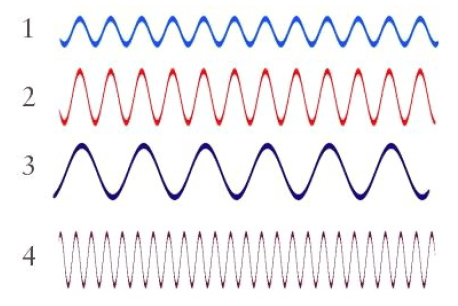
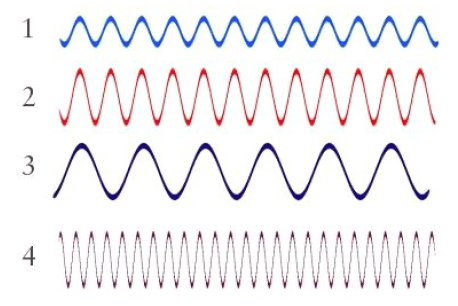
9.95 x 10⁵ Hz, what is the wavelength of this radiation?
Periodic law states that repeating patterns of chemical properties form when you arrange elements by their:
average atomic mass
atomic number
ion charge
electron configuration
A horizontal row in the periodic table is called a:
group
period
family
row
A vertical column in the periodic table is called a:
group
period
family
row

How many protons does oxygen have?
8
16
32
4
How many electrons does oxygen have when it is neutral?
8
16
32
4
How many valence electrons does oxygen have?
2
8
6
18
How many electrons does oxygen want to gain?
1
2
3
4
Based on oxygen's location on the periodic table, predict its electronegativity:
low electronegativity
medium electronegativity
high electronegativity
no electronegativity
Based on oxygen's location on the periodic table, predict its relative atomic size:
small
medium
large
no size
What type of element is oxygen?
metal
nonmetal
metalloid
transition metal
Which of these is the correct electron configuration for oxygen?
1s2 2s2 2p1
2p2
1s2 2s2 2p4
2p4
Which of these is the correct orbital diagram for oxygen?


Which of these best describes the periodic trends for electronegativity:
Increases across a period and down a group
Increases across a period and up a group
increases across a period and down a group with a drop-off at the halogens
increases across a period and up a group with a drop-off at noble gases
The trends on the periodic table are dependent on..
how attracted a valence electron is to the nucleus
how attracted valence electrons are to each other
how attracted a valence electrons is to a non valence electron
how attracted a non valence electron is to the nucleus
What makes a valence electron more attracted to the nucleus?
less distance between the nucleus and having less protons
less distance between the nucleus and having more protons
more distance between the nucleus and having less protons
more distance between the nucleus and having more protons
less distance and having more valence electrons
What is the tendency of an atom to attract electrons towards itself in a bond?
atomic radius
ionization energy
shielding
Electronegativity
The higher the ionization energy...
the more attracted the valence electron is to the nucleus so it is harder to remove
the less attracted the valence electron is to the nucleus so it is easier to remove
the more attracted the valence electron is to another electron, so it is harder to remove
the more repelled a valence electron is to another electron, so it is easier to remove
Why does ionization energy decrease going down a group?
Adding more energy levels makes the ve- further from the nucleus so it is easier to remove
There are more valence electrons in the outer shell so the ve- is easier to remove
There are more protons in the nucleus so the ve- is easier to remove
There are less protons in the nucleus so the ve- is easier to remove
P, Cs, Co, Sr
P, Cs, Co, Sr
Why doesn't having more protons increase the attraction down a column?
there are more valence electrons in the outermost energy level
actually, there aren't more protons in the nucleus down the column
as energy levels are added, non-valence electrons block the extra protons from attracting ve-
more neutrons block the extra protons
What happens to atomic radius across a period?
the atoms get bigger because the nucleus is bigger as more protons are added
the atoms get bigger because there are more ve-
the atoms get smaller because with more attraction to the extra protons, the e- cloud moves closer to the nucleus
the atoms get bigger because there are more energy levels
Element Z has more protons than element Y, but both have 4 energy levels. Which statement is true?
Y is smaller and would attract electrons more in a bond
Y is bigger and would attract electrons more in a bond
Z is smaller and would attract electrons more in a bond
Z is bigger and would attract electrons more in a bond
Nitrogen is a _ so it will _ electrons when forming an ion.
metal, lose
metal, gain
nonmetal, lose
nonmetal, gain
Nitrogen will gain _ ve- to have a charge of _.
5 , -5
3, +3
3, -3
5, +5
Which of the following lose all their ve- when forming an ion?
metals
nonmetals
metalloids
depends on how many ve- the element has
Which has a higher electronegativity.. Rb or Sr?
Rb, because with more p+ in its nucleus it attracts e- more
Sr, because with more p+ in its nucleus it attracts e- more
Rb, because with more nrg levels the ve- are closer to/ more attracted to the nucleus
Sr, because with more nrg levels the ve- are closer to/ more attracted to the nucleus
Which has a higher ionization energy.. N or As?
N, because with more p+ in its nucleus it attracts e- more making them harder to remove.
As, because with more p+ in its nucleus it attracts e- more making them harder to remove.
As, because with less nrg levels the ve- are closer to/ more attracted to the nucleus making them harder to remove.
N, because with less nrg levels the ve- are closer to/ more attracted to the nucleus making them harder to remove.

Look at the bohr models of Li and Be. Imagine the first valence electron was already removed from both atoms, and now you are going to remove the second valence electron. The energy required to remove the second valence electron is called second ionization energy. Would lithium or beryllium have a higher second ionization energy ?
Li, because it has more protons
Be, because it has more protons
Li, because the second valence electron comes from an energy level closer to the nucleus
Be, because the second valence electron comes from an energy level closer to the nucleus
Li, because the beryllium has two valence electrons that repel each other
Which of the following elements has the smallest atomic radius?
Sulfur
Chlorine
Aluminum
Sodium
Which of the following will have a lower ionization energy than Scandium (Sc)?
Helium (He)
Titanium (Ti)
Calcium (Ca)
Magnesium (Mg)
Across a period from left to right , atomic radius
decreases
increases
increases, then decreases
decreases, then increases
Ra, Be, Ca, Rb, H

