wayground logo

Free Printable Worksheets

Font size

S
M
L
XL
Worksheets

Chemistry Final Exam

Total questions: 129

Worksheet time: 4hrs 44mins

Name
Class
Date
1.
The principles of atomic theory recognized today were conceived by 
a)
Avogadro
b)
Bohr
c)
Dalton
d)
Rutherford
2.
Experiments with cathode rays led to the discovery of the 
a)
proton
b)
nucleus
c)
neutron
d)
electron
3.
A positively charge particle is a(n)
a)
proton
b)
neutron
c)
electron
d)
positron
4.
The smallest unit of an element that can exist either alone or in combination with other such particles of the same or different elements is the
a)
electron
b)
proton
c)
neutron
d)
atom
5.
Atoms of the same element that have different masses are called
a)
moles
b)
isotopes
c)
nuclides
d)
neutrons
6.
A boron isotope consists of  5 protons, 5 electrons and 7 neutrons. Its mass number is
a)
10
b)
11
c)
12
d)
2
7.
What is the atomic number for oxygen?
a)
8
b)
16
c)
6
d)
10
8.
The number of atoms in a mole of any pure substance is called
a)
its atomic number
b)
Avogadro's number
c)
its mass number 
d)
its gram-atomic number
9.
How many moles of water (H2O) are in 14 grams?
a)
3.9 x 10>22
b)
4.7 x 10>23
c)
252
d)
.78
10.
The number of atoms in 1 mol of carbon is
a)
6.022 x 10²²
b)
6.022 x 10²³
c)
5.022 x 10²²
d)
5.022 x 10²³
11.
This particle determines what element you have - the elements identity.
a)
electron
b)
proton
c)
neutron
d)
valence shell
12.
Has a mass of 1/200th the mass of a proton.
a)
electron
b)
neutron
c)
nucleus
d)
electron cloud
13.
An electron has a _____ charge.
a)
negative
b)
positive
c)
neutral
14.
What are the maximum number of electrons that go on the first 3 energy levels?
a)
2,4,16
b)
2,8,18
c)
4,8,12
d)
3,4,6
15.
Which particles make up the nucleus of an atom?
a)
protons and neutrons
b)
electrons and protons
c)
electrons, protons, and neutrons
d)
electrons and neutrons
16.
The subatomic particle that determines the identity of an element.
a)
neutron
b)
proton
c)
electron
d)
outer shell
17.
What is the mass number and name of an element with 8 protons and 8 neutrons?
a)
16 - Carbon
b)
16 - Oxygen
c)
24 - Oxygen
d)
8 - Neon
18.
An element with a mass number of 10 and an atomic number of 6 has how many protons?
a)
5
b)
8
c)
6
d)
10
19.
Matter that cannot be broken down into a simpler substance – building blocks of life.
a)
neutron
b)
atom
c)
electron
d)
quarks
20.
An isotope has three forms.  30% have a mass of 4 amu, 20% have a mass of 5 amu and 50% have a mass of 3 amu.  Average atomic mass will be closest to
a)
2 amu
b)
3 amu
c)
4 amu
d)
5 amu
21.
What are valence electrons?
a)
electrons on the first orbital always
b)
nucleus
c)
the outermost shell
d)
the number of electrons on the outermost orbital
22.
How many electron shells/levels does this atom have?
a)
1
b)
2
c)
3
d)
4
23.

A solution has a pH of 4.5. The solution is:

a)

Acidic

b)

Basic

c)

Neutral

24.

Which of the following are acids? Choose all that apply.

a)

HBr

b)

LiOH

c)

HClO

d)

LiNO2

25.

Which of the following are salts? Choose all that apply.

a)

HBrO4

b)

Pb(OH)2

c)

KCl

d)

RaSO4

26.

What is the reaction of HBrO and water?

a)

Br+ + OH-

b)

H3O+ + BrO-

c)

HBrO + H2O

d)

No Reaction.

27.

What is the reaction of KOH and water?

a)

No Reaction

b)

KOH + H2O

c)

K+ + H3O+

d)

K+ + OH-

28.

What is the reaction of RbBr with water?

a)

Rb+ + OH-

b)

HBr + H3O+

c)

BrOH + HRb

d)

No Reaction

29.

When an acid + base produces a salt + water, this type of reaction occurs.

a)

Buffer Reaction

b)

Acid Reaction

c)

Base Reaction

d)

Neutralization Reaction

30.
How many grams of sodium nitrate, NaNO3, are soluble in 100 g of water at 10 ºC?
a)
80 grams
b)
100 grams
c)
40 grams
d)
10 grams
31.
Contains the maximum amount of dissolved solute
a)
unsaturated solution
b)
supersaturated solution
c)
saturated solution
32.
How does a solution become supersaturated?
a)
dissolve lots of solvent in it.
b)
dissolve a little solute in it. 
c)
dissolve more solute than you should be able to. 
d)
dissolve a super amount of solvent in it. 
33.
At approximately what temperature does the solubility of sodium chloride, NaCl, match the solubility of potassium dichromate, K2Cr2O7?
a)
60 ºC
b)
30 ºC
c)
50 ºC
d)
83 ºC
34.
Which solute is the least soluble at 90 ⁰C?
a)
SO2
b)
KClO3
c)
KI
d)
HCl
35.
Which of the following would result in being able to dissolve a greater amount of gas in a
solution?
a)
Heat the gas and solution
b)
Decrease the pressure of the solution
c)
Make the gas an electrolyte
d)
Cool the gas and solution
36.
How many moles of Na2SO4 is needed to make 2.5 L of 2.0 M solution?
a)
5 moles
b)
1 moles
c)
1.25 moles
d)
0.80 moles
37.
Large bodies of water do not quickly fluctuate in temperature. Why?
a)
Water is a solvent.
b)
Water has a high heat capacity.
c)
Water acts as a buffer.
d)
Water is non-polar.
38.
What two elements make up water?
a)
Helium and oxygen
b)
Hydrogen and oxygen
c)
helium and carbon
d)
oxygen and carbon
39.
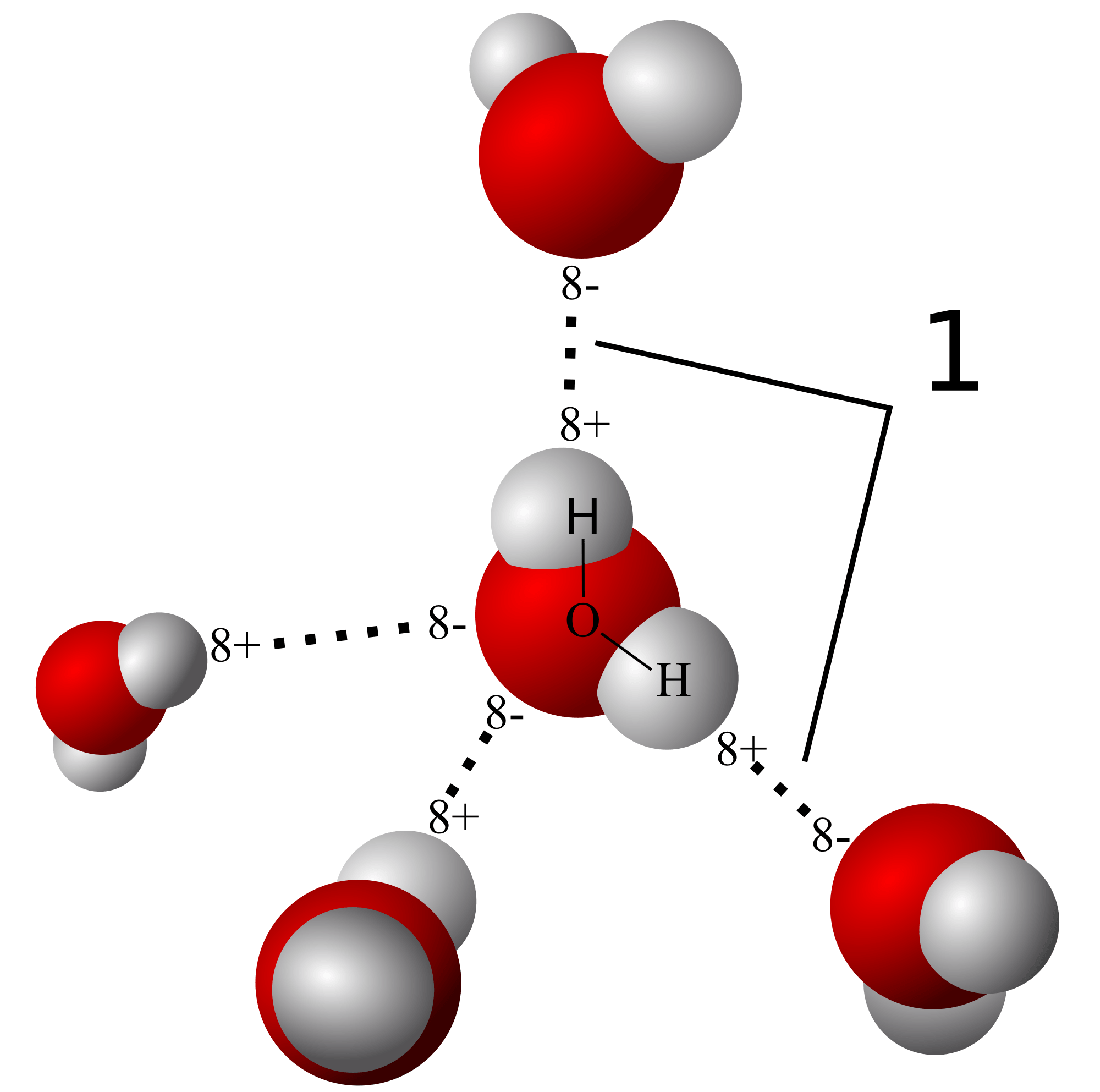
Why can water have no net charge but have slight charges in different parts of the molecule?
a)
The oxygen end is slightly negative and the hydrogen end is slightly positive
b)
The hydrogen end is slightly negative and the oxygen end is slightly positive
c)
The hydrogen and oxygen ends change in polarity
d)
Because it is hydrophobic
40.
Attractions between water molecules are called
a)
Covalent bonds
b)
Ionic bonds
c)
Polar bonds
d)
Hydrogen bonds
41.
Which is NOT a unique property of water?
a)
Frozen water floats on liquid water.
b)
Water covers most of the Earth’s surface and retains a large amount of heat.
c)
Water molecules stick to each other through hydrogen bonds.
d)
Water cools very rapidly.
42.
Which types of compounds dissolve easily in water?
a)
Polar and Nonpolar
b)
Polar and Ionic
c)
Nonpolar and Ionic
d)
Covalent and Nonpolar
43.
Molarity is measured in
a)
moles per kg
b)
mols per L
c)
moles per kJ
d)
moles per mL
44.
What is a substance that is dissolved in another substance? 
a)
solution
b)
solute
c)
solvent
d)
compound
45.
Another name for a homogeneous mixture is 
a)
an element.
b)
a solution.
c)
a compound.
46.
Which of the following is not a way to increase the rate of dissolving
a)
evaporation
b)
stirring 
c)
increasing temperature
d)
using a smaller particle size
47.
When a test instrument is calibrated, does its accuracy, precision, or reliability improve?
a)
precision
b)
accuracy
c)
reliability
d)
all of the above
48.
What is the density of an object having a mass of 8.0 g and a volume of 25 cm3?
a)
0.32 g/cm3
b)
3.1 g/cm3
c)
200 g/cm3
d)
2.0 g/cm3
49.
What is the metric system prefix for the quantity 0.000 001?
a)
deci
b)
micro
c)
centi
d)
kilo
50.
How many significant figures are in the measurement 40,500 mg?
a)
four
b)
five
c)
three
d)
two
51.
Which of the following equalities is NOT correct? Use the table behind this question to help you.
a)
100 cg = 1 g
b)
10 kg = 1g
c)
1 cm3 = 1 mL
d)
1000 mm = 1 m
52.
What is the quantity 0.0075 meters expressed in centimeters?  Use the table behind this question to help you.
a)
70.5 cm
b)
7.5 cm
c)
0.075 cm
d)
0.75 cm
53.
Which group of measurements  is the most precise? (Each group of measurements is for a  different object)
a)
2.0 g, 3.0 g, 4.0 g
b)
1 g, 3 g, 5 g
c)
2 g, 2.5 g, 3 g
d)
2 g, 3 g, 4 g
54.
In the measurement 0.503 L, which digit is the estimated digit?
a)
5
b)
3
c)
the 0 immediately to the left of the 3
d)
the 0 t the left of the decimal point
55.
What is the temperature -34oC expressed in kelvins?
a)
139 K
b)
239 K
c)
339 K
d)
207 K
56.
Which temperature scale has no negative temperatures?
a)
Joule
b)
Fahrenheit
c)
Kelvin
d)
Celsius
57.
The weight of an object _____.
a)
depends on its location
b)
is always the same
c)
is not affected by gravity
d)
is the same as its mass
58.
What is the SI unit of mass?
a)
joule
b)
candela
c)
liter
d)
kilogram
59.
If the temperature changes by 100 K, by how much does it change in oC?
a)
0oC
b)
100oC
c)
37oC
d)
273oC
60.
Density is found by dividing _____.
a)
area by mass
b)
mass by area
c)
mass by volume
d)
volume by mass
61.
A train travels at a speed of 30 miles per hour.  If 1 mile = 1.6 kilometers, how fast is the train traveling in kilometers per minute?
a)
0.6 km/min
b)
0.4 km/min
c)
0.8 km/min
d)
1.0 km/min
62.
How many significant figures are in the measurement 811.40 grams?
a)
two
b)
three
c)
four
d)
five
63.
Express the sum of 1111 km and 222 km using the correct number of significant figures.
a)
1333.0 km
b)
1300 km
c)
1333 km
d)
1330 km
64.
Express the product of 2.2 mm and 5.00 mm using the correct number of significant digits.
a)
11.0 mm2
b)
11 mm2
c)
11.00 mm2
d)
10 mm2
65.
What is the temperature of absolute zero measured in oC?
a)
-273oC
b)
-73oC
c)
-173oC
d)
-373oC
66.
The diameter of a carbon atom is 0.000 000 000 154 m.  What is this number expressed in scientific notation?
a)
1.54 x 10⁻¹⁰
b)
1.54 x 10¹⁰
c)
1.54 x 10⁻¹²
d)
1.54 x 10¹²
67.
How many significant figures are in the measurement 0.003 4 kg?
a)
This cannot be determined
b)
two
c)
four
d)
five
68.
If a liter of water is heated from 20oC to 50oC, what happens to its volume?
a)
The volume decreases
b)
Vol. first increases, then decreases
c)
The volume increases
d)
Vol. first decreases, then increases
69.
What is the measurement 1042 L rounded off to two significant figures?
a)
1.0 x 10³ L
b)
1050 L
c)
1.1 x 10³ L
d)
1040 L
70.
Which of the following terms identifies the change from a liquid to solid?
a)
Melting
b)
Condensation
c)
Vaporization
d)
Freezing
71.
Which of the following terms identifies the change from a liquid to gas?
a)
Vaporization
b)
Condensation
c)
Deposition
d)
Sublimation
72.
What is the freezing point of ice?
a)
0° Celcius
b)
50° Celcius
c)
75° Celcius
d)
100° Celcius
73.
Which is the correct mole ratio of K3PO4 to KNO3 in the chemical reaction:
Mg(NO3)2 + K3PO→ Mg3(PO4)2 + KNO3
a)
1:1
b)
2:3
c)
1:3
d)
1:2
74.
For the Balanced Reaction: 3 Mg + 1 Fe2O3 → 3 MgO + 2 Fe; What is the Ratio of moles of MgO to moles Fe?
a)
3mol Mg / 2 mol Fe
b)
2 mol Mg/ 3 mol Fe
c)
1 mol Fe/ 2 mol Fe
d)
3 mol MgO / 2 mol Fe
75.
How many grams of bromine are required to react completely with 37.4 grams aluminum chloride?
AlCl3 + Br2 → AlBr3 + Cl2
a)
33.6 g
b)
134.5 g
c)
29.9 g
d)
67.2 g
76.
How many grams of water are produced when 2.50 mol oxygen reacts with hydrogen?
2 H2 + O2 → 2 H2O
a)
0.277 g
b)
22.5 g
c)
45.0 g
d)
90.0 g
77.
How many moles are in 19.82 g Mg? 
a)
1.226mol Mg
b)
481.7mol Mg
c)
1.000mol Mg
d)
 0.82 mol Mg
78.
2CO  +  O2  −-> 2CO2
How many liters of carbon dioxide are produced from 10L of carbon monoxide?
a)
10
b)
20
c)
1
d)
5
79.
What volume of hydrogen will be produced at STP by the reaction 67.3 g of magnesium with excfess water according to the following reaction?
1Mg + 2H2O --> Mg(OH)2 + H2
a)
62L
b)
65L
c)
31L
d)
124L
80.

Which of the following gases contains the fewest number of molecules?

a)

6.0 g of H2

b)

14 g of N2

c)

17 g of NH3

d)

34 g of H2S

81.

Which gas is an odorless gas frequently used in fire extinguishers?

a)

CO2 (molar mass 44)

b)

NH3 (molar mass 17)

c)

H20 (molar mass 18)

d)

C4H10 (molar mass 58)

82.

The temperature of 36.0 mL of CH4 gas is raised from 27.0°C to 327°C at constant pressure. What is the final volume of the CH4 gas after heating?

a)

18.0 mL

b)

36.0 mL

c)

72.0 mL

d)

327 mL

83.

A real gas closely approaches the behavior of an ideal gas under conditions of

a)

low pressure and high temperature

b)

low pressure and low temperature

c)

high pressure and low temperature

d)

high pressure and high temperature

84.

When a balloon filled with helium gas is released, it rises and floats away. Which statement below is the best explanation for this observed behavior?

a)

The helium density inside the balloon is less than that of the surrounding air.

b)

The temperature of the surrounding air is less than the temperature of the helium.

c)

Air pressure is greater than the pressure exerted by the helium.

d)

The rate of diffusion of cooler air is less than that of warmer air.

85.

The density of a mystery gas is 2.0 g/Liter at 0°C and 1 atm (STP) condition.

What is the molar mass of this gas?

a)

2.0 x 22.4

b)

22.4/2.0

c)

2.0/22.4

d)

2.0 x 24.5

86.

2 NH3(g) --> 3 H2(g) + N2(g)

Consider the decomposition of NH3 gas in the equation above at constant room temperature and pressure. Compared to the initial pressure, the final pressure exerted by the products will be

a)

2 times greater

b)

3 times greater

c)

the same as the initial pressure

d)

one-half the initial pressure

87.

Which statement is typically true about gaseous molecules?

a)

The heavier the molecules, the faster they travel.

b)

The heavier the molecules, the greater their average kinetic energy.

c)

The hotter the molecules, the faster they travel.

d)

The larger the volume of the container, the greater the pressure exerted by the gaseous molecules.

88.

Is Hydrogen considered a metal or a non-metal?

a)

Metal

b)

Non-metal

89.

What two types of atoms make a covalent bond?

a)

2 Nonmetals

b)

1 Nonmetal and 1 Metal

c)

2 Metals

d)

2 Noble Gases

90.
How are covalent bonds explained?
a)
When one atom takes the other atom's electron
b)
When the atom shares an electron with an another atom
c)
When the two nucleus merge
d)
When the neutrons leave the nucleus
91.

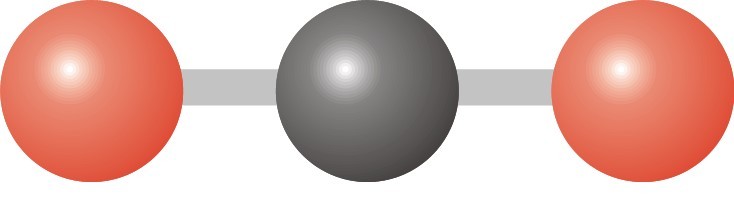
What molecule is this?

a)

CO

b)

CO2

c)

C2O

d)

C2O2

92.

How many total valence electrons are NOT involved in chemical bond shown?

a)

6

b)

3

c)

4

d)

2

93.

Which of the following elements occurs naturally as a diatomic molecule with a double covalent bond? (hint: draw Lewis dot structures for answer ALL choices)

a)

nitrogen

b)

oxygen

c)

hydrogen

d)

chlorine

94.

Which of the following elements occurs naturally as a diatomic molecule with a double covalent bond? (hint: draw Lewis dot structures for answer ALL choices)

a)

nitrogen

b)

oxygen

c)

hydrogen

d)

chlorine

95.

How many unshared pairs of electrons are present in the molecule?

a)

4

b)

8

c)

2

d)

1

96.

The molecule shown in the diagram can best be classified as

a)

polar

b)

nonpolar

97.

Phosphorous trichloride

a)

PCl3

b)

P3Cl

c)

P3Cl3

d)

PCL

98.
P2O5
a)
Phosphorus Oxide
b)
Pentaphosphorus Dioxide
c)
Diphosphorous pentoxide
d)
Phosphoric Oxygen
99.
Why do atoms share electrons?
a)
To attain the electron configuration of a noble gas.
b)
To become ions and take a charge
c)
to increase the mass
d)
it's a nice thing to do.
100.
Which three nonmetals exist only as diatomic molecules?
a)
H, C, Br
b)
N, O, S
c)
I, F,N
d)
H, O, P
101.

What element could this be the electron dot diagram for?

a)

Ne

b)

H

c)

C

d)

F

102.
How many valence electrons do most atoms need to be stable?
a)
1
b)
2
c)
6
d)
8
103.

How many electrons are shared in a single bond?

a)

2 pairs

b)

4 electrons

c)

2 electrons

d)

1 electron

104.

Which is stronger...

a)

N − N

b)

N = N

c)

N ≡ N

105.
Choose the correct shape for this molecule:
a)
Bent
b)
Trigonal pyramidal
c)
Trigonal planar
d)
Linear
106.
Choose the correct shape for this molecule:
a)
linear
b)
Trigonal pyramidal
c)
Bent
d)
Tetrahedral
107.

Which of the following shapes has unshared pairs of electrons on the central atom?

a)

Linear

b)

Bent

c)

Trigonal Planar

d)

Tetrahedral

108.
Which molecule would have this shape?
a)
BF3
b)
CH4
c)
PCl5
d)
CO2
109.
*
a)
trigonal pyramid
b)
linear
c)
bent
d)
angular
110.
In an endothermic reaction, heat is ...
a)
taken in or absorbed
b)
given out or released 
111.
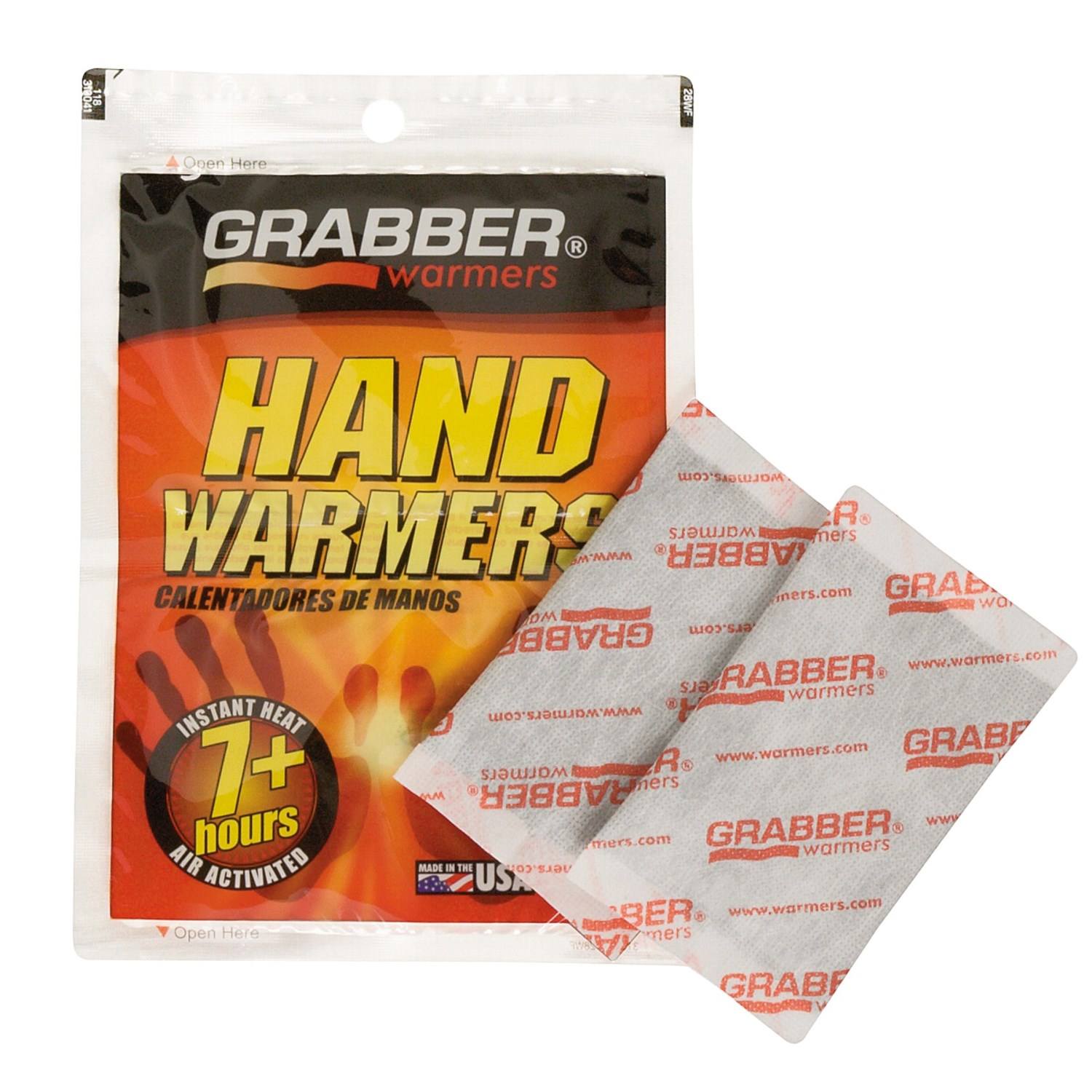
What type of reaction occurs in a hand warmer
a)
exothermic
b)
endothermic
112.
If a chemical reaction is EXOTHERMIC, the temperature would....
a)
Stay the same
b)
Increase
c)
Decrease
113.
In a neutralization reaction, what are the products of a reaction between an acid and a base?
a)
Another acid and base
b)
Carbon dioxide and a salt
c)
Water and a salt
d)
Either two acids or two bases
114.
You need 3 things for something to burn; heat, fuel and....
a)
carbon dioxide
b)
oxygen
c)
water
d)
light
115.
When methane (fuel) burns in excess oxygen the products are...
a)
Carbon dioxide + Oxygen
b)
Carbon dioxide + Water
c)
Water + Carbon monoxide
d)
Carbon monoxide + Carbon dioxide
116.
Choose the correct shape for this molecule:
a)
Trigonal planar
b)
Trigonal pyramidal
c)
Bent
d)
Linear
117.
Choose the correct shape for this molecule:
a)
Bent
b)
Trigonal pyramidal
c)
Trigonal planar
d)
Linear
118.
Choose the correct shape for this molecule:
a)
Trigonal planar
b)
Trigonal pyramidal
c)
Bent
d)
Tetrahedral
119.
Choose the correct shape for this molecule:
a)
linear
b)
Trigonal pyramidal
c)
Bent
d)
Tetrahedral
120.
Choose the correct shape for this molecule:
a)
linear
b)
Trigonal pyramidal
c)
Bent
d)
Tetrahedral
121.
Choose the correct shape for this molecule:
a)
Tetrahedral
b)
Trigonal pyramidal
c)
Bent
d)
Trigonal planar
122.

In the equation: 2Mg + O2 -> 2MgO, which are the reactants

a)

Mg and O2

b)

MgO

c)

Mg and MgO

d)

O2 and MgO

123.

Balance the equation, Ca + H2O -> CaO + H2

a)

Ca + 2H2O -> CaO + 2H2

b)

2Ca + H2O -> CaO + H2

c)

it is balanced as is

d)

can not be balanced

124.

what is a coefficient?

a)

the small number on the right of the chemical symbol

b)

the large number to the left of a formula

125.

What coefficients are needed to correctly balance the equation?

_Bi + _O2 -> _ Bi2O3

a)

3, 2, 3

b)

2, 3, 2

c)

4, 3, 2

d)

none of these

126.

Why must chemical equations be balanced?

a)

so the equation doesn't explode

b)

the reaction won't occur until it is balanced

c)

based on the Law of Conservation of Matter, matter cannot be created or destroyed

d)

based on the Law of Conservation of Energy, energy can not be created or destroyed.

127.

Write the balanced products for this reaction:

C2H4 + 3 O2 ->

a)

C2O2 + H4

b)

CO2 + HOH

c)

CO + H

d)

2CO2 + 2H2O

128.

the symbol for a substance dissolved in water is...

a)

(s)

b)

(l)

c)

(g)

d)

(aq)

129.

Which of the following is NOT a way to speed up a reaction?

a)

crush the substance to increase surface area

b)

cool off the substance to slow molecule movement

c)

increase pressure to push on the molecules and force them closer together

d)

increase the number of atoms reacting by increasing the concentration