wayground logo

Free Printable Worksheets

Font size

S
M
L
XL
Worksheets

PS Final Exam Review

Total questions: 131

Worksheet time: 33hrs 45mins

Name
Class
Date
1.
Weight, which is a Force, is measured in___
a)
Newtons
b)
grams
c)
kilograms
d)
m/s
2.
The formula for speed is
a)
dt
b)
t/d
c)
d/t
3.
A(n) __________ is a push or pull.
a)
newton
b)
acceleration
c)
force
d)
momentum
4.
The tendency of an object to resist a change in its state of motion
a)
unbalanced force
b)
inertia
c)
balanced force
d)
gravity
5.
Which law explains why you need to wear a seat belt? 
a)
First (law of inertia)
b)
Second (F=ma)
c)
Third (Action-Reaction)
d)
Gravity
6.
Acceleration is defined as the CHANGE in 
a)
time it takes for one place to move to another place. 
b)
velocity of an object.
c)
distance divided by the time interval 
d)
velocity divided by the time interval 
7.
Can be measured in meters per second (m/s)
a)
Distance
b)
Time
c)
Speed
d)
Acceleration
8.
A runners races in the 100 meter dash.  It takes her 10 seconds to finish.  What is her average speed?
a)
10 m/s
b)
1000 m/s
c)
100 seconds
d)
10 seconds
9.
Which graph represents zero acceleration (constant velocity)?
a)
A
b)
B
c)
C
d)
D
10.
Which graph shows the object standing still?
a)
A
b)
B
c)
C
d)
D
11.
What is this graph showing?
a)
Constant Speed
b)
Acceleration (speeding up)
c)
Deceleration (slowing down)
d)
No motion
12.
Which box has the most/highest density?
a)
Box A
b)
Box B
c)
cannot be determined
d)
they are the same
13.
What is the formula for density?
a)
density = mass x volume
b)
density = mass / volume
c)
density = mass + volume
d)
density = mass - volume
14.
What is the rate of gravitational acceleration?
a)
9.8 m/s
b)
8.9 m/s
c)
9.8 m/s2
d)
8.9 m/s2
15.
A measurement of space between two points or objects.
a)
Position 
b)
Distance
c)
Length
d)
Width
16.
the process of changing position
a)
motion
b)
reference point
c)
acceleration
d)
speed
17.
Velocity is both ____ and _____. 
a)
speed , direction 
b)
direction, mass
c)
volume, density 
d)
direction, magnitude 
18.
65mi/hr South is an example of...
a)
Speed
b)
Velocity
c)
Acceleration
d)
Direction
19.
Friction is a force that acts in an ___________ direction of movement.
a)
similar
b)
opposite
c)
parallel
d)
west
20.
Gravity attracts all objects towards one another.
a)
False
b)
True
c)
It depends
21.
Any object with mass has gravity.
a)
True
b)
Sometimes
c)
False
d)
Never
22.
As distance between two objects increase the pull of gravity 
a)
Increases
b)
Decreases
c)
Stays the same
23.
Gravitational potential energy depends on the ________ and ________ of the object. 
a)
Height and mass
b)
Friction and movement
c)
Mass and Movement
d)
Height and Friction 
24.
When you stretch a rubber band, you are storing __________ energy. 
a)
kinetic 
b)
potential
c)
none of the above
d)
all of the above 
25.
which point has the most potential energy
a)
G
b)
f
c)
b
d)
a
26.
As mass increases, KE ...
a)
increases
b)
decreases
c)
stays the same
27.
The Law of Conservation of Energy states that
a)
energy cannot be created nor destroyed, only transformed or transferred
b)
energy can be destroyed but not created
c)
energy can be created but not destroyed
28.
When one energy form is changed into another it is called a
a)
transformation
b)
transfer
c)
translocation
d)
transcription
29.

What is energy?

a)

The ability to do work

b)

A force

c)

Electricity

d)

The ability to transform work

30.
Energy of motion is which type of energy?
a)
Potential
b)
Kinetic
c)
Sound
d)
Gravitational
31.
What type of energy is in this picture?
a)
Kinetic
b)
Potential
c)
Chemical
d)
Sound
32.
What kind of energy?
a)
Thermal
b)
Electrical
c)
Mechanical
d)
Radiant
33.
What kind of energy is represented in this picture?
a)
Thermal
b)
Potential
c)
Nuclear
d)
Mechanical
34.

The equation used to find acceleration is a = ____.

a)

vf - vi/t

b)

v/t

c)

vi - vf/t

d)

vi + vf/t

35.
How many valence electrons does aluminum (Al) have?
a)
1
b)
2
c)
3
d)
4
36.

Iron rusting is an example of a...

a)

Physical Property

b)

Chemical Property

37.

Soil and air are an example of a...

a)

Solution

b)

Colloid

c)

mixture

38.

Copper is an example of a

a)

Compound

b)

Element

c)

Heterogeneous Mixture

d)

Homogeneous Mixture

39.
How many protons does Carbon have?
a)
6
b)
12
c)
8
d)
4
40.
What is the transfer of heat by direct contact?
a)
Convection
b)
Electromagnetic waves
c)
Radiation
d)
Conduction
41.
Heat transfers from an area of ____temperature to an area of ___ temperature.
a)
high to low
b)
low to high
c)
high to high
42.

To accelerate a 6 kg mass at 2 m/s2 requires a net force of________.

a)

3 N

b)

6 N

c)

12 N

d)

0.33 N

43.

Identify which of the following equations is BALANCED:

a)

Zn + 2HCl → ZnCl2 + H2

b)

HgO → Hg + O2

c)

H2 + Fe3O4→ Fe + H2O

d)

NaCl → Na + Cl2

44.

Ammonia has a pH of 11, so it is classified as:

a)

neutral

b)

acidic

c)

basic

d)

an indicator

45.
As a pendulum swings from its highest to lowest position, what happens to its kinetic and potential energy? 
a)
Both the potential energy and kinetic energy decrease
b)
The potential energy decreases while the kinetic energy increases 
c)
The kinetic energy decreases while the potential energy increases 
d)
Bothe the potential energy and kinetic energy increase 
46.
A drag racer accelerated from 0 m/s to 200 m/s in 5 s.  What was the acceleration?
a)
0 m/s
b)
40 m/s2
c)
-40 m/s2
d)
40 m/s
47.
A roller coasters accelerates from an initial velocity of of 6.0 m/s to a final velocity of 70 m/s over 4 seconds.  What's the acceleration?
a)
24 m/s2
b)
18 m/s2
c)
16 m/s2
d)
16 m/s
48.

Which of the following correctly matches the group number with the number of valence electrons?

a)

group 1 has 3 valence electrons

b)

group 2 has 4 valence electrons

c)

group 16 has 6 valence electrons

d)

group 17 has 8 valence electrons

49.

Which group in the periodic table will form +2 ions in order to become stable?

a)

group 1

b)

group 2

c)

group 16

d)

group 17

50.

When the temperature of water increases from boiling, the kinetic energy of the particles...

a)

speed up and move closer

b)

speed up and move farther apart

c)

slow down and move closer together

d)

slow down and move farther apart

51.

Which of these equations is correctly balanced?

a)

CH4 + 2 O2 -> CO2 + 2 H2O

b)

CH4 + O2 -> CO2 + 2 H2O

c)

3 CH4 + 2 O2 -> 3 CO2 + 2 H2O

d)

CH4 + O2 -> CO2 + H2O

52.
4Si + S8 --> 2Si2S4
a)
Synthesis
b)
Decomposition
c)
Single displacement
d)
Double displacement
53.
3Ca + 2AlCl3 --> 3CaCl2 + 2Al
a)
Synthesis
b)
Decomposition
c)
Single diplacement
d)
Double displacement
54.
2Pb(NO3)2 --> 2PbO + 4NO2 + O2
a)
Synthesis 
b)
Decomposition
c)
Single displacement
d)
Combustion
55.
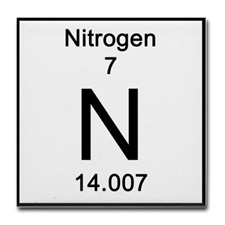
What is the number of protons that the element in this image contain?
a)
14
b)
7
c)
15
d)
18
56.

How many valence electrons does lithium have?

a)

8

b)

3

c)

4

d)

1

57.

A covalent bond is formed between

a)

a metal and a nonmetal

b)

two nonmetals

c)

two metalloids

d)

no elements

58.

Holly has an unknown substance in a beaker. She wants to determine the relative pH of the unknown substance. She places a piece of red litmus paper into the substance, and the litmus paper turns blue. The substance feel slipper like soap. The substance in the beaker

a)

is a base.

b)

has a neutral pH.

c)

is an acid.

d)

does not have a pH.

59.
Which of the following statements is correct?
a)
Blue litmus paper turns red when placed in a base.
b)
Red litmus paper turns blue when placed in a base.
c)
Blue litmus paper stays blue when placed in an acid.
d)
Red litmus paper stays red when placed in a base.
60.

The pH of a solution is tested, and it is found to be a basic solution. Of the following choices, what could the pH have been?

a)

3

b)

8

c)

7

d)

5

61.
How many protons does an Aluminum atom have? (use the picture to help you)
a)
27
b)
13
c)
14
d)
40
62.
A sports car can go from 0 to 60 mph in 14 seconds. What is the acceleration?
a)
4.29 m/s2
b)
-4.29 m/s2
c)
2.33 m/s2
d)
-2.33 m/s2
63.

When you boil water, what happens that allows the liquid to turn into gas?

a)

The molecules have a lot of energy and overcome forces that hold them together.

b)

The molecules form strong bonds and can then evaporate.

c)

The molecules have very little energy and disperse in a gas.

64.
Half-life is
a)
the name of an awesome video game
b)
the amount of time needed for half a radioactive sample to decay
c)
about 40 years for most men.
d)
the time needed for  all of a sample to decay
65.
Which process involves the splitting of large nuclei?
a)
Beta decay
b)
Alpha decay
c)
Nuclear fission
d)
Nuclear fusion
66.

Which radiation has the highest penetrating power?

a)

alpha

b)

gamma

c)

beta

67.

Which radiation has the lowest penetrating power?

a)

alpha

b)

beta

c)

gamma

68.
A material that can stop alpha radiation is
a)
lead
b)
paper
c)
sunscreen
d)
wood
69.

Nickel is an example of a

a)

Compound

b)

Element

c)

Heterogeneous Mixture

d)

Homogeneous Mixture

70.

How many hydrogen atoms are present in this formula: 2C3H7O?

a)

7

b)

21

c)

14

d)

12

71.

In this formula: 2C3H7O, what term is used to describe the "2"?

a)

product

b)

coefficient

c)

subscript

d)

reactant

72.

In this formula: 2C3H7O, what term is used to describe the "3"?

a)

product

b)

coefficient

c)

subscript

d)

reactant

73.

Identify the EXOTHERMIC reaction:

a)

vinegar and baking soda fizzing

b)

burning wood

c)

activating an instant cold pack

74.

Identify the ENDOTHERMIC reaction:

a)

gasoline combusting

b)

cake baking

c)

fireworks exploding

75.

Identify the PHYSICAL change:

a)

rusting nail

b)

burning paper

c)

melting ice

d)

rotting apple

76.

Identify the CHEMICAL change:

a)

firecracker exploding

b)

hair being cut

c)

a room being painted

d)

water boiling

77.

Identify the PRODUCT(S) in this equation: Zn + Ag2S --> ZnS + 2Ag

a)

Zn, Ag, S

b)

2

c)

Zn + Ag2S

d)

ZnS + 2Ag

78.

Identify the REACTANT(S) in this equation: Zn + Ag2S --> ZnS + 2Ag

a)

Zn, Ag, S

b)

2

c)

Zn + Ag2S

d)

ZnS + 2Ag

79.

Ammonia has a pH of 11, so it is classified as:

a)

neutral

b)

acidic

c)

basic

d)

an indicator

80.

Water has a pH of 7, so it is classified as:

a)

neutral

b)

acidic

c)

basic

d)

an indicator

81.

Lemon juice has a pH of 2, so it is classified as:

a)

neutral

b)

acidic

c)

basic

d)

an indicator

82.

What is equal and opposite, according to Newton's third law?

a)

change in velocity

b)

change in acceleration

c)

reaction

d)

action

83.

How is radiation different from convection and conduction?

a)

It can travel through empty space.

b)

It can travel through matter.

c)

It can travel through water.

84.

Which option is a copper wire a good example of?

a)

a magnet

b)

a conductor

c)

an insulator

85.
A material in which electrons are not able to move easily 
a)
Circuit 
b)
Insulator 
c)
Resistance 
d)
Conductor
86.
"For every action, there is an equal and opposite reaction."
a)
Newton's 1st Law
b)
Newton's 2nd Law
c)
Newton's 3rd Law
d)
Newton's 4th Law
87.
Force = Mass x Acceleration
a)
Newton's 1st Law
b)
Newton's 2nd Law
c)
Newton's 3rd Law
d)
Newton's 4th Law
88.
"An object in motion (or at rest) will to stay in motion (or at rest) until an outside force acts upon it."
a)
Newton's 1st Law
b)
Newton's 2nd Law
c)
Newton's 3rd Law
d)
Newton's 4th Law
89.
A force that opposes motion between a surface in contact with the atmosphere.
a)
air resistance
b)
gravity
c)
momentum
d)
terminal velocity
90.
An exploratory robot was sent to the planet Mars. The gravity on Mars is weaker than the gravity on Earth. Compared to the mass and weight of the robot on Earth, the robot on Mars has...
a)
less mass and weight.
b)
less mass but equal weight.
c)
equal mass and weight.
d)
equal mass but less weight.
91.
A crumpled piece of paper hits the ground before a flat sheet of paper because
a)
the acceleration of gravity is greater on the  crumpled paper.
b)
there is more air resistance against the flat paper.
c)
the crumpled paper is more massive
d)
the crumpled paper is less massive.
92.
Atoms of which two elements will form an ionic bond?
a)
Mg and Cl
b)
N and O
c)
Fe and Co
d)
Rb and Al
93.
Which compound will most likely be formed when lithium (Li) and nitrogen (N) are chemically combined?
a)
LiN
b)
Li3N
c)
LiN3
d)
Li3N3
94.
Which compound results from covalent bonding?
a)
NH4Cl
b)
K2SO4
c)
NaCl
d)
CO2
95.
An atom has 29 protons, 29 electrons, and 35 neutrons.  What is the mass number of the atom?
a)
29
b)
35
c)
64
d)
93
96.
Which accounts for most of the mass of an atom?
a)
electrons
b)
protons
c)
neutrons and protons
d)
electrons and neutrons
97.
Which element has the same number of valence electrons as Krypton (Kr)?
a)
Neon (Ne)
b)
Fluorine (F)
c)
Chlorine (Cl)
d)
Selenium (Se)
98.
An element located in group 18 and period 4 would be classified as which type of substance?
a)
a halogen
b)
a metalloid
c)
a lanthanoid
d)
a nonmetal
99.
How can two different nonmetals form a compound?
a)
by sharing electrons
b)
by sharing protons
c)
by transferring protons
d)
by transferring electrons
100.
What is the correct name for the compound NaNO3?
a)
sodium nitrate
b)
sodium nitrous acid
c)
sodium nitrogen oxide
d)
sodium nitrogen trioxide
101.
The faster an object moves, the ________ kinetic energy it has. 
a)
more
b)
less
c)
none of the above
d)
all of the above 
102.

How much KNO3 solute is saturated at 40 degrees?

a)

75

b)

55

c)

65

d)

85

103.

How much C12H22O11 solute is saturated at 40 degrees?

a)

240

b)

220

c)

230

d)

250

104.

How much NaBr solute is saturated at 70 degrees?

a)

110

b)

120

c)

130

d)

140

105.

At what temperature can you fully dissolve 140g of NaNO3?

a)

62

b)

73

c)

81

d)

You cannot determine this

106.

What type of a solution is 60g NaNO3 at 40ºC in 100g H2O?

a)

Saturated

b)

Unsaturated

c)

Supersaturated

107.
Alpha particles.....
a)
a) are positively charged.
b)
b) consist of two protons and four neutrons.
c)
c) can penetrate any thickness of matter
d)
d) All of the above 
108.
The process of nuclear change in an atom of radioactive material is called... 
a)
nuclear decay
b)
nuclear mass
c)
isotopes
d)
radon
109.
During beta decay, a nucleus .... 
a)
gives up two protons and two neutrons.
b)
  maintains the same number of protons and neutrons.
c)
  loses a proton and gains a neutron.
d)
gains a proton and loses a neutron. 
110.
When a nucleus undergoes nuclear decay by gamma rays, the atomic number of the element....
a)
remains the same
b)
  decreases by one.
c)
increases by one.
d)
increases by two.
111.
Radioactive materials have unstable...
a)
electrons
b)
protons
c)
nuclei
d)
neutrons
112.
Negatively charged particles emitted from a nucleus at a high speed are ____.  
a)
alpha particle
b)
gamma rays
c)
beta particles
d)
X rays
113.

What type of nuclear decay is shown here

13756Ba →→ 13756Ba + γ rays

a)

alpha

b)

beta

c)

gamma

114.

What type of decay is shown here

23892U ---> 23490Th + 42He.

a)

alpha

b)

beta

c)

gamma

115.

Finish this equation

20983Bi--> _______ + 20581Tl

a)

42He

b)

0-1e

c)

y

116.

Identify the type of nuclear decay shown here

21483Bi 0-1e + 21484Po

a)

alpha

b)

beta

c)

gamma

117.

finish the equation


22688Ra --> ____ + 22688Ra

a)

42He

b)

0-1e

c)

y

118.

finish the equation


18173Ta --> ____ + 18174W

a)

42He

b)

0-1e

c)

y

119.
If 10 mg of iodine 131 is given to a patient, how much is left after 24 days? The half-life of iodine-131 is 8 days.
a)
1.25mg
b)
1.25g
c)
10g
d)
10mg
120.
The half-life of strontium-90 is 25 years. How much strontium-90 will remain after 100 years if the initial amount is 4.0 g?
a)
3.0g
b)
0.25mg
c)
0.3g
d)
0.25g
121.
If the half-life of uranium-232 is 70 years, how many half-lives will it take for 10 g of it to be reduced to 1.25 g?
a)
1 half-life
b)
2 half-lives
c)
3 half-lives
d)
4 half-lives
122.
Water exists as a _____________ at 700 mmHg and 50 °C.
a)
solid
b)
liquid
c)
gas
d)
supercritical fluid
123.
At 10 atm, dry ice is heated from -100 °C to 30 °C.  What changes occur?
a)
freezing, then condensation
b)
melting only
c)
sublimation only
d)
melting, then boiling
124.
What state of matter is X?
a)
solid 
b)
liquid
c)
gas
d)
supercritical fluid
125.
What state of matter is Z?
a)
solid 
b)
liquid
c)
gas
d)
supercritical fluid
126.
What change occurs from C to D?
a)
condensation
b)
vaporization
c)
melting
d)
sublimation
127.
What is the symbol for Thermal Energy?
a)
Q
b)
t
c)
m
d)
C
128.
What unit do you use to measure Thermal Energy?
a)
J/Kg ºC
b)
Kg
c)
ºC
d)
J
129.
What is the equation to measure change in Thermal Energy?
a)
Q=mc∆t
b)
Q=mc
c)
Q= ∆mct
d)
m=QC
130.
A material was cooled from 100ºC to 40ºC.  What is the temperature change?
a)
60ºC
b)
40ºC
c)
-60ºC
d)
-40ºC
131.

A high specific heat means...

a)

It heats up quickly with energy added

b)

It requires more energy to change temperature