wayground logo

Free Printable Worksheets

Font size

S
M
L
XL
Worksheets

1st Semester Final Exam Review - Chem

Total questions: 132

Worksheet time: 1hrs 7mins

Name
Class
Date
1.

A quantitative value measured during an experiment

a)

measurement

b)

observation

c)

atom

d)

mass number

2.

electron

a)

A subatomic particle with a negative charge and a mass of one amu

b)

A subatomic particle with no charge and a mass of zero amu

c)

A subatomic particle with a positive charge and a mass of one amu

d)

A subatomic particle with a negative charge and a mass of zero amu

3.

The electrostatic attraction that binds oppositely charged ions together

a)

ionic bond

b)

dipole-dipole interactions

c)

cation

d)

electron

4.
Identify the equipment shown here:
a)
concave glass
b)
convex glass
c)
watch glass
d)
glass plate
5.
Identify the equipment shown here:
a)
test tube holder
b)
iron rod
c)
iron ring
d)
ring stand
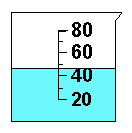
6.
Identify the equipment shown here:
a)
measuring cylinder
b)
conical flask
c)
beaker
d)
volumetric flask
7.

All of the following processes cause physical changes in matter except

a)

Combustion

b)

Melting

c)

Freezing

d)

Boiling

8.
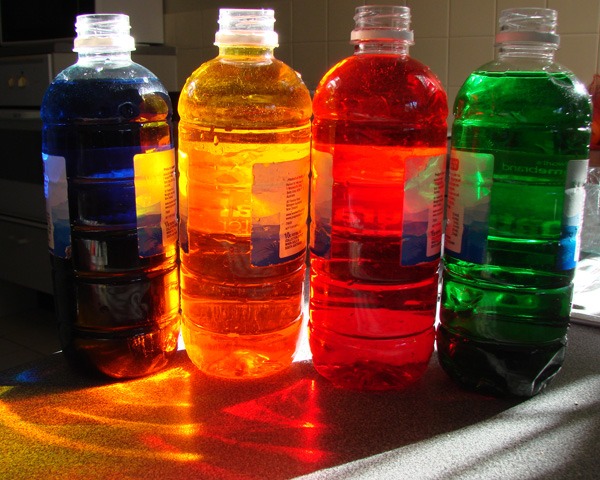
Coloured water is an example of a
a)
homogeneous mixture
b)
heterogeneous mixture
9.
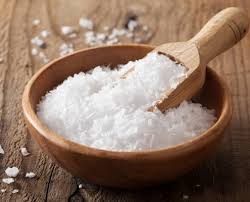
Salt is a(n)
a)
element
b)
compound
c)
mixture
10.

Which of the following could indicate that a chemical change took place?

a)

Change in color

b)

Production of Energy

c)

Formation of Gas

d)

All are correct

11.

The formation of a solid when two liquids combine is called?

a)

Solidification

b)

Freezing

c)

Precipitate

d)

Solubility

12.
a)
Physical Change
b)
Chemical Change
13.

The chart below shows objects that conduct heat and objects that insulate heat. Which answer choice best completes the chart?

a)

Glass block

b)

Gold ring

c)

Plastic spoon

d)

None of the above

14.

The picture below is an electrical wire.


What is the most reasonable answer for using copper in an electrical wire?

a)

Copper is a good insulator of electricity.

b)

Copper is magnetic.

c)

Copper is a good conductor of electricity.

d)

Copper is shiny.

15.

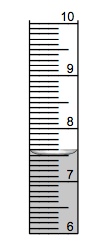
What is the volume of the liquid in this graduated cylinder?

a)

8.5 mL

b)

7.5 mL

c)

8 mL

d)

7.50 mL

16.

A student took a beaker containing a colorless liquid and evaporated the liquid. After the liquid was evaporated, she observed a white residue in the beaker. From this observation, she would conclude that the original liquid was a(n) _____.

a)

compound

b)

element

c)

heterogeneous mixture

d)

homogeneous mixture

17.

In the laboratory, students measured the temperature increase of a solution as more reactant is added to the solution

a)

In a graph of the results, temperature would be the independent variable and amount of reactant would be the dependent variable.

b)

In a graph of the results, temperature would be the dependent variable and amount of reactant would be the independent variable

c)

In a graph of the results, the type of solution would be on the x-axis and temperature would be on the y-axis.

d)

In a graph of the results, the amount of reactant would be on the x-axis and the type of solution would be on the y-axis

18.

In which month did the Cubs LOSE the most games?

a)

June

b)

July

c)

Aug

d)

Sep

19.
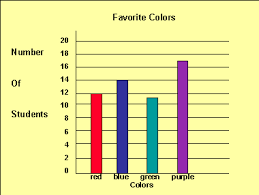
How many more people have purple for a favorite color than red?
a)
3
b)
5
c)
7
d)
9
20.
7.82 x 10⁻⁶ is an example of scientific notation. The exponent of -6 tells you your number will be very ________.
a)
Large
b)
Small
c)
Basic
21.
Change from standard form to scientific notation:  450,000
a)
4.5  x  105
b)
45  x  105
c)
4.5  x  104
d)
4.5  x  106
22.
Change from standard form to scientific notation:  0.000398
a)
39.8  x  10-5
b)
3.98  x  10-5
c)
3.98  x  10-4
d)
39.8  x  10-6
23.

Convert

 450 K450\ K  to Celsius

a)

 723oC723^oC  

b)

 277oC277^oC  

c)

 177 oC177\ ^oC  

d)

 623oC623^oC  

24.

Convert

 100oC100^oC  to Kelvin

a)

 373 K373\ K  

b)

 273 K273\ K  

c)

 212 K212\ K  

d)

 0 K0\ K  

25.

Convert 85.0 mL to L

a)

85000 L

b)

0.085 L

c)

0.0850 L

d)

0.850 L

e)

0.85 L

26.
Jill has a gel pen. The gel pen has a mass of 8g and a volume of 2cm3. What is the density of the pen?
a)
4 g/cm3
b)
16 g/cm3
c)
.25 g/cm3
d)
64 g/cm3
27.
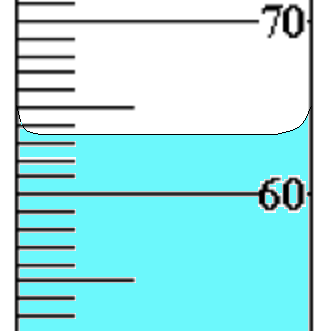
Volume?
a)
63.5 mL
b)
63 mL
c)
63.55 mL
d)
6 mL
28.

Volume?

a)

48 mL

b)

48.2 mL

c)

48.25 mL

d)

4 mL

29.

In the measurement 0.250 L, which digit is estimated

a)

The first zero (before the 2)

b)

The last zero (after the 5)

c)

2

d)

5

30.

How many sig figs are in the number below:

350.540

a)

4

b)

5

c)

6

d)

7

31.
Round 1047.78 to three sig figs
a)
104
b)
105
c)
1050
d)
1050.00
32.

10.00 cm x 2.0 cm =

a)

20 cm

b)

20. cm

c)

20.0 cm

d)

20.00 cm

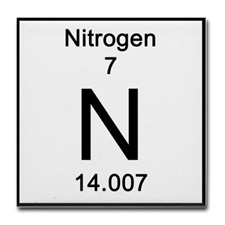
33.
What is the number of protons that the element in this image contain?
a)
14
b)
7
c)
15
d)
18
34.
the central region of an atom where its neutrons and protons are is its 
a)
nucleus 
b)
electron cloud
c)
core 
d)
center 
35.
What is the mass of an atom if it has 11 protons, 12 neutrons, and 11 electrons?
a)
22
b)
11
c)
34
d)
23
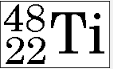
36.
How many protons does this isotope of titanium have?
a)
48
b)
22
c)
26
d)
70
37.

Isotopes of an element have a different number of...

a)

Protons

b)

Neutrons

c)

Electrons

d)

Mass

38.
Isotopes are atoms of the same element that have the same number of __________ but different number of __________ . Therefore, isotopes of the same element have different masses. 
a)
protons, neutrons
b)
protons, electrons
c)
neutrons, protons
d)
electrons, protons
39.

Calcium has three different isotopes. One has a mass of 35.00 amu; another has a mass of 41.00 amu; and another has a mass of 40.00 amu. Which isotope is probably the most abundant of the three?

a)

40.00 amu

b)

41.00 amu

c)

35.00 amu

d)

40.08 amu

40.
An isotope has three forms.  30% have a mass of 4 amu, 20% have a mass of 5 amu and 50% have a mass of 3 amu.  Average atomic mass will be closest to
a)
2 amu
b)
3 amu
c)
4 amu
d)
5 amu
41.

Violet light has a wavelength of 4.10 x 10⁻¹² m. What is the frequency?

a)

1.23 x 10 -3 Hz

b)

7.31 x 10¹⁹ Hz

c)

1.37 x 10¹² Hz

d)

3.0 x 10⁸ Hz

42.

A wave with a large wavelength will have a ______ frequency and _____ energy

a)

high, low

b)

high, high

c)

low, high

d)

low, low

43.

If short wavelength has more ENERGY than long wavelength, which color Lightsaber is the most dangerous, or powerful?

a)

Red

b)

Orange

c)

Blue

d)

Green

44.
Which one of these is not a noble gas?
a)
Helium
b)
Radon
c)
Iodine
d)
Krypton
45.

where are the metaloids found

a)

far left, vertical

b)

stair step/diagonal

c)

far right horizontal

d)

at the bottom

46.

what group number are the halogens

a)

18

b)

1

c)

2

d)

17

47.

What is the name of group number 2?

a)

transition metals

b)

halogens

c)

metaloids

d)

alkaline earth metals

48.

A row on the Periodic Table of Elements

a)

family

b)

period

c)

row

d)

isotope

49.

Which of these elements is a Non-Metal?

a)

Copper

b)

Gold

c)

Sulfur

d)

Lead

50.

Which subatomic particle plays the greatest part in determining the chemical properties of an element?

a)

proton

b)

neutron

c)

electron

d)

Robotron

51.

Which of the following will have a larger radius than Gallium (Ga)?

a)

Ge

b)

Al

c)

Mg

d)

Sr

52.

Which of these has the smallest atomic radius?

a)

K

b)

Rb

c)

Fr

d)

Cs

53.

Which has the smaller ionization energy?

a)

P

b)

Mg

54.

The atom with the largest atomic radius in Period 4 (row 4) is -

a)

K

b)

Kr

c)

Fe

d)

Fr

55.
Which has the greater Electronegativity: 
N or C?
a)
C
b)
N
56.

Barium atoms tend to form...

a)

an anion

b)

a cation

c)

an onion

d)

sea turtles

57.
Anions are...
a)
Positive
b)
Negative
c)
Neutral
d)
Crying
58.
An atom becomes _________ when it gains electrons.
a)
Positive
b)
Negative
c)
Neutral
d)
Invinsible
59.

What is the ionic symbol for a Cesium atom?

a)

Cs+

b)

Cs-

c)

Cs+2

d)

Cs-2

60.

What is the charge of a sodium ion?

a)

+2

b)

+1

c)

-1

d)

-2

61.
Group 17 always has ions with a charge of 
a)
+1
b)
+2
c)
-1
d)
-2
62.
If an element has 3 valence electrons, what charge will likely form on its ion ?
a)
+3
b)
+5
c)
-3
d)
-5
63.

How many valence electrons does Lithium have?

a)

1

b)

2

c)

3

d)

4

e)

5

64.

How many valence electrons does Boron have?

a)

1

b)

2

c)

3

d)

4

e)

5

65.

How many valence electrons does Phosphorus have?

a)

4

b)

5

c)

6

d)

7

e)

8

66.

How many valence electrons does Oxygen have?

a)

4

b)

5

c)

6

d)

7

e)

8

67.
When metals bond with non-metals they form what type of bonds
a)
covalent
b)
ionic
c)
cooperative
d)
lewis
68.
How do the following two elements bond together?
Cr3+  O2-         
a)
CrO
b)
Cr3O2
c)
Cr2O3
d)
CrO3
69.
PbS2
a)
lead sulfide
b)
lead sulfur
c)
lead II sulfide
d)
lead IV sulfide
70.
What is the formula for magnesium chloride?
a)
MgCl
b)
Mg2Cl
c)
MgCl2
d)
Mg(ClO3)2
71.
The chemical formula for an ionic compound of potassium and oxygen is
a)
KO.
b)
K2O.
c)
K2O2.
d)
KO2.
72.

When naming an ionic compound, the ion that has the -ide ending is the

a)

anion

b)

cation

c)

whichever ion you write second

d)

both the cation and the anions

73.

Which of the following contain Cu+ ion?

a)

CuO

b)

CuCl2

c)

Cu(OH)2

d)

CuBr

74.
Metals tend to 
a)
gain electrons
b)
lose electrons
75.
What is the formula for aluminum fluoride?
a)
AlF
b)
Al2F3
c)
AlF3
d)
Al3F2
76.

CO2 is a(n)

a)

Ionic compound

b)

Covalent compound

c)

Polyatomic Ion

d)

Metal

77.
MgCl2
a)
Ionic
b)
Covalent
c)
Polyatomic Ion
d)
Metallic 
78.
(NO3) - 
a)
Ionic
b)
Covalent
c)
Polyatomic Ion
d)
Metallic 
79.

What are the seven diatomic elements?

a)

H2, Cl2, Br2, O2, N2, I2, F2

b)

H2, Cl2, I2, F2, Hg2, Br2, Fe2

c)

H2, Cu2, Ni2, B2, O2, I2, Fe2

80.

A covalent bond exists between

a)

2 metals

b)

1 metal and 1 nonmetal

c)

2 nonmetals

d)

Any 2 elements

81.
What is the formula for Tricarbon Octahydride?
a)
Ca3O
b)
C2H8
c)
C3H8
d)
Ca3H8
82.

Name P2O5

a)

Phosphorus Oxide

b)

Pentaphosphorus Dioxide

c)

Diphosphorous pentoxide

d)

Phosphoric Oxygen

83.
What is the correct formula for this molecule?
a)
NH
b)
N3H
c)
NH3
d)
NH4
84.
According to the octet rule most elements need _______ valence electrons.
a)
2
b)
8
c)
6
d)
18
85.
Which of the following is the correct Lewis dot structure for the molecule fluorine (F2)?
a)
A
b)
B
c)
C
d)
D
86.

What is the correct Lewis Dot Structure for ammonia NH3

a)
b)
c)
d)
87.

Which is the correct molecular structure for carbon dioxide?

a)
b)
c)
d)
88.
Which of the following compounds will NOT form a linear structure?
a)
O2
b)
CO2
c)
CH4
d)
HCN
89.
Which of the following molecules would have a trigonal planar molecular shape?
a)
CH4
b)
NH3
c)
HCHO
d)
H2O
90.

Atoms of a polar molecule share their atoms ___________.

a)

Equally

b)

Unequally

91.

Classify the following molecule.

a)

polar

b)

nonpolar

92.

Classify the following molecule.

a)

polar

b)

nonpolar

93.
How many Elements are in the compound C2H8O ?
a)
2
b)
1
c)
3
d)
0
94.

How many oxygen atoms are in Ca(NO3)2?

a)

2

b)

3

c)

5

d)

6

95.

The Hydrogen atoms in the molecule shown have this charge:

a)

Positive

b)

Partial Positive

c)

Negative

d)

Partial Negative

96.

What does the 3- mean in PO43-?

a)

The phosphate ion has 12 oxygen atoms

b)

The phosphate ion contains 3 more protons than electrons

c)

Each oxygen atom has lost 3 electrons

d)

The phosphate ion contains 2 more electrons than protons

97.
What is a coefficient?
a)
The small number on the right of the chemical symbol.
b)
The large number to the left of a formula.
98.
Which side of a chemical equation is the product side?
a)
Left (before the arrow)
b)
Right (after the arrow)
99.
KNO3 --> KNO2 + O2
What coefficients are needed to balance the reaction?
a)
2, 2, 1
b)
2, 3, 2
c)
1, 2, 2
d)
1, 3, 1
100.
Balance this equation-
__P+ __O--> __P2O3
a)
it is already balanced
b)
2, 1, 3
c)
1, 2, 3
d)
1, 3, 2
101.
Balance this equation.
_Mg + _Cl--> _MgCl2
a)
1, 2,1
b)
already balanced
c)
2,1,1
d)
1,1,2
102.
AB + CD →AD + CB
a)
Double Replacement
b)
Single Replacement
c)
Synthesis
d)
Decomposition
103.
2 C5H5 + Fe --> Fe(C5H5)2 
a)
single displacement
b)
double displacement
c)
decomposition
d)
synthesis
104.
Which of the following is the general formula for a decomposition reaction?
a)
A + B  → AB
b)
AB → A + B
c)
AB + C → AC + B
d)
AB + CD → AC + BD
105.
Which process involves the splitting of large nuclei?
a)
Beta decay
b)
Alpha decay
c)
Nuclear fission
d)
Nuclear fusion
106.
Arrange in order of increasing ability to penetrate matter.
a)
Beta, gamma, alpha
b)
Alpha, gamma, beta
c)
Gamma, beta, alpha
d)
Alpha, beta, gamma
107.
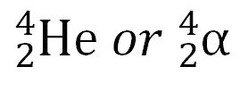
What do these symbols represent?
a)
alpha particle
b)
beta particle
c)
neutron
d)
gamma ray
108.

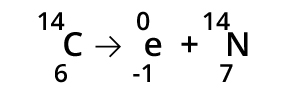
What type of nuclear decay does this equation represent?

a)

fusion

b)

fission

c)

alpha

d)

beta

109.
The technetium-99 isotope has a half-life of 6.0 hours. If 100.0 mg were injected into a patient how much remains after 18 hours?
a)
33.0 mg
b)
12.5 mg
c)
.33 mg
d)
15.8 mg
110.
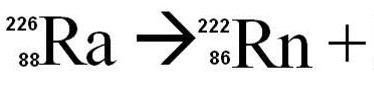
Complete the nuclear equation and determine the type of decay that is occurring in this reaction. 
a)
alpha
b)
beta
c)
gamma
d)
none
111.
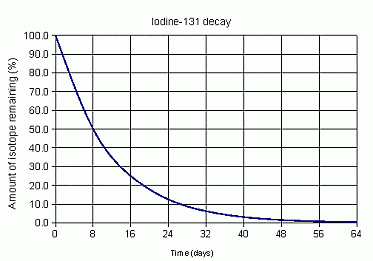
What is the half-life of iodine-131?
a)
32 days
b)
8 days
c)
16 days
d)
24 days
112.

Complete the nuclear reaction

85209At = ___ + 24He

a)

83205Bi

b)

86209Rn

c)

81207Tl

d)

85208At

113.
How many moles are in 16.94g of water?
a)
16.94 mol H2O
b)
0.9401 mol H2O
c)
305.3 mol H2O
d)
1.063 mol H2O
114.

How many moles are in 1459 grams of Na?

a)

63.46 moles

b)

60.36 moles

c)

10 moles

d)

1 mole

115.

What is the molar mass of (NH4)2CO3 ?

a)

144.0g/mol

b)

138.0 g/mol

c)

96.1 g/mol

d)

78.1 g/mol

116.

How many grams are in 0.375 mol KBr

a)

39,10 g

b)

44.625 g

c)

0.003 g

d)

56.525 g

117.
How many atoms are in 2.0 moles of oxygen? Round to correct sig figs.
a)
1.2 x 1024
b)
1.2 x 10⁻²⁴
c)
3.3 x 10⁻²⁴
d)
3.3 x 1024
118.
Molar mass is in units of ________.
a)
grams
b)
grams/mole
c)
mole
d)
moles/gram
119.
Which would have more atoms?
a)
1 mole of Li
b)
1 mole of Au
c)
1 mole of Si
d)
None, all are equal
120.
How many atoms are in 3.5 moles of arsenic atoms?
a)
5.8 x 10⁻²⁴
b)
7.5 x 101
c)
2.1 x 1024
d)
1.7 x 10²³
121.
2H2  +   O2  →  2H2O
How many moles of oxygen are consumed if 8 moles H2 are used?
a)
2
b)
4
c)
6
d)
8
122.
For the Balanced Reaction: 3 Mg + 1 Fe2O3 → 3 MgO + 2 Fe; What is the Ratio of moles of MgO to moles Fe?
a)
3mol Mg / 2 mol Fe
b)
2 mol Mg/ 3 mol Fe
c)
1 mol Fe/ 2 mol Fe
d)
3 mol MgO / 2 mol Fe
123.
2 KClO3 → 2 KCl + 3 O2
How many moles of oxygen are produced when 6.7 moles of KClO3 decompose completely?
a)
6.7 mol
b)
1.0 mol
c)
10.1 mol
d)
4.5 mol
124.

4 Al + 3 O2 –> 2 Al2O3 How much aluminum would be needed to completely react with 96 grams of O2?

a)

128 mol

b)

3.0 mol

c)

96 mol

d)

4.0 mol

125.
CH4  +  2O2  →  CO2  +  2H2O
24 grams of CH4 was added to the above reaction. Calculate the theoretical yield of CO2.
a)
66 grams
b)
132 grams
c)
33 grams
d)
8.72
126.
The ______________ yield is the maximum amount of product possible in a reaction. This determines the amount of product that should be produced in a perfect setting
a)
Percent
b)
actual
c)
stoichiometry
d)
theoretical
127.

When reacting Na with Cl2, we calculated that the theoretical yield should be 13 grams. Our actual yield was 12.5 grams. What is the percent yield?

a)

90.4%

b)

104%

c)

96.15%

d)

1.04%

128.
The limiting reactant
a)
slows the reaction down
b)
is used up first
c)
is the reactant that is left over
d)
controls the speed of the reaction
129.

Use the equation 2 Al + 3 Cl2 ---> 2 AlCl3. If 2 moles of aluminum and 2 moles of chlorine are reacted, identify the limiting reactant.

a)

AlCl3

b)

Cl2

c)

Al

130.
Theoretical yield = 73g
Actual yield = 62g
Calculate the percent yield.
a)
1.16%
b)
116%
c)
85%
d)
76%
131.

Hydrogen and oxygen gases react to form water. If you start with 2 grams of hydrogen and 16 grams of oxygen, which is the limiting reactant?

a)

hydrogen

b)

oxygen

c)

water

d)

neither oxygen nor hydrogen as they are both 100% consumed
132.
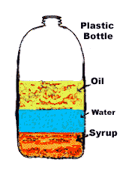
Which liquid is the least dense?
a)
oil
b)
water
c)
syrup 
d)
plastic bottle