wayground logo

Free Printable Worksheets

Font size

S
M
L
XL
Worksheets

I CAN'T WAIT TO SHOW WHAT I LEARNED FROM MR. G THIS SEMESTER PAP

Total questions: 125

Worksheet time: 2hrs 23mins

Name
Class
Date
1.

Strongest type of intermolecular force present in HCl?

a)

dipole dipole

b)

London dispersion

c)

H-bond

d)

ionic

2.

Strongest intermolecular force present in Cl2?

a)

dipole dipole

b)

H-bond

c)

London dispersion

d)

metallic

3.

Strongest type of intermolecular force present in HF.

a)

dipole dipole

b)

London dispersion

c)

H-bond

d)

ionic

4.

Which of these is NOT a sign that a chemical change has occurred?

a)

Mixing two substances

b)

An unexpected color change

c)

A temperature change

d)

The formation of a precipitate

5.
Na + CaF2 --> Ca + NaF
a)
Decomposition
b)
Single Replacement
c)
Synthesis
d)
Double Replacement
6.
AgF + CaCl2 --> AgCl + CaF2
a)
Decomposition
b)
Single Replacement
c)
Synthesis
d)
Double Replacement
7.
Fe + O2 --> Fe2O3
a)
Decomposition
b)
Single Replacement
c)
Synthesis
d)
Double Replacement
8.
What two molecules are produced in a combustion reaction?
a)
CO+ NH4
b)
SiO2 + H2O
c)
H2O + CO2
d)
CO+ H2O2
9.

What is the molar mass of chlorine gas?

a)

17 g/mol

b)

35.45 g/mol

c)

70.9 g/mol

d)

6.02 x 10²³ g/mol

10.
2 KClO3 → 2 KCl + 3 O2
How many moles of oxygen are produced when 6.7 moles of KClO3 decompose completely?
a)
6.7 mol
b)
1.0 mol
c)
10.1 mol
d)
4.5 mol
11.
What is the oxidation number of Fe in FeO?
a)
+1
b)
-1
c)
+2
d)
-2
12.
In the reaction
2Ca(s) + O2(g) --> 2CaO(s), calcium is __________
a)
Reduced
b)
Synthesized
c)
Oxidized
d)
None of the above
13.
Which type of radiation has the greatest penetrating power?
a)
Alpha
b)
Beta
c)
Gamma 
d)
Microwaves
14.
Balance the following equation:
146C --> 0-1e + ________
a)
145B
b)
146C
c)
147N
d)
42He
15.
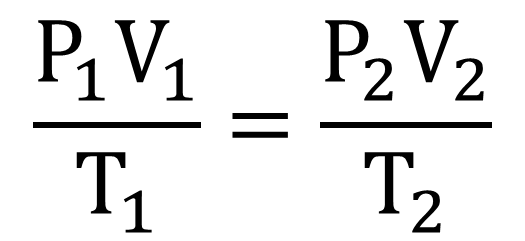
A gas is heated from 263K to 298K. The volume is increased from 24.0L to 35.0L. If the original pressure was 1.00 atm, what is the new pressure?
a)
0.78 atm
b)
1.65 atm
c)
1.28 atm
d)
0.61 atm
16.

why does an increase in volume of the container cause a decrease in pressure of the gas

a)

that's not what happens

b)

the gases don't have any space to move so there are more collisions

c)

the gases have more space to move so there are less collisions

d)

the kinetic energy increases

17.

A ___________ is a mixture containing small, undissolved particles that do not settle out that exhibits the Tyndall effect.

a)

suspension

b)

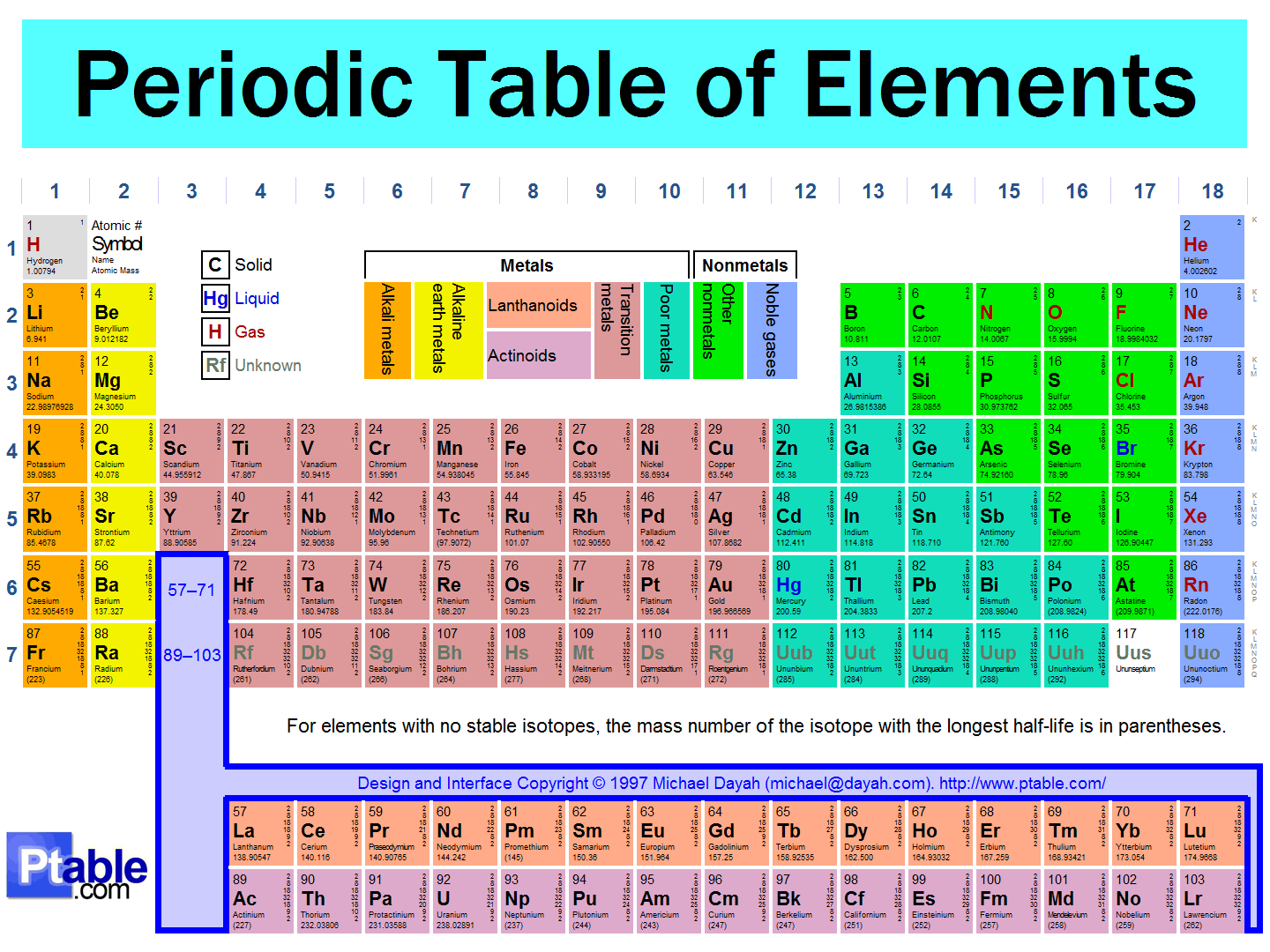
colloid

c)

solution

d)

saturated

18.
How many L of a 14 M stock solution must beused to make 250 mL of a 1.75 M solution? M1V1=M2V2
a)
0.031 L
b)
31.3 L
c)
2000 L
d)
10.2 L
19.
Describe the substance between letters A and B. 
a)
Solid
b)
Liquid
c)
Melting
d)
Evaporating
20.
During an endothermic reaction, heat content in the surroundings decreases because:
a)
all reactions need heat energy
b)
the reaction absorbs heat energy
c)
energy is given off by the reaction
d)
heat energy is destroyed during reactions
21.
What does this graph represent?
a)
Exothermic Reaction
b)
Endothermic Reaction
c)
Nuclear Reaction
d)
Radiation
22.
In an exothermic reaction:
a)
ΔH is positive because energy is gained
b)
ΔH is negative because energy is gained
c)
ΔH is positive because energy is lost
d)
ΔH is negative because energy is lost
23.
What is the hydronium concentration of a solution whose pH is 7.30?
a)
7.1 x 10⁻⁶ M
b)
1.4 x 10⁻¹¹ M
c)
3.8 x 10⁻⁸ M
d)
5.0 x 10⁻⁸ M
24.

What is the pH of a 7.89 x 10⁻⁵ M solution of sodium hydroxide, NaOH?

a)

4.10

b)

9.89

c)

14

d)

5

25.

Which scientist described a positively charged core (“nucleus”) in the middle of a lot of empty space?

a)

Chadwick

b)

Thomson

c)

Rutherford

d)

Bohr

26.

Which scientist described the existence of the neutron?

a)

Chadwick

b)

Thomson

c)

Rutherford

d)

Bohr

27.

Which has a charge of +1?

a)

proton

b)

atom

c)

electron

d)

neutron

28.

As the frequency, ν, of light increases, the wavelength of light, λ, _____.

a)

decreases

b)

increases

c)

stays the same

29.

Light is emitted when

a)

An electron moves from the ground state to excited state

b)

An electron returns from an excited state to ground state

c)

An electron absorbs energy

30.

Elements in the same group (column) have the same number of ___________

a)

electrons

b)

mass number

c)

valence electrons

d)

protons

31.

Aluminum has ____________ valence electrons

a)

2

b)

13

c)

3

d)

27

32.

Sodium is ___________in size than potassium

a)

bigger

b)

smaller

c)

same

d)

none of the above

33.

As we go down the group (column), the ionization energy _____________

a)

Decreases

b)

Increases

c)

Stays the same

34.

Which is the correct number of valence electrons in the element Sulfur (S)?

a)

16

b)

6

c)

2

d)

5

35.
An example of a physical property is 
a)
flammability
b)
acidic
c)
color
d)
ability to rust
36.
A pure substance that cannot be separated into simpler substances by chemical or physical means.  
a)
Element
b)
Compound
c)
Mixture
d)
Chemical
37.
mixture in which you can see the different parts
a)
Compound
b)
Heterogeneous
c)
Homogeneous
d)
Solution
38.

Mendeleev organized the Periodic Table of Elements by:

a)

increasing mass

b)

increasing atomic number

c)

properties

d)

states of matter

39.
describes a substance's ability to be pounded flat and shaped
a)
Ductility
b)
Reactivity
c)
Malleability
d)
Solubility
40.
elements that share characteristics with metals and nonmetals; on the periodic table their purpose is to separate metals from nonmetals
a)
Halogens
b)
Alkali Metals
c)
Metalloids
d)
Noble Gases
41.
The purpose of balancing chemical equations is to...
a)
use subscripts and coefficients
b)
make them add up
c)
disprove the Law of Conservation of Mass
d)
support the Law of Conservation Mass
42.
What is the VSEPR theory used to predict?
a)
Bond Strength
b)
Polarity
c)
Molecular Shape
d)
Electronegativity
43.
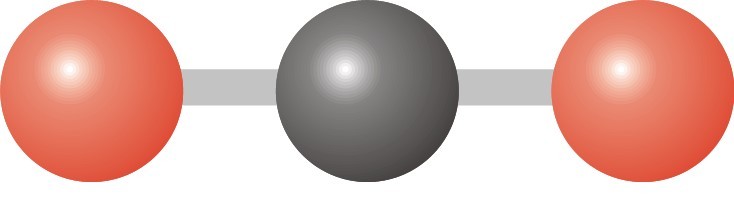
Which molecule would have this shape?
a)
BF3
b)
CH4
c)
PCl5
d)
CO2
44.
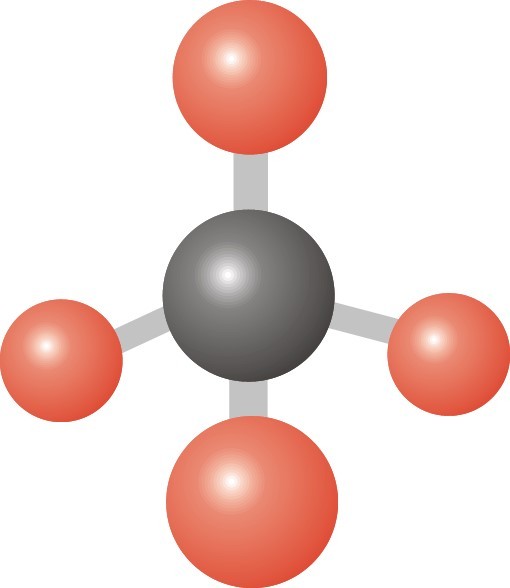
Who could this molecule be?
a)
CH4
b)
CO2
c)
PCl5
d)
BF3
45.
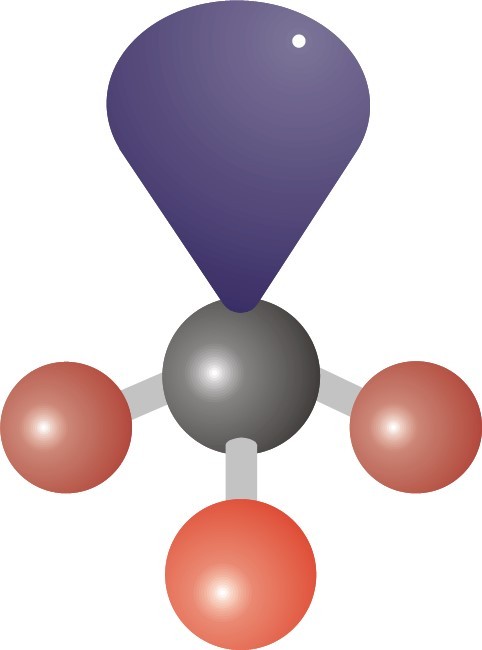
Who could this be?
a)
H2O
b)
NH3
c)
CO2
d)
CH4
46.

Bent molecules are

a)

polar

b)

non-polar

47.

polar molecules

a)

share electrons equally

b)

share electrons unequally

48.

N2 always has

a)

single bonds

b)

double bonds

c)

triple bonds

49.
The horizontal row on the periodic table is called a
a)
group
b)
family
c)
period
d)
atomic number
50.
What happens when the sodium atom loses an electron?
a)
It become negatively charged 
b)
It become positively charged
c)
none
51.
As the temperature of a sample of H2O(l) deceases, the average kinetic energy of its molecules will
a)
a. decrease
b)
b. increase
c)
c. remain the same
52.
An element that is malleable and a good conductor of heat and electricity could have an atomic number of
a)
a. 16
b)
b. 18
c)
c. 29
d)
d. 35
53.
A cube has a  volume od 8.0 cm3 and a mass of 21.6 grams.  The density of the cube, in grams per cubic centimeter, is best expressed as
a)
a. 2.7
b)
b. 2.70
c)
c. 0.37
d)
d. 0.370
54.
What is the mass number of an atom which contains 21 electrons, 21 protons, and 24 neutrons?
a)
a. 21
b)
b. 42
c)
c. 45
d)
d. 66
55.
What is the total number of electrons in a Mg2+ ion?
a)
a. 10
b)
b. 2
c)
c. 12
d)
d. 24
56.
Different isotopes of the same element must have a different 
a)
a. mass number
b)
b. atomic number
c)
c. number of protons
d)
d. number of electrons
57.
Which is the most likely pH for a solution of a weak acid?
a)
a. 1
b)
b. 5
c)
c. 11
d)
d. 14
58.
Which change is exothermic?
a)
a. freezing water
b)
b. melting iron
c)
c. vaporization of ethanol
d)
d. sublimation of iodine
59.

How many significant figures?

1010

a)

1

b)

2

c)

3

d)

4

60.

Balance the following equation:

KOH + H3PO4 --> K3PO4 + H2O

a)

2:1:1:3

b)

1:1:1:1

c)

4:2:1:3

d)

3:1:1:3

61.

What is the correct way to write:

aluminum nitrate

a)

AlNO3

b)

Al(NO3)2

c)

AlN2

d)

Al(NO3)3

62.

Which is the correct way to write:

MgCl2

a)

magnesium chlorate

b)

magnesium chlorite

c)

magnesium (II) chloride

d)

magnesium chloride

63.

Which is the correct way to write:

HBr

a)

hydrogen bromide

b)

hydrobromic acid

c)

bromic acid

d)

hydrogen bromous

64.

Which is a diatomic molecule?

a)

bromine

b)

hydroxide

c)

carbon

d)

gallium

65.

1 mole of sodium has the same number of particles as 1 mole of calcium.

a)

true

b)

false

66.

The correct electron configuration for iron is:

a)

1s22s22p63s23p64s23d6

b)

1s22s22p63s23p64s23d4

c)

1s22s22p63s23p6

d)

1s22s22p63s23p64s2

67.

This orbital diagram represents ____.

a)

boron

b)

carbon

c)

nitrogen

d)

oxygen

68.

Which of the following is the correct orbital diagram for carbon?

a)
b)
c)
d)
69.

If temperature is constant, the relationship between pressure and volume is:

a)

direct

b)

indirect

c)

no relationship

70.

What volume will 2.00 mol of oxygen gas occupy at STP?

a)

0.089 L

b)

44.8 L

c)

569 L

d)

25.6 L

71.

How many moles of Na are needed to make 4.5 L of a 1.5 M Na solution?

a)

6.75 mol

b)

0.33 M

c)

0.33 mol

d)

3 M

72.
Which of the following is NOT considered a pure substance?
a)
Atoms
b)
Elements
c)
Compounds
d)
Mixtures
73.
The rose is red. This is an example of a 
a)
physical extensive property
b)
Chemical property
c)
physical intensive property
d)
physical change
74.
Which experiment did Thomson do?
a)
Gold Foil
b)
Cathode Ray
c)
Oil Drop
d)
Bright Line Spectra
75.
Four isotopes of lead include lead-204, lead-206, lead-207, and lead-208.  The average atomic mass of lead is 207.2.  Which isotope of lead is likely to be the most abundant.
a)
204
b)
206
c)
207
d)
208
76.
Look carefully at the diagram. The atoms that are isotopes of the same element are:
a)
A & D
b)
D & X
c)
X & Y
d)
Y & A
77.
As you move down the periodic table atoms get bigger.  This is because ____________.
a)
The atoms have more mass.
b)
The atoms have more protons.
c)
The atoms have more energy levels
d)
The atoms have more nuetrons
78.
Name the following ionic compound: Cr(NO2)3
a)
chromium nitrite
b)
chromium nitride
c)
chromium (III) nitride
d)
chromium (III) nitrite
79.
What is the proper name for S2O2?
a)
Sulfur oxide
b)
Sulfur dioxide
c)
sulfur (II) oxide
d)
disulfur dioxide
80.
Why don't noble gases normally form chemical bonds?
a)
They have only 2 valence electrons
b)
Their outer level electrons are empty
c)
They have 8 neutrons
d)
They have a full valence electron shell
81.

How many total valence electrons are participating in bonding in the molecule above?

a)

8

b)

4

c)

2

d)

3

82.
Sublimination
a)
Solid to Liquid
b)
Liquid to Gas
c)
Gas to Solid
d)
Solid to Gas
83.
What kind of reaction is this:
Fe + CuSO4 -> Cu + FeSO4
a)
Double Replacement
b)
Decompostion
c)
Single Replacement
d)
Combustion
84.
Classify
HI → H
2 + I2
a)
synthesis
b)
decomposition
c)
single replacement
d)
double replacement
85.
What is the maximum number of electrons that an orbital can have?
a)
1 electron
b)
2 electrons
c)
3 electrons
d)
4 electrons
86.
What is this element? 
1s22s22p63s23p6
4s23d104p6
a)
Argon
b)
Krypton
c)
Selenium
d)
Bromide
87.
Identify the element in Period 5 that has 1 valence electron?
a)
Rb
b)
Nb
c)
Ag
d)
Sb
88.
Gas molecules can easily be compressed  because ___________. 
a)
gas molecules are soft
b)
gas molecules are far apart
c)
gas molecules follow the shape of the container
89.
Which is the correct net ionic equation for the reaction of AgNO3 and CaCl2?
a)
Ca2+(aq) +  2Cl- (aq) → CaCl(s)
b)
Ag+(aq)  +  Cl- (aq) → AgCl(s)
c)
Ag +  Cl  →  AgCl
d)
Ag+  +  Ca2+   →Ag2Ca (s)
90.
What are the spectator ions in this reaction?
CuCl2(aq) + NaOH(aq) → Cu(OH)2(s) + NaCl(aq)
 
a)
Cu2+ and OH1-
b)
Na2+ and Cl2-
c)
Na1+ and Cl1-
d)
Na1+ and OH1-
91.
How many significant figures will be in the answer to the following question:
7.62 x 6.98 x 3.2645
a)
1
b)
2
c)
3
d)
4
92.
Round 0.010229 to four sig figs
a)
1022
b)
1023
c)
0.01023
d)
0.01022
93.
Calculate 5.50 cm + 5.50 cm and give your answer with the appropriate number of significant figures.
a)
11 cm
b)
11.0 cm
c)
11.00 cm
d)
11.000 cm
94.
Name the acid: HC2H3O2
a)
Acetic Acid
b)
Acetous Acid
c)
Hydrogen Acetate
d)
Hydrogen Dicarbon Trihydrogen Dioxygen
95.
What is the formula for Carbonic Acid?
a)
H2CO3
b)
H2CrO4
c)
H2C2O4
d)
HCO3
96.
What is the chemical formula for Tetrasulfur pentoxide?
a)
SO
b)
S4O
c)
S4O5
d)
S5O4
97.
What is the name of Br6F10 ?
a)
Bromium fluoride
b)
Hexabromine fluoride
c)
Bromium decafluoride
d)
none of the above
98.
Al(C2H3O2)3 contains how many oxygen atoms?
a)
2 atoms
b)
5 atoms
c)
6 atoms
d)
22 atoms
99.
Determine the molar mass for CCl4
a)
158.8 g/mol
b)
47.54 g/mol
c)
189.35 g/mol
d)
82.9 g/mol
100.
Which of the following dimensional analysis setups will correctly convert 27.76g of Li to atoms of Li?
a)
A
b)
B
c)
C
d)
D
101.

Target on the right, how would it be described?

a)

Accurate

b)

Precise

c)

Accurate and Precise

d)

Neither Accurate or Precise

102.

Target on the left, how would it be described?

a)

Accurate

b)

Precise

c)

Accurate and Precise

d)

Neither Accurate or Precise

103.

Length

a)

Intensive Property

b)

Extensive Property

104.

Density

a)

Intensive Property

b)

Extensive Property

105.
A sample of iron receives 50.J of heat energy that raises the temperature of the iron by 25.0°C. If iron has a specific heat of 0.10 J/g°C, what is the mass of the iron sample?  (show your work)
a)
25g
b)
30g
c)
20g
d)
50g
106.
Has a mass of 4 and a charge of +2
a)
Alpha
b)
Beta
c)
Gamma
107.
Solve this equation for alpha decay.
20985At = ___ + 42He
a)
20583Bi
b)
20986Rn
c)
20781Tl
d)
20885At
108.

What is the oxidation number of Carbon in the following polyatomic ion: CO32-

a)

-4

b)

+2

c)

+4

d)

+6

109.
What is the chemical formula for  Vanadium (V) oxide
a)
V (V) O
b)
VO
c)
VO5
d)
V2O5
110.
Convert 5 cm to mm:
a)
5,000mm
b)
0.5 mm
c)
0.05 mm
d)
50 mm
111.
Which of the following is true?
a)
Electronegativity increases up a group
b)
Atomic Radii increases up a group
c)
Ionization energy increases down a group
d)
Oxidation numbers increase down a group
112.

Order the following in decreasing electronegativity value:

Ga, Fe, As, K

a)

Ga, Fe, As, K

b)

K, As, Fe, Ga

c)

As, Ga, Fe, K

d)

Fe, K, Ga, As

113.
Order the following in increasing atomic radii: 
Ra, Be, Ca, Rb, H
a)
Ra, Be, Rb, H, Ca
b)
Rb, H, Ca, Be, Ra
c)
Ra, Rb, Ca, Be, H
d)
H, Be, Ca, Rb, Ra
114.

In 1s2, the 1 means

a)

there is 1 electron

b)

the electrons are in the 1st energy level

c)

the shape is circular

d)

there is a -1 charge

115.
What is the noble gas configuration for phosphorus?
a)
[Ar] 3p5
b)
[He] 3s2 3p5
c)
[Ne] 3s2 3p3
d)
[Na] 3s2 3p5
116.

Orbits of equal energy are occupied one at a time before doubling up

a)

Hund's Rule

b)

Pauli Exclusion Principle

c)

Aufbau Principle

117.

Electrons occupy the lowest energy levels first

a)

Hund's Rule

b)

Pauli Exclusion Principle

c)

Aufbau Principle

118.

Which orbital shows a violation of the Pauli Exclusion Principle?

a)

A

b)

B

c)

C

d)

D

119.

What is the shape of a p orbital?

a)

sphere

b)

it's just too complex to think about it

c)

dumbbell

d)

I don't know this stuff.

120.
Ionic Bonding involves...
a)
The transfer of protons
b)
The transfer of nuetrons 
c)
The transfer of electrons
d)
None Of the above
121.
The pH of a solution is tested, and it is found to be a basic solution. Of the following choices, what could the pH have been?
a)
3
b)
9
c)
7
d)
5
122.
What is the percent by mass of magnesium in MgO?
a)
20%
b)
40%
c)
50%
d)
60%
123.
What is the empirical formula if you have 36.84% nitrogen and 63.16% oxygen?
a)
NO
b)
N2O3
c)
N2O4
d)
N2O5
124.

N2 + 3 H2 → 2 NH3

How many moles of NH3 will be formed from 1 mole of H2?

a)

4 moles

b)

2/3 moles

c)

3/2 moles

d)

6 moles

125.
Determine the molarity of 2.25 mole of sulfuric acid, H2SO4, dissolved in 725 mL of solution.
a)
322.2 M
b)
3.1 M
c)
0.32 M
d)
2.25 M