wayground logo

Free Printable Worksheets

Font size

S
M
L
XL
Worksheets

APA Final Review

Total questions: 120

Worksheet time: 30hrs 0mins

Name
Class
Date
1.
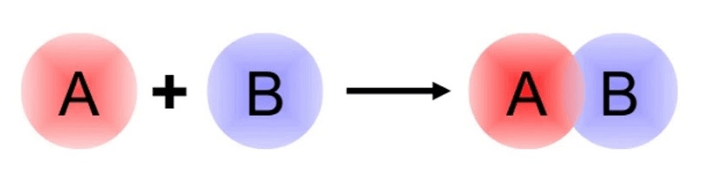
Two Reactants and One Product
a)
Decomposition
b)
Synthesis
c)
Combustion
d)
Single Replacement
2.
One reactant into several products.
a)
Decomposition
b)
Synthesis
c)
Combustion
d)
Single Replacement
3.
One element replaces another in a compound.
a)
Synthesis
b)
Combustion
c)
Single Replacement
d)
Double Replacement
4.
Always starts with a Hydrocarbon that reacts with oxygen and produces carbon dioxide and water. 
a)
Decomposition
b)
Synthesis
c)
Combustion
d)
Single Replacement
5.

The metal ions in two compounds switch.

a)

Synthesis

b)

Combustion

c)

Single Replacement

d)

Double Replacement

6.

What is the type of reaction shown above?

a)

Synthesis

b)

Decomposition

c)

Single Replacement

d)

Double Replacement

7.

Identify the reaction type:

C2H6 + O2 --> CO2 + H2O

a)

Double replacement

b)

Synthesis

c)

Acid base

d)

Combustion

8.

Identify the type of reaction:

ZnCl2 + Mg --> Zn + MgCl2

a)

Precipitate

b)

Single Replacement

c)

Double Replacement

d)

Decomposition

9.

__ Al + __ FeO → Al2O2 + __ Fe

a)

1, 1, 2

b)

2,1,2

c)

2, 2, 2

d)

2,4,2

10.
Which problem is balanced?
a)
PbO2 + 2H2
b)
SO2 + H20 --> H2SO4
c)
2Na + 2H2O --> 2NaOH + H2
11.
Balance this equation.
_SnO+_H2-->_Sn +_H2O
a)
1,1,2,1
b)
1,2,1,1
c)
1,2,1,2
d)
1,2,2,1
12.
When balancing equations a ____ can be placed to the left of a formula of a substance to make the equations balanced
a)
charge
b)
subscript
c)
random number
d)
coefficient
13.

Mole Ratios used for conversions are derived from:

a)

the molar mass of the reactants in the balanced chemical equation

b)

the coefficients of the balanced chemical equation

c)

the subscripts of the products in the balanced chemical equation

d)

the group number of each element in the balanced chemical equation

14.

What is the mole ratio of Ba(OH)2 to AlPO4?

AlPO4 + Ba(OH)2 → Al(OH)3 + Ba3(PO4)2

a)

3 mol Ba(OH)2 / 2 mol AlPO4

b)

1 mol Ba(OH)2/ 1 mol AlPO4

c)

2 mol Ba(OH)2/ 3 mol AlPO4

d)

1 mol Ba(OH)2/ 3 mol AlPO4

15.
What does the Law of Conservation of Mass state?
a)
Matter cannot be gained or lost in a chemical reaction.
b)
Matter can only be lost in a chemical reaction.
c)
Matter can only be gained in a chemical reaction.
d)
Matter can be gained and lost in a chemical reaction. 
16.
 The equation for Percent Yield:
a)
(predicted/experimental) X 100
b)
(experimental/predicted) X 100
c)
(experimental - predicted)/ Predicted X 100
17.
2H2   +   O2  →  2H2O
How many moles of water can be produced if 8 moles H2 are used?
a)
4 moles
b)
8 moles
c)
16 moles
d)
2 moles
18.
What is a Limiting Reagent?
a)
speeds up a reaction
b)
what you run out of first
c)
what you have left over
d)
slows down a reaction
19.
What is the mole used for? 
a)
To measure the amount of grams in a substance
b)
To measure the amount of atoms or molecules in a substance
c)
To measure the amount of energy in a substance
d)
To measure the amount of bonding in a substance 
20.
What is Avogadro's Number? 
a)
6.02 x 10²³
b)
- 6.02 1023
c)
6.02 x 10²²
d)
6,020,000,000,000
21.
Avogadro's number of representative particles is equal to one_____.
a)
kilogram
b)
gram
c)
kelvin
d)
mole
22.
What is the molar mass of Carbon Dioxide (CO2)?
a)
12 amu
b)
12 g
c)
44 g
d)
44 amu
23.
0.50 moles of carbon is equal to how many grams?
a)
6.0
b)
12.0
c)
8.0
d)
14.0
24.
How many moles are in 4.5x1024 particles?
a)
0.747 particles
b)
0.747 mol
c)
2.71x1047 mol
d)
2.71x1047 particles
25.
2Al + 3H2SO4 -> Al2(SO4)3 + 3H2
How many grams of aluminum sulfate would be formed if 250g H2SO4 completely reacted with aluminum?
a)
0.85 g
b)
290 g
c)
450 g
d)
870 g
26.
4 Al + 3 O2 –> 2 Al2O How much aluminum would be needed to completely react with 45 grams of O2?
a)
1.05 moles
b)
3.75 moles
c)
1.875 grams
d)
1.875 moles
27.
What is the percentage of chromium in KCr2O7?
a)

43.9%

b)

15.3%

c)

40.7%

d)
100%
28.
Find the percentage composition of  Mg in Mg3(PO4)2.
   

a)
27.75% Mg
b)
23.57% Mg
c)
48.68% Mg
d)
13.45% Mg
29.

Use the equation 2 Al + 3 Cl2 ---> 2 AlCl3.  If 2 moles of aluminum and 2 moles of chlorine are reacted, identify the limiting reactant.

a)

AlCl3

b)

Cl2

c)
Al
d)

None

30.
Mole ratios are obtained from the
a)
balanced chemical equation
b)
periodic table
c)
molar mass
31.
What is the mole ratio of H2O to H3PO4 in the following chemical equation?   P4O10 + 6 H2O --> 4 H3PO
a)
6:4
b)
4:6
c)
1:3
d)
3:1
32.
Identify the limiting reagent when 6.00 moles HCl combines with 5.00 moles Mg to form MgCl2.
 
1 Mg +  2 HCl --> 1 MgCl2  +  1 H2   
 
a)
Mg
b)
H2
c)
MgCl2
d)
HCl
33.

An unsaturated solution is one that....

a)

contains the maximum amount of dissolved solute.

b)

contains less solute than a saturated solution.

c)

contains more solute than a saturated solution.

d)

is the amount of a substance required to form a saturated solution.

34.

A supersaturated solution is one that....

a)

contains the maximum amount of dissolved solute.

b)

contains less solute than a saturated solution.

c)

contains more solute than a saturated solution.

d)

is the amount of a substance required to form a saturated solution.

35.

When no more solute dissolves the solution is _________

a)

supersaturated

b)

unsaturated

c)

saturated

d)

extra saturated

36.
At approximately what temperature does the solubility of sodium chloride, NaCl, match the solubility of potassium dichromate, K2Cr2O7?
a)
60 ºC
b)
30 ºC
c)
50 ºC
d)
83 ºC
37.
What is the correct formula to solve for the Molarity of a solution that has .4 moles of HCl in 9.5 L of solution?
a)
M = 9.5 L / .4 mol
b)
M1V1=M2V2
c)
M = .4 mol / 9.5 L
d)
none of the other choices
38.
Which of the following would decrease the rate of solution when dissolving a solid in water?
a)
Raise the temperature of the solution
b)
Crush the solid before mixing
c)
Stir the solution after mixing
d)
Use a single cube of solid
39.

How many mols of HCl are in 3 liters of 2.0M HCl solution?

a)

2.0

b)

1.5

c)

6.0

d)

0.66

40.
How many moles of NaCl are present in 6000. ml a 1.5 M NaCl solution?
a)
9 moles NaCl
b)

9000 moles NaCl

c)

900 moles NaCl

d)
4000  moles NaCl
41.
How many moles of NaCl are present in a solution with a molarity of 8.59 M and a volume of 125 mL?
a)
1074 mol
b)
0.069 mol
c)
1.07 mol
d)
62.7 mol
42.
What is a property of bases?
a)
Slippery touch
b)
Sour taste
c)
Ability to dissolve metal
d)
Ability to form hydronium ions
43.
How do acidic solutions taste?
a)
Delicious
b)
Sweet
c)
Bitter
d)
Sour
44.
This piece of pH paper has been dipped into:
a)
An acid
b)
A base
c)
A pH-neutral substance
d)
A buffer
45.

If the pH of a solution is 4.0, what is the pOH?

a)

4.0

b)

10.0

c)

1.0 x 10 -4

d)

cannot be determined from the information

46.

If the [H+] of a solution is 1 x 10⁻³ M, the pH is

a)

11

b)

-3

c)

3

d)

1

47.

What is the pH of a solution that has a [H+] of 2.5 x 10⁻⁵?

a)

4.60

b)

2.5

c)

5.0

d)

7

48.
Which of the following statements is correct?
a)
Blue litmus paper turns red when placed in a base.
b)
Red litmus paper turns blue when placed in a base.
c)
Blue litmus paper stays blue when placed in an acid.
d)
Red litmus paper stays red when placed in a base.
49.
What is the only substance with a neutral pH of 7?
a)
Milk
b)
Orange Juice
c)
Water
d)
Blood
50.
What might happen if you mixed a strong acid with an equally strong base?
a)
You would see an explosive chemical reaction.
b)
The acid would destroy the base.
c)
The base would destroy the acid.
d)
You'd wind up with a pH-neutral substance.
51.
When you combine an acid with a base it produces ___.
a)
a huge explosion
b)
a very dangerous gas
c)
a salt and water
52.
A neutralization reaction will always produce...
a)
water & salt
b)
water
c)
salt
d)
water & carbon
53.
As the kinetic energy of the molecules in a substance increases, the temperature of the substance __________.
a)
increases
b)
decreases
54.
The measure of average kinetic energy of all the particles within an object is called ____________. 
a)
temperature
b)
conduction
c)
radiation
d)
heat 
55.
What is the equation to measure change in Thermal Energy?
a)
Q=mc∆t
b)
Q=mc
c)
Q= ∆mct
d)
m=QC
56.
Copper, Stainless Steel, Carbon Steel, and Zinc were all heated using 10,000 JOULES of thermal energy.  What material would be have the LARGEST change in temperature?
a)
Copper
b)
Carbon Steel
c)
Zinc
d)
Stainless Steel
57.
A high specific heat means...
a)
It requires less energy to change temperature
b)
It requires more energy to change temperature
c)
It heats up very quickly
58.
The specific heat of aluminum is 0.21 cal/g°C.  How much heat(Q) is released when a 10 g piece of aluminum foil is taken out of the oven and cools from 100° to 50°?
a)
105 J
b)
10.5 J
c)
1.05 J
d)
50 J
59.
20 g of water. specific heat of water is 4.18 J/g°C.  temperature changes from 25° C to 20° Chow much heat energy (Q) moves from the water to the surroundings?
a)
418 Joules
b)
209 J
c)
83 J
d)
4.18 J
60.
Specific heat is....
a)
The measure of kinetic energy of an objects particles
b)
A measure of the energy needed to increase the average kinetic energy of the particles
c)
The heating caused by the motion of flluid due to temperature difference
d)
The transfer of energy by electromagnetic radiation
61.
The amount of energy required to raise the temperature 1ºC for every kilogram is called____?
a)
Thermal Energy
b)
Specific Heat
c)
Temperature
d)
Kinetic Energy
62.

A non-electrolyte is composed of __________in solution

a)

molecules

b)

molecules and ions

c)

ions

d)

none of the above

63.

A nonelectrolyte is...

a)

The rapid, random movement of particles in colloidal dispersion.

b)

A substance that dissolves in water and conducts electric current.

c)

A substance that dissolves in water and does not conduct electric current.

d)

The solution process when water is the solvent.

64.
Strong acids and bases...
a)
do not break apart into ions (non-electrolyte)
b)
partially break apart into ions (weak electrolyte)
c)
completely break apart into ions (non-electrolyte)
d)
completely break apart into ions (strong electrolyte)
65.
Convert: 253 C to K:
a)
526 K
b)
625 K
c)
0 K
d)
186 K
66.

If 200. mL of a gas at 57°C is cooled to 33°C at a constant pressure, the volume will be

a)

250. mL

b)

9.40 mL

c)

185 mL

d)

345 mL

67.

The volume of gas in a balloon is 1.90 L at 21.0 oC. The balloon is heated, causing it to expand to a volume of 5.70 L. What is the new temperature of the gas inside the balloon?

a)

7.00 C

b)

63.0 C

c)

120. C

d)

609. C

68.

Pressure and temperature have a(n) _________ proportionality.

a)

direct

b)

inverse

c)

non-linear

d)

exponential

69.
A gas has a pressure of 1.50 atm at a temperature of 273 K.  What will be the pressure at 410 K?
a)
.99 atm
b)
2.25 atm
c)
.75 atm
d)
2.5 atm
70.

A gas has a pressure of 2.3 atm. If its temperature was decreased to -54 °C and its new pressure was 1.8 atm, what was its original temperature?

a)

280 K

b)

69 K

c)

340 K

d)

-55 K

71.
A gas is heated from 263K to 298K. The volume is increased from 24.0L to 35.0L. If the original pressure was 1.00 atm, what is the new pressure?
a)
0.78 atm
b)
1.65 atm
c)
1.28 atm
d)
0.61 atm
72.

A(n) ___ particle consists of 2 protons and 2 neutrons.

a)

alpha

b)

beta

c)

gamma

d)

positron

73.

The symbol represents a(n) ___ particle.

a)

positron

b)

beta

c)

gamma

d)

alpha

74.

In ___ decay, an neutron is changed into an electron and a proton.

a)

alpha

b)

beta

c)

gamma

d)

positron

75.

The time it takes for half of a sample of radioactive particles to decay is called ___.

a)

decay time

b)

half-life

c)

one life

d)

years

76.
An ionic bond forms when atoms ___________ electrons.
a)
gain
b)
share
c)
increase
d)
transfer
77.
Which type of bond has an equal sharing of electrons?
a)
Polar Covalent 
b)
Non Polar Covalent
c)
Ionic
d)
Metallic
78.
Which type of bond has an unequal sharing of electrons?
a)
Polar Covalent 
b)
Non Polar Covalent
c)
Ionic
d)
Metallic
79.
Bonds that form between two metals are called ______________ bonds.
a)
ionic 
b)
covalent
c)
metallic
d)
pervasive
80.
What is the shape of this molecule?
a)
bent
b)
linear
c)
trigonal pyramidal
d)
tetrahedral
81.
What is the shape of this molecule?
a)
Linear
b)
bent
c)
tetrahedral
d)
trigonal planar
82.
What is the shape of this molecule?
a)
Linear
b)
Bent
c)
Tetrahedral
d)
Trigonal Pyramidal
83.
What is the shape of this molecule?
a)
Linear
b)
Bent
c)
Tetrahedral
d)
Trigonal Pyramidal
84.
Which of the following is the correct Lewis dot structure for the molecule fluorine (F2)?
a)
A
b)
B
c)
C
d)
D
85.

Which is the correct molecular structure for carbon dioxide CO2?

a)
b)
c)
d)
86.
K20 - name?
a)
potassium dioxide
b)
potassium oxide
c)
potassium oxygen
d)
dipotassium dioxide
87.
What is the chemical formula for Tetrasulfur pentoxide?
a)
SO
b)
S4O
c)
S4O5
d)
S5O4
88.
What is the chemical formula for phosphorus triiodide?
a)
P3I
b)
PI
c)
P3I3
d)
PI3
89.
Name the acid: HC2H3O2
a)
Acetic Acid
b)
Acetous Acid
c)
Hydrogen Acetate
d)
Hydrogen Dicarbon Trihydrogen Dioxygen
90.
Name the acid: H3PO3
a)
hydrophosphoric acid
b)
phosphorous acid
c)
phosphoric acid
d)
phosphoric hydroxide
91.

Name the compound CuO

a)

copper (II) oxide

b)

copper oxide

c)

copper (I) oxide

d)

carbon uranium oxide

92.
What is the formula for lead (II) carbonate?
a)
PbCO3
b)
Pb2CO3
c)
Pb(CO3)2
d)
Pb(CO)4
93.

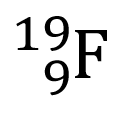
How many protons and neutrons are in the nucleus of the atom shown?

a)

9 protons and 19 neutrons

b)

19 protons and 9 neutrons

c)

10 protons and 9 neutrons

d)

9 protons and 10 neutrons

94.

Which is the correct symbol for an atom that has 7 protons and 8 neutrons?

a)

b)

c)

d)

95.

Which is the correct symbol for an atom that has 4 protons and 5 neutrons?

a)
b)
c)
d)
96.

If you need to know what something smells like you will

a)

never put the chemical directly near your face

b)

Waft the air above it

c)

sniff directly

d)

never smell in the lab , always cover your nose

97.

What should you not do in the lab?

a)

follow directions

b)

run

c)

prank

d)

walk

e)

push/shove

98.

why do we use goggles/eye protection?

a)

to stop our eyes from hurting

b)

to help you see the board

c)

to look cool

d)

to protect your eyes from chemicals, heat, or broken glassware

99.
Elements in the same ____________ tend to have similar properties
a)
group
b)
period
100.
The density of pyrite is 5g/cm. This is an example of 
a)
physical intensive property
b)
physical extensive property
c)
chemical change
d)
chemical property
101.
Wood burning is an example of _______
a)
physical intensive property
b)
physical extensive property
c)
chemical change
d)
Physical change
102.
Physical properties of a substance include _________
a)
color and odor
b)
melting and boiling points
c)
density 
d)
all of the choices are correct
103.
The mass of a lead cube is 64 grams. This is an example of 
a)
physical intensive property
b)
physical extensive property
c)
chemical change
d)
physical change
104.
Which of the following is a chemical property of milk?
a)
it is white
b)
it has fats
c)
it has turns sour if left out of the refridgerator
d)
it is soluble in water
105.
Which of the phases have particles that have a fixed volume but not a fixed shape? 
a)
solid
b)
liquid
c)
gas
d)
plasma
106.
Which phase has a constant volume and a constant shape? 
a)
solid
b)
liquid
c)
gas
d)
plasma
107.
What are the products of the chemical reaction pictured?
a)
CH4 and CO2
b)
CH4 and O2
c)
CO2 and H2O
d)
O2 and H2O
108.
In the modern periodic table elements are arranged by:
a)
atomic mass
b)
atomic number
c)
valence electrons
d)
number of isotopes
109.
DIFFERENT kinds of atoms chemically combined to form a substance are
a)
Mixture
b)
Element
c)
Compound
d)
Substance
110.
Alex goes into the garden and digs up a shovel full of dirt.  This is a _____________ mixture.
a)
Homogeneous
b)
Heterogenous
111.
Which of the following will have a lower ionization energy than Scandium (Sc)?
a)
Helium (He)
b)
Titanium (Ti)
c)
Calcium (Ca)
d)
Magnesium (Mg)
112.
Which atom has the largest atomic radius?
a)
potassium
b)
rubidium 
c)
francium
d)
cesium
113.
In the modern periodic table elements are arranged by:
a)
atomic mass
b)
atomic number
c)
valence electrons
d)
number of isotopes
114.

What electron configuration matches an oxygen atom?

a)

1s22s22p63s2, 3p64s23d104p5

b)

1s22s22p4

c)

1s22s22p6

d)

1s22s22p63s23p64s23d1

115.

Which is most reactive?

a)

N

b)

O

c)

F

d)

Ne

116.

Which is most reactive?

a)

Li

b)

Be

c)

B

d)

C

117.

The law that states that the repeating chemical and physical properties of elements relate to and depend on the elements' atomic numbers is _______.

a)
periodic
b)
period
c)
periodic table of the elements
d)
periodic law
118.

How was Dmitri Mendeleev's periodic table organized?

a)

atomic number

b)

atomic mass

c)

it wasn't organized

d)

nuetrons

119.

  Why were there blank spaces left in Mendeleev's periodic table?

a)

 He didn't know what to put there.

b)

  Undiscovered elements not yet known.

c)

Multiple elements could have fit

d)

He forgot to add the elements in

120.

______arranged elements in a periodic table according to the increasing order of atomic number

a)

John Newlands

b)

Dimitri Mendeleev

c)

Henry Moseley

d)

Lothar Mayer