
 Worksheets
Science 9 Chp. 2 Practice Test
Total questions: 121
Worksheet time: 6hrs 3mins
A substance that is made up of only one kind of atom is a(an)
mixture.
element.
compound.
solution.
If an unknown substance CANNOT be broken down into simpler substances, it is
a mixture.
a compound.
an element.
both a mixture and an element.
A mixture that appears to contain only one substance is a(an)
suspension.
compound.
homogeneous mixture.
heterogeneous mixture.
A substance has a melting point of 0° C and a boiling point of 100° C. The substance is most likely
oxygen.
hydrogen.
water.
gold.
Which of the following materials is useful for making molds because it has a low melting point?
wax
water
iron
lead
Filtration can be used to separate mixtures based on
the size of their particles.
their boiling points.
their densities.
their melting points.
A substance that has high reactivity
burns in the presence of oxygen.
displaces dissolved oxygen.
easily combines chemically with other substances.
Name the two pure substances.
homogeneous and heterogeneous
compounds and mixtures
elements and compounds
The substances in a(an) ____________________ mixture are evenly distributed throughout the mixture.
homogeneous
compound
heterogeneous
element
In a(an) ____________________ mixture, the parts of the mixture are noticeably different from one another.
homogeneous
compound
heterogeneous
element
If you put a teaspoon of sugar in water and stir, what would it result in?
Pure substance
Homogenous mixture
Heterogeneous mixture
Immiscible solution
How do atoms of a molecule combine?
Chemically
Thermally
Physically
Ionically
Which of the following is not a pure substance?
element
compound
molecule
mixture
What is a material that can be represented by a chemical formula?
An element
A mixture
A homogenous mixture
A compound
How many atoms are in a single molecule of C6H6?
2
6
12
36
Which of the following is an element?
nylon
sand
zinc
salt
Different substances in a mixture
keep their properties.
form new substances.
cannot be separated.
combine chemically.
Which of the following is not a physical property?
Freezing point
Boiling point
Reactivity
Density
How can a chemical change be reversed?
They cannot be reversed at all.
They can be reversed by physical changes.
They can be reversed by chemical changes.
Which of the following is best for separating iron from sand?
Magnet
Tweezers
Filter
centrifuge
Which of the following is an example of a chemical change?
Bending a metal nail
Paint fading
Painting a wall
Water evaporating
Unlike a mixture, a pure substance has
atoms.
molecules.
a specific size.
a fixed composition.
The capacity of a substance to combine chemically with another substance.
Compound
Reactivity
Pure substance
mixture
The smallest particle of a substance that has all of the chemical properties of a substance; it is made up of a group of atoms bonded together.
Atom
Element
Molecule
Compound
The smallest unit of an element that maintains the chemical properties of that element.
Atom
Element
Molecule
Compound
A substance that cannot be separated or broken down into simpler substances by chemical means.
Compound
Element
Molecule
Calcium is a(an)
element.
compound.
homogeneous mixture.
heterogeneous mixture.
Air is a(an)
element.
compound.
homogeneous mixture.
heterogeneous mixture.
Calculate the density of a sample of gas with a mass of 150 g and a volume of 50 cm3.
3 g/cm3
0.33 g/cm3
7500 g/cm3
Which is the best sign that a chemical change has occurred?
change in shape
change in size
change in color
change in temperature
Water freezing is what kind of change?
Chemical Change
Physical Change
The state of matter that has no definite size or shape is a
solid.
liquid.
gas.
Molecules are generally closest together in a
solid.
liquid.
gas.
What is the gaseous version of water?
water
steam
ice
When liquid water changes to a gas, it is called
evaporation.
freezing.
condensation.
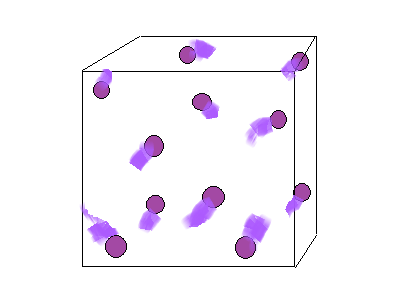
Al(SO4)2
Al(SO4)2
Al(SO4)2
Object A with a density of 0.1 g/ml
Object B with a density of 0.9 g/ml
Object C with a density of 1.25 g/ml
What is the definition of matter?
Anything that has mass and takes up space
Anything that can be seen with the naked eye
Anything that is a liquid or a solid
Anything that is made of molecules only
Which of the following is NOT a way that matter can be classified?
Element
Compound
Mixture
Solution only
Why are carbon and copper classified as elements?
They are made of one kind of atom
They are both metals
They are both found in nature
They are both compounds
What is an element?
A substance that cannot be separated or broken down into simpler substances by chemical means
The smallest unit of a compound
A mixture of atoms
A molecule made of two or more atoms
What is the smallest unit of an element that maintains the properties of that element?
Atom
Molecule
Compound
Mixture
How are elements represented?
By symbols
By numbers
By colors
By shapes
What is a molecule?
The smallest particle of a substance that has all of the chemical properties of that substance
The largest unit of an element
A mixture of compounds
A symbol for an element
Atoms that make up a molecule act as:
A unit
Separate elements
Different compounds
Individual substances
A molecule is made up of:
One atom or two or more atoms bonded together
Only one kind of atom
Only two atoms
Only elements
Explain why an element cannot be separated into simpler substances by chemical means. (DoK Level 2)
Because it is made of only one kind of atom
Because it is a mixture
Because it is a compound
Because it is a molecule
Describe the relationship between atoms and molecules. (DoK Level 2)
Atoms bond together to form molecules, which act as a unit
Molecules break down to form atoms
Atoms and molecules are the same thing
Molecules are made only of compounds
Given a substance that cannot be separated by chemical means, how would you classify it? (DoK Level 3)
As an element
As a compound
As a mixture
As a molecule
If you have a sample made up of two or more atoms bonded together, what is it called? (DoK Level 3)
A molecule
An element
A mixture
A symbol
Which of the following best defines a compound?
A substance made up of atoms of two or more different elements joined by chemical bonds
A mixture of two or more substances not chemically combined
A sample of matter with definite chemical and physical properties
A substance that cannot be mixed with others
What does a chemical formula represent?
A compound
A mixture
A pure substance
A heterogeneous mixture
Which of the following is an example of a pure substance?
A single element or a single compound with definite chemical and physical properties
A combination of two or more substances not chemically combined
A mixture of gases and liquids
A substance that cannot be mixed
How are mixtures classified?
By how thoroughly the substances mix
By their chemical formulas
By their color
By their boiling points
Which statement describes a heterogeneous mixture?
Substances aren’t mixed uniformly and are not evenly distributed
Substances are evenly distributed and the mixture is the same throughout
Substances that can be mixed
Substances that cannot be mixed
What is the difference between a homogeneous mixture and a heterogeneous mixture?
Homogeneous mixtures are evenly distributed; heterogeneous mixtures are not
Homogeneous mixtures cannot be mixed; heterogeneous mixtures can
Homogeneous mixtures are pure substances; heterogeneous mixtures are compounds
Homogeneous mixtures are gases; heterogeneous mixtures are liquids
Which term describes substances that can be mixed?
Miscible
Immiscible
Compound
Element
Gases can mix with which of the following?
Liquids
Solids
Compounds
Elements
A student is given a sample that contains two substances that are not chemically combined. How should this sample be classified?
Mixture
Compound
Pure substance
Element
If a mixture is the same throughout and substances are evenly distributed, what type of mixture is it?
Homogeneous mixture
Heterogeneous mixture
Immiscible mixture
Compound
Which of the following is classified as a physical property?
Flammability
Reactivity
Density
Ability to rust
What is the definition of density?
The ratio of the volume of a substance to its mass
The ratio of the mass of a substance to the volume of the substance
The amount of space a substance occupies
The weight of a substance per unit volume
Which unit is commonly used to express density?
kg/m³
g/cm³
m/s²
N/m²
Why can physical properties help identify substances?
Because they change the identity of the substance
Because they are characteristics that can be observed without changing the identity of the substance
Because they are only present in liquids
Because they are always visible
Which of the following is NOT an example of a physical property?
Color
Melting point
Magnetism
Flammability
How is density different from weight?
Density is the force of gravity on an object, while weight is mass per unit volume
Density is the ratio of mass to volume, while weight is the force of gravity on an object
Density and weight are the same
Density is measured in newtons, while weight is measured in grams per cubic centimeter
A student measures the mass and volume of a substance. What physical property are they determining?
Hardness
Density
Magnetism
Boiling point
Which physical property describes the temperature and pressure at which a solid becomes a liquid?
Boiling point
Melting point
Hardness
Magnetism
Why are color, volume, and density classified as physical properties?
Because they can only be measured after a chemical change
Because they are characteristics that can be observed without changing the identity of the substance
Because they are only found in gases
Because they are related to chemical reactions
Which physical property describes the temperature and pressure at which a liquid becomes a gas?
Melting point
Boiling point
Magnetism
Hardness
Which of the following best defines a chemical property?
A property that describes how a substance changes into a new substance
A property that can be observed without changing the identity of a substance
A property that describes the color of a substance
A property that measures the mass of a substance
What is flammability?
The ability to burn
The ability to dissolve in water
The ability to conduct electricity
The ability to change color
Which statement correctly describes reactivity?
The capacity of a substance to combine chemically with another substance
The ability of a substance to change its shape
The ability of a substance to reflect light
The ability of a substance to freeze
How are physical and chemical properties different?
Physical properties can be observed without changing the identity of a substance, while chemical properties can be observed only when the identity changes
Physical properties require a chemical reaction to be observed, while chemical properties do not
Physical properties are always visible, while chemical properties are always invisible
Physical properties are only found in solids, while chemical properties are only found in liquids
Why are flammability and reactivity classified as chemical properties?
Because they describe how a substance changes into a new substance
Because they are physical changes
Because they do not involve any change in the substance
Because they are related to the color of the substance
A student observes a substance burning and forming a new material. Which property is being observed?
Chemical property
Physical property
Density
Hardness
Which of the following is an example of a physical change?
Cutting paper
Burning wood
Rusting iron
Baking bread
What is the main difference between a physical change and a chemical change?
Physical changes form new substances, chemical changes do not
Chemical changes do not affect properties, physical changes do
Physical changes do not change a substance’s identity, chemical changes do
Chemical changes only occur in laboratories
Which process is considered a chemical change?
Dissolving sugar in water
Crushing a can
Burning a log
Cutting hair
Why is baking bread considered a chemical change?
It only changes the shape of the bread
It forms entirely new substances with different properties
It does not involve any change in properties
It is a reversible process
Which of the following is NOT an example of a physical change?
Reshaping clay
Dissolving salt in water
Rusting of iron
Crushing ice
Explain how mixtures and compounds can be broken down, using evidence from physical and chemical changes.
Mixtures can only be broken down by chemical changes, compounds by physical changes
Both mixtures and compounds can be broken down by physical changes only
Mixtures can be separated by physical changes, compounds require chemical changes to break down into new substances
Neither mixtures nor compounds can be broken down
Which of the following is a sign of a chemical change?
Change of color
Melting
Freezing
Dissolving
Why can't chemical changes be reversed by physical changes?
Because chemical changes create new substances
Because physical changes are permanent
Because chemical changes only affect appearance
Because physical changes require heat
Which method can be used to physically separate a mixture?
Centrifuge
Electrolysis
Combustion
Fermentation
When saltwater is heated and the water evaporates, what remains?
Salt
Water
Sugar
Oil
Which process is used to separate a mixture based on different boiling points?
Distillation
Filtration
Chromatography
Magnetism
How can compounds be broken down?
By chemical changes
By physical changes
By freezing
By dissolving
What happens when mercury(II) oxide is heated?
It breaks down into mercury and oxygen
It melts into a liquid
It forms water and carbon dioxide
It evaporates completely
When a current is passed through melted table salt, what elements are produced?
Sodium and chlorine
Hydrogen and oxygen
Carbon and nitrogen
Potassium and bromine
When you open a bottle of soda, what does carbonic acid break down into?
Carbon dioxide and water
Oxygen and hydrogen
Sodium and chlorine
Mercury and oxygen
Explain why mixtures can be separated by physical changes but compounds require chemical changes for separation.
Mixtures are made of substances that retain their properties, while compounds are chemically bonded.
Mixtures are always liquids, while compounds are solids.
Mixtures contain only one substance, while compounds contain many.
Mixtures are created by chemical reactions, while compounds are not.

