
 Worksheets
Final Exam Review
Total questions: 120
Worksheet time: 2hrs 24mins
Name
Class
Date
1.

Cr3N
a)
chromium nitride
b)
chromium (I) nitride
c)
chromium (II) nitride
d)
chromium (III) nitride
2.

chromium (III) nitrate
a)
Cr3N2
b)
Cr2N
c)
Cr2NO3
d)
Cr(NO3)3
3.

calcium oxide
a)
Ca2O2
b)
Ca2O
c)
CaO
d)
CaO2
4.

Lithium fluoride
a)
LiF
b)
LiF2
c)
Li2F
d)
Li2F3
5.

barium phosphide
a)
Ba3(PO4)2
b)
BaP
c)
Ba3P2
d)
Ba2P3
6.

FeSO3
a)
iron (I) sulfate
b)
iron sulfite
c)
iron (III) sulfite
d)
iron (II) sulfite
7.

Mn(NO3)2
a)
Magnesium nitrate
b)
Manganese (I) nitrate
c)
Manganese (II) nitrate
d)
Manganese (III) nitrate
8.

carbon monoxide
a)
CO
b)
CO2
c)
C2O
d)
COH
9.

P2O5
a)
phosphorus oxide
b)
phosphorus (II) oxide
c)
diphosphorus pentoxide
d)
phosphorus pentoxide
10.
Pb(NO3)2
a)
Lead nitrate
b)
Lead (II) nitrate
c)
Lead nitrite
d)
Lead (I) nitrate
11.
What is the correct name for the compound PH3?
a)
Monophosphorus trihydride
b)
Phosphorus hydride
c)
Trihydrogen monophosphide
d)
Phosphorus trihydride
12.
What is the correct name for the compound Al2S3?
a)
Aluminum sulfide
b)
Dialuminum trisulfide
c)
Trisulfur dialuminide
d)
Aluminum sulfur
13.
What is the correct name for the compound N2O?
a)
Dinitrogen monoxide
b)
Dinitrogen oxide
c)
Nitrogen oxide
d)
Nitrogen dioxide
14.
What is the correct name for the compound CBr4?
a)
Monocarbon tetrabromide
b)
Carbon tetrabromide
c)
Carbon bromide
d)
Tetrabromine monocarbon
15.
copper (II) phosphate
a)
Cu(PO4)2
b)
Cu2PO4
c)
Cu3PO2
d)
Cu3(PO4)2
16.
The covalent compound N2O5 would be named
a)
nitrogen oxide.
b)
dinitrogen oxide.
c)
nitrogen pentoxide.
d)
dinitrogen pentoxide.
17.
Name the following ionic compound: MgSO4
a)
magnesium sulfoxide
b)
magnesium sulfide
c)
magnesium sulfate
d)
magnesium oxide
18.
When an atom loses an electron, it becomes a:
a)
positive ion
b)
negative ion
c)
neutral ion
d)
neutral atom
19.
When an atom loses an electron, it becomes a:
a)
positive ion
b)
negative ion
c)
neutral ion
d)
neutral atom
20.
An ionic bond is the attraction between:
a)
oppositely charged ions
b)
similarly charged ions
c)
neutral ions
d)
neutral atoms
21.
When ions having a positive charge form bonds with ions having a negative charge, the charge on the resulting compound is:
a)
0
b)
1+
c)
1-
d)
37
22.
Elements in Group 1 lose one electron to form ions with a(n) _________________ charge.
a)
1+
b)
2+
c)
0
d)
1-
23.
Ionic bonds form between metals and ____.
a)
metalloids
b)
metals
c)
nonmetals
24.
What determines ionic bonds to form?
a)
Number of protons
b)
Mass of the atom
c)
Number of total electrons
d)
Number of valence electrons
25.
A anion will be a ____ ion.
a)
negative
b)
positive
26.
A cation is a ____ ion.
a)
negative
b)
positive
27.
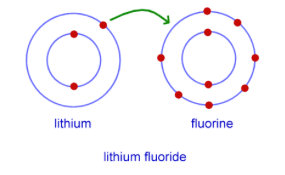
What type of bond is this?
a)
ionic
b)
covalent
28.
A charged particle that has gained or lost electrons is called a _____.
a)
molecule
b)
ion
c)
isotope
d)
element
29.
How many electrons are needed in the outer energy levels of an atom to be stable?
a)
2
b)
4
c)
6
d)
8
30.
Which of the following elements does NOT have an oxidation number of +2?
a)
Ca
b)
Sr
c)
K
d)
Ba
31.
Covalent bonds are between...
a)
Metal and Non-metal
b)
Non-metal and Non-metal
c)
Metal and Metal
32.
What is a valence electron?
a)
The sum of neutrons and protons.
b)
The # of electrons in the last shell.
c)
A type of bond.
d)
A popular compound.
33.
Ionic bonds are between...
a)
Metal and Non-metal
b)
Non-metal and Non-metal
c)
Metal and Metal
34.
How are covalent bonds formed?
a)
Sharing of electrons
b)
Transfer of electrons
35.
How are ionic bonds formed?
a)
Transfer of electrons
b)
Sharing of electrons
36.

Where are the metalloids located on the periodic table?
a)
Blue
b)
Red
c)
Green
37.

Where are metals located on the periodic table?
a)
Blue
b)
Green
c)
Red
38.

Where are the nonmetals located on the periodic table?
a)
Blue
b)
Red
c)
Green
39.
Atoms that gain electrons become...
a)
negatively charged
b)
positively charged
c)
remain neutrally charged
d)
21
40.
What happens when an atom loses an electron?
a)
It becomes Negatively Charged
b)
It remains neutral because the proton also leaves.
c)
It becomes Positively Charged
d)
It stays the same.
41.
Which is the charge that results when oxygen becomes an ion?
a)
+3
b)
+2
c)
-2
d)
-3
42.
H2O
a)
Ionic Bond
b)
Covalent Bond
c)
Both bonds
d)
Neither bond
43.
CO2
a)
Ionic Bond
b)
Covalent Bond
c)
Both bonds
d)
Neither bond
44.
LiF
a)
Ionic Bond
b)
Covalent Bond
c)
Both bonds
d)
Neither bond
45.
MgBr2
a)
Ionic Bond
b)
Covalent Bond
c)
Both bonds
d)
Neither bond
46.
Is hydrogen considered a metal or a non-metal?
a)
A metal
b)
Nonmetal
c)
Metalloid
47.
Covalent compounds have opposite partial charges on either side of the compound. This makes these compounds...
a)
Ionic
b)
Polar
c)
Nonpolar
48.
What is the formula for density?
a)
density = mass x volume
b)
density = mass / volume
c)
density = mass + volume
d)
density = mass - volume
49.
The tool used to measure the mass of a substance or object is a ______________.
a)
balance
b)
graduated cylinder
c)
ruler
d)
thermometer
50.
Jack has a rock. The rock has a mass of 14g and a volume of 2cm3. What is the density of the rock?
a)
7 mL
b)
7 g/cm3
c)
28 g/cm3
d)
1/7 g/cm3
51.

What is the volume of Object X?
a)
10.0 cm3
b)
15.0 cm3
c)
20.0 cm3
d)
25.0 cm3
52.
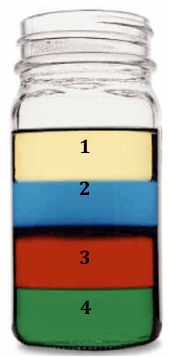
Put the liquids in order from most dense to least dense?
a)
4, 3, 2, 1
b)
1, 2, 3, 4
c)
3, 4, 2, 1,
d)
4, 3, 1, 2
53.
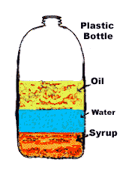
Which liquid is the least dense?
a)
oil
b)
water
c)
syrup
d)
plastic bottle
54.

Which box has a higher density?
a)
Box A
b)
Box B
c)
cannot be determined
d)
they are the same
55.
In general what is the most dense form of matter?
a)
solid
b)
liquid
c)
gas
d)
plasmas
56.

What is the volume of the fish?
a)
18.0 cm3
b)
6.0 cm3
c)
38.0 cm3
57.
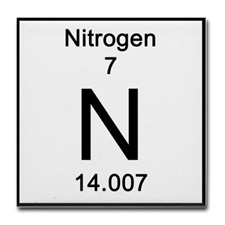
What is the number of protons that the element in this image contain?
a)
14
b)
7
c)
15
d)
18
58.

What is the atomic mass of "F"
a)
9
b)
18
c)
17
d)
19
59.
all matter is made of what
a)
energy
b)
atoms
c)
electrons
d)
compounds
60.
The positive particles of an atom are
a)
electrons
b)
positrons
c)
neutrons
d)
protons
61.
the central region of an atom where its neutrons and protons are is its
a)
nucleus
b)
electron cloud
c)
core
d)
center
62.
an atom with atomic number 6 would have how many protons
a)
6
b)
12
c)
3
d)
cannot be determined
63.
Which of the following is a positively charged subatomic particle found in the nucleus of an atom?
a)
Electron
b)
Proton
c)
Neutron
d)
Quark
64.
Which of the following is a subatomic particle with no charge that is found in the nucleus of an atom?
a)
Electron
b)
Proton
c)
Neutron
d)
Quark
65.
Where are electrons of an atom found?
a)
Nucleus
b)
Electron Cloud
c)
Some are in the nucleus and some in the electron cloud.
d)
They are moving everywhere.
66.
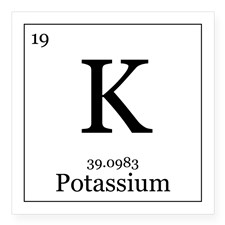
How many neutron are in the atom "K"?
a)
7
b)
2
c)
39
d)
20
67.

What is the number of protons that the element in this image contain?
a)
14
b)
7
c)
15
d)
18
68.

In which region would the nonmentals be found?
a)
1
b)
4
c)
3
d)
5
69.

In which region would the most reactive elements be found?
a)
1
b)
4
c)
5
d)
3
70.

In which region would the least reactive elements be found?
a)
1
b)
4
c)
3
d)
5
71.
The three main regions on the periodic table are ____________.
a)
solid, liquid, gas
b)
metals, nonmetals, meatlloids
c)
radioactive, man-made, poisonous
72.
Atoms can be seen with the naked eye.
a)
True
b)
False
73.
Something that is made up of only one kind of atom is known as _________________.
a)
a molecule
b)
a compound
c)
an element
d)
a proton
74.
What determines where an element is located on the periodic table?
a)
its atomic mass
b)
its atomic number
c)
its number of electrons
d)
they're arranged alphabeticaly
75.
A "group" is a ____________ on the periodic table.
a)
column
b)
row
76.
A "period" is a ____________ on the periodic table.
a)
column
b)
row
77.
Elements on the periodic table that are usually shiny, easily hammered into thin sheets or pulled into wires, and are good conductors of electricity are called _____________.
a)
metals
b)
nonmetals
c)
metalloids
d)
transition elements
78.
Elements on the periodic table that are often gases at room temperature, are poor conductors of electricity, and are good insulators are called _____________.
a)
metals
b)
nonmetals
c)
metalloids
d)
transition elements
79.
Elements on the periodic table that have physical and chemical properties of both metals and nonmetals are called _____________.
a)
metals
b)
nonmetals
c)
metalloids
d)
transition elements
80.
Helium, neon, argon, krypton, xenon, and radon are known as _____________.
a)
halogens
b)
noble gases
c)
metalloids
d)
transition elements
81.
The sum of the protons and neutrons in the nucleus of an atom
a)
Atomic Number
b)
Compound
c)
Electrons
d)
Mass Number (also called Atomic Mass)
82.
These elements are found along the zig-zag line on the periodic table.
a)
Metal
b)
Group
c)
Metalloid
d)
Nonmetal
83.

This picture represents which of the following?
a)
element
b)
compound
c)
mixture of elements
d)
mixture of compounds
84.

This picture represents which of the following?
a)
element
b)
compound
c)
mixture
85.

This picture represents which of the following?
a)
element
b)
compound
c)
mixture
86.
How many elements are represented in the compound?
Na2CO3
Na2CO3
a)
1
b)
2
c)
3
d)
4
87.
Which one can be found on the periodic table?
a)
Compound
b)
Element
88.
Is salt (NaCI) a compound or a element
a)
Compound
b)
element
89.
compounds are chemically bonded together
a)
False
b)
true
c)
I don't know?
90.

In this image, what are the symbols in red are called the_______.
a)
Products
b)
Reactants
c)
Subscripts
d)
Coefficients
91.

In this image, the symbols to the right of the arrow (in black) are called the_______.
a)
Products
b)
Reactants
c)
Subscripts
d)
Coefficients
92.
Read the following chemical formula: C6H12O6. How many hydrogen atoms are in the formula?
a)
12
b)
6
c)
4
93.
The law of conservation of mass states that....
a)
Matter can be made
b)
Matter can be destroyed
c)
Matter cannot be made or destroyed
94.

How many oxygen atoms are in this chemical formula?
a)
6 oxygen atoms
b)
2 oxygen atoms
c)
3 oxygen atoms
d)
4 oxygen atoms
95.
Balance this equation...
H2 + Cl2 --> HCl
H2 + Cl2 --> HCl
a)
It is balanced
b)
3H2 + Cl2 --> 6H2Cl
c)
H2 + Cl2 --> 2HCl
96.
Which of the following shows the correct way to balance the chemical equation?
Fe + O2 -> Fe2O3
Fe + O2 -> Fe2O3
a)
4Fe + 3O2 -> 2Fe2O3
b)
2 Fe + 3O2 -> Fe2O6
c)
4 Fe + O6 -> 2Fe2O3
d)
None of the options are correctly balanced.
97.
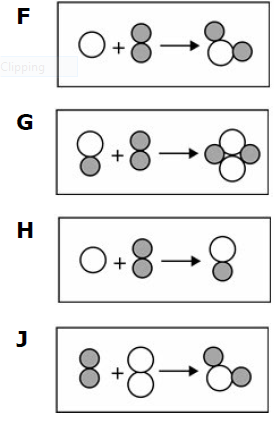
Which of the following models best demonstrates a balanced chemical equation?
a)
F
b)
G
c)
H
d)
J
98.
Which of the following is NOT an example of a chemical reaction?
a)
Wood Burning
b)
A cake baking in an oven
c)
Melting Ice Cream
d)
Mixing Vinegar and Baking Soda
99.
Which of the following is a PHYSICAL change?
a)
Getting a haircut
b)
Rusty metal
c)
sour milk
d)
A compound
100.
Which of the following IS a chemical change
a)
using chalk
b)
water freezing
c)
slicing cheese
d)
digestion
101.

What type of reaction is shown in image?
a)
exothermic reaction
b)
endothermic reaction
c)
single displacement reaction
d)
double displacement reaction
102.

In an endothermic reaction energy is...
a)
released
b)
absorbed
c)
protons
d)
neutrons
103.

In an exothermic reaction energy is ...
a)
released
b)
absorbed
c)
protons
d)
electrons
104.

What type of reaction is shown in image?
a)
exothermic reaction
b)
endothermic reaction
c)
synthesis reaction
d)
decomposition reaction
105.
How are solids different from liquids?
a)
particles in solids are moving freely around each other.
b)
particles in solids have no motion.
c)
particles in solids are vibrating in place.
d)
particles in solids have more motion than in liquids
106.
What is the phase change of a solid to a liquid?
a)
freezing
b)
melting
c)
boiling
d)
condensation
107.

What is labelled "B" on the graph?
a)
solids
b)
liquids
c)
gases
d)
a phase change
108.

What is happening at "D" on the graph?
a)
Water is boiling
b)
water is evaporating
c)
water is melting
d)
the sublimation of water
109.

Why does the graph have two flat lines at "b" and "d"?
a)
Those are times when we took the water off the hot plate
b)
Those are phase changes where temperature doesn't change while adding heat
c)
The line is flat because the water is all in the solid or gas phase
d)
The line is flat because temperature increases the most at those locations
110.
Phase change from a liquid to a gas that only happens at the surface.
a)
evaporation
b)
boiling
c)
sublimation
d)
melting
111.
When the temperature of matter increases the particles...
a)
speed up and move closer
b)
speed up and move farther apart
c)
slow down and move closer together
d)
slow down and move farther apart
112.
When the temperature of matter decreases the particles ...
a)
speed up and move farther apart
b)
speed up and move closer together
c)
slow down and move farther apart
d)
slow down and move closer together
113.
Phase change from a gas to a liquid.
a)
condensation
b)
evaporation
c)
melting
d)
deposition
114.
In the modern periodic table elements are arranged by:
a)
atomic mass
b)
atomic number
c)
valence electrons
d)
number of isotopes
115.
The noble gases have how many valence electrons?
a)
1
b)
2
c)
7
d)
8
116.
The alkali metals have how many valence electrons?
a)
1
b)
2
c)
7
d)
8
117.
Elements which are considered semiconductors are
a)
metal
b)
nonmetal
c)
metalloid
d)
nonexistent
118.
Good conductor of heat
a)
Metal
b)
Nonmetal
119.

The atoms along the staircase are called
a)
metals
b)
nonmetals
c)
metalloids
d)
noble gases
120.
An isotope is the same element with a different number of...? (4.3)
a)
Protons
b)
Neutrons
c)
Electrons
100 %

