
 Worksheets
C02 Trends IE EA EN Reactivity
Total questions: 120
Worksheet time: 3hrs 34mins
Base on the trend, which has the greater electronegativity,
Cl or Al?
Cl
Al
Base on the trend, which has the greater electronegativity,
N or C?
C
N
Based on the trend, which has the greater electronegativity,
H or F?
H
F
Which of the following will definitely have a larger radius than Zinc?
Gallium
Aluminum
Magnesium
Strontium
Which of the following will definitely have a higher electronegativity than arsenic (As)?
Carbon (C)
Neon (Ne)
Antimony (Sb)
Germanium (Ge)
Chlorine (Cl)
For elements in Group 16, how does the electronegativity change as you go down the group?
decreases
increases
remains the same
none of the above
The element with the lowest electronegativity in Period 3 is -
Na
Cl
S
Mg

Based on electronegativity trends in the periodic table, which of the following is the most likely value for the electronegativity of silicon?
2.44
1.23
2.22
2.03
The electron cloud is ... (pick all that apply)
mostly empty space
mostly electrons with little empty space
free to expand and contract
static (does NOT change its size)
Which one of the following deals with atoms losing electrons and forming positive ions?
ionic radii
atomic radii
electronegativity
ionization energy
Which of the following increases across a row from left to right? (Mark all that apply)
ionic radii
atomic radii
electronegativity
ionization energy
electron affinity
Which of the following DECREASES across a row from left to right? (Mark all that apply)
ionic radii
atomic radii
electronegativity
ionization energy
electron affinity
Which of the following increases across a row from left to right but does NOT include the Noble Gases? (Mark all that apply)
atomic radii
electronegativity
ionization energy
Which of the following increases across a row from left to right and INCLUDES the Noble Gases? (Mark all that apply)
atomic radii
electronegativity
ionization energy
Which of the following decreases down a group? (Mark all that apply)
ionic radii
atomic radii
electronegativity
ionization energy
electron affinity
Which of the following increases down a group? (Mark all that apply)
ionic radii
atomic radii
electronegativity
ionization energy
electron affinity
Which two groups are the most reactive?
Group 1
Group 2
Group 16
Group 17
Group 18
Base on the Reactivity Trend, which two groups would be the second most reactive?
Group 1
Group 2
Group 16
Group 17
Group 18
Which of the given atoms has the lowest electron affinity?
Sr
Be
Ca
Ra
Which element would experience the greatest energy loss when a neutral atom in the gaseous phase gains one additional electron?
Lithium
Fluorine
Chlorine
Krypton
Electron affinity (a) as you go from left to right.
Increases or decreases?
This element has the lowest electron affinity
magnesium
sodium
silicon
sulfur
What non-metal is the most reactive
iodine
sulfur
oxygen
fluorine
What metal is most reactive
lithium
sodium
potassium
francium
The energy it takes to remove one electron from an atom
Atomic Radii
Ionization Energy
Electronegativity
Electron Afinity
Oxidation Number
The tendency of an atom to attract a shared pair of electrons
Atomic Radii
Ionization Energy
Electronegativity
Electron Afinity
Oxidation Number
The amount of energy released when an electron is added to a neutral atom to form a negative ion
Atomic Radii
Ionization Energy
Electronegativity
Electron Afinity
Oxidation Number
Ionization energy trend . . . .
becomes greater up and to the right of the periodic table.
becomes greater down and to the right of the periodic table.
becomes greater up and to the left of the periodic table.
becomes greater down and to the left of the periodic table.
Electronegativity trends is . . . .
increases on passing from left to right along a period, and decreases on descending a group.
increases on passing from left to right along a period, and increases on descending a group.
decreases on passing from left to right along a period, and decreases on descending a group.
decreases on passing from left to right along a period, and increases on descending a group.
Electron affinity trends is . . . .
generally increases across a period, and a trend of decreasing electron affinity going down groups would be expected.
generally decreases across a period, and a trend of decreasing electron affinity going down groups would be expected.
generally increases across a period, and a trend of increasing electron affinity going down groups would be expected.
generally decreases across a period, and a trend of increasing electron affinity going down groups would be expected.
Which element has higher electron affinity?
Bromine is higher than Calcium
Chlorine is higher than Fluorine
Magnesium is higher than Beryllium
Sodium is higher than Aluminium
Which element has lower electron affinity?
Bromine is lower than Calsium
Chlorine is lower than Fluorine
Berylliumis lower than Magnesium
Aluminium is lower than Sodium
Put these in order of predicted increasing electron affinity (smallest to largest) (Left to Right)
B
C
N
O
F
Put these in order of predicted increasing ionization energy (smallest to largest) (Left to Right)
Al
Si
P
S
Cl

Put these in order of predicted increasing electronegativity (smallest to largest) (Left to Right)
Al
Si
P
S
Cl
Electronegativity (a) as you go from left to right.
Increases or decreases?
Ionization Energy (a) as you go from left to right.
Increases or decreases?
Electronegativity (a) as you go UP a group
Increases or decreases?
Ionization Energy (a) as you go UP a group
Increases or decreases?
Electron Affinity (a) as you go UP a group
Increases or decreases?
Electron Affinity (a) as you go DOWN a group
Increases or decreases?
Ionization Energy (a) as you go DOWN a group
Increases or decreases?
Electronegativity (a) as you go DOWN a group
Increases or decreases?

Put these in order of predicted INCREASING electronegativity (smallest to largest) (Left to Right)
I
Br
Cl
F
Put these in order of predicted INCREASING ionization energy (smallest to largest) (Left to Right)
Cs
Rb
K
Na
Li
Put these in order of predicted INCREASING electron affinity (smallest to largest) (Left to Right)
I
Br
Cl
F

Which one is predicted to have the HIGHEST Electronegativity?
O, S, Se or Te?
(a)
Which one is predicted to be smallest,
O, S, Se or Te?
(a)
Which one is predicted to be bigger,
O, S, Se or Te?
(a)
Which one is predicted to have the LOWEST Electronegativity?
O, S, Se or Te?
(a)
Which one is predicted to have the HIGHEST Ionization Energy?
O, S, Se or Te?
(a)
Which one is predicted to have the LOWEST Ionization Energy?
O, S, Se or Te?
(a)
Which one is predicted to have the LOWEST Electron Affinity?
O, S, Se or Te?
(a)
Which one is predicted to have the LOWEST Electron Affinity?
B, C, N, or O
(a)
Which one is predicted to have the LOWEST Ionization Energy?
B, C, N, or O
(a)
What is effective nuclear charge?
The charge that effects the mass of the atom.
The charge that the protons feel from the rest of the atom.
The charge felt by the valence electrons.
The charge felt by the core electrons.
As you move down a group, the effective nuclear charge
increase
decreases
stays the same
Effective nuclear charge ________ across a period.
increases
decreases
stays the same
Which of the following elements has the most "shielding" electrons?
nitrogen
phosphorus
arsenic
bismuth
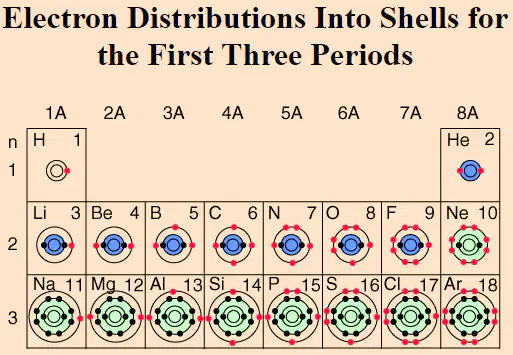
What periodic trend do you notice about valence electrons?
(Mark all that apply.)
Valence electrons increase across a row
Valence electrons increase down a group
Valence electrons decrease across a row
Valence electrons decrease down a row
Valence electrons stay constant down a group.
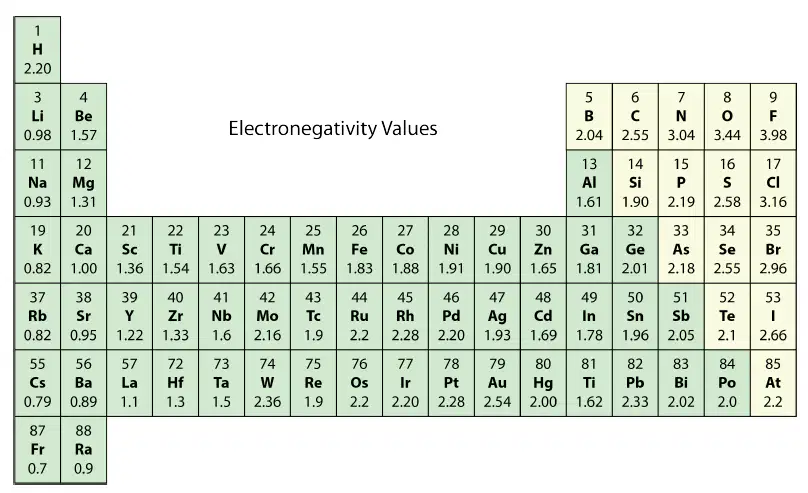
Which of the following correctly describes the trend for electronegativity?
Electronegativity increases with increasing number of energy levels. Electronegativity increases as new electrons are added within the same electron shell
Electronegativity decreases with increasing number of energy levels. Electronegativity increases as new electrons are added within the same electron shell
Electronegativity increases with increasing number of energy levels. Electronegativity decreases as new electrons are added within the same electron shell
Electronegativity decreases with increasing number of energy levels. Electronegativity decreases as new electrons are added within the same electron shell
Which of the following correctly describes the PERIOD (L to R) trend for electronegativity?
Electronegativity increases as new electrons are added within the same electron shell
Electronegativity decreases with increasing number of energy levels.
Electronegativity decreases as new electrons are added within the same electron shell
Electronegativity increases with increasing number of energy levels.
Which of the following correctly describes the GROUP trend for electronegativity?
Electronegativity increases as new electrons are added within the same electron shell
Electronegativity decreases with increasing number of energy levels.
Electronegativity decreases as new electrons are added within the same electron shell
Electronegativity increases with increasing number of energy levels.
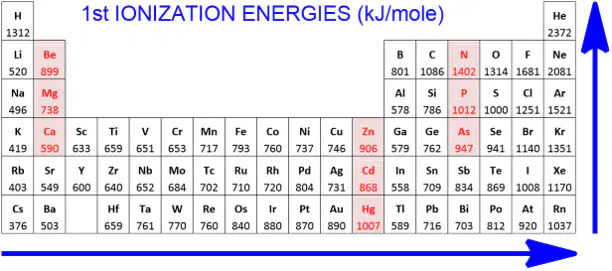
Which of the following correctly describes the PERIOD (L to R) trend for Ionization Energy?
Ionization Energy increases as new electrons are added to the valence electron shell
Ionization Energy decreases with increasing number of energy levels.
Ionization Energy decreases as new electrons are added to the valence electron shell
Ionization Energy increases with increasing number of energy levels.
Which of the following correctly describes the GROUP trend for Ionization Energy?
Ionization Energy increases as new electrons are added within the same electron shell
Ionization Energy decreases with increasing number of energy levels.
Ionization Energy decreases as new electrons are added within the same electron shell
Ionization Energy increases with increasing number of energy levels.

On the graph what does Na to Ar represent?
a group
a period
an electron orbital
a radom collection of elements
On the graph what does Li to Fr represent?
a group
a period
an electron orbital
a radom collection of elements
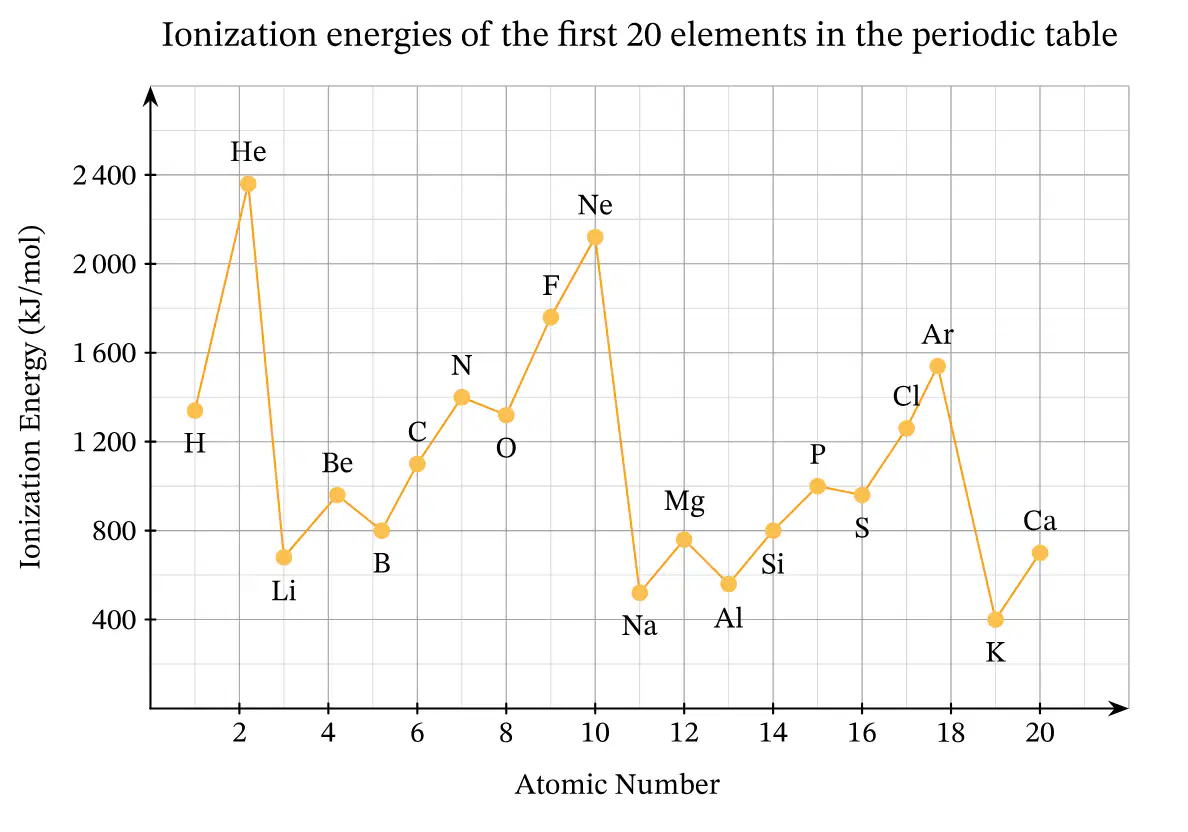
What trend do you notice for the ionization energies shown in the picture?
Select a correct answer
Ionization energy decreases as atomic numbers increase
Ionization energy decreases from hydrogen to helium
Ionization energy decreases from helium to argon
Ionization energy decreases lithium to oxygen
What trend do you notice for the ionization energies shown in the picture?
Select a correct answer
Ionization energy increases as atomic numbers increase
Ionization energy increases from neon to sodium
Ionization energy increases from lithium to neon
Ionization energy increases helium to oxygen
Weak electrostatic attractions make it easy to (a) electrons, but harder to (b) electrons
Strong electrostatic attractions make it easier to (c) electrons, but harder to (d) electrons.
Categorize the following as related to an increasing force or decreasing force of attraction between the NUCLEUS and the VALENCE ELECTRONS
decreasing atomic radius
increasing ionization energy
increasing electronegativity
caused by higher effective nuclear charge
increasing atomic radius
decreasing ionization energy
decreasing electronegativity
caused by more shielding
increasing electron affinity
decreaing electron affinity
Which of the following correctly describes why electronegativity increases across a row? pick 2
a decrease in the strength of attraction between the nucleus and valence electrons occurs
atoms get smaller bringing the charges closer
an increase in the strength of attraction between the nucleus and valence electrons occurs
atoms get bigger creating more separation between the charges

Which of the following correctly describes why ionization energy increases across a row? pick 2
a decrease in the strength of attraction between the nucleus and valence electrons occurs
atoms get smaller bringing the charges closer
an increase in the strength of attraction between the nucleus and valence electrons occurs
atoms get bigger creating more separation between the charges
Which of the following correctly describes why ionization energy decreases down a group? pick 2
a decrease in the strength of attraction between the nucleus and valence electrons occurs
atoms get smaller bringing the charges closer
an increase in the strength of attraction between the nucleus and valence electrons occurs
atoms get bigger creating more separation between the charges
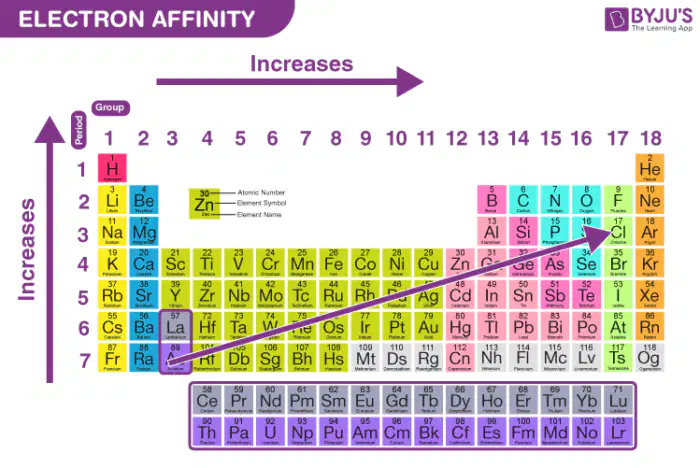
Which of the following correctly describes why electron affinity decreases down a group? pick 2
a decrease in the strength of attraction between the nucleus and valence electrons occurs
atoms get smaller bringing the charges closer
an increase in the strength of attraction between the nucleus and valence electrons occurs
atoms get bigger creating more separation between the charges
Which of the following correctly describes why electron affinity increases across a row? pick 2
a decrease in the strength of attraction between the nucleus and valence electrons occurs
atoms get smaller bringing the charges closer
an increase in the strength of attraction between the nucleus and valence electrons occurs
atoms get bigger creating more separation between the charges
Which of the following correctly describes why electronegativity decreases down a group? pick 2
a decrease in the strength of attraction between the nucleus and valence electrons occurs
atoms get smaller bringing the charges closer
an increase in the strength of attraction between the nucleus and valence electrons occurs
atoms get bigger creating more separation between the charges
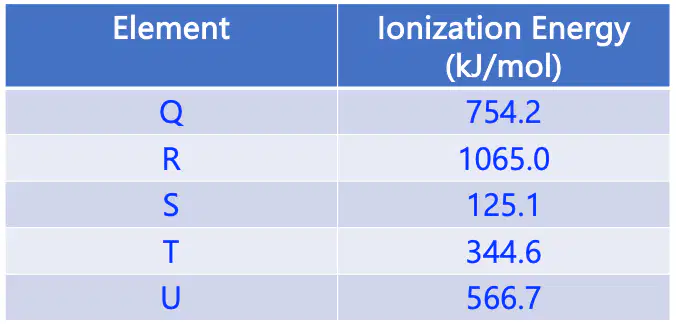
Which element is MOST Likely to lose an electron?
Element Q
Element R
Element S
Element T
Element U
Which element is LEAST Likely to lose an electron?
Element Q
Element R
Element S
Element T
Element U
Which element has the STRONGEST Force of Attraction between the nucleus and the valence electrons?
Element Q
Element R
Element S
Element T
Element U
Which element has the WEAKEST Force of Attraction between the nucleus and the valence electrons?
Element Q
Element R
Element S
Element T
Element U
Element R is...
most likely to lose an electron
least likely to lose an electron
most likely to gain an electron
least likely to gain an electron
Element S is...
most likely to lose an electron
least likely to lose an electron
most likely to gain an electron
least likely to gain an electron
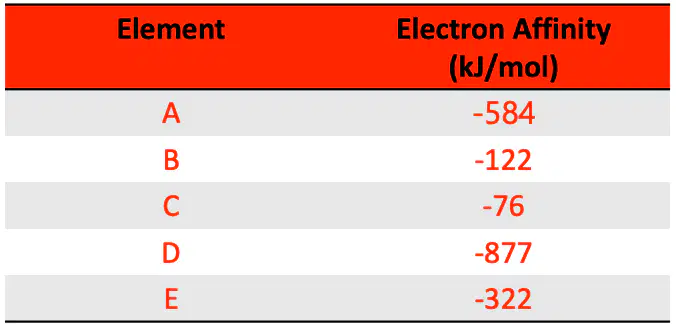
Element D is...
most likely to lose an electron
least likely to lose an electron
most likely to gain an electron
least likely to gain an electron
Element C is...
most likely to lose an electron
least likely to lose an electron
most likely to gain an electron
least likely to gain an electron
Which element has the STRONGEST Force of Attraction between the nucleus and the valence electrons?
Element A
Element B
Element C
Element D
Element E
From the elements listed
Element D has the...
strongest force of attraction between the nucleus and valence electrons
weakest force of attraction between the nucleus and valence electrons
Which element has the WEAKEST Force of Attraction between the nucleus and the valence electrons?
Element A
Element B
Element C
Element D
Element E
Which element is MOST LIKELY to gain an electron?
Element A
Element B
Element C
Element D
Element E
Which element is LEAST LIKELY to gain an electron?
Element A
Element B
Element C
Element D
Element E
According to Coulomb's Law what happens to the electrostatic force if the atom gets bigger and the valence electrons are moved further AWAY from the nucleus?
force of ATTRACTION between the valence electrons and the nucleus INCREASES
force of ATTRACTION between the valence electrons and the nucleus DECREASES
force of REPULSION between the valence electrons and the nucleus INCREASES
force of REPULSION between the valence electrons and the nucleus DECREASES
According to Coulomb's Law what happens to the electrostatic force if the atom gets smaller and the valence electrons are moved CLOSER TO the nucleus?
force of ATTRACTION between the valence electrons and the nucleus INCREASES
force of ATTRACTION between the valence electrons and the nucleus DECREASES
force of REPULSION between the valence electrons and the nucleus INCREASES
force of REPULSION between the valence electrons and the nucleus DECREASES
According to periodic trends, which element has a HIGHER ionization energy,
Li or B?
According to periodic trends, which element is more likely to LOSE an electron,
Li or B?
According to the periodic trend, which element has a HIGHER ionization energy,
B or O?
According to the periodic trend, which element is MORE likely to LOSE an electron
B or O?
According to the periodic trend, which element has a HIGHER ionization energy,
Li or O?
According to the periodic trend, which element is MORE likely to LOSE an electron,
Li or O?
According to the periodic trend, which element is MORE likely to LOSE an electron,
Li or Cs?
According to the periodic trend, which element is MORE likely to LOSE an electron,
N or As?
According to the periodic trend, which element has a HIGHER ionization energy,
N or As?
According to the periodic trend, which element has a HIGHER ionization energy,
Ca or Ba?
According to the periodic trend, which element has a HIGHER electron affinity,
rubidium or iodine?
According to the periodic trend, which element has a HIGHER electron affinity,
fluorine or iodine?
According to the periodic trend, which element has a HIGHER electron affinity,
lithium or carbon?
According to the periodic trend, which element has a HIGHER electron affinity,
aluminum or indium?
According to the periodic trend, which element is MORE likely to GAIN an electron
rubidium or iodine?
According to the periodic trend, which element is MORE likely to GAIN an electron
fluorine or iodine?
According to the periodic trend, which element is MORE likely to GAIN an electron
potassium or boron?
According to the periodic trend, which element is MORE likely to GAIN an electron aluminum or indium?
According to the periodic trend, which element is LESS likely to GAIN an electron
rubidium or iodine?

Using the Blank Periodic Table:
Which elements would be highly reactive?
(a) (b) (c)
Categorize these properties
smaller atomic radius
bigger ionization energy
bigger electron affinity
bigger atomic radius
smaller ionization energy
smaller electron affinity
weaker force of attraction on the valence electrons
stronger force of attraction on the valence electrons

