
 Worksheets
Unit 2- Atomic Structure
Total questions: 126
Worksheet time: 3hrs 4mins
To calculate average atomic mass, you need
the atomic mass of each isotope
the percent abundance of each isotope
the atomic mass and percent abundance of each isotope
to find the average of the atomic masses of each isotope
Which subatomic particle determines the identity of an element?
protons
neutrons
electrons
Which TWO subatomic particles determine the charge of an atom?
protons
neutrons
electrons
What is the relative mass of an electron?
1 amu
0 amu
An element has two isotopes, one with a mass of 39 and one with a mass of 41. If the average mass is 40.6, which isotope is more abundant?
mass of 39
mass of 41
they are both equally abundant


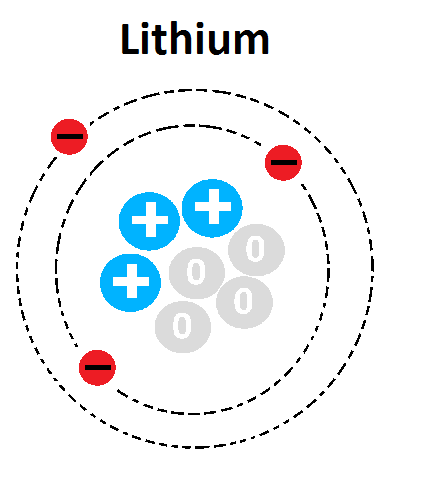


What is this element?
Beryllium (atomic #4)
Boron (atomic #5)
Carbon (atomic #6)
Nitrogen (atomic #7)

How many valence electrons?
2
3
4
5

What group does this element belong to?
1
2
17
18

How many valence electrons?
2
4
6
8
Which Bohr model represents Neon?


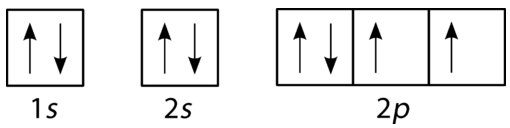


This orbital diagram represents
Sodium
Magnesium
Aluminum
Iron
1s22s22p63s23p64s23d10
1s2 2s2 2p6 3s2
What is the maximum number of electrons that an S orbital can have?
1 electron
2 electrons
3 electrons
4 electrons
What is this element?
1s22s22p63s23p64s23d104p6
Argon
Krypton
Selenium
Bromide
Which area on the periodic table represents the electrons in the "d" sublevel?
representative elements
columns 3-8
rare earth elements
transition elements
How many valence electrons does the element have?
(a)
How many valence electrons does the element have?
(a)
How many valence electrons does the element have?
(a)
How many valence electrons does the element have?
1s22s22p63s23p64s23d10
(a)
How many valence electrons does the element have?
1s2 2s2 2p6 3s2
(a)
How many valence electrons does the element have?
1s22s22p63s23p64s23d104p6
(a)
N or C?

Which element has the highest electronegativity?
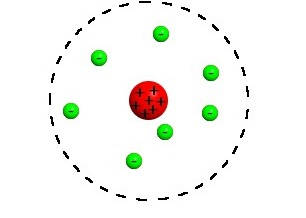
This model this model was the first to show a nucleus, consisting of protons and neutron. Electrons surround the nucleus but are not shown in distinct energy levels.
The "Rutherford Model" of the atom
The "Plum Pudding Model" of the atom
The "Quantum Mechanical Model" of the atom
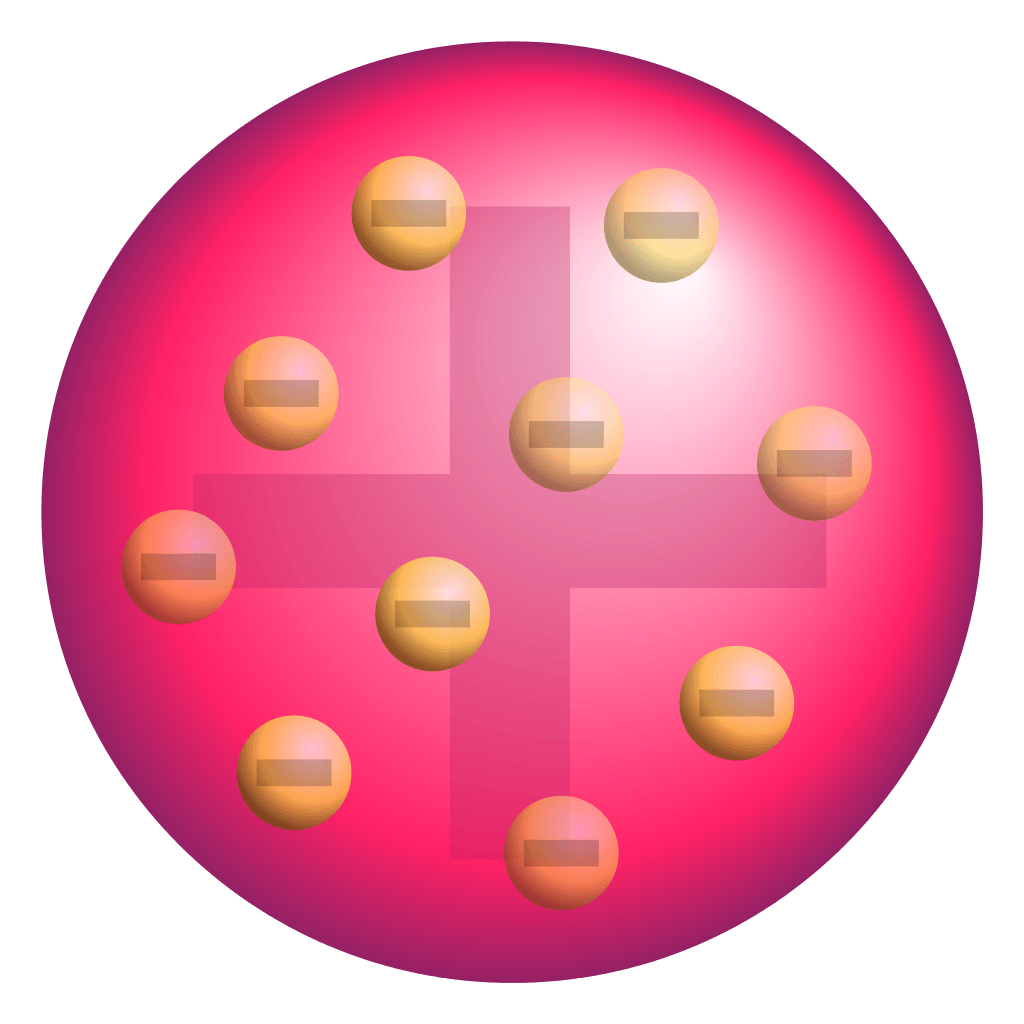
This model was developed after J.J. Thompson discovered electrons, a particle smaller than an atom. It shows electrons floating freely in a positive region.
The "Plum Pudding Model" of the atom
The "Rutherford Model" of the atom
Democritus's model of the atom
The "Quantum Mechanical Model" of the atom

Who was the first to propose that matter consist of indivisible particle of matter called atoms?
John Dalton
Aristotle
Democritus
Plato
The cathode-ray tube was used to discover the ____ by ____.
electron by Thomson
electron by Dalton
proton by Thomson
proton by Dalton
electron by Rutherford
An atom is electrically neutral because
the numbers of protons and neutrons are equal.
the numbers of protons and electrons are equal.
neutrons balance the protons and electrons.
Which of the following statements is correct?
Protons are positively charged and neutrons are negatively charged.
Protons are negatively charged and electrons are positively charged.
Protons are positively charged and electrons are negatively charged.

Which model of the atom is denoted as the "plum pudding" model?
A
B
C
D
E
Chadwick is credited with discovering which part of the atom?
nucleus
protons
electrons
neutrons

Who is credited with developing model D?
Thomson
Dalton
Bohr
Rutherford

Dalton's model of the atom is represented by which letter?
A
B
C
D
E
What is the heaviest atom that can be formed through nuclear fusion in the core of stars?
(a)
What is the name of the process that forms elements Helium through Iron?
(a)
This model this model was the first to show a nucleus, consisting of protons and neutron. Electrons surround the nucleus but are not shown in distinct energy levels.
The "Rutherford Model" of the atom
The "Plum Pudding Model" of the atom
The "Quantum Mechanical Model" of the atom

True or False: The ground state is the highest energy state of an atom.
True
False


All stars are composed of a mixture of elements. When these elements are heated they emit specific amounts of electromagnetic radiation, known as an emission spectrum. Each element emits a unique, identifiable, spectrum.
Using the Bright-line emission spectrum chart below, identify the elements present in this modeled star (found in the line labeled “mixture”).
Lithium and cadmium are in the mixture. Strontium is not in the mixture.
Lithium and strontium are in the mixture. Cadmium is not in the mixture
Cadmium and strontium are in the mixture. Lithium is not in the mixture
All of the shown elements are present in the mixture.

The unknown emissions spectra belongs to the element
Hydrogen
Mercury
Neon
Sodium

The unknown emissions spectra belongs to the element
Hydrogen
Mercury
Neon
Sodium


Which element(s) is/are found in the star's spectra below?
Hydrogen only
Hydrogen & Helium
Calcium only
Hydrogen & Calcium

If an electron moves from n=4 to n=2 it ____
absorbs energy
releases energy

Look carefully at the picture. It shows an electron in the excited state on the left, and the electron returning to its ground state on the right. When the electron return to the ground state it emits a_______________________.
blast of cold air
electrostatic charge
proton
photon (light)

Each element produces its own pattern of emission spectra lines because each element has its own distinct
Speed of light
Electron configuration
Number of neutrons
None of these
An atom that has gained or lost electrons in an attempt to become stable/bond with another atom.
Normal/Neutral Atom
Ion
Isotope
Atoms of the same element that have different mass than expected because they have a different number of neutrons.
Neutral Atom
Ion
Isotope
Cation
If an ion has a positive charge you would __________ the charge number from the number of protons to figure out how many electrons there are.
subtract
add
multiply
divide
If an ion has a negative charge you would __________ the charge number to the number of protons to figure out how many electrons there are.
Add
Subtract
Divide
Multiply
If an atom has 9 protons and 10 electrons it has a charge of ____.
0
-1
+1
-2
If an atom has 4 protons and 2 electrons it has a charge of ____.
0
-2
+2
+1
If an atom has a charge of +3 and an atomic number of 5 it should have _______ electrons.
1
2
3
4
If an atom has a charge of -2 and an atomic number of 16 it should have _______ electrons.
14
16
18
20
If an atom has a charge of 0 (neutral) and an atomic number of 8 it should have ____ electrons.
0
8
7
9

How many protons does this isotope of titanium have?
22
26
48
70
How many neutrons are in an atom of carbon-14?
6
8
10
14
If X is the symbol for an element, which TWO of the following symbols represent isotopes of the same element?
I. 7735X
II. 7733X
III. 8137X
IV. 8135 X
I
II
III
IV
Chromium has four naturally occurring isotopes (chromium-50, chromium-52, chromium-53, and chromium-54). What is the average atomic mass of Chromium?
4
51.996
52.25
Not enough information was given.
An element has three isotopes. Given the abundances and relative masses, calculate the average atomic mass and determine (from the periodic table) which element it is.
Abundances | Relative masses
0.005% | 234.04 amu
0.720% | 235.04 amu
99.275% | 238.05 amu
Uranium (#92, Atomic Mass: 238.03 amu)
Fluorine (#9, Atomic Mass: 19.00 amu)
Mercury (#89, Atomic Mass: 200.59 amu)
Polonium (#84 209 amu)
Rubidium has two naturally occurring isotopes, 85Rb (relative mass 84.9118 amu) and 87Rb (relative mass 86.9092 amu). The abundance of 87Rb is 27.8%, If rubidium has an average atomic mass of 85.47 amu, what is the % abundance of 85Rb (in percent)?
27.9%
72.1%
74.63%
34.29%

What is the number of neutrons?
(a)
If you have 10 protons and 9 neutrons, what would the mass number be?
(a)

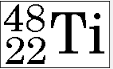
How many neutrons does this isotope of titanium have?
(a)

