
 Worksheets
Chem Unit 1 Study Guide
Total questions: 116
Worksheet time: 5hrs 21mins
Which is the property of matter in which a substance can transfer heat or electricity?
magnetism
conductivity
density
solubility
Serena is mixing a material into a beaker filled with a liquid. She notices that the material seems to disappear into the liquid. What physical property of the material is Serena most likely observing?
solubility
conductivity
magnetism
density
What happens when a substance undergoes a physical change?
Some physical properties change, but the substance keeps its identity.
No physical properties change, and the substance keeps its identity.
Some physical properties change, and the substance changes its identity.
No physical properties change, but the substance changes its identity.
Which can occur in a physical change?
The mass can increase.
The particles can arrange in different ways.
The mass can decrease.
The atoms can bond to different atoms.
When liquid gold becomes a solid, its particles get closer together. Which best describes what happened to the gold?
the conservation of magnetism
the change in solubility in a physical change
the change in melting point in a physical change
the rearrangement of particles in a physical change
What is an example of a physical change?
having less ash than the paper that was burned to form it
ice forming and then melting back into water
rust having a different identity than the iron it forms on
the irreversible reaction of vinegar and baking soda
The Statue of Liberty is made of copper that has turned green because it has undergone a change. What can be said about this change?
The change is a physical change because the copper in the statue is still there.
The change is a physical change because a new chemical is formed on the outside of the statue.
The change is not a physical change because the color of the statue has changed.
The change is not a physical change because a new chemical is formed on the outside of the statue.
Which scenario is an example of a physical change?
Wood is burned in a campfire and is turned into ash and smoke.
A piece of metal is left in the rain and forms rust.
Lead is melted into a liquid to form pellets.
Yeast turns sugar into energy, water, and carbon dioxide gas.
A scientist is examining an unknown solid. Which procedure would most likely help determine a chemical property of the substance?
heating it to find the temperature at which it melts
exposing it to a flame to see if it catches on fire
hitting it with a hammer to determine if it breaks or bends
placing it in water to find out whether or not it dissolves
Which characteristic of a substance is considered a chemical property?
its boiling point
its reactivity
its density
its conductivity
Which statement best describes what happens during a chemical change?
Some properties of a substance change, but its identity remains the same.
Both the identity and the properties of a substance change.
The chemical properties of a substance change, but its physical properties remain the same.
The physical properties of a substance change, but its chemical properties remain the same.
In a science lab, Cash mixes two clear liquids together in a beaker. Bubbles are produced, and a white solid forms and settles to the bottom. He plans to heat the beaker over low heat and make more observations. In a science lab, Cash mixes two clear liquids together in a beaker. Bubbles are produced, and a white solid forms and settles to the bottom. He plans to heat the beaker over low heat and make more observations.
A physical change occurred, so if Cash heats it, the white solid will dissolve to form the original mixture of clear liquids.
A physical change occurred, so even if Cash heats it, the white solid will remain.
A chemical change occurred, so if Cash heats it, the white solid will dissolve to form the original mixture of clear liquids.
A chemical change occurred, so even if Cash heats it, the white solid will remain.
What is the outcome of all chemical changes when two substances are combined?
A new substance forms with identical properties.
The two substances release an odor.
The two substances change color.
A new substance forms with different properties.
Which laboratory activity involves a chemical change?
boiling saltwater for several minutes until only solid salt remains
extracting iron filings from a sand mixture using a magnet
leaving a copper penny in vinegar until it turns green
crushing a rock with a hammer to extract mineral deposits
Which event always involves a chemical change?
boiling
melting
conducting
burning
Goggles are worn in the laboratory
A. to avoid eye strain.
B. to improve your vision
C. only if you don’t have corrective glasses.
D. any time chemicals, heat, or glassware are used.
If you do not understand a direction or part of a lab procedure, you should—
Figure it out as you do the lab
Try several methods until something works
ask the instructor before proceeding
skip it and go on to the next part
After completing an experiment, all chemical wastes should be—
Left at your lab station for the next class
Disposed of according to your instructor's directions
Dumped in the sink
Taken home
If you have been injured in a laboratory by a cut or burn, first you should—
Visit the school nurse after class
See a doctor after school
Tell the science teacher at once
Apply first aid to yourself
Long hair in the laboratory must be
cut short
held away from the experiment with one hand
always neatly groomed
tied back or kept entirely out of the way with a hair band
Which of the following may be worn in a laboratory while completing a lab assignment
loose clothing
dangling jewelry
sandals
contact Lenses
horseplay and practical jokes in the laboratory are
always against the rules
okay
not dangerous
okay if you are working alone
When you finish working with chemicals, biological specimens, and other lab substances, always
treat your hands with skin lotion
wipe your hands on your pants
wash your hands thoroughly with soap and water
none of the above
If a harmful chemical splashes in your eyes or on your skin, you should—
ignore it and hope it goes away.
wipe it off with a paper towel and finish the lab.
flush with water at the eyewash station or in the lab shower and tell the teacher.
run to the bathroom.


What is Lindsey doing wrong?
not paying attention
not wearing goggles
long loose hair
all of these
If a laboratory fire erupts, immediately _________.
Run for the fire extinguisher.
Notify your instructor.
Throw water on the fire.
Open the windows.
You are heating a substance in a test tube. Always point the open end of the test tube ________.
Toward yourself.
Toward your lab partner.
Toward another classmate.
Away from all people.
Hot glass looks the same as cold glass.
True
False


When is it OK to eat or drink at the lab tables?
Always
Only during group work, not during labs
Never
Whenever I'm hungry
The following activity is permitted in the laboratory
chewing gum
eating
drinking
none of the above
in the lab, you should NEVER
taste substances being used
wear your goggles
pull your hair up if its long
wear close-toed shoes
You are heating a piece of glass and now want to pick it up. You should
use a rag or paper towels.
pick up the end that looks cooler.
use tongs.
pour cold water on it.
If you are injured in the laboratory, you should first
visit the nurse after class.
see a doctor after school.
notify your science instructor.
apply first aid yourself.
Chipped or cracked glassware is okay to use in the laboratory.
True
False
Holding 50 mL of boiling water
beaker or flask
forceps
pipette
gloves
Measuring the length of a piece of evidence
shoe
scale
metric ruler
thermometer
Protecting your eyes from chemicals
goggles or face shield
hat
cover slip
magnifying glass
Used to drop small amounts of chemicals into a substance
pipette
forceps
beaker or flask
cover slip
Measuring the temperature of a boiling glucose mixture
beaker or flask
thermometer
metric ruler
pipette
Holding a set of 5 test tubes while you test the acidity of the solutions
test tube rack
gloves
stage clips
calipers

What is used to measure, heat, and mix large amounts of liquids?
beaker
flask
test tube
graduated cylinder

Which equipment holds, measures, and mixes liquids, and measures in milliliters?
flask
test tube
beaker
graduated cylinder

Which equipment heats objects with an open flame?
hot plate
thermometer
bunsen burner
beaker

This is used to pour lab materials into an object with a small opening
scoop
funnel
bunsen burner
goggles

This is used to clean test tubes
test tube brush
ruler
forceps
test tube

This is used to find the volume of a liquid
graduated cylinder
inference
observation
triple beam balance

stopper
forceps
tripod stand
test tube holder

funnel
test tube
balance
forceps

hat rack
scale
thingamabob
test tube rack

Used to transfer small amount of liquid
graduated cylinder
test tube
scoopula
pipette

Used to find the mass of an object
meter stick
digital balance
petri dish
triple beam balance

Used to transfer small amounts of solids
pipette
scoopula
thermometer
pestle

This is used to safely heat glassware
wire gauze
plate
steel wool
chainmail

This is used to hold any of the clamps
Ring Stand
Stick
Base
Pole

This is used to hold small amounts of solid chemicals
Watch Glass
Ring stand
Balance
Scale

These can be used for crucibles or beakers (if plastic-tipped)
Crucible tongs
Crucible Clamp
Ring Stand
Iron Ring

This is used to safely mix chemicals
Glass Stirring Rod
Baseball Bat
Test Tube
Stir thingy

This is used for evaporating liquids
Evaporating Dish
Freezing Dish
Dinner Dish
Lunch Dish
1.3 x 10²⁰
2.9 x 10²¹
9.5 x 1032
8.4 x 10¹⁹

Which of the following numbers is written in correct scientific notation?
64.2⋅102
6.42⋅103
0.642⋅104
6240
How is the following number written in scientific notation?
450,000
4.5 x 10⁵
45 x 105
4.5 x 10⁴
4.5 x 10⁶
How is the number below written in scientific notation?
0.000398
39.8 x 10⁻⁵
3.98 x 10⁻⁵
3.98 x 10⁻⁴
39.8 x 10⁻⁶
Which of the following is the correct way to write 3.97 x 10⁻² in standard form?
0.000397
0.0397
0.0000397
0.397
Which is the correct way to write the number 3.5 x 10⁶ in standard notation?
0.0000035
35,000,000
3,500,000
0.00000035


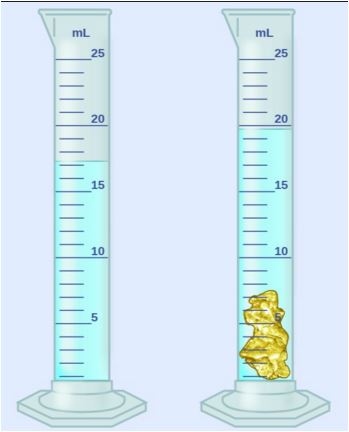
15 cm3
50 cm3
150 cm3
180 cm3
When you put an object in a graduated cylinder of water and measure how much the water level changed what is this process called?
Relative Density
Displacement
Density

10.0 ml
15.0 ml
20.0 ml
25.0 ml

18.0 ml
6.0 ml
38.0 ml

A person's mass on Earth would be __________ when they go to the moon.
More
Less
The same
A person's weight on Earth will be ____________ compared to when they travel to the moon.
More
Lrss
The same
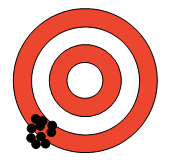
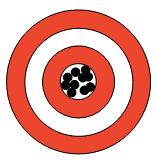
How close a measurement is to the true value is called..
Accuracy
Precision
Significant
Estimate

The students measured length during a science experiment, they got 12 cm. But the actual measurement was 14.25 cm. What was the percent error?
15.79%
18.75%
2.25%
18%
The deer population is estimated to be 17,600 in northern Illinois, but an actual count was 21,300. What is the percent error?
21%
17.37%
17.4%
21.02%
A group of students measured the density of a copper cube to be 8.44 g/mL. When they looked at the density table for copper it read 8.94 g/mL. Use the formula to calculate the groups % error.

4.47% error
25% error
10% error

In the formula for % error. The error is
the difference between experimental value and accepted value
is 100%
the error is accepted value X experimental value


What is the length of the blue line?
.3 cm
.33 cm
.03 cm
3.219 cm

