
 Worksheets
Module J Comprehensive Chemistry
Total questions: 110
Worksheet time: 2hrs 59mins
Which statement BEST describes the relationship between the weight and mass of an object?
If mass increases, weight will decrease.
Doubling mass reduces weight by half.
An increase in mass will not affect weight.
If mass increases, weight will increase.
What happens to the mass and weight of an object that is launched into space, where the pull of gravity is less?
The mass decreases while the weight stays constant.
The mass stays constant while the weight decreases.
The mass stays constant while the weight increases.
The mass increases while the weight decreases.
Nick is preparing a solution and needs to measure the mass of some copper sulfate. Which one of the objects should he use to measure MASS?
Graduated Cylinder
Ruler
Balance or Scale
Select the correct definition for MATTER
Anything that takes up space and composed of atoms and/or molecules
A measure of the amount of space an object takes up
A property that describes the compactness of molecules in a substance (also describes the mass in a given space).
Select the correct definition for MASS
A measure of the amount of matter in an object
A measure of the amount of space an object takes up
A property that describes the compactness of molecules in a substance
Select the correct definition for DENSITY
A measure of the amount of matter in an object
A measure of the amount of space an object takes up
A property that describes the compactness of molecules in a substance (describes the mass in a given volume)
Select the correct definition for VOLUME
A measure of the amount of matter in an object
A measure of the amount of space an object takes up
A property that describes the compactness of molecules in a substance

Select the correct definition for ATOMS
The smallest building block of all matter
Two or more atoms bonded and held together
The different types of atoms, organized on the Periodic Table.

Select the correct definition for MOLECULES
The smallest building block of all matter
Two or more atoms bonded and held together
The different types of atoms, organized on the Periodic Table.

Select the correct definition for ELEMENTS
The smallest building block of all matter
Two or more atoms bonded and held together
The different types of atoms, organized on the Periodic Table.

Which phase in the image is the LEAST DENSE?
Solid
Liquid
Gas

In this image, a ping pong ball is floating in water. Select all correct statements.
The ping pong is less dense than the water
The water is less dense than the ping pong
If the ping pong ball was bigger, it would eventually sink
Calculate the density of a piece of wood with a mass of 50g and a volume of 100cm3. Use the formula:
Density = mass / volume (division!)
2
0.5
Calculate the density of a piece of a marble with a mass of 5g and a volume of 2cm3. Use the formula:
Density = mass / volume (division!)
0.5
2.5

Which material is MOST dense?
A
B
C

The image shows 12 aluminum cylinders, different sizes. Which statement below is correct?
They all have the same mass and same volume
Because they are all the same material, they all have the same density.
They all have different densities. The larger the cylinder, the greater the density.
Based on the data for the four samples, determine which of the following substances has the greatest density.
Sample 1: volume = 15 cm3, mass =30 g
Sample 2: volume = 20 cm3, mass = 66 g
Sample 3: volume = 3 cm3, mass = 12 g
Sample 4: volume = 48 cm3, mass = 100 g


A characteristic that can be observed using our senses is a ___.
chemical property
physical property
melting point
chemical change
Energy may be gained or lost during a chemical reaction.
___ change - causes the identity of a substance to change; something new is formed.
formation
physical
chemical
conservation
What is the chemical symbol for the element hydrogen
H
He
h
he
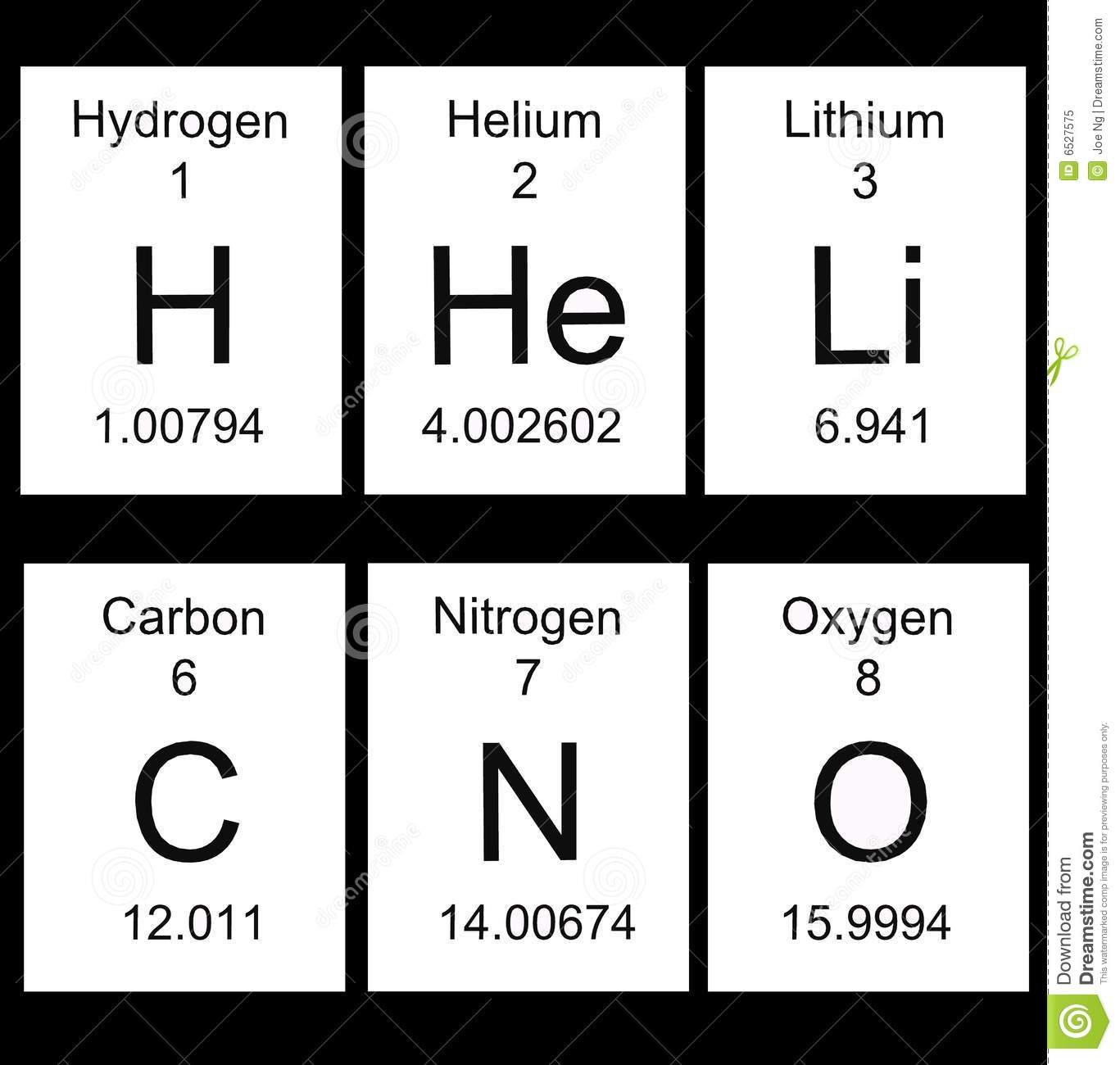
The atomic number tells you what?
number of electrons
number of protons
number of neutrons
the number of protons, and therefore the number of electrons
What are the electrons of the "outer shell" of an element called?
VALENCE ELECTRONS
PERIODIC FAMILY
PERIODIC GROUP
ELEMENT
COMPOUND
A substance that cannot be separated or broken down into simpler substances by chemical means is?
Mixture
Element
Compound
Molecule
The smallest part of any substance is?
Element
Compound
Atom
Molecule


How are the elements arranged on the periodic table?
Atomic number
Atomic mass
Alphabetically
Chemical symbol

What do elements in the same group (family) have in common with each other?
Properties and valence electrons
Atomic number and valence electrons
Chemical symbol and atomic mass
Atomic mass and atomic number

Electrons are located around the nucleus in energy levels. The first energy level is...
Closest to the nucleus.
Furthest from the nucleus.
Able to hold the most electrons.
Not able to hold any electrons.
Neon has 10 electrons. The electrons fill the energy levels in Neon like this...
Two in the first, four in the second and four in the third.
Four in the first, Four in the second and two in the third.
Two in the first and eight in the second.
Two in the first, two in the second and six in the third.

Which picture represents an element/molecule made of the same atoms?
O2
H2O

What is the volume of this item?
10 mL
20 mL
30 mL
50 mL
A solid turning into a liquid is:
Vaporation
Freezing
Melting
Deposition
Sublimation
A gas turning into a liquid:
Deposition
Melting
Condensation
Sublimation
A liquid turning into a solid is:
Freezing
Melting
Condensation
Sublimation
Which two particles are part of an atom's nucleus?
Electron
Neutron
Proton
Nucleon
Orbital
The amount of which two particles are shown by the atomic number?
Nucleons
Protons
Electrons
Neutrons
Neutrons + Protons = _________
Atomic Number
Atomic Mass
Electrons
Element

How many protons does this atom have?
4
5
9
13

What is the volume of this rectangular prism?
3
3 2/3
18
8
What causes objects to change to different states?
Heat
Electricity
Decay
Movement

How many neutrons are in this atom?
9
18
19
10
28
H2O
H2SO4
How do you know how many elements are in a chemical formula?
you cannot tell
count the capital letters
add the subscripts together (elements with no number have 1)
look at the Periodic Table of Elements
How do you figure out how many atoms are in a chemical formula?
use the Periodic Table of Elements
count the capital letters
you cannot tell
add the subscripts together (elements with no number have 1)
How many atoms are in the chemical formula C2H2Co?
6
5
4
3

What is pictured here?
compound
mixture of elements
mixture of compounds and elements
mixture of compounds
element

What is pictured here?
compound
mixture of elements
mixture of compounds and elements
mixture of compounds
element

What is pictured here?
compound
mixture of elements
mixture of compounds and elements
mixture of compounds
element

What is pictured here?
compound
mixture of elements
mixture of compounds and elements
mixture of compounds
element
The type of matter with the lowest heat energy and temperature.
gas
solid
liquid
plasma

Which of the following describes liquids?
definite shape, definite volume
no definite shape, definite volume
no definite shape, no definite volume
no definite shape, no definite volume, electrically charged
Matter is _________.
when you use a balance
only in space
magnetism
anything that has mass and takes up space
Molecules in a solid look like:


Molecules in a liquid look like:

Which arrow shows melting?
1
2
3
4

Which arrow shows condensation?
1
2
3
4

Which arrow shows freezing?
1
2
3
4

Which arrow shows evaporation?
1
2
3
4

When temperature is decreased, these molecules will become:
solid
liquid
gas
What do liquids and solids have in common?
Both have definite volume
Both have definite shape
Both take the shape of its container
Both can be compressed

