
 Worksheets
Sem 1 Final Exam Review- 8th Grade
Total questions: 106
Worksheet time: 3hrs 40mins
Name
Class
Date
1.
Which atomic particle has a positive charge?
a)
Proton
b)
Neutron
c)
Electron
2.
Where is most of the mass of the atom contained?
a)
In the protons
b)
In the neutrons
c)
In the electron cloud
d)
In the nucleus
3.
What is the atomic number for an element with three protons?
a)
2
b)
1
c)
3
d)
6
4.

How many protrons are in a gold atom?
a)
79
b)
196
c)
117
d)
275
5.

How many electrons does an Iodine atom have?
a)
53
b)
126
c)
73
d)
179
6.

What is the atomic weight of Iron?
a)
26
b)
55.845
c)
56
d)
30
7.

How many neutrons does a Hydrogen atom have?
a)
1
b)
2
c)
3
d)
0
8.

What kind of molecule is this?
a)
Water
b)
Carbon Dioxide
c)
Methane
d)
Oxygen
9.
these are in an atom
a)
protons
b)
neutrons
c)
electrons
d)
all of them
10.
What is the smallest?
a)
worm
b)
molecule
c)
galaxy
d)
atom
11.

Name this compound: H2O
a)
Water
b)
Carbon dioxide
c)
Hydrogen peroxide
d)
Sulfuric acid
12.
In a solid, the molecules are -
a)
close together
b)
moving around
c)
moving fast
13.
When you heat matter, what happens to the atoms and molecules?
a)
they move faster
b)
they move slower
c)
they stop moving
d)
they stay the same
14.
If you cool a liquid, it will -
a)
freeze
b)
melt
c)
evaporate
d)
stay the same
15.
The four states of matter are -
a)
solid, liquid, gas, plasma
b)
solid, plasma, liquid, air
c)
gas, liquid, air, fire
d)
water, air, ice, liquid
16.
Substances that combined but can be separated again are called -
a)
mixtures
b)
solutions
17.
NaCl (sodium chloride) is a compound called -
a)
salt
b)
sugar
c)
pepper
d)
sucrose
18.
The smallest part of an element is an -
a)
atom
b)
comound
c)
mixture
d)
solution
19.
When two or more elements combine to make a completely new substances, it is called a -
a)
compound
b)
element
c)
atom
d)
mixture
20.
A molecule is________
a)
a glob of gelatinous goo
b)
smaller than an atom
c)
filled with raisons
d)
more than one atom bonded together
21.
What is an element?
a)
consists of one atom and cannot be broken down into a simpler substance
b)
Fire, Earth, Water, Wind
c)
a substance consisting of atoms that have 10 or more protons
d)
The ingredients used in a 5-star restaurant
22.
A molecule is
a)
two or more atoms bonded together
b)
one type of atom
c)
smaller than an atom
d)
an element
23.
What is it called when one form of energy is changed to another form?
a)
Energy change
b)
Energy conversion
c)
Electrical conversion
d)
Force change
24.
What kind of energy are you taking in when eating food?
a)
thermal
b)
sound
c)
chemical
d)
electrical
25.
What is energy?
a)
the ability to do work
b)
mass and volume
26.
What is the energy of motion?
a)
radiant
b)
kinetic
c)
gravitational
d)
potential
27.
Any energy conversion will always result in what form of energy?
a)
potential
b)
sound
c)
radiant
d)
thermal
28.
what is the energy of moving electrons?
a)
Nuclear
b)
thermal
c)
sound
d)
electrical
29.
When is kinetic energy GREATEST on a roller coaster?
a)
at the top of the highest hill
b)
at the bottom of the highest hill
c)
at the end of the ride
d)
at the beginning of the ride
30.
What type of energy is stored inside a battery?
a)
elastic potential energy
b)
gravitational potential energy
c)
chemical potential energy
d)
kinetic energy
31.
Which is an example of potential energy?
a)
A car sitting at the top of a hill
b)
A kite flying in the air
c)
A fox chasing a mouse
d)
A bowling ball rolling
32.
The main source of energy for our planet is/are
a)
the sun.
b)
the earth’s core.
c)
greenhouse gases.
d)
cosmic background radiation.
33.

What energy transformation occurs in the flashlight above when it is on?
a)
heat-->magnetic-->light
b)
chemical-->magnetic-->light
c)
chemical-->electrical-->light
d)
mechanical-->electrical-->light
34.

When a pendulum swings, at which point is potential energy at its greatest
a)
1
b)
2
c)
3
d)
4
35.
Which of the following has the most potential energy?
a)
A car at the top of a hill
b)
A car speeding down the hill
c)
A person at the top of a hill
36.
____________ is the ability to cause change.
a)
Energy
b)
Force
c)
Friction
d)
Motion
37.

What energy is pulling an arrow back
a)
kinetic energy
b)
potential energy
c)
energy
38.
What is energy?
a)
The ability to cause a change
b)
A force
c)
Electricity
d)
The ability to transform work
39.
Energy of motion is which type of energy?
a)
Potential
b)
Kinetic
c)
Sound
d)
Gravitational
40.

What type of energy is in this picture?
a)
Kinetic
b)
Potential
c)
Chemical
d)
Sound
41.
When plants convert the sun's energy into food, which type of energy is it?
a)
kinetic
b)
chemical
c)
thermal
d)
radiant
42.
The type of energy that allows us to hear is
a)
Mechanical
b)
Sound
c)
Light
d)
Electric
43.

What kind of energy is represented in this picture?
a)
Thermal
b)
Chemical
c)
Electrical
d)
Sound
44.

What kind of energy is represented in this picture?
a)
Thermal
b)
Potential
c)
Nuclear
d)
Mechanical
45.

What kind of energy?
a)
Thermal
b)
Electrical
c)
Mechanical
d)
Radiant
46.

What kind of energy does this device use?
a)
Chemical
b)
Electrical
c)
Thermal
d)
Chemical
47.

What kind of energy is represented in the picture?
a)
Thermal
b)
Chemical
c)
Sound
d)
Nuclear
48.

A battery converts what type of energy to another?
a)
sound to kinetic
b)
light to heat
c)
mechanical to electrical
d)
chemical to electrical
49.

The glow sticks produce light for a short amount of time. The light from the glow stick is a conversion from what to what?
a)
thermal to light
b)
gravitational to potential
c)
radiant to electrical
d)
chemical to light
50.
Which type of energy can cross space (a vacuum)?
a)
Nuclear
b)
Thermal
c)
Radiant
d)
Convection
51.
Energy that is transferred by objects touching is called?
a)
Conduction
b)
Convection
c)
Induction
d)
Radiation
52.
On a roller coaster, where is maximum potential energy?
a)
At the bottom of a big hill
b)
When going around a corner
c)
When going upside down
d)
At the top of a big hill
53.
On a roller coaster, where is maximum kinetic energy?
a)
At the bottom of a big hill
b)
When going around a corner
c)
When going upside down
d)
At the top of a big hill
54.
The ultimate source of energy is:
a)
The sky
b)
The sun
c)
Plants
d)
Movement
55.
Ice melting
a)
Chemical Change
b)
Physical Change
56.
Water freezing
a)
Chemical Change
b)
Physical Change
57.
Wood burned in a fireplace
a)
Chemical Change
b)
Physical Change
58.
Cake batter baked in an oven
a)
Chemical Change
b)
Physical Change
59.
Blue liquid and yellow liquid mixed to make a green liquid
a)
Chemical Change
b)
Physical Change
60.
Baking soda and vinegar combine to make carbon dioxide
a)
Chemical Change
b)
Physical Change
61.
Light used to produce food in plants
a)
Chemical Change
b)
Physical Change
62.
Glass bottle that is shattered
a)
Chemical Change
b)
Physical Change
63.
Copper roof changing color
a)
Chemical Change
b)
Physical Change
64.
Shredding a piece of paper
a)
Chemical Change
b)
Physical Change
65.
Rust on an iron fence
a)
Chemical Change
b)
Physical Change
66.
Boiling water
a)
Chemical Change
b)
Physical Change
67.
Burning coal
a)
Chemical Change
b)
Physical Change
68.
What happens when a piece of wood burns?
a)
A physical change takes place.
b)
A chemical change takes place.
c)
The wood loses its gravity.
d)
The wood loses its inertia.
69.
Which answer makes a correct statement?
a)
Physical change only changes the size.
b)
Physical change only changes the color.
c)
Physical changes begin and end with the same matter.
d)
Physical changes change the matter into something total different.
70.
Which property of a substance depends on how much of the substance there is?
a)
mass
b)
density
c)
boiling point
d)
melting point
71.
______ is the amount of space that an object takes up.
a)
volume
b)
space
c)
room
d)
density
72.
A change that does not result in a new substance.
a)
Physical Change
b)
Chemical Change
73.
A ___________ is an arrangement of elements in columns
a)
columns
b)
rows
c)
periodic table
d)
electron shell
74.
In the modern periodic table elements are arranged by:
a)
atomic mass
b)
atomic number
c)
valence electrons
d)
number of isotopes
75.
Each column in the periodic table is called a
a)
period
b)
group
c)
cluster
d)
unit
76.
The atomic number tells you what?
a)
number of electrons
b)
number of protons
c)
number of neutrons
d)
both electrons and protons in an atom.
77.
Elements which are shiny, conduct electricity and heat are called
a)
metal
b)
nonmetal
c)
metalloid
d)
nonexistent
78.

The atoms along the staircase are called
a)
metals
b)
nonmetals
c)
metalloids
d)
noble gases
79.
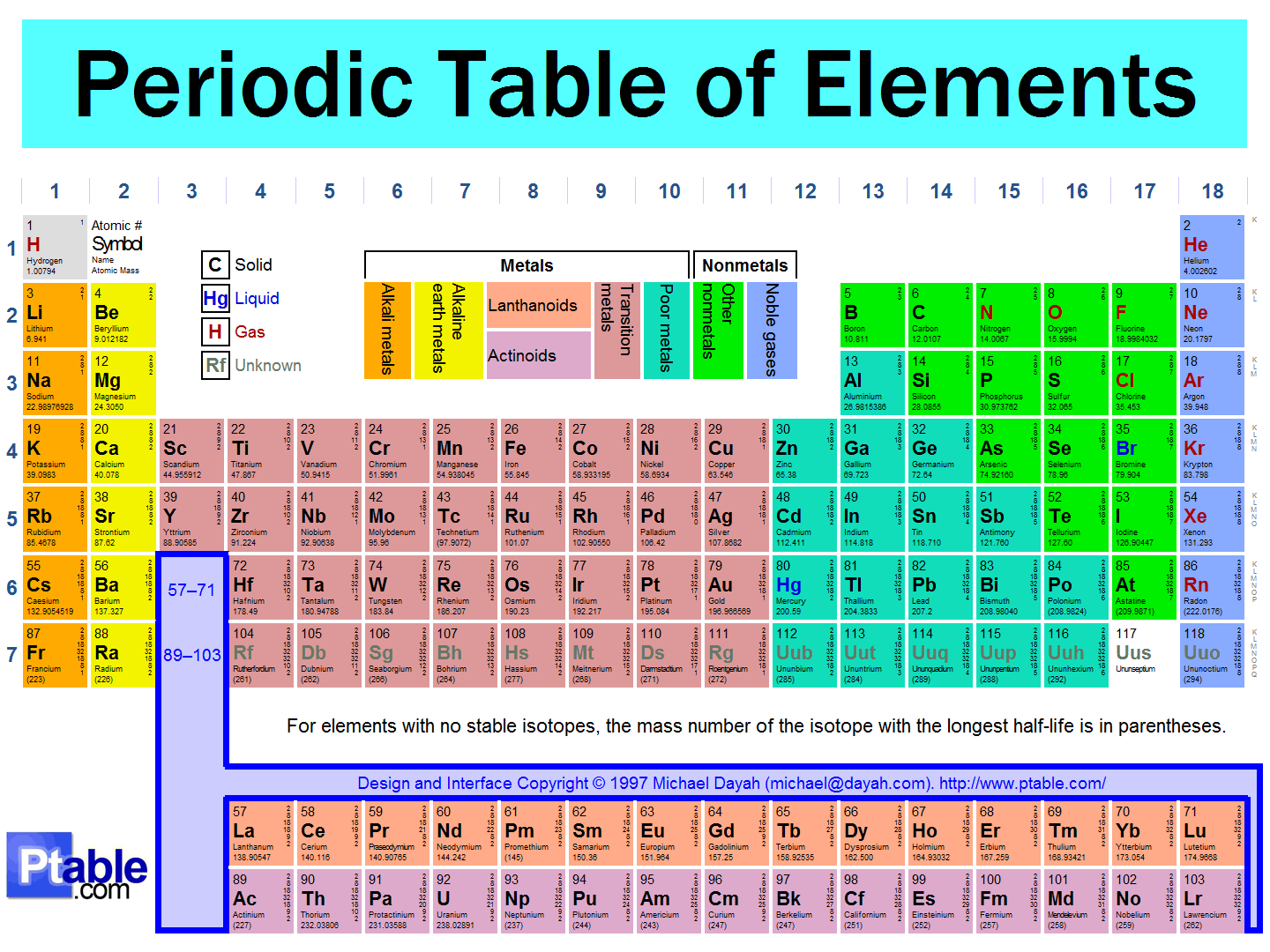
The horizontal row on the periodic table is called a
a)
group
b)
family
c)
period
d)
atomic number
80.
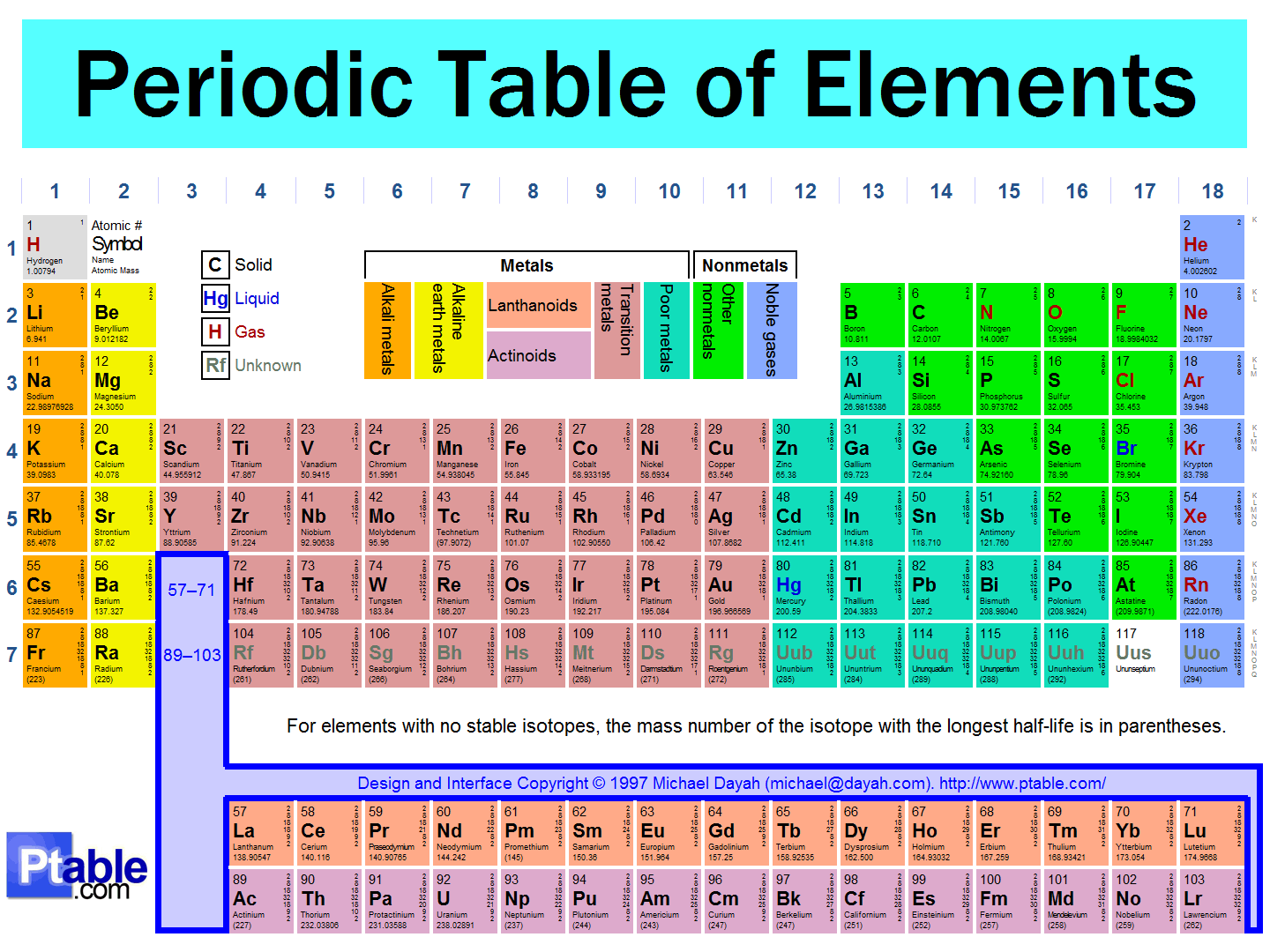
A vertical column is called...
a)
group
b)
tower
c)
period
d)
crew
81.
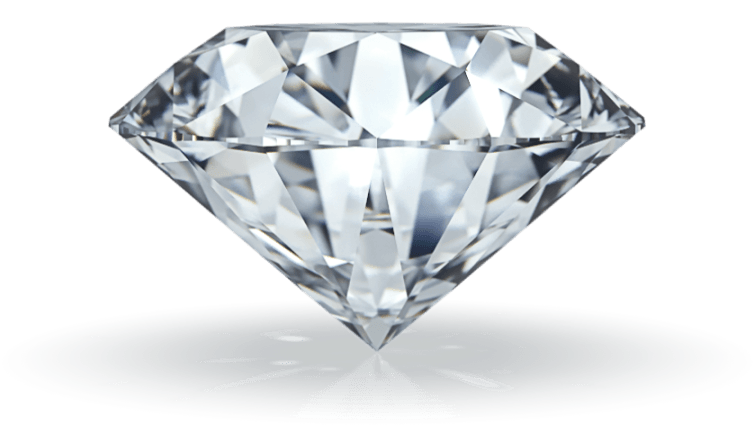
Diamonds are a pure form of what element?
a)
Carbon
b)
Oxygen
c)
Silicon
d)
Silver
82.

Most of the elements on the periodic table are classified as _____.
a)
Metals
b)
Nonmetals
c)
Metalloids
d)
Periods
83.
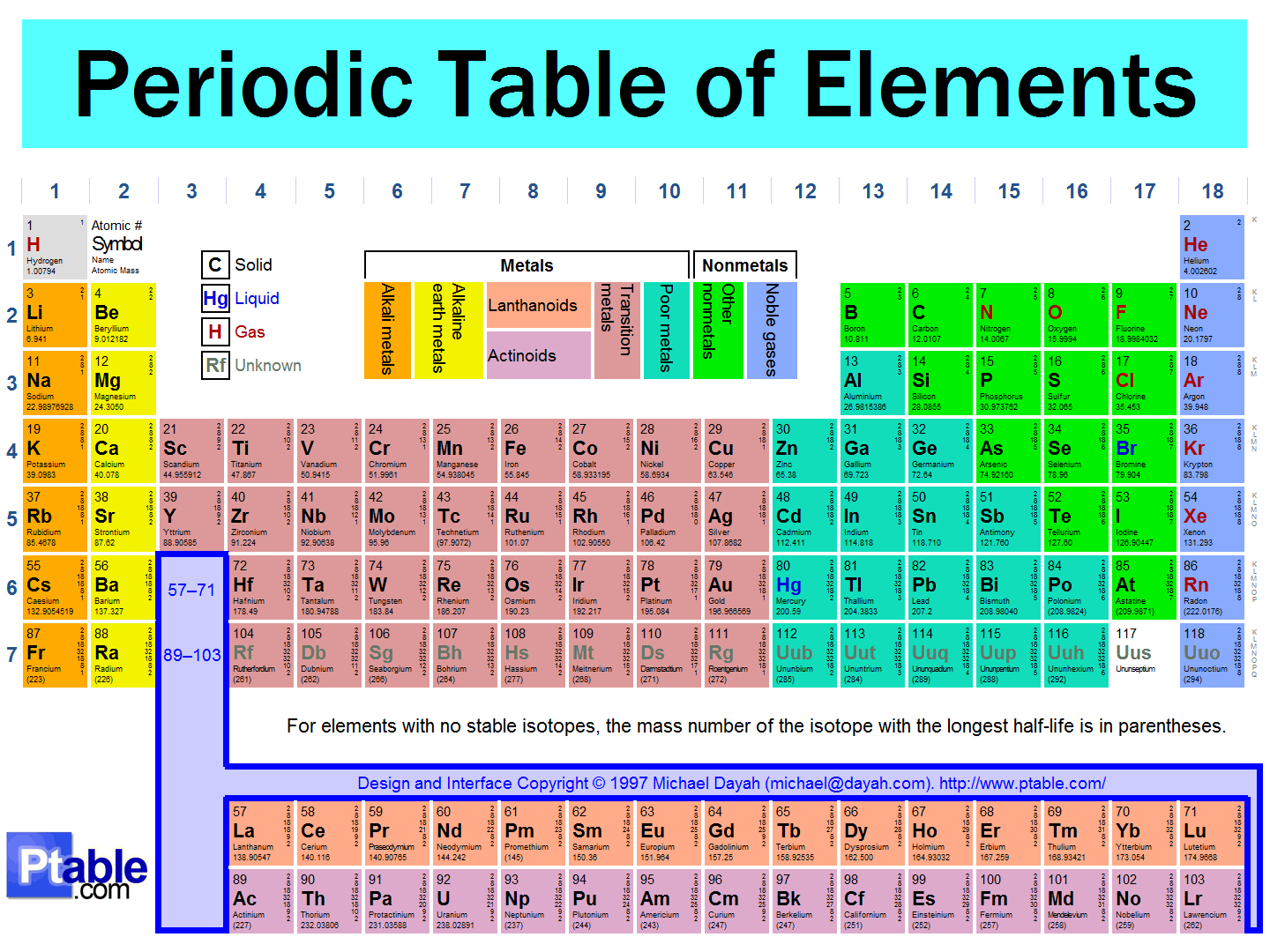
This class of elements are sometimes called "semiconductors."
a)
Metals
b)
Nonmetals
c)
Metalloids
d)
Groups
84.

The high point of a wave.
a)
crest
b)
trough
c)
amplitude
d)
wavelength
85.

The low point of a wave.
a)
crest
b)
trough
c)
amplitude
d)
wavelength
86.

The maximum height of a wave.
a)
crest
b)
trough
c)
amplitude
d)
wavelength
87.

__________ have the most energy of the electromagnetic spectrum.
a)
infrared waves
b)
microwaves
c)
gamma rays
d)
x-rays
88.

All waves carry ________ as they travel from one place to another.
a)
matter
b)
space
c)
energy
d)
water
89.

The distance from one point to the same point on the next wave.
a)
crest
b)
trough
c)
amplitude
d)
wavelength
90.
The SI unit for frequency is ________.
a)
m
b)
m/s
c)
hertz
d)
s
91.

What might a wave do as it encounters a boundary?
a)
reflect
b)
refract
c)
absorb
d)
all of the above
92.

When a light ray bends as it passes through a lens, what type of behavior does it demonstrate?
a)
reflection
b)
refraction
c)
dispersion
d)
absorption
93.

Which is an example of a longitudinal wave?
a)
light wave
b)
sound wave
c)
visible wave
d)
radio wave
94.
A wave in which the particles of the medium move perpendicularly to the direction the wave is traveling
a)
A. surface wave
b)
B. transverse wave
c)
C. electromagnetic wave
d)
D. longitudinal wave
95.
A wave in which the particles of the medium vibrate parallel to the direction of the wave motion
a)
A. mechanical wave
b)
B. surface wave
c)
C. longitudinal wave
d)
D. wave
96.
Material in which a mechanical wave travels through
a)
medium
b)
vacuum
c)
black holes
d)
chocolate
97.
Sound travels fastest through
a)
solids
b)
liquids
c)
gases
d)
empty space
98.
What type of wave does NOT need matter to travel through?
a)
Mechanical
b)
Transverse
c)
Sound
d)
Electromagnetic
99.
What type of wave MUST have matter to travel through?
a)
X-Ray
b)
Electromagnetic
c)
Mechanical
d)
Radient
100.

This image represents what kind of wave behavior?
a)
Diffraction
b)
Reflection
c)
Refraction
d)
Resonance
101.
The bouncing back of a wave when it hits a surface that it cannot pass through is called......
a)
Resonance
b)
Diffraction
c)
Refraction
d)
Reflection
102.

What kind of lens does this object use (magnifying glass)?
a)
Convex
b)
Concave
c)
Complex
d)
Construct
103.

Which lens is convex?
a)
A
b)
B
c)
C
104.
Choose the correct relationship for wavelength and frequency.
a)
Higher Frequency=Longer Wavelength
b)
Lower Frequency=Shorter Wavelength
c)
Higher Frequency=Shorter Wavelength
d)
Higher Frequency=Identical Wavelength
105.
This type of lens is thinner in the middle and when light passes through it diverges out in different directions.
a)
Concave
b)
Convex
c)
Complex
d)
Flat
106.
The bending of a wave around a barrier or opening is called....
a)
Resonance
b)
Reflection
c)
Diffraction
d)
Refraction
100 %

