
 Worksheets
STAAR Review
Total questions: 107
Worksheet time: 4hrs 33mins
Name
Class
Date
1.

a)
4N
b)
6N
c)
10 N
d)
14 N
2.

a)
2,050 m
b)
450 m
c)
910 m
d)
3,650 m
3.

a)
The activities prevent most of the water from evaporating into the atmosphere.
b)
Pollutants from the activities percolate through the soil and enter the water table.
c)
The activities replace the groundwater used.
d)
All of the above
4.

a)
Position 1, because North America receives the most direct sun
b)
Position 2, because North America is tilted toward the sun
c)
Position 3, because North America is parallel to the sun
d)
Position 4, because North America is tilted away from the sun
5.

a)
a main-sequence star in spectral class B
b)
a supergiant in spectral class K
c)
a main-sequence star in spectral class K or M
d)
a white dwarf in spectral class B
6.
The universe has many different components. Which list places four components of the universe in the most likely order from smallest to largest?
a)
Planets, stars, galaxies, nebulae
b)
Nebulae, stars, planets, galaxies
c)
Galaxies, stars, planets, nebulae
d)
Planets, stars, nebulae, galaxies
7.

a)
About 46 light-years
b)
390 light-years
c)
Approximately 2800 light-years
d)
7.18 light-years
8.
What geologic feature/event would you most likely to find at a divergent boundary between two pieces of oceanic crust?
a)
Rift Valley
b)
Mid-Ocean Ridge
c)
Island Arc
d)
Flat land
9.
What geologic feature/event would you most likely to find at a divergent boundary between two pieces of continental crust?
a)
Mid-Ocean Ridge
b)
Mountain
c)
Rift Valley
d)
Island Arc
10.
What would you be most likely to find at a transform boundary?
a)
Earthquakes
b)
Volcanoes
c)
Mountains
d)
Rift
11.
What would you be most likely to find at a convergent boundary between two pieces of oceanic crust?
a)
Mountains
b)
Rift
c)
Mid-Ocean Ridge
d)
Island Arc
12.

Which of the following organisms is a herbivore.
a)
butterfly
b)
snake
c)
fox
d)
ladybird
13.
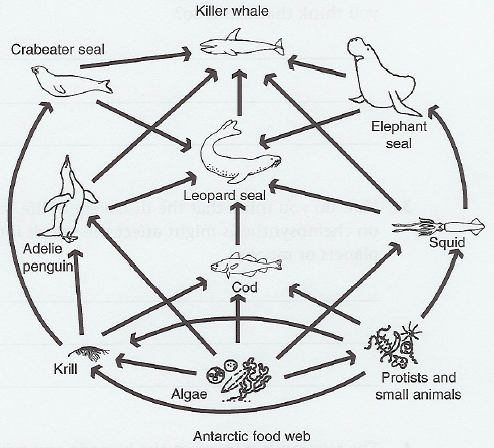
How many predators does the squid have?
a)
1
b)
2
c)
3
d)
4
14.

What type of consumer is the wolf?
a)
herbivore
b)
omnivore
c)
carnivore
d)
decomposer
15.

An organism that gets energy from breaking down dead organisms, non-living material or waste is a(an) ___________.
a)
producer
b)
consumer
c)
decomposer
d)
autotroph
16.

The shrew provides energy for the _______.
a)
cricket
b)
grasshopper
c)
frog
d)
snake
17.
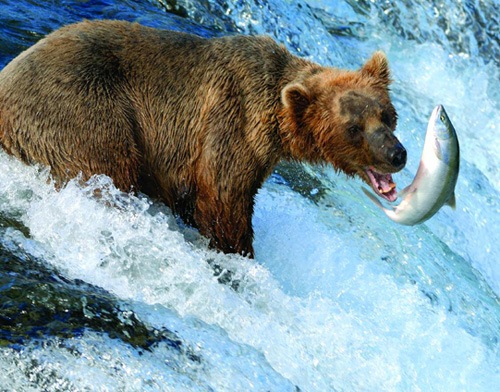
An organism that needs to eat other organisms to obtain energy is known as a:
a)
Autotroph
b)
Producer
c)
Consumer
d)
Mutualist
18.

This is the symbol for a...
a)
Cold Front
b)
Warm Front
c)
Stationary Front
d)
Occluded Front
19.

This is the symbol for a...
a)
Occluded Front
b)
Stationary Front
c)
Warm Front
d)
Cold Front
20.

This is the symbol for a...
a)
Stationary Front
b)
Occluded Front
c)
Cold Front
d)
Warm Front
21.
A severe storm that involves strong winds and forms over warm water is:
a)
tornado
b)
thunderstorm
c)
hurricane
d)
blizzard
22.
Located at the leading edge of a temperature drop off. Bring heavy thunderstorms, rain, and hail. Cool, fair weather is likely to follow.
a)
Warm Front
b)
Cold Front
c)
Occluded Front
d)
Stationary Front
23.
Located at the leading edge of a warm air mass. Brings gentle rain or light snow, followed by warmer, milder weather.
a)
Warm Front
b)
Cold Front
c)
Occluded Front
d)
Stationary Front
24.
About how long does it take the moon to make one complete cycle around the earth?
a)
65 days
b)
8 days
c)
365 days
d)
28 days
25.

Name the moon phase
a)
waning crescent
b)
waxing crescent
c)
waning gibbous
d)
waxing gibbous
26.
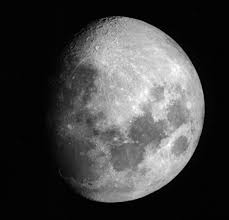
Name the moon phase
a)
waning crescent
b)
waxing crescent
c)
waning gibbous
d)
waxing gibbous
27.
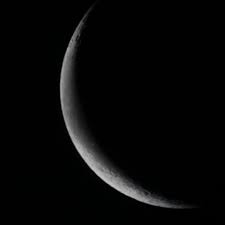
Name the moon phase
a)
waning crescent
b)
waxing crescent
c)
waning gibbous
d)
waxing gibbous
28.
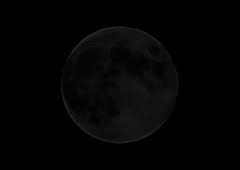
Name the moon phase
a)
First Quarter
b)
Last Quarter
c)
New Moon
d)
Full Moon
29.
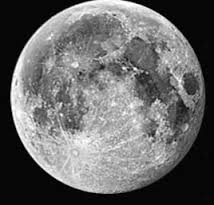
Name the moon phase
a)
First Quarter
b)
Last Quarter
c)
New Moon
d)
Full Moon
30.
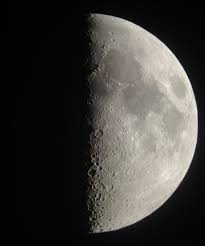
Name the moon phase
a)
First Quarter
b)
Last Quarter
c)
New Moon
d)
Full Moon
31.
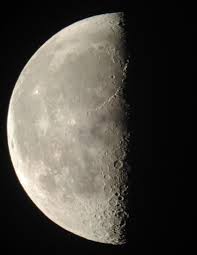
Name the moon phase
a)
First Quarter
b)
Last Quarter
c)
New Moon
d)
Full Moon
32.

Name the moon phase that would come AFTER this moon.
a)
waning crescent
b)
waxing crescent
c)
waning gibbous
d)
waxing gibbous
33.
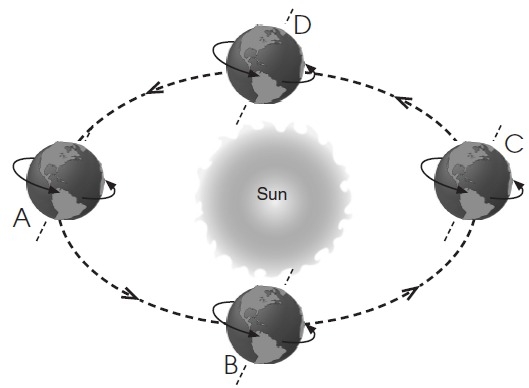
What season is letter A?
a)
Winter
b)
Summer
c)
Spring
d)
Fall
34.
What are the reasons for the seasons?
a)
Earth's tilt and rotation.
b)
Earth's rotation and revolution.
c)
Earth's tilt and revolution.
d)
Earth's tilt and resolution
35.
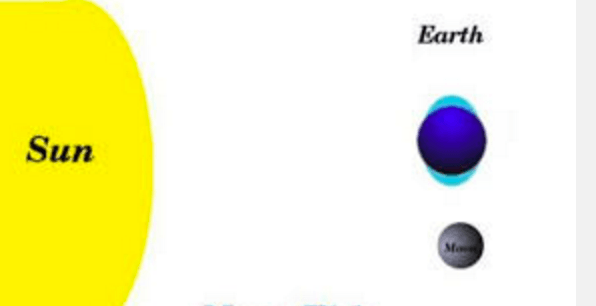
Which moon phase is shown in this diagram?
a)
new moon
b)
1st quarter
c)
full moon
d)
last quarter/3rd quarter
36.

Which moon phase is shown in this diagram?
a)
new moon
b)
first quarter
c)
full moon
d)
last quarter/3rd quarter
37.

What phase is this?
a)
Waning Gibbous Moon
b)
Waxing Gibbous Moon
c)
Waning Crescent Moon
d)
Waxing Crescent Moon
38.

Name the phase of the moon for letter a
a)
First Quarter
b)
Last Quarter
c)
Waxing Gibbous
d)
Waning Gibbous
39.

Name the phase of the moon for letter f
a)
Waning Gibbous
b)
Waxing Gibbous
c)
Waning Crescent
d)
Waxing Crescent
40.

What phase comes BEFORE this one?
a)
Waxing Gibbous
b)
Waxing Crescent
c)
Waning Gibbous
d)
Waning Crescent
41.

What phase comes AFTER this one?
a)
Waxing Crescent
b)
Waning Gibbous
c)
Waxing Gibbous
d)
Third Quarter
42.
The complete cycle of the moon lasts about a _.
a)
day
b)
year
c)
week
d)
month
43.
Day and night is caused by the _____________ of earth on its axis.
a)
revolution
b)
orbit
c)
rotation
44.
On two days each year, around June 22 and December 22, the noon sun is overhead at either 23.5° north or south. Each of these days is known as a __________.
a)
equinox
b)
solstice
c)
vacation
d)
day
45.

At position A, which hemisphere would have summer?
a)
Northern hemisphere
b)
Southern hemisphere
46.
Spring tides occurs during a ___________moon and a __________________moon.
a)
New, Full
b)
1st Quarter, 3rd Quarter
c)
Waxing Gibbous, Waning Crescent
d)
1st Quarter, Full
47.
A __________________ tide occurs during a_______________________ moon and a __________________________moon.
a)
Spring, 1st quarter, 3rd/last quarter
b)
Moon, 1st quarter, 3rd/last quarter
c)
Neap, 1st quarter, 3rd/last quarter
d)
Beach, 1st quarter, 3rd/last quarter
48.
14 days after a new moon is the _________ which is _______% visible.
a)
1st quarter, 50%
b)
3rd quarter, 50%
c)
Full moon, 0%
d)
Full moon, 100%
49.
If an atom has 3 electrons, how many protons does it have?
a)
1
b)
2
c)
4
d)
3
50.
What is the atomic number?
a)
the number of protons
b)
the number of protons and neutrons
c)
the number of neutrons
d)
the number of protons and electrons
51.
What is the mass number?
a)
the number of protons
b)
the number of protons and neutrons
c)
the number of neutrons
d)
the number of protons and electrons
52.

a)
Metals
b)
Nonmetals
c)
Metalloids
53.

a)
Metals
b)
Nonmetals
c)
Metalloids
54.

What is the atomic mass of Neon?
a)
10
b)
20.18
c)
10.18
d)
12
55.
H2
a)
Element
b)
Compound
56.
CO2
a)
Element
b)
Compound
57.
The subatomic particle with a negative charge is the
a)
electron
b)
proton
c)
neutron
d)
nucleus
58.
Elements with similar properties
a)
Periods
b)
Groups
59.
On Periodic Table, how are elements ordered?
a)
color
b)
shape
c)
atomic number
d)
alphabetically
60.
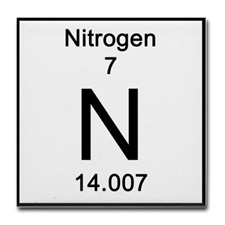
What is the number of protons that the element in this image contain?
a)
14
b)
7
c)
15
d)
18
61.

What is the atomic mass of "F"
a)
9
b)
18
c)
17
d)
19
62.
How many elements are in the this compound?
H2CO4N5
H2CO4N5
a)
11
b)
4
c)
12
d)
5
63.
How many TOTAL atoms are in this compound?
H2C3O4N5
H2C3O4N5
a)
5
b)
14
c)
15
d)
19
64.
5H2O
How many atoms of Hydrogen?
How many atoms of Hydrogen?
a)
2
b)
7
c)
10
d)
5
65.
In the following equation, what are the products?
HCl + Zn → H2 + ZnCl2
HCl + Zn → H2 + ZnCl2
a)
HCl + Zn
b)
H2 + ZnCl2
c)
Zn → H2
d)
the stuff on the outside
66.
When trying to identify an unknown element, a scientist determines what other elements the unknown element reacts with chemically. Which property of the unknown element determines the other elements it reacts with?
a)
The total number of neutrons in the unknown element.
b)
The total number of particles in the nucleus of the unknown element
c)
The number of protons in the nucleus of the unknown element
d)
The number of valence electrons in the unknown element
67.
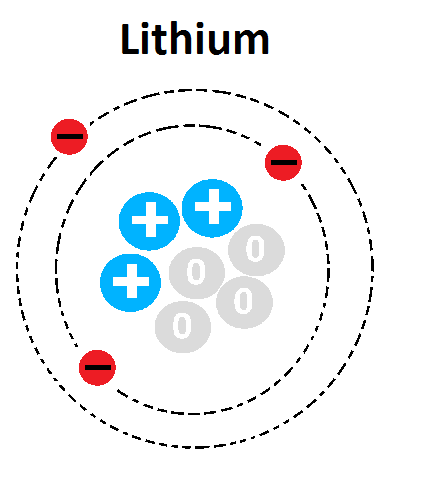
What is the atomic number of this atom?
a)
1
b)
3
c)
4
d)
7
68.
Reactivity of an element is influenced by
a)
protons
b)
valence electrons
c)
nuetrons
d)
cloud
69.
What determines an elements identity?
a)
electrons
b)
periodic table
c)
protons
d)
mass
70.
You can identify the number of protons by looking at the ____________ on the periodic table.
a)
Atomic mass
b)
Atomic number
c)
Atomic Symbol
d)
Impossible
71.
The periodic table is arranged in ______________ that go up and down and are also known as families.
a)
groups
b)
periods
c)
pods
d)
elements
72.
The periodic table is arranged in ________________ that go from left to right and tells me how many energy levels each atom has.
a)
groups
b)
periods
c)
pods
d)
elements
73.
Which of the following formulas is inorganic?
a)
CHO
b)
CH
c)
SiO
d)
CHCOOH
74.
The compound CHO is...
a)
inorganic
b)
organic
75.

a)
Atom 1 and Atom 2
b)
Atom 1 and Atom 4
c)
Atom 2 and Atom 3
d)
Atom 3 and Atom 4
76.
The elements in a column of the periodic table...
a)
have similar atomic numbers
b)
start with the same letter
c)
have similar properties
d)
are not related in any way
77.
How many O's are in Al₂(SO₄)₃
a)
4
b)
12
c)
7
d)
24
78.
Which is the correct formula for:
four hydrogen (H)
three sulfur (S)
one oxygen (O)
four hydrogen (H)
three sulfur (S)
one oxygen (O)
a)
H3SO4
b)
HSO4
c)
H4S3O
d)
H2O
79.

What do we call the 4 in front of the Barium Hydroxide molecule?
a)
subscript
b)
number
c)
coefficient
d)
multiply
80.

At which point is potential energy greatest?
a)
W
b)
X
c)
Y
d)
Z
81.

What kind of energy is in a rock at the edge of a cliff?
a)
Potential
b)
Kinetic
c)
Both potential and kinetic energy
d)
none of the above
82.
Which is the best example that something has kinetic energy?
a)
a. a car parked on a steep hill
b)
b. a tennis ball rolling across the court
c)
c. a picture hanging on the wall
d)
d. a piece of coal before it's burned
83.
65 miles per hour North is an example of an objects what?
a)
Speed
b)
Velocity
c)
Average Speed
d)
Constant Speed
84.
10 miles per hour is an example of an objects what?
a)
Velocity
b)
Speed
c)
Acceleration
d)
Inertia
85.
Total distance divided by total time is
a)
average speed
b)
constant speed
c)
instantaneous speed
d)
acceleration
86.
If a car travels North on the highway for 50 m, and has a time of 20 s. What is the velocity?
a)
2.5 m/s N
b)
10000 m/s N
c)
0.4 m/s
d)
4.0 m/s
87.

Force = Mass x Acceleration
a)
Newton's 1st Law
b)
Newton's 2nd Law
c)
Newton's 3rd Law
d)
Newton's 4th Law
88.

Any push or pull on an object.
a)
force
b)
velocity
c)
inertia
d)
momentum
89.
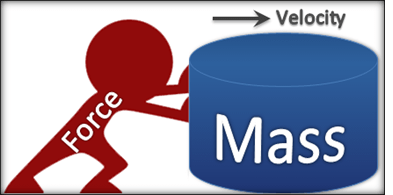
a)
1st
b)
2nd
c)
3rd
90.

a)
1st
b)
2nd
c)
3rd
91.

a)
1st
b)
2nd
c)
3rd
92.
Force exerted between the surfaces of two objects.
a)
Friction
b)
Inertia
c)
Force
d)
Gravity
93.
Objects tendency to resist change
a)
Friction
b)
Inertia
c)
Force
d)
Gravity
94.

What is the net force?
a)
10 N
b)
0 N
c)
25 N
d)
1 N
95.

Balanced or Unbalanced?
a)
Balanced
b)
Unbalanced
96.

What is the net force?
a)
400 N Up
b)
400 N Down
c)
- 400 N Down
d)
800 N Down
97.

What is the tendency of an object to resist a change in motion?
a)
coffee
b)
motion
c)
inertia
d)
gravity
98.
45 m/s2 is the...
a)
Mass
b)
Force
c)
Acceleration
d)
weight
99.
A 20 kg bike accelerates at 10 m/s2. what was the force
a)
25
b)
200 N
c)
20 N
d)
10 N
100.
What is Newton's First Law known as? The Law of
a)
Friction
b)
Mass
c)
Inertia
d)
Gravity
101.
Which law explains why when you put a book on a table the table pushes on the book
a)
3rd law
b)
4th law
c)
1st law
d)
2nd law
102.

During which interval is the object not moving?
a)
B to C
b)
C to D
c)
D to E
d)
only at point A
103.

During which interval is the object speeding up?
a)
A to B
b)
B to C
c)
D to E
d)
E to F
104.
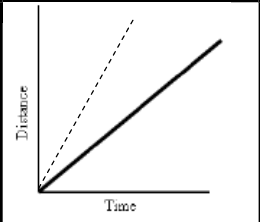
What does this graph represent?
a)
Constant Speed
b)
Acceleration
c)
Not moving
105.
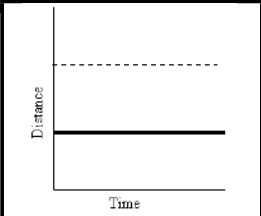
What does this graph represent?
a)
Constant speed
b)
Acceleration
c)
Not moving
106.
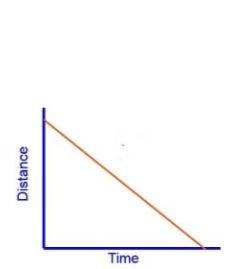
What is this line of this graph showing?
a)
moving away from starting point at a constant speed
b)
moving back towards the starting point at a constant speed
c)
acceleration (getting faster)
d)
deceleration (getting slower)
107.
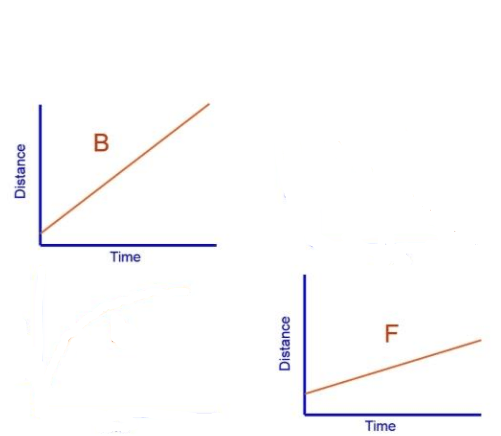
Which graph is showing a faster constant speed?
a)
B
b)
F
c)
They show the same speed
100 %

