
 Worksheets
Unit 5- Planet Earth
Total questions: 103
Worksheet time: 3hrs 31mins
Name
Class
Date
1.
What is the Moh's Scale used for?
a)
To test the hardness of a mineral
b)
To test how shiny a mineral is
c)
To figure out if a mineral is magnetic
d)
To figure out a minerals' streak
2.
How do you find a mineral's streak?
a)
By scratching it with a nail
b)
By rubbing the mineral on a piece of unglazed porcelain tile
c)
by hitting it with another rock
d)
by rubbing it against a diamond.
3.
When minerals break in a smooth predictable way, this is known as. . .
a)
Fracture
b)
Cleavage
c)
Breakage
d)
Streak
4.
What is luster?
a)
the color of the mineral
b)
the way a mineral reflects light
c)
the hardness of a mineral
d)
the taste of the mineral
5.
Whats the most unreliable way to identify a mineral
a)
Streak
b)
luster
c)
breakage
d)
Color
6.

All rocks are made out of...
a)
other rocks
b)
minerals
c)
Mica
d)
Fluorite
7.

Scientist who study the earth are called...
a)
Volcanologist
b)
Palentologist
c)
Archologist
d)
Geologist
8.

True or False:
Some minerals can come in more than one color.
Some minerals can come in more than one color.
a)
True
b)
False
9.

What property is being observed when you rub a mineral on a surface and look at the color of the mark it leaves?
a)
hardness
b)
color
c)
streak
d)
magnetism
10.
When a mineral breaks rough and jagged it is said to break with __________
a)
pieces
b)
cleavage
c)
broken
d)
fractures
11.

True or False:
When testing a mineral for hardness, it is given a number. The lower the number, the harder the mineral.
When testing a mineral for hardness, it is given a number. The lower the number, the harder the mineral.
a)
True
b)
False
12.

Based on the data table above, which property would be most useful when identifying samples 1 and 2?
a)
Hardness
b)
Specific gravity
c)
Color
d)
Cleavage/Fracture
13.
Talc has a hardness of 1. Quartz has a hardness of 7. Therefore,
a)
Talc has more than twice the luster as quartz.
b)
Talc can scratch quartz.
c)
Both talc and quartz can scratch a diamond.
Both talc and quartz can scratch a diamond.
d)
Quartz can scratch talc.
14.
Silver, gold, and copper have shiny surfaces and thus are said to have ____.
a)
dull luster
b)
waxy luster
c)
metallic luster
d)
nonmetallic luster
nonmetallic luster
15.
Mica will peel off in flat sheets. This is an example of the physical characteristic called ____.
a)
hardness
b)
streak
c)
fracture
d)
cleavage
16.
Minerals are comprised of one or more ____.
a)
colors
b)
elements
c)
rocks
d)
structure
17.

This rock formed when bits of other rocks became pressed into a solid. What type of rock is it?
a)
Sedimentary Rock
b)
Metamorphic Rock
c)
Igneous Rock
18.

This rock was formed when magma cooled very slowly inside the Earth. What specific type of rock is it?
a)
Intrusive Igneous Rock
b)
Extrusive Igneous Rock
c)
Foliated Metamorphic Rock
d)
Clastic Sedimentary Rock
19.

This rock formed when lava cooled very quickly on Earth's surface. What specific type of rock is it?
a)
Extrusive Igneous Rock
b)
Intrusive Igneous Rock
c)
Non-Foliated Metamorphic Rock
d)
Biochemical Sedimentary Rock
20.
When you watch a volcano erupt molten rock, you are seeing _____
a)
Lava
b)
Magma
c)
Mineral Crystals
d)
Igneous Rocks
21.
What are the 3 rock families?
a)
Igneous, Metamorphic, Sedimentary
b)
Metamorphic, Igneous, Cementation
c)
Brown, Red, Gray
d)
Streak, Hardness, Breakage
22.
Two ways to describe types of igneous rocks are _____
a)
Extrusive and Intrusive
b)
Foliated and Non-Foliated
c)
Clastic and Biochemical
d)
Black and Gray
23.
What process is used to form sedimentary rocks?
a)
Lava cools and hardens to form a rock.
b)
Bits of sand and gravel form layers that turn into rock from pressure.
c)
Extreme heat and pressure from inside the Earth turn rocks into new rocks.
d)
Magma trapped under the Earth's surface cools and solidifies.
24.
Which of the words below describe mud, sand, and tiny bits of rocks that cement together to form a type of rock?
a)
stalactites
b)
magmas
c)
metamorphs
d)
sediments
25.
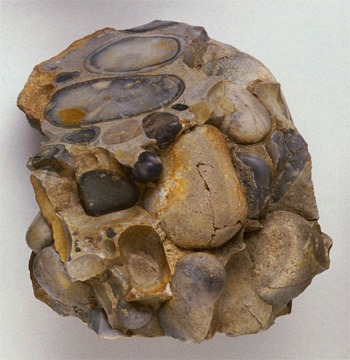
This rock was formed by smaller pieces of rock that settled at the bottom of a lake millions of years ago. What type of rock is this?
a)
Sedimentary
b)
Igneous
c)
Metamorphic
26.
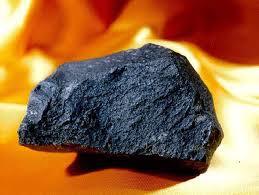
This rock was found near the mouth of a volcano. What type of rock is this?
a)
Sedimentary
b)
Igneous
c)
Metamorphic
27.

When sediments are pressed together tightly, this is called ____________.
a)
Compaction
b)
Cementation
c)
Weathering
d)
Erosion
28.
The process in which dissolved minerals crystallize and glue sediment together forming a natural cement.
a)
compaction
b)
deposition
c)
organic rock
d)
cementation
29.

The process when rocks break into smaller pieces due to exposure to natural elements is called
a)
erosion
b)
weathering
c)
sediments
30.
The movement of weathered material (sediment) is called?
a)
weathering
b)
erosion
c)
deposition
31.
What is sedimentation?
a)
build up of sediment
b)
Movement of sediment
c)
Breaking down of sediment
32.
During the rock cycle, what forms when the magma cools?
a)
igneous rocks
b)
sedimentary rock
c)
metamorphic rock
d)
foliated rock
33.
rock that cools below the Earth's surface
a)
non-foliated
b)
extrusive igneous rock
c)
strata
d)
intrusive igneous rock
34.
process in which layers in sedimentary rock are formed
a)
stratification
b)
non-foliated
c)
extrusive igneous rock
d)
striations
35.
process by which sediment is removed from its source
a)
deposition
b)
erosion
c)
rock
d)
texture
36.
process by which new rock is made from old rock
a)
rock
b)
texture
c)
rock cycle
d)
composition
37.
What is process in which water, wind, and heat break down rock?
a)
weathering
b)
exfoliation
c)
cementation
d)
composition
38.
What has to increase for metamorphism to occur?
a)
weathering and erosion
b)
temperature, time and pressure
c)
melting and cooling
d)
compaction ad cementation
39.
A good example of a metamorphic rock is
a)
mica
b)
granite
c)
gneiss
d)
conglomerate
40.
Rock that forms sediment from older rocks get pressed and cemented together.
a)
Sedimentary Rock
b)
Metamorphic Rock
c)
Igneous Rock
41.
The name rock is given when it is broken down into smaller pieces.
a)
texture
b)
weathering
c)
sediment
d)
erosion
42.
True or False: Igneous Rocks form from Sediment
a)
True
b)
False
43.
Extreme Heat and Pressure creates a _________ rock.
a)
Igneous
b)
Metamorphic
c)
Sedimentary
d)
Mineral
44.
True or False: Once a rock is sedimentary, it cannot become an igneous rock.
a)
True
b)
False
45.

Each rock type can follow only one pathway of the rock cycle.
a)
True
b)
False
46.
What two processes make sediment?
a)
Weathering
b)
Erosion
c)
Weathering & Erosion
d)
none of the above
47.

What is HUMUS made from?
a)
Chick-Peas
b)
The remains of decayed plants and animals
c)
Beans
d)
Cheese
48.
Which of the following best describes soil erosion?
a)
A. the breakdown of soil
b)
A. the improvement of soil
c)
A. the addition of soil
d)
A. the movement of soil by wind or water
49.

Wind blowing dirt and sand through the air is an example of...
a)
weathering
b)
erosion
50.

Water gets into the cracks of rock and freezes, causing the rock to break. What is this an example of?
a)
erosion
b)
frost wedging
c)
sedimentation
d)
Glacial Striations
51.
This type of weathering occurs when rock is physically broken down into smaller pieces of rock.
a)
mechanical weathering
b)
chemical weathering
c)
erosion weathering
d)
deposition
52.
This type of weathering occurs when rocks weaken then break down due to chemical changes in the composition of the rock.
a)
mechanical weathering
b)
chemical weathering
c)
erosion weathering
d)
deposition
53.

These rocks were broken apart from the continuous freeze/thaw of water in the cracks of the rocks. This is an example of:
a)
frost wedging
b)
acid rain
c)
permeability
d)
abrasion
54.
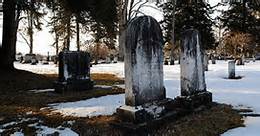
These gravestones have slowly broken down and turned a blackish color due to the action of:
a)
ice wedging
b)
abrasion
c)
acid rain
d)
mechanical weathering
55.
How is mechanical weathering different from chemical weathering?
a)
Chemical weathering happens over much shorter time frame than mechanical weathering.
b)
Chemical weathering changes the chemical composition of rocks; mechanical weathering does not.
c)
Chemical weathering occurs only in tropical climates; mechanical weathering occurs only in cool climates.
d)
Chemical weathering occurs only in the mountains; mechanical weathering occurs only on flat land.
56.
Weeds growing into the cracks in a sidewalk and the sidewalk begins to crumble is an example of:
a)
mechanical weathering
b)
chemical weathering
c)
mechanical, biological weathering
d)
chemical, biological weathering
57.
Potholes forming in the road after a cold winter is an example of:
a)
mechanical weathering
b)
chemical weathering
c)
biological weathering
58.
A metal statue slowly turning green after years of being outside is an example of:
a)
mechanical weathering
b)
chemical weathering
c)
biological weathering
59.
Rocks along a riverbed that are smoothed from continuously moving water and sediment rubbing against them is an example of:
a)
mechanical weathering
b)
chemical weathering
c)
biological
60.
The breakdown of rock is called weathering, the building up of rock is called
a)
frost wedging
b)
erosion
c)
sedimentation
d)
striations
61.
What are the four naturally occurring events that cause mechanical weathering?
a)
wind, water, glaciers, gravity
b)
gravity, animals, water, air
c)
air, animals, water, metals
d)
glaciers, wind, water, animals
62.
When glaciers leave behind the large rocks after it melts, we call those large rocks
a)
striations
b)
moraines
c)
erratics
d)
rock slides
63.
The scratches left behind on rocks as glaciers slowly pass by are called, __________.
a)
moraines
b)
striations
c)
stratifications
d)
erratics
64.
Which layer of the earth has the lowest temperature?
a)
Crust
b)
Mantle
c)
Outer Core
d)
Inner Core
65.
What is the name of the layer that contains the uppermost mantle and crust
a)
Asthenosphere
b)
Mesosphere
c)
Lithosphere
d)
Transosphere
66.
This layer of Earth is solid Iron and Nickel
a)
Outer Core
b)
Mantle
c)
Inner Core
d)
Crust
67.
The outer core is _________.
a)
solid
b)
liquid
c)
gas
d)
solid and liquid
68.
The layer of Earth between the crust and core is the _______.
a)
crust
b)
core
c)
mantle
d)
fault
69.
What happens when an oceanic plate collides with a continental plate?
a)
the denser oceanic plate slides on top of the less dense continental plate
b)
the less dense oceanic plate slides under the denser continental plate
c)
the denser oceanic plate slides under the less dense continental plate
d)
the less dense oceanic plate slides past the denser continental plate
70.
The oceanic crust is __ than the continental crust.
a)
more dense
b)
less dense
c)
Same density
d)
older
71.

Who is the scientist who proposed Continental Drift Theory?
a)
Albert Einstein
b)
Alfred Wegener
c)
Isaac Newton
d)
John Dalton
72.

What is the theory that states that the Earth was once one large continent but has since drifted apart to what we know today?
a)
Theory of Evolution
b)
Heliocentric Theory
c)
Geocentric Theory
d)
Continental Drift Theory
73.

What do you call the supercontinent landmass formed million years ago?
a)
Pangea
b)
Asia
c)
Pantallasa
d)
Eurasi
74.
What two specific continents fit together most noticeably?
a)
Africa and North America
b)
South America and Europe
c)
South America and Africa
d)
Antartica and Africa
75.
How does fossil evidence support Wegener's hypothesis of continental drift?
a)
Similar fossils are found along continental margins that appear to join together.
b)
Fossils are found in areas where the present-day climate could not have supported the organisms that made the fossils.
c)
Similar fossils of giant, land-dwelling dinosaurs are found on continents separated by oceans.
d)
all of the above
76.
What is the force that moves the continents?
a)
Conduction
b)
Convection currents
c)
Radiation
d)
Conveyor belts
77.
Originally the Continental drift theory was not well received by other scientist. Why?
a)
There was a competing theory at the time that was more believable.
b)
There was no data showing the continents ever moved.
c)
The scientists did not know the force responsible for moving the continents.
d)
The scientist presenting the data was unreliable.
78.
Which of the following is evidence that supports continental drift?
a)
the presence of penguins at both the equator and Antarctica
b)
fossils of the same plant have been found on several continents
c)
the presence of glacial features in Antarctica
d)
the presence of volcanic rock in Antarctica
79.

Name the boundary
a)
convergent boundary
b)
divergent boundary
c)
transform boundary
d)
sergent boundary
80.

Name the boundary
a)
convergent boundary
b)
divergent boundary
c)
transform boundary
d)
sergent boundary
81.

Name the boundary
a)
convergent boundary
b)
divergent boundary
c)
transform boundary
d)
sergent boundary
82.
This theory states that Earth is divided into plates that move on top of the mantle at a slow constant rate
a)
Plate Tectonics
b)
Continental Drift
c)
Superposition
d)
Pangaea
83.
What forms when two continental, convergent plates push together?
a)
volcano
b)
mountain
c)
earthquakes
d)
island
84.
When two convergent plates come together where the denser one is forced under back into the mantle
a)
reduction
b)
conduction
c)
subduction
d)
convection
85.
A place where two plates meet; a break in Earth's crust
a)
plate
b)
fault/ boundary
c)
fold
d)
crack
86.
A boundary where two plates collide into each other.
a)
convergent boundary
b)
divergent boundary
c)
transform boundary
d)
sergent boundary
87.
___________ help explain why Earth is not getting any larger even though the tectonic plates are always moving.
a)
earthquakes
b)
subduction zones
c)
fossils
d)
volcanoes
88.
Sea-floor spreading states that new ocean crust is being formed constantly. Which of the following is also true?
a)
The oceans are constantly getting bigger.
b)
The amount of land on earth is constantly increasing.
c)
The amount of land on earth remains the same due to subduction.
d)
When the size of the crust reaches a certain amount, sea-floor spreading will stop.
89.
New crust is always formed at the...
a)
mid-ocean ridge
b)
deep-ocean trench
c)
asthenosphere
d)
lithosphere
90.
What did scientists use to map the oceans floor?
a)
Echo-location
b)
Sonar
c)
Space Shuttles
d)
Animals
91.
True or False : Sea-floor Spreading adds new material to the ocean floor?
a)
True
b)
False
92.
The OLDEST seafloor is located?
a)
Closest to the mid-ocean ridge
b)
Farthest from the mid-ocean ridge
93.
___________ help explain why Earth is not getting any larger even though the tectonic plates are always moving.
a)
earthquakes
b)
subduction zones
c)
fossils
d)
volcanoes
94.
Where is the point at which the first movement occurs during an earthquake?
a)
Epicenter
b)
Focus
c)
Fault
d)
Plate
95.
Where is the point on the Earth’s surface directly above the focus of an earthquake?
a)
Epicenter
b)
Fault
c)
Hypocenter
d)
Tremor
96.
Which type of wave is the first to arrive after an earthquake occurs?
a)
P Wave
b)
Rayleigh Wave
c)
S Wave
d)
Shear Wave
97.
P Waves can move through which of the following?
a)
Gas
b)
Liquid
c)
Solid
d)
All of these
98.
S Waves can move through which of the following?
a)
Gas
b)
Liquid
c)
Solid
d)
All of these
99.
What is an instrument that detects and records waves produced by earthquakes? (This piece of equipment can measure the magnitude of an earthquake.)
a)
Epicenter
b)
Fault
c)
Seismogram
d)
Seismograph
100.
What is the measure of the amount of energy released in an earthquake?
a)
Earthquake
b)
Epicenter
c)
Magnitude
d)
Seismogram
101.
Which scale measures the intensity of the ground movement?
a)
Mercalli Scale
b)
Richter Scale
c)
Seismogram Scale
d)
Bernoulli Scale
102.
What is a smaller earthquake that follows a larger earthquake?
a)
Aftershock
b)
Liquefaction
c)
Seismic Gap
d)
Tsunami
103.
What is a large ocean wave that results from an underwater earthquake, landslide, or volcanic eruption?
a)
Aftershock
b)
Liquefaction
c)
Seismic Gap
d)
Tsunami
100 %

