
 Worksheets
8P3 Waves Unit Test Review
Total questions: 103
Worksheet time: 3hrs 47mins
Name
Class
Date
1.
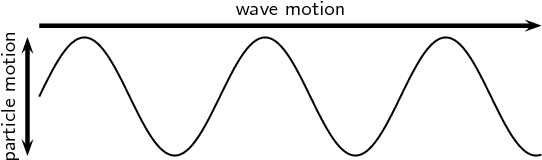
What kind of wave is pictured below?
a)
compressional wave
b)
transverse wave
c)
sound wave
d)
mechanical wave
2.
Waves are a transfer of what?
a)
Heat
b)
Light
c)
Energy
d)
Food
3.
This is what you get when sound waves are reflected, or bounce back, off of a hard surface.
a)
Amplitude
b)
Pitch
c)
Volume
d)
Echo
4.
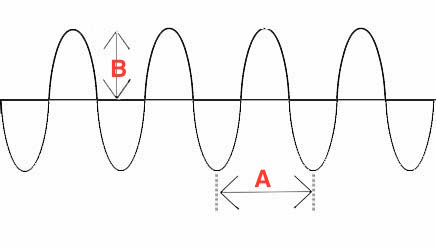
What property of this wave is represented by the letter "A"
a)
amplitude
b)
crest
c)
trough
d)
wavelength
5.
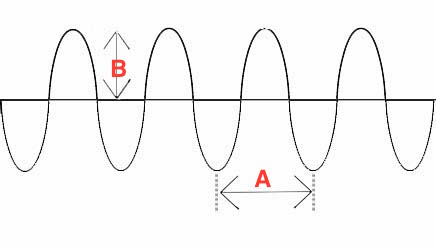
What property of the wave is represented by the letter "B"?
a)
amplitude
b)
crest
c)
trough
d)
wavelength
6.
The number of wavelengths that pass a point each per second is:
a)
frequency
b)
period
c)
longitudinal
d)
transverse wave
7.
The type of waves that require medium to pass:
a)
Mechanical Waves
b)
Electromagnetic Waves
c)
Radio waves
d)
X-Rays
8.
When the frequency of a wave increases, what happens to the wavelength?
a)
The wavelength is not directly affected by the frequency of a wave.
b)
The wavelength increases.
c)
The wavelength decreases.
d)
More specific information is needed to form a conclusion about the wavelength.
9.
A mechanical wave cannot travel through...
a)
a vacuum(empty space).
b)
water.
c)
air.
d)
glass.
10.
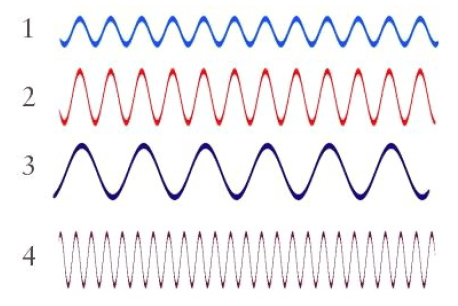
Which wave in the diagram has the higher frequency?
a)
1
b)
2
c)
3
d)
4
11.
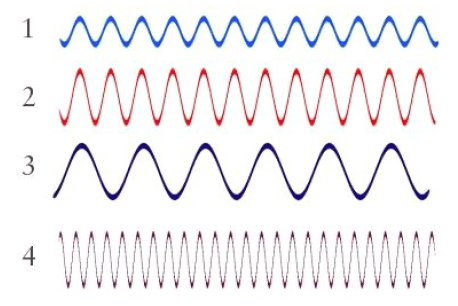
Which wave in the diagram has the greatest wavelength?
a)
1
b)
2
c)
3
d)
4
12.
Which wave in the diagram has the lowest frequency?
a)
1
b)
2
c)
3
d)
4
13.
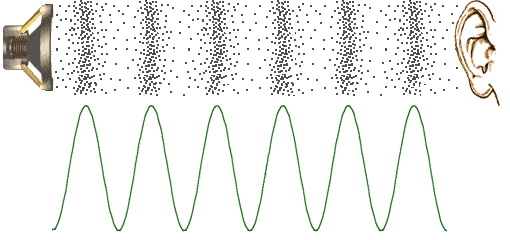
What is the speed of a sound wave that has a frequency of 250 hertz and a wavelength of 8 meters?
a)
31 m/s
b)
250 m/s
c)
2000 m/s
d)
5280 m/s
14.

What are the spaced out sections of this wave called?
a)
Reflections
b)
Rarefactions
c)
Compressions
d)
Wavelengths
15.

What is the wavelength of the sound wave that has a frequency of 340 hertz as it travels through the air at 680 m/s?
a)
0.01 m
b)
0.5 m
c)
2.0 m
d)
200 m
16.
The combination of two or more waves that result in a single wave
a)
A. diffraction
b)
B. resonance
c)
C. reflection
d)
D. interference
17.
If ALL colors of visible light are reflected back to your eye, what color will the t-shirt appear?
a)
white
b)
black
c)
red
d)
green
18.
The bending of a wave as the wave passes between two substances in which the speed of the wave differs
a)
A. refraction
b)
B. reflection
c)
C. resonance
d)
D. standing wave
19.
A change in the direction of a wave when the wave finds an obstacle or an edge.
a)
A. refraction
b)
B. reflection
c)
C. standing wave
d)
D. diffraction
20.
A wave in which the particles of the medium vibrate parallel to the direction of the wave motion
a)
A. mechanical wave
b)
B. surface wave
c)
C. longitudinal wave
d)
D. wave
21.

This image represents what kind of wave behavior?
a)
Diffraction
b)
Reflection
c)
Refraction
d)
Resonance
22.
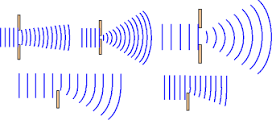
a)
Diffraction
b)
Interference
c)
Refraction
d)
Reflection
23.
When the crests of one wave overlap the crests of another wave or waves, this occurs.
a)
A. diffraction
b)
B. destructive interference
c)
C. constructive interference
d)
D. resonant frequencies
24.
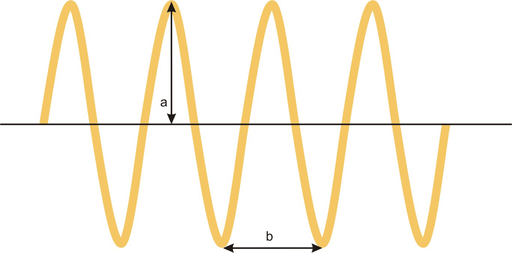
How many waves are in this wave chain or what is the frequency of the wave?
a)
6
b)
3
c)
4
d)
5
25.
A wave has wavelength of 10 m and a speed of 340 m/s. What is the frequency of the wave?
a)
34 m/s
b)
3400 Hz
c)
3400 m/s
d)
34 Hz
26.
A wave has wavelength of 10 m and a speed of 340 m/s. What is the period of the wave?
a)
0.029s
b)
0.029Hz
c)
34Hz
d)
34s
27.

Which statement can be made based on these data?
a)
Sound waves are slowest in liquids and fastest in gases.
b)
Sound waves are fastest in solids and slowest in gases.
c)
Speed of a sound wave increases from one medium to another.
d)
Speed of a sound wave decreases from one medium to another.
28.
Which describes the amplitude of a wave?
a)
A wave is 5 meters long.
b)
A wave has a height of 5 meters.
c)
A wave has a frequency of 5 Hz.
d)
A wave takes 5 minutes to pass a point.
29.
If 3 complete wavelengths pass a fixed point in 2 seconds What is the frequency of the wave?
a)
3 Ha
b)
1.5 Hz
c)
3 Hz
d)
6 Hz
30.

This is a __________wave
a)
transverse
b)
longitudinal
c)
surface
d)
all of the above
31.
What is happening to the waves as they travel along the tuning fork?
a)
Matter is being transferred
b)
Energy is being transferred
c)
The amplitude increases
d)
The wavelengths increases
32.
The electromagnetic spectrum in order of decreasing (long to short) wavelength is
a)
gamma, x-ray, sound, light, UV, infrared, microwave, radio
b)
radio, microwave, infrared, sound, UV, x-ray, gamma
c)
gamma, x-ray, UV, visible light, infrared, microwave, radio
d)
radio waves, microwaves, visible light, X-rays
33.
Electromagnetic waves can transfer energy without a(an)
a)
medium
b)
electric field
c)
magnetic field
d)
change in either a magnetic or an electric field
34.

In the picture shown, sound wave is presented. Which of the following statements below is true based on the sound waves produced by the instrument?
a)
transverse, mechanical that travels through space and is perpendicular to the direction of the wave
b)
transverse, electromagnetic that travels through a medium and is parallel to the direction of the wave
c)
longitudinal, mechanical that travels through a medium and is parallel to the direction of the wave
d)
longitudinal, electromagnetic that travels through space and is perpendicular to the direction of the wave
35.
Which of the following statements is false?
a)
The medium for sound is air
b)
The medium for rope waves is the rope
c)
The medium for seismic waves is Earth's crust
d)
The medium for ocean waves is a liquid
36.
Which statement is incorrect?
a)
Electromagnetic waves can travel in or through space
b)
Electromagnetic waves can travel through a medium
c)
Mechanical waves can travel through or in space
d)
Mechanical waves require a medium to travel through
37.

The image above shows a student using a Slinky to create a wave. The slinky is stretched at one end and the resulting wave travels back and forth. This is an example of a...
a)
Superposition Wave
b)
Refracted Wave
c)
Longitudinal Wave
d)
Transverse Wave
38.

Which letter represents the amplitude of the wave?
a)
A
b)
B
c)
C
d)
D
39.

Light waves are hitting an object (that black horizontal line). What is happening to those light waves?
a)
They are being reflected.
b)
They are being refracted.
c)
They are being transmitted.
d)
They are being absorbed.
40.

What word could you use to describe the fish bowl?
a)
transparent
b)
translucent
c)
opaque
41.

What kind of object is represented by the black horizontal line?
a)
transparent
b)
translucent
c)
opaque
42.

I can kind of see through that wax paper, but not really. Why?
a)
It is transparent
b)
It is translucent.
c)
It is opaque.
43.

What's going on here?
a)
Red light is being refracted; all other colors are absorbed.
b)
Red light is being absorbed; all other colors are reflected.
c)
Red light is transmitted; all other colors are refracted.
d)
Red light is reflected; all other colors are absorbed.
44.
Black will ____ all wavelengths of the visible spectrum.
a)
reflect
b)
absorb
c)
refract
d)
diffract
45.
Paul is fishing out on the Resevoir. He sees a fish from his boat and goes to spear it but misses by a lot but sees that the fish has not moved. What caused him to think the fish was some where else?
a)
reflection
b)
transmission
c)
absorption
d)
refraction
46.
The color you see is the color that is ___.
a)
reflected
b)
absorbed
c)
refracted
d)
diffracted
47.
Two waves come together and interact to form a new, smaller wave. This process is called
a)
destructive interference
b)
constructive interference
c)
reflective interference
d)
positive interference
48.
For wave refraction to take place, a wave must
a)
increase in velocity
b)
enter a new medium
c)
increase in frequency
d)
merge with another wave
49.

What phenomenon does this image demonstrate?
a)
Constructive interference
b)
Destructive interference
c)
Increasing frequency
d)
Increasing period
50.
What do all waves have in common?
a)
nothing
b)
they carry energy
c)
they absorb light
d)
you can see them
51.

Which is correct???
a)
A
b)
B
c)
C
d)
D
52.

Which is correct??
a)
F
b)
G
c)
h
d)
J
53.

a)
Constructive Interference
b)
Destructive Interference
54.
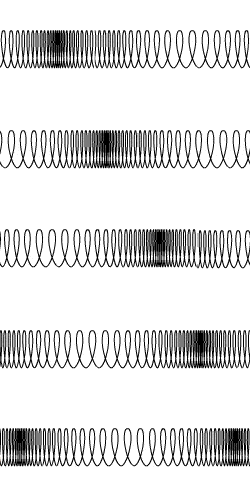
What type of wave is this?
a)
Longitudinal
b)
Transverse
c)
Electromagnetic
d)
Ocean
55.
A wave has a frequency of 8 Hz and a wavelength of 4 meters. What is the period of the wave?
a)
16 sec
b)
2 m
c)
0.5 sec
d)
0.125 sec
56.
Waves in a lake are 2.0 m in length and pass an anchored boat 0.5 s apart. What is the speed of the waves?
a)
10 m/s
b)
4 m/s
c)
1 m/s
d)
2 m/s
57.
Calculate the speed of sound if the wavelength is 108 cm with a frequency 300 Hz.
a)
32400 m/s
b)
0.36 m/s
c)
324 m/s
d)
277.78 m/s
58.

The following is a picture of what type of mirror?
a)
Convex Mirror
b)
Concave Mirror
c)
Plane Mirror
d)
Flat Mirror
59.

The following is a picture of what type of mirror?
a)
Convex Mirror
b)
Concave Mirror
c)
Plane Mirror
d)
Flat Mirror
60.

A surface that curves outward and causes light to spread out.
a)
convex mirror
b)
concave mirror
c)
plane mirror
61.

A surface that curves inward and causes light to focus at the mirror's focal point, or converge.
a)
convex mirror
b)
concave mirror
c)
plane mirror
62.
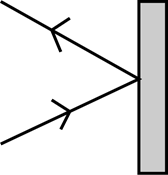
The illustration shows a light ray striking an object.
In the illustration, the light ray striking the object is-
In the illustration, the light ray striking the object is-
a)
absorbed
b)
stopped
c)
reflected
d)
refracted
63.

If the top wave is 40 cm and the bottom wave is 45 cm, when they meet, what will be the amplitude of the wave produced?
a)
45 cm
b)
5 cm
c)
40 cm
d)
85 cm
64.

Which diagram shows refraction?
a)
A
b)
B
c)
C
d)
D
65.

The prism is an example of what and why?
a)
reflection because light bounces back
b)
refraction because light is being bent
c)
Transmission because light is passing through
d)
Absorption because light is being taken in
66.

Prisms are examples of
a)
Refraction
b)
Reflection
c)
Absorption
d)
Transmission
67.

Which of the following represents transmission?
a)
A
b)
B
c)
C
d)
D
68.

Which of the figures represents refraction?
a)
A
b)
B
c)
C
d)
D
69.

Which wave has a higher amplitude?
a)
The wave on top
b)
The wave on bottom
c)
They both have the same amplitude
70.
In a bright environment, pupil becomes larger to allow more light entering the eye.
a)
True
b)
False
71.

What is letter B
a)
Optic nerve
b)
Lens
c)
Cornea
d)
Retina
72.

What is letter G?
a)
Sclera
b)
Retina
c)
Lens
d)
Vitreous humor
73.

What is letter I?
a)
Cornea
b)
Lens
c)
Vitreous humor
d)
Optic nerve
74.
What part of the eye sends nerve impulses to the brain
a)
optic nerve
b)
iris
c)
cornea
d)
sclera
75.
What part of the eye is a clear protective structure that allows light to enter the eye and is responsible for refracting and bending the light rays?
a)
iris
b)
retina
c)
cornea
d)
choroid
76.
What part of the eye responsible for refracting and focusing the light?
a)
lens
b)
retina
c)
pupil
d)
ciliary body
77.
What part of the eye responsible for turning light into electricity and producing nerve impulses?
a)
lens
b)
retina
c)
pupil
d)
ciliary body
78.
This part of the eye is also known as the colored part of the eye. What is it called?
a)
pupil
b)
lens
c)
iris
d)
retina
79.
This part of the eye is the hole or the opening of the eye and controls how much enters the eye.
a)
pupil
b)
optic nerve
c)
sclera
d)
lens
80.

What is letter F?
a)
Retina
b)
Pupil
c)
Vitreous humor
d)
Iris
81.

What is letter H?
a)
Cornea
b)
Optic nerve
c)
Iris
d)
Retina
82.
What is letter E?
a)
Cornea
b)
Optic nerve
c)
Iris
d)
Retina
83.
Why does your pupil increase in size when you enter a dark room?
a)
To protect the eye
b)
to allow more light to enter the eye
c)
to allow less light to enter the eye
d)
to look like a pirate
84.
What part of the eye are the rods and cones located
a)
Iris
b)
lens
c)
retina
d)
pupil
85.

_____________________light is the only type of EM wave detected by the human eye.
a)
Red
b)
Gamma
c)
Microwave
d)
Visible
86.

Which color would have the longest wavelength?
a)
Red
b)
Orange
c)
Blue
d)
Violet
87.
Which color would have the shortest wavelength?
a)
Red
b)
Orange
c)
Blue
d)
Violet
88.
Which order is correct going from the shortest to the longest wavelength?
a)
x-rays, ultraviolet rays, infrared rays, microwaves, radio waves
b)
radio waves, infrared rays, ultraviolet rays, x-rays, gamma rays
c)
ultraviolet rays, radio waves, gamma rays, x-rays, infrared rays
d)
gamma rays, radio waves, x-rays, ultraviolet, infrared rays
89.
electromagnetic waves with the longest wavelengths are
a)
gamma rays
b)
x-rays
c)
infrared waves
d)
radio waves
90.
electromagnetic waves with the shortest wavelengths are
a)
gamma rays
b)
x-rays
c)
infrared waves
d)
radio waves
91.
Put the visible light colors in order from longest wavelength to shortest wavelength
a)
Violet, Indigo, Blue, Green, Orange, Yellow, Red
b)
Red, Yellow, Green, Orange, Violet, Blue, Indigo
c)
Red, Orange, Yellow, Green, Blue, Indigo, Violet
92.

This wave has the second highest frequency on the spectrum.
a)
microwaves
b)
visible light
c)
x-rays
d)
gamma ray
93.
This wave has the highest frequency on the spectrum.
a)
microwaves
b)
visible light
c)
x-rays
d)
gamma ray
94.
This wave has the lowest frequency on the spectrum out of the following
a)
microwaves
b)
visible light
c)
x-rays
d)
gamma ray
95.
A wave with a high or long wavelength will have a ______ frequency and _____ energy
a)
high, low
b)
high, high
c)
low, high
d)
low, low
96.

A prism could best be described as which of the following?
a)
A triangle with an opening on one side and another side that absorbs light.
b)
A triangle object that allows light to enter and be refracted out into colors
c)
A pyramid shaped object that reflects the rats of the rainbow
d)
A triangular object that absorbs the light from a rainbow
97.
Which of the following electromagnetic waves has the lowest energy?
a)
gamma ray
b)
infrared wave
c)
visible light wave
d)
radio waves
98.

EM waves are always____________
a)
Transverse
b)
Compression
c)
Longitudinal
d)
Seismic
99.
Cell phones uses
a)
radio wave
b)
tv wave
c)
Gamma wave
d)
microwaves
100.
Which of the following is true to occur and change when a radio transmit more energy
a)
Changing frequency of the wave
b)
Constant amplitude
c)
Can only be broadcasted over short distances
d)
Nothing
101.
Satellites uses
a)
gamma rays
b)
radio waves
c)
infrared waves
d)
X-rays
102.
Color filters
a)
reflects only one light and absorbs the others
b)
absorbs only one light and reflect the others
c)
refract light
d)
diffrict laight
103.
What is the correct order light passes through the eye?
a)
Retina → cornea → optic nerve → convex lens →iris→ pupil → brain
b)
Cornea → iris→ pupil →convex lens → retina → optic nerve → brain
c)
Convex lens → cornea → retina → optic nerve →brain →pupil → iris
d)
Cornea → pupil → iris →convex lens → optic nerve → retina → brain
100 %

