
 Worksheets
Chapter 3
Total questions: 101
Worksheet time: 3hrs 31mins
Name
Class
Date
1.
A grouping of two covalent bonds between carbon atoms
a)
single bond
b)
James Bond
c)
triple bond
d)
double bond
2.
Element that has a central role in the chemistry of living organisms
a)
biochemical element
b)
oxygen
c)
carbon
d)
gold
3.
A covalently bonded compound that contains carbon
a)
organic compound
b)
biological compound
c)
inorganic compound
d)
compound sentence
4.
A chain of repeating units
a)
hemoglobin
b)
biochemicals
c)
polymer
d)
copycat
5.
A class of energy-giving nutrients that includes sugars, starches, and fibers
a)
lipid
b)
carbohydrate
c)
nucleic acid
d)
protein
6.
A type of organic compound that does not dissolve in water; includes fats, oils, waxes, and steroids
a)
nucleic acid
b)
protein
c)
carbohydrate
d)
lipid
7.
An organic compound that is made of one or more chains of amino acids and is in all cells
a)
protein
b)
carbohydrate
c)
lipid
d)
nucleic acid
8.
Covalent compounds based on carbon
a)
organic compounds
b)
inorganic compounds
c)
amino acids
d)
carbon fiber
9.
The building blocks of proteins
a)
amino acids
b)
nucleic acid
c)
legos
d)
carbohydrates
10.
Helps transport nutrients to cells
a)
amino acids
b)
water
c)
Uber
d)
proteins
11.
Carries genetic information
a)
phosphorus
b)
polymer
c)
hemoglobin
d)
nucleic acid
12.
The protein that helps carry oxygen to cells
a)
hemoglobin
b)
starch
c)
biochemicals
d)
organic compounds
13.
Which of the following is NOT a biochemical?
a)
carbohydrates
b)
propane
c)
proteins
d)
lipids
14.
A model that shows how carbon atoms are connected is called a
a)
carbon diagram
b)
carbon compound
c)
carbon bond
d)
carbon backbone
15.
What allows carbon to form lots of different compounds?
a)
its size
b)
its color
c)
its melting point
d)
its bonding ability
16.
Over 90% of compounds are what type of compounds?
a)
sugars
b)
ionic compounds
c)
organic compounds
d)
inorganic compounds
17.
The four types of biochemicals in living organisms are
a)
carbohydrates, lipids, proteins, and amino acids.
b)
carbohydrates, water, salt, and proteins.
c)
carbohydrates, lipids, proteins, and nucleic acids.
d)
carbohydrates, salt, lipids, and water.
18.
Which of these statements about proteins is incorrect?
a)
Certain proteins provide structural support for cells.
b)
Nucleic acids are the building blocks of proteins.
c)
Proteins are involved in the transport of molecules across membranes.
d)
The function of a protein depends on its shape.
19.
What is an organic compound?
a)
a covalently bonded compound that contains oxygen
b)
a covalently bonded compound that contains hydrogen
c)
an ionic compound that contains carbon
d)
a covalently bonded compound that contains carbon
20.
The two main kinds of nucleic acids are
a)
DNA and RNA.
b)
amino acids and lipids.
c)
polymers and acids.
d)
DNA and polymers.
21.
Which of the following is NOT one of the most common elements in your body?
a)
oxygen
b)
helium
c)
nitrogen
d)
phosphorus
22.
How many atoms can a single carbon atom bond with?
a)
one
b)
four
c)
two
d)
three
23.
Which of the following compounds regulates temperature in your body?
a)
starch
b)
water
c)
salt
d)
DNA
24.
Which of the following is NOT true of carbon?
a)
It can bond with other elements.
b)
It can form long chains with other carbon atoms.
c)
It can form single, double, or triple bonds.
d)
It stores genetic information.
25.

Name the three TYPES of bonds that carbon can form...(Section 1)
a)
1, 2, 3
b)
Single, Double, Triple
c)
First, Second, Third
d)
Hydrogen, Carbon, Phosphorus
26.

How many bonds can carbon form? (Article)
a)
1
b)
2
c)
3
d)
4
27.

These store genetic information and have the cell's instructions to make proteins...they comprise DNA. (section 2)
a)
Proteins
b)
Lipids
c)
Carbohydrates
d)
Nucleic Acids
28.
These biochemicals are made of small molecules and long-chains of amino acids. (Section 2)
a)
Carbohydrates
b)
Lipids
c)
Proteins
d)
Nucleic Acids
29.

These are long-chains of carbon atoms...and commonly called fats. (Section 2)
a)
Carbohydrates
b)
Lipids
c)
Proteins
d)
Nucleic Aids
30.

This is comprised of sugar molecules that are bonded together. (Section 2)
a)
Carbohydrates
b)
Lipids
c)
Proteins
d)
Nucleic Acids
31.

What is the largest molecule in living organisms? (Section 2)
a)
Carbohydrates
b)
Lipids
c)
Proteins
d)
Nucleic Acids
32.

A polymer is a...(section 2)
a)
...kind of glue
b)
...chain of repeating units
c)
...special chemical bond
d)
...unending chemical bond
33.
Capillary action is the result of adhesion. Which aspect of water is responsible for this?
a)
Nonpolar covalent bonds that enable water to dissolve other substances
b)
Polar covalent bonds that join molecules of water to other substances
c)
Hydrogen bonds between water and another substance
d)
Ionic bonds that enable electrons to flow through water and into another substance
34.
Which of the following properties of water enables it to move from the roots to the leaves of plants?
a)
Water expands as it freezes.
b)
Water is an excellent solvent.
c)
Water exhibits cohesive behavior.
d)
Water moderates temperature.
35.
What property of water allows it to be such a versatile solvent that it is often called the "universal solvent?"
a)
Purity
b)
Polarity and cohesion
c)
High heat capacity
d)
Expansion upon freezing
36.
Large bodies of water do not quickly fluctuate in temperature. Why?
a)
Water is a solvent.
b)
Water has a high heat capacity.
c)
Water acts as a buffer.
d)
Water is non-polar.
37.
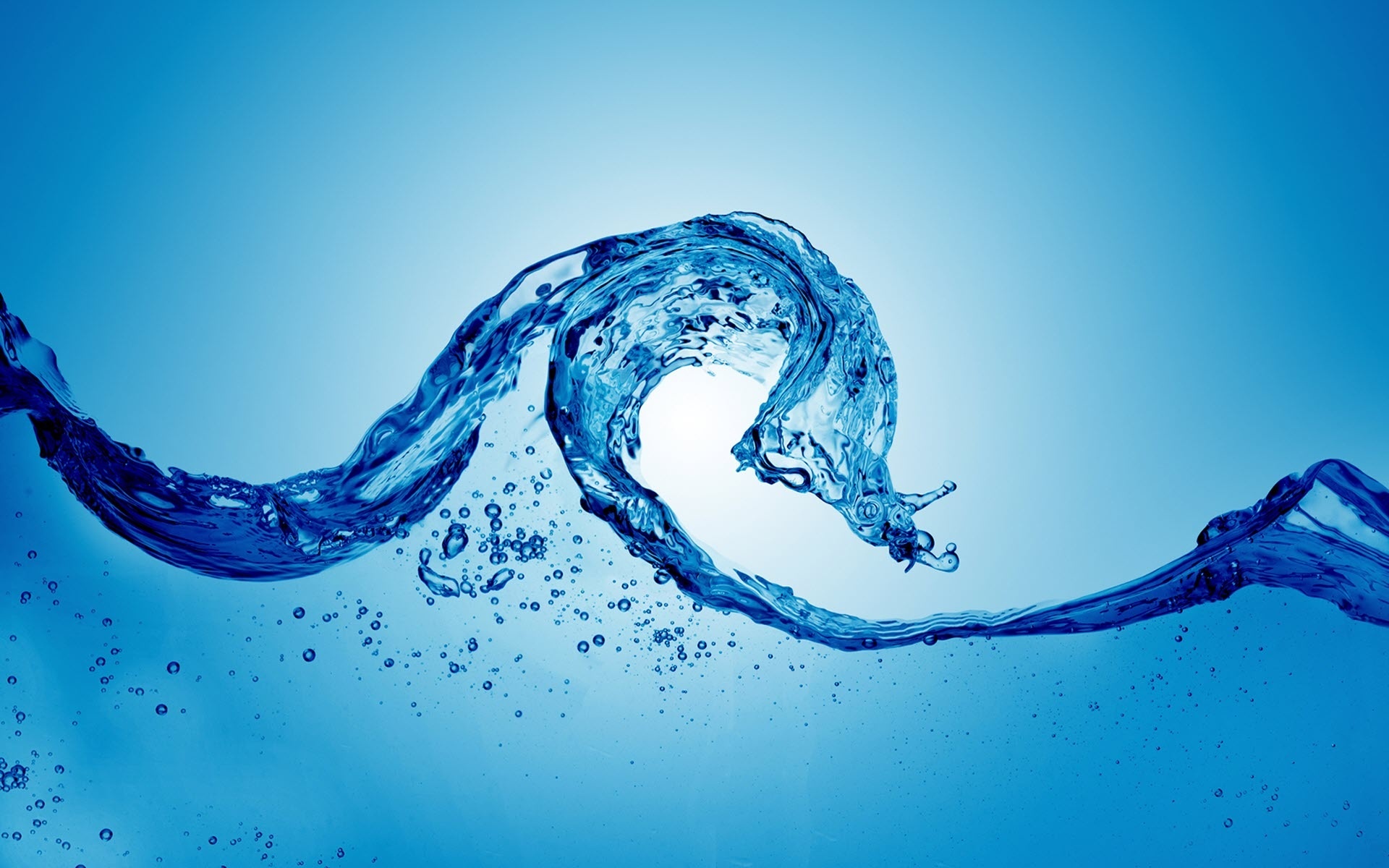
What two elements make up water?
a)
Helium and oxygen
b)
Hydrogen and oxygen
c)
helium and carbon
d)
oxygen and carbon
38.

What word describes when water is attracted to other substances?
a)
cohesion
b)
adhesion
c)
capillary action
d)
surface tension
39.

Why does water move from the roots to the leaves of plants?
a)
Water is pushed by solutes
b)
Capillary action pulls the water molecules like a chain
c)
Water is pulled by gravity
d)
Water’s cohesion causes it to “pull” towards the leaves
40.
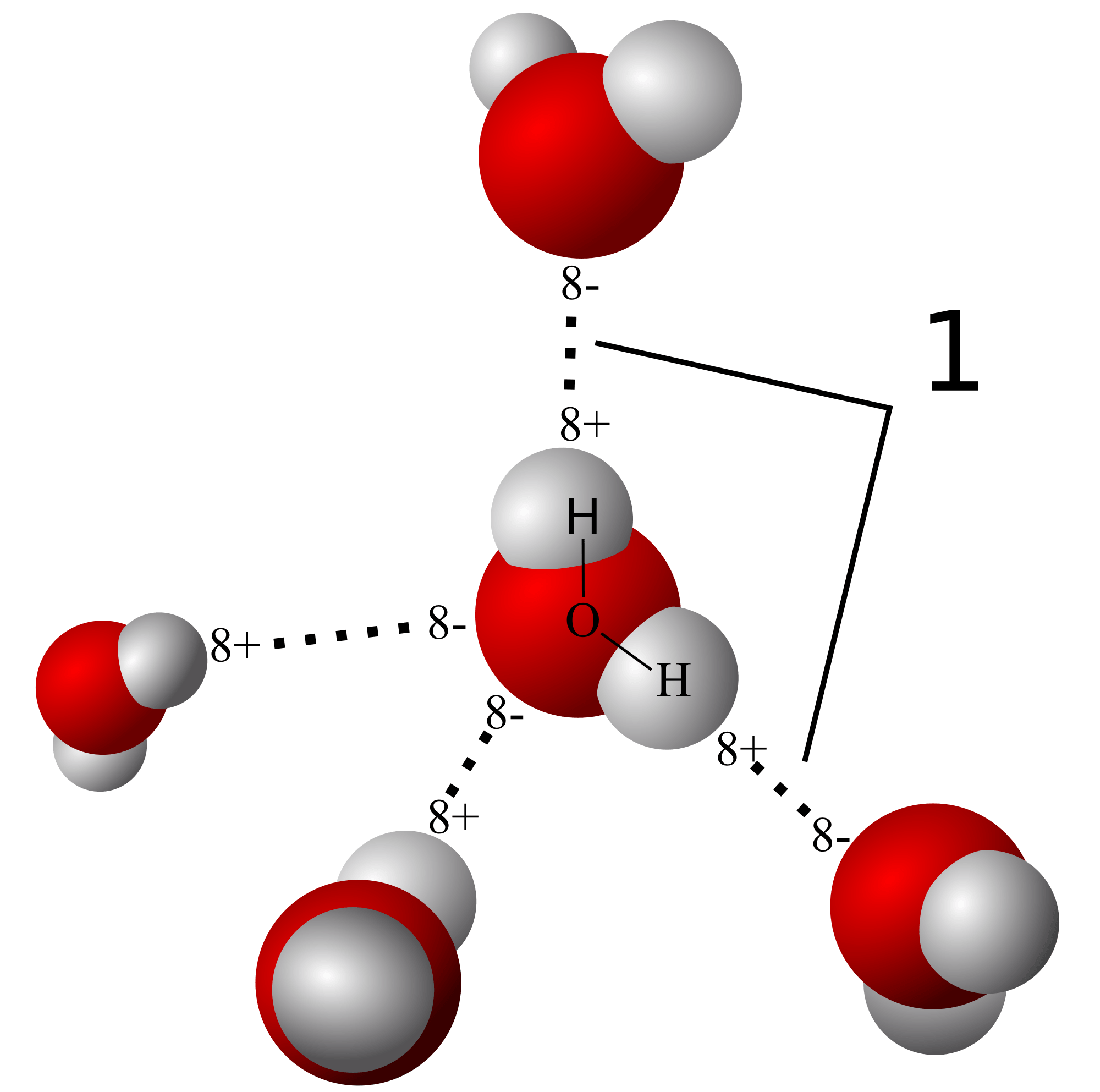
Attractions between water molecules are called
a)
Covalent bonds
b)
Ionic bonds
c)
Polar bonds
d)
Hydrogen bonds
41.

The attraction that causes water and other liquids to form drops on thin films is called ________________. This is also water’s ability to be attraction to other water molecules.
a)
adhesion
b)
capillary action
c)
cohesion
d)
surface tension
42.
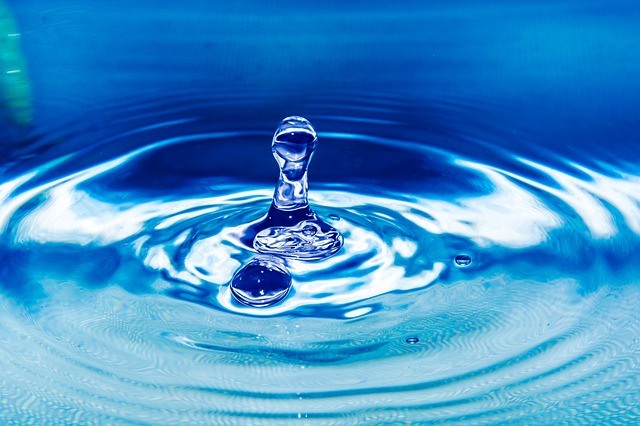
Which is NOT a unique property of water?
a)
Frozen water floats on liquid water.
b)
Water covers most of the Earth’s surface and retains a large amount of heat.
c)
Water molecules stick to each other through hydrogen bonds.
d)
Water cools very rapidly.
43.

What property of water helps to moderate earth's temperature?
a)
adhesion
b)
chohesion
c)
Specific heat capacity
d)
Latent heat of vaporization
44.
Why does ice float?
a)
As water freezes, it expands and its density decreases.
b)
As water freezes, it takes up more hydrogen from the atmosphere, causing it to have a greater buoyancy.
c)
As water freezes, air becomes trapped between the hydrogen bonds of water molecules.
d)
As water freezes, it takes up more oxygen from the atmosphere, causing it to have a greater buoyancy.
45.
Water is polar because...
a)
The unequal sharing of electrons gives the water molecule a slight negative charge near its oxygen atom and a slight positive charge near its hydrogen atoms.
b)
The molecule has two poles, at which the it is colder than other regions of the molecule.
c)
The unequal sharing of electrons gives the water molecule a slight negative charge near its hydrogen atoms and a slight positive charge near its oxygen atom.
d)
The water molecule is neutral.
46.

A molecule with electrically charged areas is called a _______________.
a)
magnet
b)
polar molecule
c)
solution
d)
electrical molecule
47.
Which characteristic of water will allow a paperclip to remain floating on water when the paperclip is gently placed on top of the water?
a)
adhesion
b)
surface tension
c)
solvent properties
d)
nonpolar
48.

A Compound that is being dissolved is called a
a)
Solution
b)
Solute
c)
Solvent
d)
Suspension
49.

A water strider can skate along the top of a pond because:
a)
covalent bonds result in water cohesion
b)
hydrogen bonds result in water cohesion (surface tension)
c)
water striders have adapted to take advantage of water cohesion
d)
low surface tension of water
50.
Which statement best describes an effect of the low density of frozen water in a lake?
a)
When water freezes, it contracts, decreasing the water level in a lake.
b)
Water in a lake freezes from the bottom up, killing most aquatic organisms.
c)
When water in a lake freezes, it floats, providing insulation for organisms below.
d)
Water removes thermal energy from the land around a lake, causing the lake to freeze.
51.
Water is a universal solvent because it...
a)
It can be found anywhere
b)
It freezes when it gets cold
c)
floats when frozen
d)
Dissolves most substances
52.
Which of the following is LEAST likely to dissolve in water?
a)
nonpolar fats and oils
b)
polar sugar molecules
c)
salt made of a positive sodium ion and a negative chloride ion
d)
all of the substances will dissolve easily in water
53.
Water beads up on the surface of a penny because of this property.
a)
Adhesion
b)
High Surface Tension
c)
Universal Solvent
d)
Changes in Density
54.
Water is one of the few substances whose solid has a density lower than the liquid form.
a)
True
b)
False
55.
The properties of water are caused by water's ability to form _____________
a)
Hydrogen Bonds
b)
Covalent Bonds
c)
Ionic Bonds
d)
None of these
56.
Water molecules are attracted to other kinds of molecules because of the property.
a)
Cohesion
b)
Adhesion
c)
Surface Tension
d)
Universal Solvent
57.
What is the property that makes water molecules attracted to water molecules?
a)
Cohesion
b)
Adhesion
c)
Universal Solvent
d)
Changes Density
58.
Which characteristic makes water require a lot of energy to change temperature?
a)
Cohesion
b)
Adhesion
c)
High Specific Heat
d)
Universal Solvent
59.
Why is water considered to be a polar molecule?
a)
Water has oppositely charged ends, and the negative charged oxygen pulls the hydrogen's electrons towards it.
b)
Water has oppositely charged ends, and the negative charged hydrogen's pulls the oxygen's electrons towards it.
c)
Water has equal charges on each end
d)
Statement is false, water is non-polar
60.

Within a single water molecule, the hydrogen's are bonded to the oxygen by
a)
Ionic bonds
b)
Van der waals forces
c)
Covalent bonds
d)
Hydrogen bonds
61.

Several water molecules bonding together is an example of?
a)
Adhesion
b)
Cohesion
c)
Binary fission
d)
hydrolysis
62.
In regards to density, what happens to water when it freezes?
a)
it becomes more dense
b)
the density doesn't change
c)
it becomes less dense
d)
none of these
63.
True or false: water is a bad solvent that dissolves very few molecules
a)
True
b)
False
64.
Which property of water is responsible for the unique properties that water exhibits?
a)
Polarity
b)
It's 10 electrons
c)
It's 2:1 hydrogen to oxygen ration
d)
All of these
65.
Which element is "backbone" in ALL organic macromolecules?
a)
Nitrogen
b)
Oxygen
c)
Hydrogen
d)
Carbon
66.

How many valence electrons are present in carbon?
a)
10
b)
6
c)
4
d)
8
67.
In addition to energy, what do carbohydrates also provide for plants?
a)
Structure
b)
Their color
c)
Carbon dioxide
d)
Oxygen
68.
Providing the PRIMARY source of energy to living organisms is the function of which organic macromolecule?
a)
Nucleic acids
b)
Carbohydrates
c)
Lipids
d)
Proteins
69.
The monomer of carbohydrates are called monosaccharides, these are also known as ?
a)
Glycogen
b)
Sugars
c)
Starches
d)
Glycerol
70.
The process of monomers binding together to form polymers is done through which process?
a)
Hydrolysis
b)
Facilitated diffusion
c)
Dehydration synthesis
d)
Osmosis
71.
The polymer of carbohydrates are called polysaccaharides, these are also known as?
a)
Sugars
b)
Glycogen
c)
Glucose
d)
Starches
72.
The process of polymers being broke down to polymers is done by which of the following?
a)
Selective transport
b)
Hydrolysis
c)
Dehydration synthesis
d)
Facilitated diffusion
73.
Which of the following best explains dehydration synthesis?
a)
The removal of water from monomers, which allows them to bind to each other to form polymers
b)
The addition of water to monomers, which allow them to bind to each other to form polymers
c)
The removal of water from polymers, which allow them to bind to each other to form monomers
d)
The addition of water to polymers, which allows them to bind to form monomers
74.
Which of the following best explains hydrolysis?
a)
The addition of water to break monomers down into atoms
b)
The addition of water to break monomers down into polymers
c)
The addition of water to polymers to split bonds, which breaks the polymer back down into monomers
d)
The addition of water that only breaks down proteins
75.
Enzymes are considered to be
a)
Lipids
b)
Carbohydrate
c)
Protein
d)
Nucleic Acid
76.
What is the purpose of an enzyme?
a)
give permission for the reaction
b)
raise activation energy
c)
speed up reactions
d)
control how many reactions occur
77.
Where do substrates bind on an enzyme?
a)
voltage-gated channels
b)
surface receptor
c)
calcium channels
d)
active site
78.
Enzymes are capable of increasing the rate of a chemical reaction within a living cell. Enzymes accomplish this through which of the following means?
a)
reducing the number of products
b)
reducing the activation energy
c)
increasing the temperature of the cell
d)
increasing the concentration of reactants
79.

What is structure A?
a)
Substrate
b)
Active site
c)
Enzyme
d)
Products
80.

What is structure E, F, G?
a)
Substrate
b)
Active site
c)
Enzyme
d)
Products
81.

What is structure C?
a)
Substrate
b)
Active site
c)
Enzyme
d)
Products
82.

What is structure D?
a)
Substrate
b)
Active site
c)
Enzyme
d)
Products
83.
How do enzymes speed up chemical reaction?
a)
Increasing activation energy
b)
Decreasing activation energy
c)
Increasing deactivation energy
d)
Decreasing deactivation energy
84.
What is a substance called if it speeds up a chemical reaction?
a)
reusable
b)
catalyst
c)
specific
d)
fragile
85.
Each enzyme only has 1 substrate that will fit its active site. What is this called?
a)
reusable
b)
catalyst
c)
specific
d)
fragile
86.
Once a new product leaves an enzyme, the enzyme is unchanged and ready for the next substrate. What is this called?
a)
reusable
b)
catalyst
c)
specific
d)
fragile
87.
What 3 letters do enzymes typically end in?
a)
-ose
b)
-ase
c)
-ese
d)
-tic
88.

Which of the following conclusions can be drawn from this graph?
a)
The optimum pH of the enzyme is 6.6.
b)
The optimum pH of the enzyme is 5.8
c)
The enzyme’s activity increases as pH increases 5.0 to 9.0
d)
The enzyme’s activity is greater around pH of 8.0 .
89.
What is the name for the mechanism of enzyme activity?
a)
Lock and key
b)
jigsaw puzzle
c)
hammer and nail
d)
two hands pattern
90.
The "lock and key hypothesis" attempts to explain the mechanism of?
a)
Vacuole formation
b)
Pinocytosis
c)
Sharing of electrons
d)
Enzyme specificity
91.
Which chemical is classified as an enzyme?
a)
Galactose
b)
Lipid
c)
Protease
d)
Manganese dioxide
92.
Any substance that is acted upon by an enzyme is called a(n)?
a)
Coenzyme
b)
Substrate
c)
Vitamin
d)
Polypeptide
93.
After the enzyme and substrate bind together and perform the reaction, what does the substrate become?
a)
a substrate
b)
an enzyme
c)
a product
d)
an active site
94.
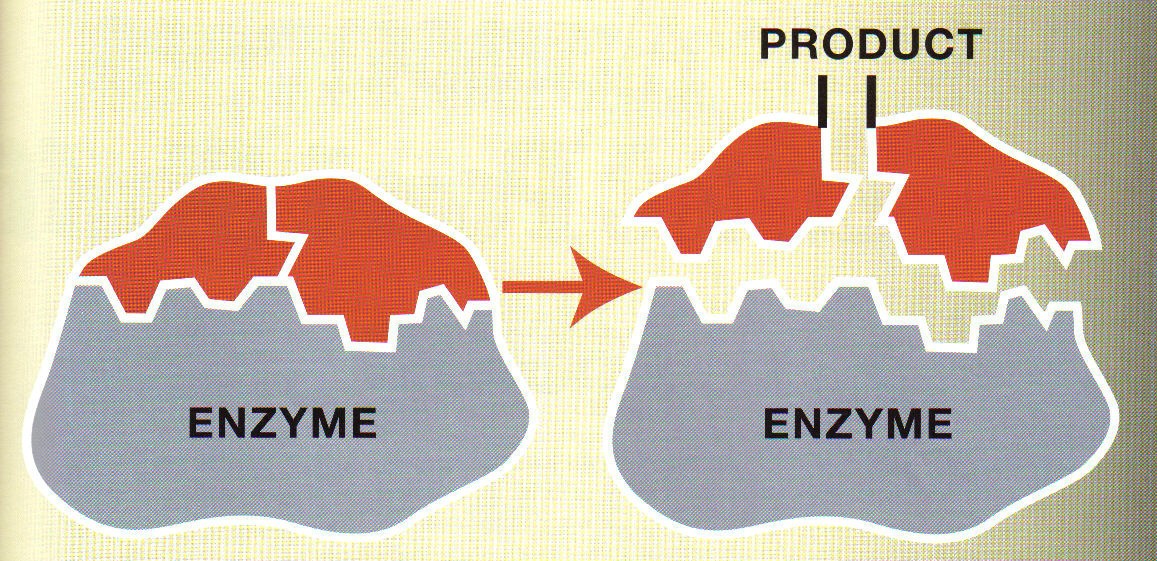
Enzymes speed up reaction rates by changing...
a)
Activation Energy
b)
pH
c)
Hydrogen Bonds
d)
Kinetic Energy
95.
How do enzymes speed up chemical reaction?
a)
Increasing activation energy
b)
Decreasing activation energy
c)
Increasing deactivation energy
d)
Decreasing deactivation energy
96.
Which is NOT true?
a)
Enzymes speed up chemical reactions.
b)
Enzymes react best at a specific temperature.
c)
Enzymes only control ONE type of reaction.
d)
Enzymes are made of fatty acids.
97.
What happens when enzymes are heated to a high temperature?
a)
The enzymes die.
b)
The shapes of the enzyme are altered denature
c)
The enzymes' amino acid sequence changes.
d)
The enzymes remain the same
98.
What is the function of an enzyme?
a)
enzymes break themselves into small pieces
b)
enzymes slow down chemical reactions
c)
enzymes speed up chemical reactions
d)
enzymes combine products to form reactants
99.
An enzyme speeds up a chemical reaction in the cell but can only be used once. True or False?
a)
true
b)
false
100.
Enzymes are...
a)
nucleic acids
b)
proteins
c)
lipids
d)
carbohydrates
101.
Enzymes are considered to be
a)
Lipids
b)
Carbohydrate
c)
Protein
d)
Nucleic Acid
100 %

