wayground logo

Free Printable Worksheets

Font size

S
M
L
XL
Worksheets

Fall Semester Exam Review

Total questions: 96

Worksheet time: 2hrs 12mins

Name
Class
Date
1.
What is a substance called if it speeds up a chemical reaction?
a)
reusable
b)
catalyst
c)
specific
d)
fragile
2.
The energy needed to start a reaction
a)
activation energy
b)
adhesion energy
c)
chemical energy
d)
cohesion energy
3.
Enzymes are considered to be 
a)
Lipids
b)
Carbohydrates
c)
Proteins
d)
Nucleic Acids
4.
Enzymes are capable of increasing the rate of a chemical reaction within a living cell.  Enzymes accomplish this through which of the following means?
a)
reducing the number of products   
b)
reducing the activation energy
c)
increasing the temperature of the cell
d)
increasing the concentration of reactants 
5.
What suffix do enzymes typically end in?
a)
-ose
b)
-ase
c)
-ese
d)
-tic
6.
What cell part is NOT found in all cells?
a)
Cell Wall
b)
Cell Membrane
c)
Cytoplasm
d)
Genetic Material
7.
This organelle takes food and turns it into ENERGY for plant and animal cells.
a)
Chloroplast
b)
Mitochondria
c)
Lysosome
d)
Ribosome
8.
What does this organism use for movement?
a)
Pseudopod
b)
Cilia
c)
Flagella
d)
legs
9.

This organelle that breaks down (digests) worn out cell parts, mostly in animal cells is the

a)

cytoplasm

b)

lysosomes

c)

mitochondria

d)

vacuoles

10.
Which reaction helped to make the peptide bond?
a)
hydrolysis 
b)
dehydration synthesis
11.
Osmosis is the movement of _____ across a membrane.
a)
food
b)
energy
c)
oxygen
d)
water
12.

What is the difference between the Smooth and Rough Endoplasmic Reticulum (ER)? There are two correct choices. Choose both.

a)

The smooth ER makes lipids while the rough ER helps assemble proteins

b)

The smooth ER is rough due to ribosomes on it, while the rough ER is smooth

c)

The smooth ER helps assemble proteins while the rough ER makes lipids

d)

The rough ER is rough due to ribosomes on it, while the smooth ER is smooth

13.
Proteins are made by the _______________.  The are then moved through the cell by the ________________ and packaged for use by the _________________
a)
endoplasmic reticulum, golgi body, ribosomes
b)
ribosomes, endoplasmic reticulum, golgi body
c)
endoplasmic reticulum, nucleus, cell wall
d)
ribosomes, vacuoles, lysosome
14.

The main job of protein channels in the cell membrane is:

a)

break down lipids, carbohydrates and proteins

b)

store water, salt, proteins and carbohydrates

c)

keep the cell wall from floating away

d)

regulate the movement of materials into and out of cells

15.
Which type of transport requires energy from the cell?
a)
diffusion
b)
osmosis
c)
facilitated diffusion
d)
active transport
16.
The levels of biological organization from simplest to most complex:
a)
cell, tissue, organ, system, organism
b)
tissue, organ, organism, system, cell
c)
tissue, system, organism, organ, cell
d)
organism, system, organ, tissue, cell
17.
Diffusion is a type of
a)
active transport
b)
passive transport
c)
cell division
d)
cell mutation
18.
The picture is an example of...
a)
active tranport
b)
passive transport
c)
diffusion
d)
osmosis
19.
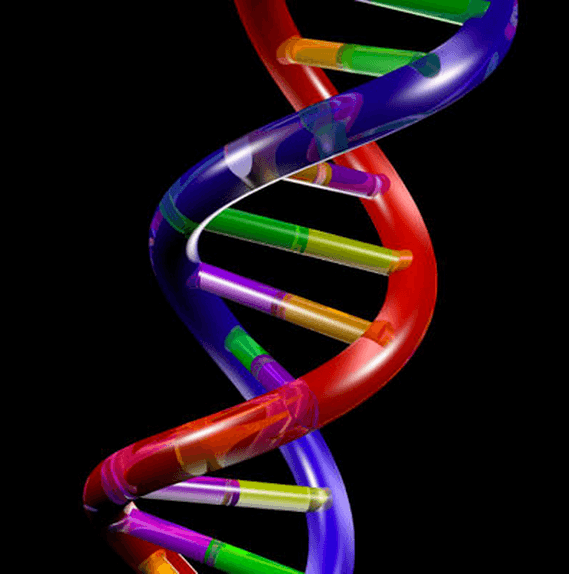
What determines the code, or information, of a DNA molecule?
a)
the shape (structure) of the nitrogen bases
b)
the order (sequence) of the nitrogen bases
c)
the color of the nitrogen bases
d)
the frequency (number) of nitrogen bases
20.
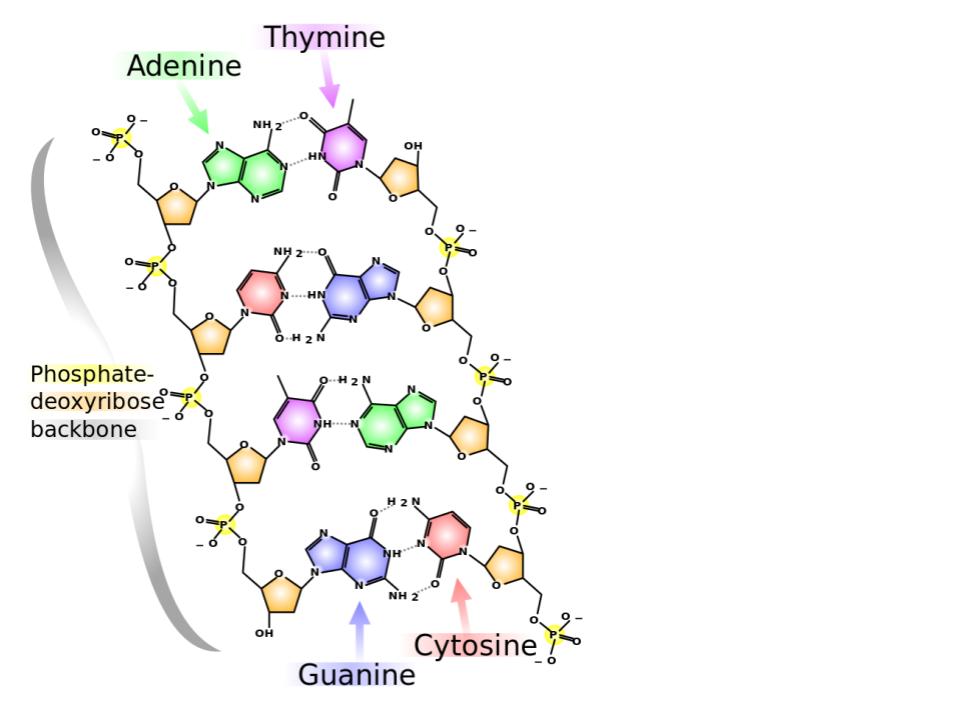
The two strands of DNA are held together by:
a)
Hydrogen Bonds
b)
Phosphodiester Bonds
c)
Neuclotides join the open DNA strands.
d)
Glycosidic Linkages
21.
Before a cell can divide, what must happen?
a)
Nothing, it is always ready to divide
b)
The number of chromosomes must be cut in half
c)
The number of chromosomes must double
d)
The number of chromosomes must triple.
22.
When you start with 1 cell, at the end of mitosis, how many identical cells will you have?
a)
1
b)
2
c)
3
d)
4
23.
In mitosis, the two resulting cells are
a)
different from the starting cell and identical to each other.
b)
different from the starting cell and different from each other.
c)
identical to the starting cell and different from each other.
d)
identical to the starting cell and identical to each other.
24.
When does the genetic material get replicated?
a)
G2
b)
metaphase
c)
S phase
d)
anaphase
25.
What happens when enzymes are heated to a high temperature?
a)
The enzymes die.
b)
The shapes of the enzyme are altered or denatured
c)
The enzymes' amino acid sequence changes.
d)
The enzymes remain the same
26.
What is the bond at X called?
a)
hydrogen bond
b)
peptide bond
c)
ionic bond
27.
Identify building blocks A, B, and C. 
a)
monosaccharides
b)
1 glycerol and 2 fatty acids
c)
amino acids
d)
carbon, hydrogen, and phosphorous
28.
What are the building blocks in the diagram? 
a)
fatty acids
b)
monosaccharides
c)
amino acids
d)
glycerol and 3 fatty acids
29.
In what way is the DNA of a nerve cell different from the DNA of a muscle cell?
a)
The DNA is the same but each cell contains different genes
b)
The DNA is the same but different genes are turned on and turned off in each cell
c)
The DNA is different, but the same genes are turned on and off in each cell
d)
The DNA is different, but each cell contains the same genes
30.
The cell below is in a _________ solution.
a)
Hypotonic
b)
Hypertonic
c)
Isotonic
31.
The cell below is in a _____________ solution.
a)
Hypertonic
b)
Hypotonic
c)
Isotonic
32.
What type of transport is this?
a)
facilitated diffusion
b)
active transport
c)
diffusion
d)
osmosis
33.
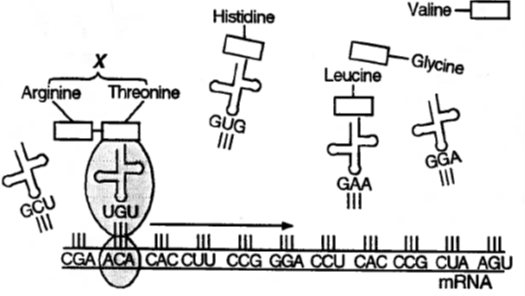
What process is going on in this photo? 
a)
Transcription 
b)
Translation 
c)
Replication 
d)
All the above 
34.
What is the location in the cell for translation?
a)
nucleus
b)
mitochondria
c)
ribosome
d)
chloroplast
35.
What is the location in the cell for transcription?
a)
nucleus
b)
cytoplasm
c)
ribosome
d)
mitochondria
36.
What is the correct amino acid sequence for the mRNA code AUGCCAGUAUGA
a)
Met-Pro-Ala-Val
b)
Met-Pro-Val
c)
Tyr-Gly-His
d)
Tyr-Gly-Arg-His
37.
Which change below would result in a different Amino Acid? 
3'-GCT-5'
a)
GTT
b)
TCT
c)
TCC
d)
GCA
38.
What causes genetic variation in meiosis?
a)
chromosomes lining up
b)
crossing over of chromosomes
c)
separation of chromosomes
d)
chromosomes pulling apart
39.
If a somatic (body) cell in a butterfly contains 24 chromosomes, a butterfly egg would contain how many chromosomes?
a)
3
b)
6
c)
12
d)
24
40.
In humans, sperm and egg cells each have _____ chromosomes. Therefore a fertilized egg cell would create a cell with _____ chromosomes.
a)
23, 46
b)
46, 23
c)
2, 4
d)
50, 100
41.
Which mutation refers to the failure of chromosomes failing to separate evenly during meiosis?
a)
Nondisjunction
b)
Crossing Over
c)
Frameshift
d)
Deletion
42.
Why do we need meiosis?
a)
To double the number of chromosomes going into sex cells
b)
To half the number of chromosomes going into sex cells
c)
To triple the number of chromosomes going into sex cells
d)
To not change the number of chromosomes going into sex cells
43.
Which of the following statements are true?
a)
Meiosis cells divide once while mitosis cells divide twice
b)
Meiosis parent cell is diploid while mitosis parent cell is haploid
c)
Meiosis produces four haploid cells while mitosis produces two diploid cells 
d)
Meiosis produces genetically identical cells while mitosis produces genetically different cells
44.
An organism has 16 chromosomes in its skin cell. How many chromosomes are in its heart cells?
a)
16
b)
32
c)
8
d)
64
45.
Genotype refers to
a)
the physical expression of the genes
b)
the combination of alleles for a trait
c)
whether an allele is dominant or recessive
d)
how an organism will appear
46.
An offspring will receive how many alleles from each parent to determine a specific trait?
a)
one
b)
two
c)
three
d)
five
47.
What is a phenotype?
a)
The genetic make up (code)
b)
The physical description for a trait
48.
An allele whose trait only shows up when no dominant allele is present is called a 
a)
hidden allele
b)
dominant allele
c)
recessive allele
d)
present allele
49.
A male beetle has the genotype Ttbb. If this beetle mates with a female with genotype TTBb, what is the chance their offspring will have the genotype TtBb?
a)
12.5%
b)
25%
c)
50%
d)
75%
50.
What gamete possibilities could come from this parent's genotype?
a)
AB, AB, aB, aB
b)
Ab, AB, Ab, ab
c)
Ab, Ab, Ab, Ab
d)
AB, aB, ab, aB
51.
What is the genotypic ratio here
a)
1 TT  : 2Tt  : 1 tt
b)
4 Tall : 0
c)
3 TT : 1 tt 
d)
4 TT : 0
52.

In some carnations, flower color exhibits codominance. When crossed, Red (R) and white (r) flowers make speckled flowers (Rr) that show both colors.

Complete a cross between A speckled flower and a red flower. Find the phenotype ratio.

a)

2 red: 2 speckled: 0 white

b)

4 red: 0 speckled: 0 white

c)

0 red: 4 speckled: 0 white

d)

0 red: 2 speckled: 2 white

53.
A roan cow shows co-dominance in fur color (orange and white). What is the phenotype ratio expected if a roan cow and a roan steer mate together?
a)
4: Orange and White
b)
1: Orange : 1 White
c)
2 Orange: 2 Orange and White: 0 White
d)
1: Orange: 2 Orange and White: 1 White
54.

A red flowered plant (RR) breeds with a White flowered plant (rr). The gene for petal color in these plants expresses incomplete dominance. What percentage of the offspring will have pink (Rr) flowers?

a)

0%

b)

25%

c)

50%

d)

100%

55.
In which inheritance pattern are heterozygous individuals a blend of the dominant and recessive phenotypes?
a)
sex-linked inheritance
b)
complete dominance
c)
codominance
d)
incomplete dominance
56.

What percentage of the female offspring will be a carrier for this recessive disease? (Carrier means heterozygous in this case)

a)
0%
b)
50%
c)
100%
d)
25%
57.
What type of inheritance do two alleles have if their traits blend together? 
a)
Incomplete Dominance
b)
Co-Dominance
c)
Mendelian Inheritance
d)
Homozygous Inheritance
58.
What is this diagram represent?
a)
mRNA
b)
tRNA
c)
rRNA
d)
DNA
59.

Label the parts of the chemical reaction:

60.

Label the pH scale!

61.

Which spot on the graph shows the enzymes optimal activity rate?

62.

Label the pieces of this chemical reaction using the options below!

63.

Match the following pictures with their name:

a)

1.

monosaccharide

b)

2.

phospholipid

c)

3.

disaccharide

d)

4.

amino acid

e)

5.

DNA

64.

Match the following monomers and polymers together!

a)

Monosaccharide

1.

Carbohydrates

b)

Nucleotide

2.

Nucleic Acid

c)

Glycerol + Fatty Acids

3.

Lipids

d)

Amino Acid

4.

Protein

65.

Organize these options into the correct category!

Categorize the following

short-term energy

long-term energy

muscle building

storing genetic information

amino acids

helps build immune system

glycerol + fatty acids

compose the cell membrane

monosaccharides

simple sugars

DNA & RNA

codes for proteins

peptide bonds

ase

1:2:1 ratio

plant cell walls

ose

enzymes

insulation

Carbohydrates
Lipids
Proteins
Nucleic Acids
66.

Use the options to label the picture!​

67.

Match the following terms with their functions!

a)

Cellulose

1.

forms the cell walls of plants

b)

Chitin

2.

forms the exoskeletons of insects

c)

Starch

3.

plant energy storage

d)

Glycogen

4.

animal energy storage

68.

Match each term with another term that means the same thing!

a)

fat

1.

lipid

b)

maltose

2.

simple sugar

c)

starch

3.

complex carb

d)

alkaline

4.

basic

e)

substrate

5.

reactant

69.

Select the three parts of a nucleotide.

a)
b)
c)
d)
70.

Match the enzymes with their substrate:

a)

maltase

1.

maltose

b)

lactase

2.

lactose

c)

sucrase

3.

sucrose

d)

Protease

4.

proteins

e)

lipase

5.

lipids

71.

Match the following organelles and their functions:

a)
1.

contains genetic information

b)
2.

compose the cell membrane

c)
3.

convert solar energy to sugars

d)
4.

makes ATP energy for the cell through respiration

e)
5.

provides locomotion to the cell (movement)

72.

Organize these options into the right categories for Mitosis, Meiosis and both!

Categorize the following

growth and repair of damaged cells

produces somatic cells

produces gametes

starts with a diploid cell

starts with a cell containing 46 chromosomes

ends with cells containing 23 chromosomes

ends with cells containing 46 chromosomes

daughter cells are not identical

daughter cells are identical

includes prophase, metaphase, anaphase and telophase

Mitosis
Meiosis
Both
73.

Place the following events in the correct category according to the phase they take place in:

Categorize the following

chromosomes become visible

spindle fibers form

nuclear envelope breaks down

chromosomes line up along equator

spindle fibers attach to centromeres

sister chromatids move towards opposite poles

spindle fibers shorten

two nuclei form

nuclear envelope reforms

chromosomes uncoil to chromatin

Prophase
Metaphase
Anaphase
Telophase
74.

Reorder the following stages of the cell cycle:

a)

b)

c)

d)

e)

1)
2)
3)
4)
5)
75.

Label the chromosome!

76.

Match the following phases with their descriptions:

a)

G1

1.

Cell grows in size

b)

G2

2.

Cell prepares for mitosis

c)

S

3.

DNA is replicated

d)

Mitosis

4.

Process of cell (nucleus) dividing

e)

Cytokinesis

5.

Division of the cytoplasm

77.

Organize the terms below into one of the two categories!

Categorize the following

small molecules

large molecules

oxygen

carbon dioxide

ions

charged molecules

not charged moelcules

Can pass through membrane on their own
Needs help crossing the membrane
78.

Match the following specialized cells with their function!

a)

1.

transports oxygen throughout body

b)

2.

fights off invaders in body

c)

3.

involved in reproduction

d)

4.

allows for movement of body parts

79.

Match the images with the types of transport they represent.

a)

1.

Exocytosis

b)

2.

Endocytosis

c)

3.

Facilitated Diffusion

d)

4.

Simple Diffusion

80.

Osmosis is the movement of ​ (a)   across a membrane from ​ (b)  

to ​ (c)   concentration until ​ (d)   is achieved.

Choose from the below words
food
energy
oxygen
water
high
low
equilibrium
81.

Label the 3 parts of a DNA nucleotide.

82.

Fill in the complementary bases to this DNA strand from left to right.

(a)  

83.

What is the correct order of enzymes during the process of DNA replcation?

a)

helicase

b)

primase

c)

polymerase

d)

ligase

1)
2)
3)
4)
84.

Reorder the following in the correct order of DNA replication.

a)

One DNA molecule

b)

DNA gets unzipped

c)

New bases are added

d)

Fragments are sealed

e)

Two double helixes'

1)
2)
3)
4)
5)
85.

Match the following enzymes with their roles during DNA replication:

a)

DNA polymerase

1.

builds the new strand from 5' to 3'

b)

DNA ligase

2.

joins Okazaki fragments together

c)

DNA primase

3.

the initializer

d)

DNA helicase

4.

breaks hydrogen bonds between the bases

86.

According to Chargaff's Rule, identify the proper amount of nitrogen bases in each sample of DNA.

87.

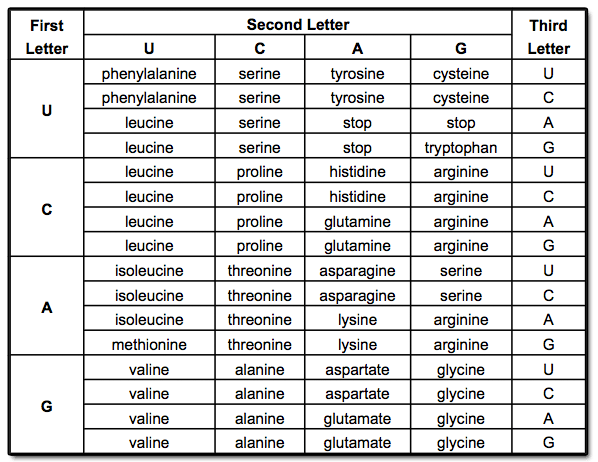
Click the amino acid coded for by the following mRNA codon CCU!

88.

Reorder the following steps of translation!

a)

mRNA leaves the nucleus

b)

mRNA travels to the ribosome

c)

rRNA reads the mRNA strand

d)

tRNA molecules bring in amino acids

e)

amino acids join together to build polypeptide

1)
2)
3)
4)
5)
89.

Label the parts of the process of translation:

90.

Categorize each option into DNA, RNA or the both column!

Categorize the following

deoxyribose sugar

ribose sugar

uracil

thymine

double stranded

guanine

cytosine

adenine

single stranded

sugar phosphate backbone

made of base pairs

has 3 types

made of the elements CHONP

needed to make a protein

found only in nucleus

found in nucleus & ribosomes

DNA
BOTH
RNA
91.
Question Image

Identify each type of chromosomal mutation.

a)

1.

Deletion: genes are deleted

b)

2.

Duplication: gene(s) are copied twice

c)

3.

Inversion: genes are flipped

d)

4.

Transloc: genes swapped bet chromosomes

92.

Match each type of molecule with its function.

a)
mRNA
1.

takes message from nucleus to ribosome

b)
tRNA
2.

carries amino acids

c)
rRNA
3.

builds ribosome structure

d)
DNA
4.

contains the original code for traits

93.

What is the correct order in how traits are built?

a)

DNA

b)

mRNA

c)

polypeptide chain

d)

protein

e)

trait

1)
2)
3)
4)
5)
94.

Which is the mRNA molecule that would be transcribed from this DNA template?
TGGCAAGTACGT

(a)  

95.

Transcription occurs in the ​ (a)   while translation occurs in the ​ (b)   . Ribosomes can be found in the ​ (c)   or attached to the ​ (d)   .

Choose from the below words
nucleus
ribosomes
cytoplasm
rough ER
smooth ER
chromosomes
96.

Categorize the following genotypes as homozygous or hybrids

Categorize the following

BB

FF

DD

Gg

Aa

Yy

AA

AO

BO

OO

Homozygous
Hybrid