
 Worksheets
aris2tle
Total questions: 113
Worksheet time: 2hrs 5mins
a substance made up of at least two different substances
pure substance
malleability
properties
mixture
a table of the chemical elements arranged in order of atomic number
mixture table
element table
atom table
periodic table
It is made of one type of atom all the way through.
molecule
element
atom
substance
Chemical Change
Cannot be undone
Can be undone
Done
23
Physical Change
Can be undone
Cannot be undone
Done
23
a table of the chemical elements arranged in order of atomic number
mixture table
element table
atom table
periodic table
made up of one type of atom all the way through
mixture
property
pure substance
element
anything that has mass and volume
Matter
Volume
element
atom
anything that has mass and volume
Matter
Volume
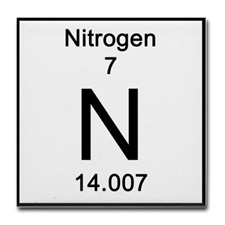

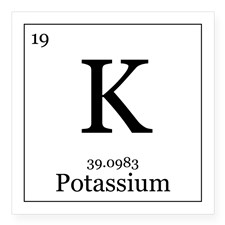


Na2CO3
lst shell holds
2
8
18
32
2nd shell holds
2
8
18
32
same number of protons, different number of neutrons
atomic number
mass number
isotope
ion
a charged atom
neutral
isotope
ion
nucleus
Which group includes non-reactive gasses that have a full outer electron shell?
Alkai Metals
Alkaline Metals
Halogens
Noble Gases
Which group includes non-reactive gasses that have a full outer electron shell?
Alkai Metals
Alkaline Metals
Halogens
Noble Gases

Which of the following is an Alkaline Earth Metal?
Calcium (Ca)
Lithium (Li)
Phosphorus (P)
Copper (Cu)
Which of the following is a transition metal?
Iron (Fe)
Oxygen (O)
Neon (Ne)
Barium (Ba)

Where are the metals on the periodic table?
Blue
Green
Yellow
There are no metals on the periodic table

Most noble gases have _______ valence electrons.
1
2
7
8
Which two elements on the periodic table are in the same period?
Sn and Rb
K and Ba
F and Cl
Se and Te
Which of the following is a metal?
Carbon
Chlorine
Oxygen
Magnesium

When an atom gains an electron, the atom will
lose a proton.
reduce its mass.
become radioactive.
have a negative charge
Two elements in the same group on the periodic table of the elements are MOST similar in their
atomic mass.
number of protons
atomic size.
chemical reactivity.
The number of neutrons in an atom is found by subtracting
atomic number from mass number.
mass number from atomic number.
atomic number from electron number.
isotope number from electron number.




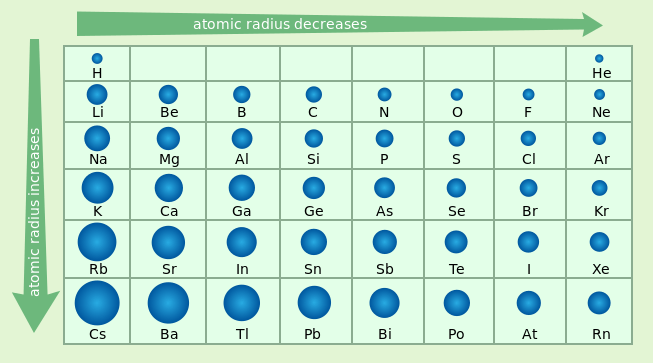

As you move from left to right across each row of the Periodic Table, the size of an atom
Decreases because additional protons and electrons are added to the same principal energy level, resulting in more forces of attraction and pulling the electrons closer to the nucleus.
Increases because electrons are added to energy levels further away from the nucleus, which results in electron shielding.
Decreases because electrons are more easily lost.
Increases because additional neutrons added to the nucleus interfere with the forces of attraction between the protons and electrons.
In which group would an element that is not reactive most likely be located?
1
2
16
18
In which group would an element that is very reactive most likely be located?
1
5
15
18
The most electronegative atom is
Francium (Fr)
Fluorine (F)
Gallium (Ga)
Potassium (K)
Which element has the highest ionization energy?
Silicon
Phosphorus
Fluorine
Sulfur
Which element has the lowest ionization energy?
Potassium
Calcium
Gallium
Germanium
Which element has the highest ionization energy?
Silicon
Phosphorus
Fluorine
Sulfur
The most electronegative atom is
Francium (Fr)
Fluorine (F)
Gallium (Ga)
Potassium (K)
Which element has the largest atomic radius?
Cesium
Rubidium
Francium
Potassium
Which element has the smallest atomic radius?
Beryllium
Magnesium
Calcium
Strontium
What are two properties that make a metal a good choice to use as wire in electronics?
Conductivity, malleability
Ductility, conductivity
Luster, malleability
Malleability, high density
Which statement is true about oxygen-16 and oxygen-18 ?
They do not have the same number of protons
their atoms have identical mass
they are isotopes of oxygen
they have the same mass number
Which of the following Group 7A elements is the most reactive?
Cl (chlorine)
I (iodine)
F (fluorine)
Br (bromine)
Sulfur is often found in nature as an element, not combined with other elements in a compound. What does this fact tell you about the reactivity of sulfur?
Very reactive
Not reactive



