
 Worksheets
Y9 End of year review quiz
Total questions: 114
Worksheet time: 1hrs 27mins


Carbon


_Al +_HCl --> _H2 +_AlCl3
_CH4 + _O2 --> _CO2 + _H2O

What are the three components found in an atom?
Protons
energy
electrons
neutrons
nucleus
Protons are..
negative charged
neutral charged
positive charged
a neutron is..
positive charged
neutral charged
negative charged
an electron is..
negative charged
positive charged
neutral charged
What is an isotope?
A particle
A poisonous dart frog
Isotopes are variants of a particular chemical element which differ in neutron number.
Dust

Name this element and identify its atomic number.
Carbon, 12.01
Calcium, 6
Carbon, 6
Calcium 12.01

Identify the group number and family name of these elements.
Group 1 - Hydrogen Family
Group 2 - Hydrogen Family
Group 8 Hydrogen Family
Group 1 - Alkaline Metals Family

Suggest the group and period of Sodium simply by referring to it's electron configuration.
Group 7, Period 3
Group 1, Period 3
Group 1. Period 1
Group 7, Period 7

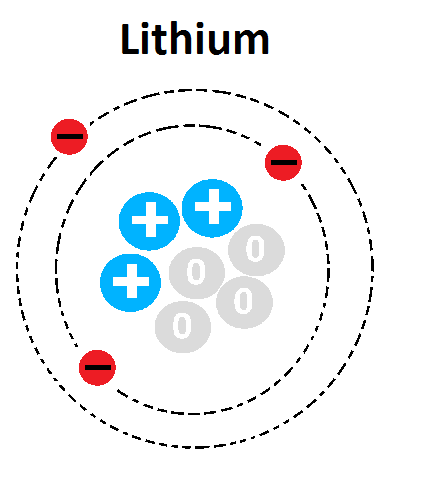
Determine the Atomic Number of this element:
6
7
8
5

Determine the number of neutrons.
125
82
207
207.2

A stable carbon atom has an Atomic Mass of 12. Suggest the name of this.
Carbon ion
Carbon-14 radioisotope
Carbon-6 radioisotope
Carbonic acid
Which of the statements below about the periodic table is true?
All elements found in period 3 are metals
The elements are arrange in increasing atomic number
The elements in groups 17 and 18 are metals
The elements are arranged in increasing atomic mass

what is the atomic number?
17
35
Cl

What is the mass number?
9
4
Be

How many electrons does this atom have?
2
4
6
8

what would the electron configuration be for this element?
2,6
6,2
2,4,2
2,8

What would the electron configuration be for this element?
2,8,7
2,6,8
4,8,5
7,8,2

how many protons does this element have?
12
24
45
10
Atoms that lose or gain electrons to become charged are called _________.
atoms
elements
ions
valences
Outer shell electrons are also called _________________ electrons.
atoms
electrons
valence
inner most
The arrangement of electrons in the shells is called the __________________ ___________________.
atomic number
atomic mass
electron configuration
electron diagram
The number of electrons in a neutral atom is the same as the ______________ ________________.
atomic number
atomic mass
The octet rule state an atom is stable when the outer shell is _________, usually containing 8 electrons
full
empty





How are elements arranged in the modern Periodic Table?
In rows called columns, by increasing mass number.
In rows called periods, by increasing mass number.
In rows called columns, by increasing atomic number.
In rows called periods, by increasing atomic number.
Mendeleev’s Periodic Table was revolutionary because (CHOOSE 2):
He ordered elements by both their properties and their proton number
He left gaps for undiscovered elements.
He swapped some elements so they fit into a group with similar properties
What group are the Halogens in?
Group 1
Group 2
Group 7
Group 0
Elements in the same group in the Periodic Table have (CHOOSE 2):
Similar reactivity
The same melting and boiling points
The same number of outer shell electrons
The same mass
Select the correct physical properties of the alkali metals (CHOOSE 2).
Soft
Brittle
Dense
Have relatively low melting points
When potassium reacts with water, the following observations are true (CHOOSE 2):
Melts into a ball and fizzes
It sinks
Burns with a lilac flame and floats
It doesn't react
Why do the alkali metals get more reactive down the group? (CHOOSE 3)
They are smaller and have less electron shells
They are larger and have more electron shells
It is easier for them to lose their outer electron
The attraction from the nucleus for the outer shell electron is less
Chlorine is more reactive than bromine, so it ........................... it from a compound
decomposes
neutralises
displaces
What term is given to a compound which contains atoms of carbon and hydrogen only?
alkene
hydrocarbon
alkane
saturated
Alkenes have the general formula:
CnH2n
CnH2n+1
CnH2n+2
CnHn
What term describes alkene molecules that contain a C=C double bond?
saturated
unsaturated
Alkanes have the general formula:
CnH2n
CnH2n+1
CnH2n+2
CnHn
What term describes alkane molecules that contain C-C single bonds?
saturated
unsaturated
What process is used to separate crude oil in hydrocarbons with different chain lengths?
distillation
fractional distillation
cracking
polymerisation
Where in the fractionating column are shorter chain hydrocarbon molecules obtained?
At the top
At the bottom
Fractional distillation separates crude oil based on the different __________ of the molecules in the mixture
melting point
boiling point
freezing point
chemical reactivity
Molecules collected at the bottom of the fractionating column tend to be...
more viscous, less flammable and less volatile
less viscous, more flammable and more volatile
more viscous, more flammable and less volatile
less viscous, less flammable and more volatile
Molecules collected at the top of the fractionating column tend to be...
more viscous, less flammable and less volatile
less viscous, more flammable and more volatile
more viscous, more flammable and less volatile
less viscous, less flammable and more volatile
What are the 2 products of complete combustion?
carbon dioxide + hydrogen
carbon dioxide + water
carbon monoxide + water
carbon monoxide + hydrogen
What are the products of incomplete combustion?
carbon monoxide
water
carbon
hydrogen
What does a fuel react with when it burns?
oxygen
water
carbon dioxide
methane
What is the term given to the process by which longer chain hydrocarbons are broken down into shorter length alkanes and alkenes?
fractional distillation
evaporation
cracking
polymerisation
What conditions are needed for cracking?
high temperature
high pressure
catalyst
low temperature

Name the following hydrocarbon
alkane
pentene
pentane
alkene
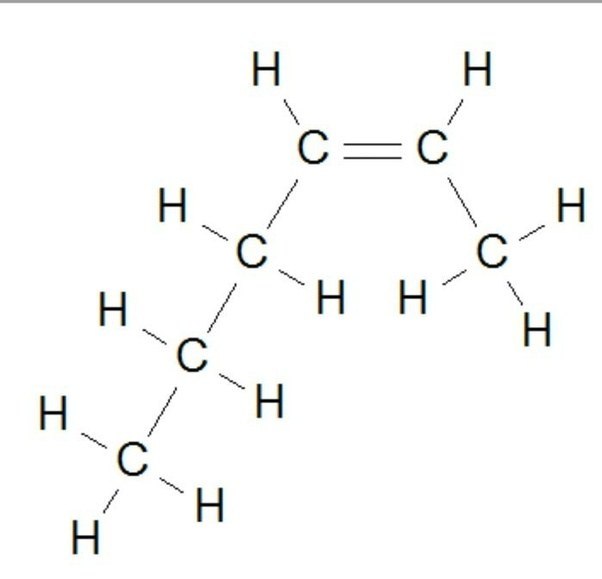
Name the following hydrocarbon
butane
hexane
heptane
hexene
C10H22 --> C5H12 + C3H6 + ?
C2H4
C3H4
CO2
CH4
When testing for alkenes (unsaturation) bromine water turns from...
orange --> blue/black
colourless --> pink
orange --> colourless
orange --> clear
Limewater turning cloudy is the test for...
carbon dioxide
water
hydrogen
oxygen
What is the name of the alkane with two carbon atoms?
Ethane
Methane
Butane
Propane
The alkanes are a homologous series.
What is the general formula of the alkanes?
n carbon atoms, 2n hydrogen atoms
2n carbon atoms, n hydrogen atoms
n carbon atoms, n+2 hydrogen atoms
n carbon atoms, 2n+2 hydrogen atoms
Crude oil is finite because we use it before more can be formed.
How was crude oil formed?
From the remains of an ancient biomass, consisting mainly of plankton, that was buried in mud
Mostly from the remains of dinosaur bones
By fractional distillation
By cracking
Hydrocarbons with shorter carbon chains are more flammable.
What does this make them useful for?
Lubricants
Fuels
Plastics
Feedstock
What gas is produced when magnesium reacts with ethanoic acid?
hydrogen
carbon dioxide
oxygen
chlorine
What gas is produced when potassium carbonate reacts with ethanoic acid?
hydrogen
carbon dioxide
oxygen
chlorine
Ethanoic acid is described as a weak acid. Explain what this means in terms of ionisation
fully ionised
partially ionised
deionised
Complete the following equation, which show what happens when ethanoic acid dissolves in water.
CH3COOH(aq)⋚ CH3COO– (aq) + _______
H
H-
H+
H2
Explain why the pH of 0.1 mol/dm3 hydrochloric acid is lower than the pH of 0.1 mol/dm3 ethanoic acid
Hydrochloric acid is a strong acid so is fully ionised.It has a higher concentration of H+ ions, so a lower pH.
Hydrochloric acid is a weak acid so is fully ionised.It has a higher concentration of H+ ions, so a lower pH.
Hydrochloric acid is a strong acid so is partially ionised.It has a higher concentration of H+ ions, so a lower pH.
Hydrochloric acid is a strong acid so is fully ionised.It has a lower concentration of H+ ions, so a lower pH.
What is the role of sulfuric acid in the reaction to make esters?
weak acid
hydrogen ion acceptor
catalyst
partially ionises
Esters have distinctive sweet smells, and are volatile liquids. What does volatile mean?
flows easily
catches fire easily
evaporates easily
colours easily
What are some common uses of esters? (Select all that apply)
perfumes
flavourings
clothing
nappies

What type of reaction is shown?
Polymerisation
Hydrogenation
Hydration
Bromination
What would you make if you added Hydrogen to Ethene?
Ethane
Propane
1,2 - dihydroethane
Ethanol
What is the general formula for alcohols?
CnH2n+1OH
CnH2nOH
CnH2n+2OH
CnH2n-1OH
Which of the following is a property of alcohols?
They are non-flammable
They have high boiling points
They are insoluble in water
They do not react with sodium
What is the product when ethanol is oxidized?
Ethanoic acid
Ethene
Ethane
Ethyl ethanoate
What is the name of the ester formed from ethanol and ethanoic acid?
Ethyl ethanoate
Methyl ethanoate
Propyl ethanoate
Butyl ethanoate

