
 Worksheets
Chemistry practice quiz
Total questions: 109
Worksheet time: 1hrs 28mins
What part of an atom has a positive charge?
protons
electrons
neutrons
atoms
What is the center of an atom called?
neutron
nucleus
proton
electron

What two particles are found in the nucleus of an atom?
protons and neutrons
protons and electrons
electrons and neutrons
protons only
What particles have a negative charge?
neutrons
protons
electrons
atoms
What have a neutral charge (or no charge)?
protons
electrons
neutrons
atoms

Two or more elements that have been chemically combined to form a new substance
a compound
an element
matter
atoms
An example of a compound is _________________.
water
hydrogen
oxygen
aluminum
An example of an element is _______________ (pick all that apply).
matter
oxygen
water
hydrogen
How many Oxygen atoms are in H2O?
1
2
0
4
How many atoms are there TOTAL in H2SO4 ?
6
5
7
3
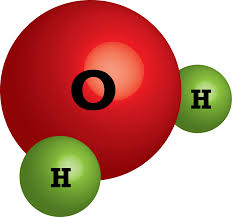
How many atoms of Hydrogen are in this compound?
1
2
3
4

What is colored green in this picture?
symbol
subscript
coefficient
postscript

What is this thing called?
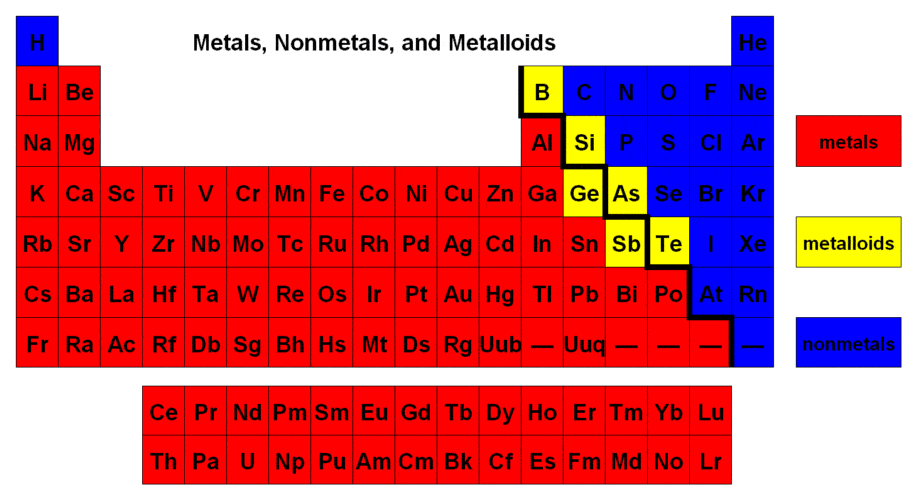
The Periodic Table of Elements
The Element Family
Fodor's Guide to the Elements
The Platonic List of Atoms

On this square, what is the chemical symbol?
79
Au
Gold
196.9665

What is the atomic mass of carbon?
6
C
12.011
Unknown
Which of the following is a sign that a chemical change has taken place?
change in state of matter
change in size
change in shape
change in energy
The chemicals in a chemical reaction that you begin with
Products
Reactants
Starters
Enders

Which example below is a chemical reaction?
ice melting
water boiling
lighting a match
grape juice freezing


The solid dissolves quickly in liquid A.
The solid remains unchanged with the addition of liquid B.
The white solid remains, but dissolves very slowly in liquid C.
When liquid D is added, fizzing occurs and the well becomes warmer.
In which well does a chemical change occur?
Which of the following changes demonstrates a chemical property?
substance breaks in half
substance combusts
hammer bounces off substance
substance floats in water
The abilities to dissolve in water and to conduct electricity are examples of
natural properties
chemical properties
natural laws of matter
physical properties
Which is the correct equation for calculating density?
Density= Mass/Volume
Density = Mass/Weight
Density = Volume/Mass
Density = Volume/Weight
Weight is a flawed measure of mass because it
is not used in other countries
is affected by the force of gravity
tends to fluctuate
can be influenced by temperature and pressure
The law of conservation of mass states that
matter is neither created or destroyed
the mass of an object remains the same even if chemical change occurs
the number of molecules before and after a chemical reaction cannot change
mass is lost when a chemical change occurs
In a solid, particles do not move around each other, but they do
change shape
vibrate
flow
sit completely still
A substance that has neither a definite shape nor a definite volume is a
fluid
solid
liquid
gas
Sugar is considered a crystalline solid because its particles are
arranged in a regular pattern
arranged randomly
completely motionless
able to move around one another
What color does bases turn litmus paper?
It turns litmus paper purple.
It turns blue litmus paper red.
It turns red litmus paper blue.
It turns red litmus paper red.
List four factors that affects the rate of a reaction
temperature
concentration
surface area
volume
catalysts
A temperature increase causes the particles ......
to slow down
move faster
collide higher
in the right order
How does a catalyst work in speeding up a reaction?
By lowering the activation energy or reaction
by giving them more energy
by making them more available

Why does a higher concentration increase the rate of reaction?
it increases the amount of reactants
it lowers the activation energy
it increases the energy of particle collisions
it increases the frequency of particle collisions
Why does a higher temperature increase the rate of a reaction?
it increases both the frequency and energy of particle collisions
it only increases the frequency of particle collisions
it only increases the energy of particle collisions
it reduces the activation energy of the reaction
The ______________is required to break the bonds of the reactants.
Carbonic energy
Activation energy
Plutonic energy
Energi Gaib
Materials made by humans through chemically changing natural resources are called?
Nonrenewable Resources
Synthetic Materials
Renewable Resources
Natural resources are?
Resources that exist within the environment without humans having to intervene, or put them there.
Resources that exist within the environment through due to human actions.
Organic substrates found deep within the earth's lithosphere
Which of the following is NOT a natural resource?
wood
cotton
oil
plastic
coal
Which of the following is NOT a synthetic material?
Nylon
plastic
paper
polyester
Which is NOT a benefit of synthetic products?
pests don't like it as much
more biodegradable
more durable
stronger
What is an advantages of a
synthetic material?
stronger
not renewable
more expensive
does not require natural resouces
Read the following statements. Select each answer choice that is a true statement about synthetic materials. Please select 4 answers.
Synthetic materials are made from natural resources
Synthetic materials are made by chemically changing natural resouces to create a material with different characteristics.
Some examples of synthetic materials are plastics, medicines, and new fuels.
A synthetic substance cannot be chemically identical to a naturally-occurring substance
Making and using synthetic materials have both positive and negative impacts on society.
A chain of repeating units (called monomers)
monomer
dimer
replicate
polymer
Which part of the atom is responsible for chemical bonding?
Core Electrons
Valence Electrons
Protons
Neutrons

How would you draw a Lewis dot diagram for Magnesium?


Which is the correct molecular structure for carbon dioxide?




What is the Lewis Dot for Calcium Oxide
A
B
C
D
Sierra helps her father install an air purifier in her house. What type of separation method does an air purifier use to remove dust and allergens from the air?
distillation
filtration
evaporation
magnetic attraction

Select the following that are elements
NH3
C
Cl
CH
CN

Select the following that are molecules
NH3
CH
O
N
Cl
Apollo 17 astronauts Eugene Cernan and Harrison Schmitt collected the last samples of moon rocks to bring back to Earth in 1972. The astronauts took measurements of the moon rocks using three categories not affected by gravity. This is because the Earth and moon have different forces of gravity. Which measurement did they NOT use?
mass
density
weight
volume

Mira is testing objects for her science experiment. She has a chart listing the mystery object's densities, but no other information. She needs to calculate which object has a mass of 27 grams. If each object has an identical volume of 3 cm3, which object has a mass of 27 grams?
A
B
C
D
Mira is testing objects for her science experiment. She has a chart listing the mystery object's densities, but no other information. She places each object in a large bowl of water in order to determine if any float. Which of the objects, if any, will float?
A
C
All objects will float
No objects will float
As her family eats the delicious dinner, Jia remembers an important fact about the law of conservation of mass. What does she remember?
Matter always moves from hot to cold
Matter is not created or destroyed in any change
Matter can change physically or chemically
Matter is the amount of mass in a given volume
Which is the correct equation for calculating density?
Density = mass/volume
Density = mass/weight
Density = volume/mass
Density = volume/weight
What is the density of an object whose mass is 180 grams and whose volume is 45 cm3?
4 cm3/g
0.25 g/cm3
4 g/cm3
0.25 cm3/g

How to separate tea leaves from the water?
Magnetic attractions
Filtration method
Floatation method
Hand-picking method
How to separate the metal earring from the soil?
Floatation method
Sieving method
Filtration method
Magnetic attraction
Motor oil has different ratings depending on how readily it flows. This property depends on how much attraction is present between its particles. Which property of a liquid does this illustrate?
expandability
felxibility
surface tension
viscosity

A scientist has a "mystery element" that she wants to identify by using its properties. These properties include its freezing point. She collected data about the element's freezing point. Use the graph of her data to determine the freezing point of the element. Which of these elements is the "mystery element"?
silicon (1430 degrees Celsius)
nickel (1455 degrees Celsius)
cobalt (1495 degrees Celsius)
iron (1539 degrees Celsius)

Kenneth warmed up a 100 mL sample of air in an expandable container. He displayed the results in the following graph. The results formed a straight line, so he extended the line the full length of the graph. At what temperature did the gas have a volume of 110 mL?
19 K
20 K
110 K
300 K
Min increases the temperature of a gas in an expandable container. If she keeps the pressure constant, what will happen to the volume of gas?
The volume will decrease.
The volume will increase.
The volume will remain the same.
The volume will decrease, then increase.

Sonja and Jeremy performed several experiments to show how changes in temperature affected the volume of an inflated balloon. They made sure the pressure stayed the same. They also showed the effects of pressure on volume if temperature stayed the same. They organized their data in the table. Which experiments provide evidence for Boyle's law?
A and B
C and D
A and C
B and D
A scout on a hike becomes lost. He does not have a compass, but he does have a small needle, a magnet, and some water. He magnetizes the needle and then gently places it on the surface of the water, where it points to the north. What property of the water makes it possible for the needle to lie on the surface of the water?
visocisty
definite volume
surface tension
boiling point


