wayground logo

Free Printable Worksheets

Font size

S
M
L
XL
Worksheets

Grade 9 Chemistry

Total questions: 108

Worksheet time: 4hrs 36mins

Name
Class
Date
1.
A negative ion is called
a)
cation
b)
anion
c)
cathode
d)
electro
2.
Postive ions are called
a)
anions
b)
positrons
c)
alpha 
d)
cations
3.
Particles in an atom that are neutral and have no charge are 
a)
negatrons 
b)
electrons 
c)
neutrons 
d)
protons 
4.
The smallest particle of any particular type of matter is known by which of the following terms?
a)
Compound
b)
Atom
c)
Chemical
d)
Element
5.

The apple has a mass of 24 grams is an example of a

a)

quantitative observation

b)

qualitative observation

6.

If a neutral atom has 3 electrons, how many protons does it have?

a)

1

b)

2

c)

4

d)

3

7.
If the number of protons equal the number of _____, the atom will have no charge
a)
protons
b)
neutrons
c)
electrons
d)
nucleus
8.

The basketball player is 6'9".

a)

qualitative observation.

b)

quantitative observation

9.
What is the atomic number?
a)
the number of protons
b)
the number of protons and neutrons
c)
the number of neutrons
d)
the number of protons and electrons
10.

What is the atomic mass?

a)

the number of protons

b)

the number of protons and neutrons

c)

the number of neutrons

d)

the number of protons and electrons

11.
An atom with an unequal number of protons and electrons is said to have (a) ___.
a)
no charge
b)
balance
c)
charge
d)
unbalance
12.
Ions are: 
a)
atoms with a positive or negative charge
b)
atoms with no charge
c)
atoms with ONLY a positive charge
d)
atoms with ONLY a negative charge
13.
The state of matter that takes the shape of its container is....
a)
Gas
b)
Solid
c)
Liquid
d)
None of these
14.
Thermal energy refers to....
a)
Heat energy
b)
Light energy
c)
Potential Energy
d)
Rotational energy
15.

An example of a natural chemical is

a)

lycra

b)

fleece

c)

polyester

d)

cotton

16.
The state of matter with the molecules with the LOWEST amount of energy is....
a)
Gas
b)
Solid
c)
Liquid
17.
Which is the following is NOT a sign of a chemical change?
a)
Releasing a gas
b)
Releasing bubbles
c)
Changing state
d)
Rearranging atoms
18.
What are the basic building blocks for all matter?
a)
atoms
b)
elements
c)
compounds
d)
chemicals
19.
What do we call a chemical substance made up of 2 or more different types atoms bonded together?
a)
formula
b)
atom
c)
subscript
d)
compound
20.
A recipe for a chemical substance is called a ________ _________.
a)
coefficent
b)
chemical formula
c)
Oxygen
d)
atom
21.
 2H2O
How many Hydrogen atoms are present?
a)
2
b)
4
c)
1
d)
10
22.
Is salt (NaCI) a compound or a element
a)
Compound
b)
element
23.

which is found on the periodic table

a)

Compound

b)

Element

24.
Which of the following is an example of a chemical reaction?
a)
Water evaporating from a pot on a hot stove
b)
Sand being removed from sea water by filtration
c)
A spoonful of sugar dissolving in a glass of water
d)
A white solid forming when two clear liquids are poured together
25.
What happens when chemical bonds break and new bonds form?
a)
a physical change
b)
a chemical reaction
c)
matter is destroyed
d)
surface area increases
26.

An example of a synthetic chemical is

a)

wood

b)

silk

c)

nylon

d)

wool

27.

water boiled and turns to vapor

a)

physical change

b)

chemical change

28.

after 3 substances are mixed, an odor emits

a)

chemical change

b)

physical change

c)

thermal energy is used

29.

baked cookies are chemical change because

a)

thermal energy is used

b)

the cookies change shape

c)

a new substance is produced

30.

When the candle was lit, a pool of liquid wax formed in the area around the wick, and then spilled over the side and resolidified. Does this observation refer to a physical change or a chemical change? Explain.

a)

A chemical change. The substance was still wax, but it changed to a liquid and then back to a solid.

b)

A physical change. The substance was still wax, but it changed to a liquid and then back to a solid.

c)

A chemical change. The substance changed from a chemical liquid to solid wax.

d)

A physical change. The substance was still wax, but it changed to a solid and then back to a liquid.

31.

The flame from the candle gives off black smoke. Does this statement describe evidence for a physical change or a chemical change? Explain.

a)

A chemical change. The black smoke is evidence that a new substance is not forming which means a chemical change occurred.

b)

A physical change. The black smoke is evidence of the formation of a new substance, which means a chemical change occurred.

c)

A chemical change. The black smoke is evidence of the formation of a new substance, which means a chemical change occurred.

d)

A physical change. The black smoke is evidence of a solid turning into a gas

32.

True or False: Malleability is the ability of a substance to be pounded or rolled into thin sheets.

a)

True

b)

False

33.

Density is...

a)

the amount of mass in an object

b)

the amount of space an object takes up

c)

the amount of matter in a given space

d)

the weight of an object

34.

Negatively charged part of an atom located in shells outside the nucleus

a)

Proton

b)

Neutron

c)

Electron

d)

Neutron

35.

Burning a piece of paper

a)

Chemical Change

b)

Physical Change

36.

Mixing salt and water

a)

Chemical Change

b)

Physical Change

37.

We could not see through the blinds at all because they were

a)

transparent

b)

translucent

c)

opaque

38.

Milk turning sour

a)

Chemical Change

b)

Physical Change

39.
What is the symbol for chlorine?
a)
C
b)
Ch
c)
Ce
d)
Cl
40.
Which of these elements has a symbol which DOES NOT include a letter from its name?
a)
iron
b)
helium
c)
magnesium
d)
zinc
41.
What is the symbol for the element Neon?
a)
Na
b)
Ne
c)
He
d)
N
42.
A _________ is a substance made of two or more DIFFERENT elements chemically combined. 
a)
mixture
b)
compound
c)
substance 
43.
A mixture can be separated by ________ means. 
a)
physical
b)
chemical
44.

Salt Water

a)

Compound

b)

Mixture

45.

A bar of gold is made of only one ______

a)

Plasma

b)

Mixture

c)

Element

d)

Compound

46.
If the number of electrons in an element changes, a new element is formed 
a)
True 
b)
False 
47.
These are the two particles located inside the nucleus of an atom 
a)
Protons and Electrons 
b)
Protons and Neutrons 
c)
Electrons and Neutrons 
d)
Neutrons and Molecules 
48.
A physical property can be observed by _________________.
a)
burning the substance
b)
changing the chemical identity of a substance
c)
using the senses
d)
placing the substance in acid
49.
Signs that a chemical change has occurred include
a)
a change in color
b)
the release of bubbles
c)
the production of an odor
d)
all of the above
50.
A substance that is made up for one type of atom is called an:
a)
atom
b)
element
c)
compound
d)
mixture
51.

The windows in are classroom allow us to see outside because they are

a)

opaque

b)

transparent

c)

translucent

52.

The common name for calcium carbonate is

a)

baking soda

b)

chalk

c)

charcoal

d)

sugar

53.
CO2
a)
Element
b)
Compound
54.
CaCo3
a)
Element
b)
Compound
55.

The chemical name for vinegar is

a)

sodium bicarbonate

b)

sodium chloride

c)

acetylsalicylic acid

d)

acetic acid

56.

The chemical formula for glucose is

a)

CuSO4

b)

C6H12O6

c)

H2O

d)

CaCO3

57.

Volume _________ as a substance changes from a solid to liquid to gas.

a)

increases

b)

decreases

c)

stays the same

58.
What are the three states of matter?
a)
solid, volume, mass
b)
density, volume, mass
c)
solid, liquid, gas
d)
density, gas, volume
59.
Something that takes up space and has mass.
a)
volume
b)
matter
c)
mass
d)
density
60.
A state of matter that has a definite volume and shape.
a)
solid
b)
liquid
c)
gas
d)
matter
61.

Iron + oxygen = rust is an example of a ___________.

a)

physical change

b)

chemical change

c)

mass

d)

volume

62.

This phase of matter has no definite volume or shape.

a)

solid

b)

liquid

c)

gas

63.

On Periodic Table, how are elements ordered?

a)

color

b)

shape

c)

atomic number

d)

alphabetically

64.
which of the following is an example of a physical change?
a)
a car rusting
b)
cutting a piece of wood
c)
acid rain corroding a barn door
d)
water seperating into hydrogen and oxygen atoms.
65.
What is the number of protons that the element in this image contain?
a)
14
b)
7
c)
15
d)
18
66.
What is the atomic mass of "F"
a)
9
b)
18
c)
17
d)
19
67.

Changing state from a gas to a liquid.

a)

condensation

b)

melting

c)

sublimation

d)

freezing

68.
The positive particles of an atom are 
a)
electrons 
b)
positrons 
c)
neutrons 
d)
protons 
69.
the central region of an atom where its neutrons and protons are is its 
a)
nucleus 
b)
electron cloud
c)
core 
d)
center 
70.

Is melting butter for popcorn a chemical or physical change?

a)

chemical

b)

physical

71.
Is burning wood a chemical or physical change?
a)
chemical
b)
physical
72.

When you break a cracker into pieces it is a

a)

Chemical change

b)

Physical change

73.
Which is a chemical change?
a)
freezing fruit juice
b)
slicing a potato
c)
boiling water
d)
copper metal turning green
74.
If there is no subscript, there is ______ atom(s) of that element.
a)
0
b)
2
c)
only 1
d)
1 million
75.

How many atoms of Hydrogen are in this compound

a)

1

b)

2

c)

3

d)

4

76.
5H2O
How many atoms of Hydrogen?
a)
2
b)
7
c)
10
d)
5
77.

Can be pulled into wire

a)

Malleable

b)

Ductile

c)

Density

d)

Luster

78.

Blue Color: Chemical or Physical Property

a)

Chemical Property

b)

Physical Property

79.

Flammability (burns): Chemical or Physical Property

a)

Chemical Property

b)

Physical Property

80.

Changing from a solid to a gas is called

a)

evaporation

b)

freezing

c)

sublimation

d)

condensation

81.

Reacts with Acid: Chemical or Physical Property

a)

Chemical Property

b)

Physical Property

82.

Melting Point: Chemical or Physical Property

a)

Chemical Property

b)

Physical Property

83.

Sour Taste: Chemical or Physical Property

a)

Chemical Property

b)

Physical Property

84.

Hardness: Chemical or Physical Property

a)

Chemical Property

b)

Physical Property

85.

Luster: Qualitative or Quantitative characteristic

a)

Qualitative characteristic

b)

Quantitative characteristic

86.

Oxidizes (Reacts with Air): Chemical or Physical Property

a)

Chemical Property

b)

Physical Property

87.

Smells delicious.

a)

Quantitative observation

b)

Qualitative observation

88.

Ice melting is an example of a

a)

physical change

b)

chemical change

89.
Ability to rust is this type of property:
a)
Physical property
b)
Chemical property
90.
a copper penny turning greenish after a few years.
a)
Chemical Change
b)
Physical Change
91.
Baking a cake by mixing flour, sugar, chocolate powder, eggs, and milk, and then heating them in the oven.
a)
Chemical Change
b)
Physical Change
92.
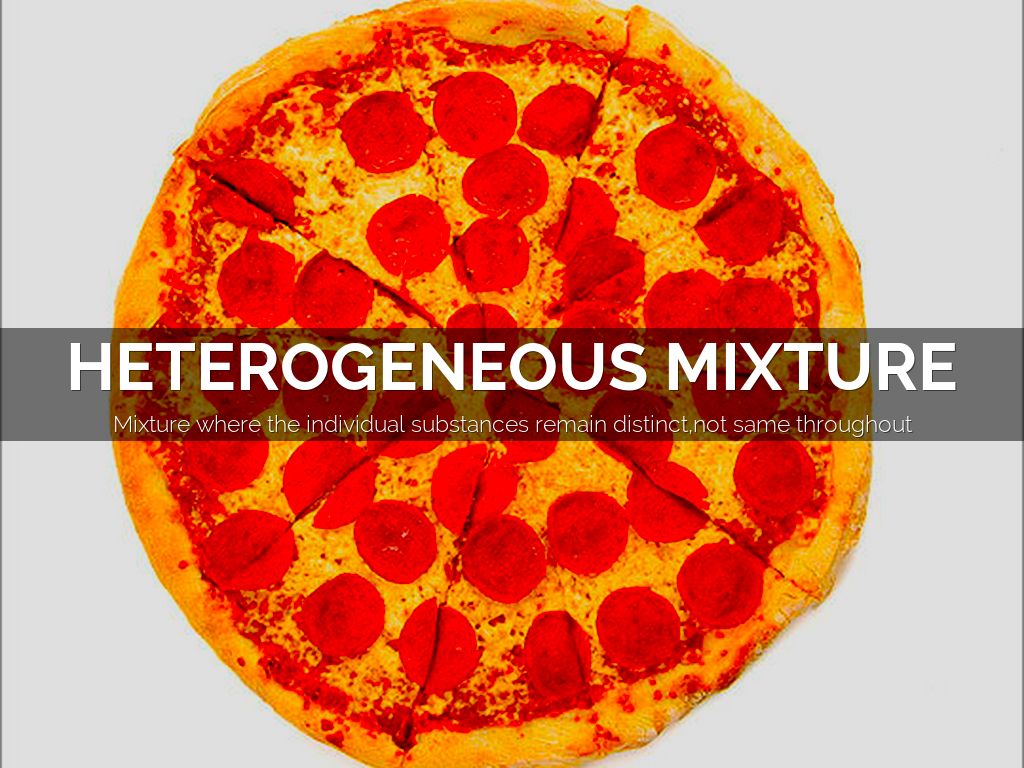
What does it mean if a mixture is heterogeneous?
a)
you can see the different parts
b)
cannot tell one part from another
c)
very well blended
d)
made of elements
93.

My glasses fogged up making it difficult to see.

a)

transparent

b)

transluecent

c)

opaque

94.
What type of mixture is this?
a)
heterogeneous 
b)
homogeneous
95.
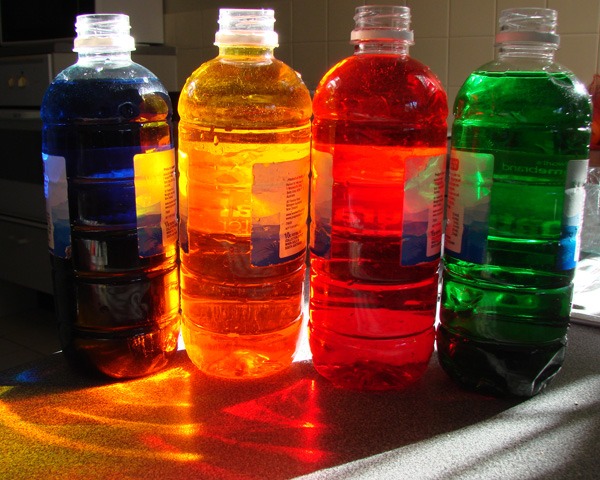
What type of mixture is this?
a)
heterogeneous 
b)
homogeneous
96.
What type of mixture is this?
a)
heterogeneous 
b)
homogeneous
97.
What type of mixture is this?
a)
heterogeneous 
b)
homogeneous
98.

What type of mixture is this?

a)

homogeneous

b)

heterogeneous

99.
Which mixture separation method would use to separate sugar from water?
a)
filtration 
b)
magnet
c)
boiling/evaporation
d)
sorting physically
100.
Elements and compounds are always ___.
a)
pure
b)
mixed
101.

What type of mixture is dirt and water?

a)

Colloid.

b)

Suspension.

c)

Solution.

d)

Mechanical Mixture.

102.

Coloured water is an example of a

a)

solution

b)

suspension

c)

coloid

d)

mechanical mixture

103.

Sugar water is a

a)

homogeneous

b)

heterogeneous

104.

Milk is a

a)

solution

b)

suspension

c)

colloid

d)

mechanical mixture

105.

How does a solution become supersaturated?

a)

by trying to dissolve lots of solute in it.

b)

by trying to dissolve a little solute in it.

c)

by trying to dissolve more solute than you are be able to.

106.

What type of mixture separates upon standing?

a)

Solution

b)

Alloy

c)

Colloid

d)

Suspension

107.

Which is not a of mixture?

a)

suspension

b)

solution

c)

colloid

d)

compound

108.
Which of these is NOT an alloy?
a)
bronze
b)
copper
c)
brass
d)
stainless steel