
 Worksheets
Science 9 Chemistry Review
Total questions: 109
Worksheet time: 2hrs 55mins
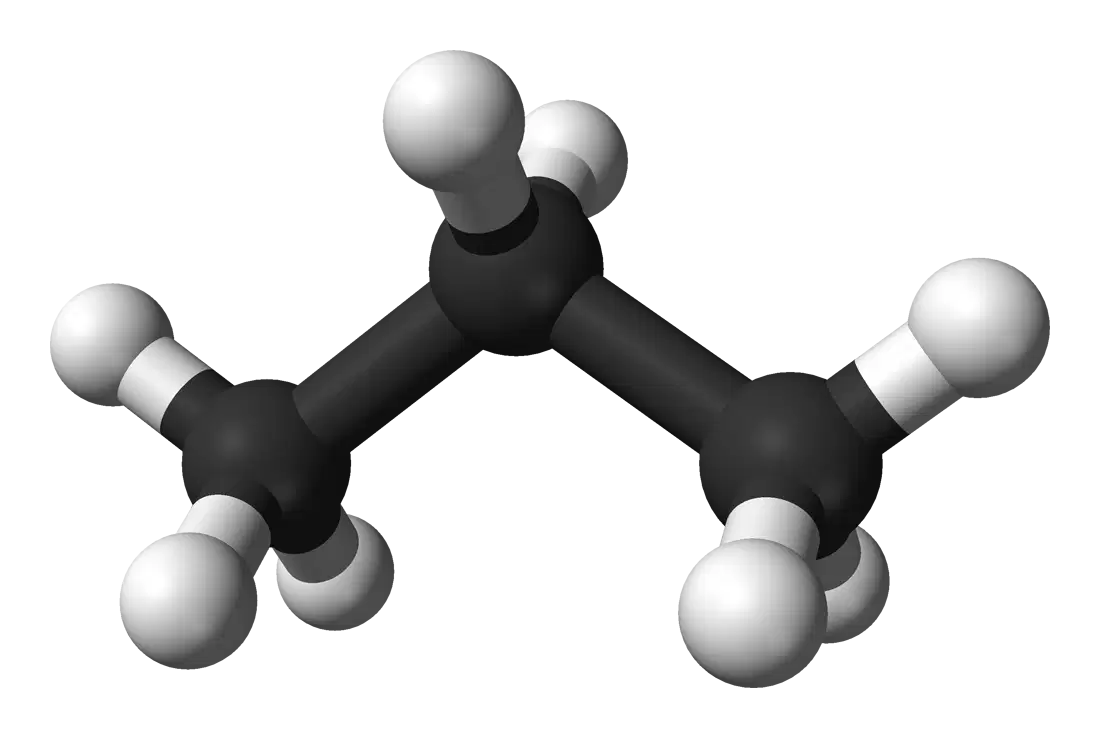
What is the name of this molecule? (black is carbon, white is hydrogen)
carbon hydride
tricarbon hexahydride
tricarbon octatahyride
triplecarbon octahydride
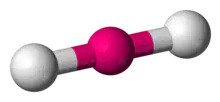
Which of the following could compounds could be represented by the molecule in the picture?
NaCl
CrCl2
Na3P
CaO
The name of FeCl₂ is
iron chloride
iron (II) chloride
iron (I) chloride
iron dichloride
LiBr is called
lithium bromine
lithium (I) bromine
lithium bromide
lithuim (I) bromide
Which of these combinations is an ionic compound made of?
Metal and Metal
Nonmetal and Nonmetal
Metal and Nonmetal
Cation and Cation
Which of the following combinations would need roman numerals in the name?
potassium + fluorine
beryllium + oxygen
boron + iodine
gold + oxygen
Cr3+ O2-
K1+ S2-
Choose which one is a physical property
Flammability
Solubility
Water Reaction
Magic
Choose the one that is a chemical property
Magnetism
Size
Color
Reactivity with water
If you describe a substance as being corrosive, you have given a __________ property of that substance
Chemical
Large
Physical
Thermal
Which of the following statements is accurate?
After observing a chemical property, the substance remains the same as before
All metals have the same physical properties
When you see water turn into steam, you have observed a chemical property
A physical property can change without causing a change in the chemical identity of the substance
What is the outcome of observing a chemical property?
Nothing
A new substance is formed with different properties
NaCl
A rise in thermal conductivity
Which of these statements best describes a chemical property of a substance?
It reacts with an acid to form water
The object has a blue color
The substance has a powdery texture
It has a density of 2.11 g/cm3
Choose whether the following is a physical or chemical property: Malleability
Physical
Chemical
Choose whether the following is a physical or chemical property: Reacts with oxygen
Physical
Chemical
Choose whether the following is a physical or chemical property: Magnetic
Physical
Chemical
Choose whether the following is a physical or chemical property: Non-flammable
Physical
Chemical
Which of the following could indicate that a chemical change took place?
Change in color
Production of Energy
Formation of Gas
All are correct

Identify what type of change happening in the picture below...
Chemical Change
Physical Change
Endothermic Reaction
Exothermic Reaction

Identify what type of change happening in the picture below...
Chemical Change
Physical Change
Endothermic Reaction
Exothermic Reaction

Identify what type of change happening in the picture below...
Chemical Reaction
Physical Change
Change in State
Change in appearance only
Which of the following is an example of a physical change?
A glass falling and shattering on the floor.
Baking a birthday cake.
Burning a piece of paper.
Baking soda and vinegar mixing together.
Which is not a clue that could indicate a chemical change has occurred?
Change in color
Change in shape
Release of energy
Formation of an odor
During Chemical Reactions, the new substances created are called?
Precipitate
Corrosion
Reactants
Products
During Chemical Reactions, the substances that are used are called?
Precipitate
Corrosion
Reactants
Products


The property of metals by which they can be beaten in to thin sheets is called
Sonority
Malleability
Ductility
None of the above
The property of metals by which it can be drawn into wires is
Malleability
Sonority
Lustrous
Ductility
Metals are good conductor of
Only heat
Only electricity
Heat and electricity both
None of the above
Examples of metals.
Gold
Silver
Aluminium
All of the these
Examples of non-metals.
Carbon
Oxygen
Sulphur
All of these

Non-metals are found in solid, liquid and gas states.
True
False

Sulfur is a ___.
metal
non-metal
Most metals are solid at room temperature
False
True



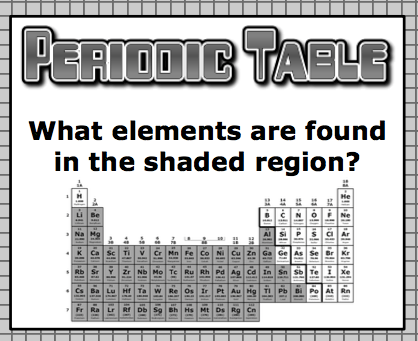
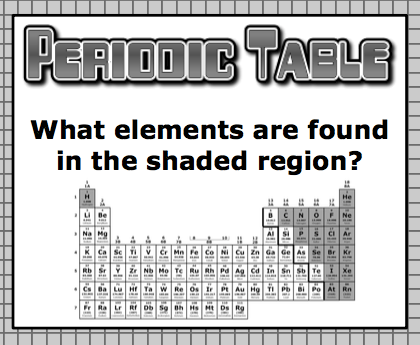
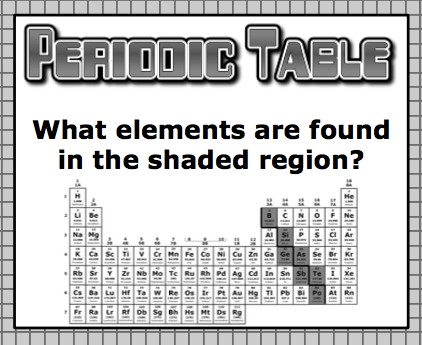
What does the number of proton tell us?
electrons
atomic number
atomic mass
neutrons
How do you calculate the number of neutrons? *
Mass = Atomic number - Neutrons
Mass - Atomic number = Neutrons
Atomic number = Neutrons

How many protons and electrons does nickel have?
28
58.69
This element has two valence electrons and two energy levels?
Beryllium (Be)
Lithium (Li)
Zinc (Zn)
How many valence electrons and energy levels does (Pb) lead have?
4 valence electrons and 6 energy levels (orbitals)
6 valence electrons and 4 energy levels (orbitals)
5 valence electrons and 5 energy levels (orbitals)
5 valence electrons and 10 energy levels (orbitals)
A neutron has what charge?
Positive
Negative
It has no charge (it is neutral)
A proton has what charge?
Positive
Negative
It has no charge (it is neutral)
An electron has what charge?
Positive
Negative
It has no charge (it is neutral)

What is the atomic # of iron?
55
56
26
2

How many protons does krypton have?
84
36
48
8

How many electrons does oxygen have?
8
16
2
15

How many neutrons does lithium have?
3
4
6
7

How many neutrons are in magnesium?
12
24
25
36

How many neutrons does beryllium have?
4
5
9
13

How many electrons does helium have?
2
4
6
8
A higher reaction rate means...
the reaction takes less time
the reaction takes more time
more reactants are used
less reactants are used
Which of the following will result in a faster reaction rate?
high surface area
low temperature
low concentration
high volume
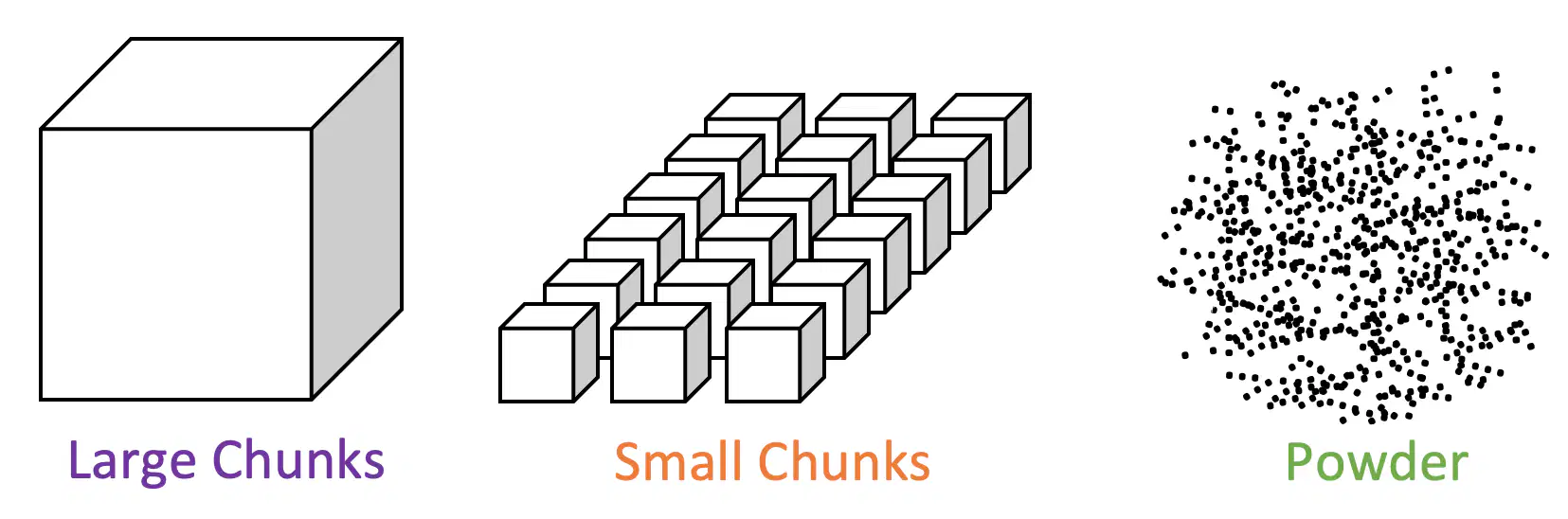
Which one has the larger surface area?
Large chunks
Small chunks
Powder
A 50 g large chunk of salt, 50 g of small chunks of salt, and 50 g of powdered salt are each dissolved in 500 mL of water. The time it takes for the salt to dissolve is measured. Which is the manipulated variable?
Surface area
Temperature
Amount of water
Mass of salt
Time
A 50 g large chunk of salt, 50 g of small chunks of salt, and 50 g of powdered salt are each dissolved in 500 mL of water. The time it takes for the salt to dissolve is measured. Which is the responding variable?
Surface area
Temperature
Amount of water
Mass of salt
Time
How many atoms and elements, respectively, does Ca3(PO4)2 have?
3, 13
3, 5
4, 13
4, 11
How many atoms and elements, respectively, does LiOH have?
2, 2
2, 3
3, 3
3, 2
Translate the word equation below.
Aluminum and Hydrochloric Acid (HCl) react to form Aluminum Chloride and Hydrogen
Al + HCl → AlCl3 → H2
Al + HCl → AlCl + H2
Al + HCl → AlCl3 + H2
Al + HCl → AlCl + H
Translate the word equation below.
Carbon Dioxide and Water react to form Glucose (C6H12O6) and Oxygen.
CO2 + H2O → C6H12O6 + O2
CO2 + H2O + C6H12O6 → O2
CO2 + H2O → C6H12O6 + O
CO2 → H2O + C6H12O6 + O2
Which is the correct chemical equation for the following: Solid Zn reacts with silver (I) chloride to produce Zinc (II) chloride and silver metal
Zn + AgCl → ZnCl2 + Ag
ZnCl2 + Ag → Zn + AgCl
ZnCl2 + Ag2 → Zn + AgCl
Zn2Cl + Ag → Zn + AgCl

Magnesium can be burned in oxygen to produce solid magnesium oxide.
Mg(s) + O2(g)→ MgO(s)
Mg(s) + O(g) → MgO(s)
Mg(s) + CO2(g) → MgO(s) + C(s)
Mg(s) + O2(g) → Mg2O2(s)

Is this equation balanced?
Yes
No

Is this equation balanced?
Yes
No
Which of the following describes covalent bonds?
Bonds form because of opposite charges
electrons are shared to fill outer electron shells
Electrons are transferred between atoms
Covalent bonds are magical
Some are solids, some are liquids, and some are gases at room temperature.
ionic compounds
molecular compounds
When dissolved in water, the solution is a good conductor of electricity.
ionic compounds
molecular compounds
When dissolved in water, the solution does NOT conduct electricity.
ionic compounds
molecular compounds
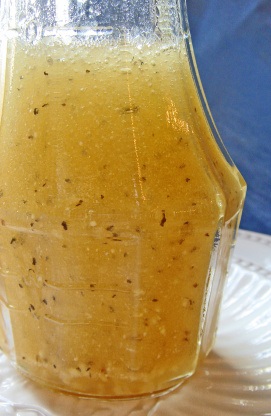

Food coloring in water
mixture
substance

Chunky salsa
homogeneous
heterogeneous
element
compound

Copper pipe (Cu)
homogeneous
heterogeneous
element
compound

Sulphur (S)_
homogeneous
heterogeneous
element
compound

Baking soda (CaCO3)
homogeneous
heterogeneous
element
compound
Corrosion is _______ than combustion. Both are _________ reactions.
slower, endothermic
faster, endothermic
slower, exothermic
faster, exothermic
20 g of vinegar mixes with 15 g of baking soda. Bubbling appear and the products are measured to be 28 g. What is the mass of carbon dioxide produced?
7 g
28 g
20g
15 g
Which is endothermic?
cold pack
fireworks
rusting
glowstick
Which element is always needed for combustion?
nitrogen
carbon
oxygen
hydrogen
Which of the following is quantitative? (more than 1 answer)
colour
density
mass
mallebility
texture
When a reaction produces heat or light, energy is _________ and is called an _________ reaction.
released, exothermic
released, endothermic
absorbed, endothermic
absorbed, exothermic
When a reaction feels cold, energy is _________ and is called an _________ reaction.
released, exothermic
released, endothermic
absorbed, endothermic
absorbed, exothermic

