Worksheets
Not happy quiz
Total questions: 153
Worksheet time: 3hrs 33mins
Flammable materials, like alcohol, should never be dispensed or used near
another student
an open flame
an open door
a sink
If a laboratory fire erupts, immediately
run for the fire extinguisher
notify your instructor
throw water on fire
open windows
Approved eye protection devices (such as goggles) are worn in the laboratory
to avoid eye strain
to improve your vision
anytime heat, chemicals, or glassware is used
only if you don't have glasses
If you wear contact lenses in the school laboratory,
take them out before starting the lab (in real world this is answer but not at school)
you do not have to wear protective goggles
advise your science instructor that you wear contact lenses
keep the information to yourself
If you do not understand a direction or part of a lab procedure, you should
figure it out as you go along
ask the instructor before proceeding
try several methods until something works
skip it and go on to the next part
After completing an experiment, all chemical wastes should be
disposed of according to your instructor's directions
left at your lab station for the next class
dumped in the sink
taken home
If a lab experiment is not completed, you should
discuss the issue with your instructor
sneak in after school and work alone
come in during lunch and finish while eating lunch( remember you can not eat in lab)
make up some results
You are heating a substance in a test tube. Always point the open end of the tube
toward yourself
away from all people
toward your lab partner
toward another classmate
The following footwear is best in the laboratory
close-toed shoes
open-toed shoes
sandals
whatever is appropriate for weather
In a laboratory, the following should NOT be worn
sandals
dangling jewelry
loose clothes
all the answers are correct
Personal eyeglasses provide as much protection as
a face shield
safety glasses
splash proof chemical googles
None of the above
Long hair in the laboratory must be
always neatly groomed
tied back or kept entirely out of the way with a hair band, hairpins, or other confining device
held away from the experiment with one hand
cut short
You have been injured in the laboratory (cut, burn, etc.). First you should
apply first aid yourself
see a doctor after school
visit the school nurse after class
tell the science instructor at once
You are heating a piece of glass and now want to pick it up. You should
pick it up with beaker tongs(correct answer)
use a rag or paper towels
pick up the end that looks cooler
pour cold water on it
Horseplay or practical jokes in the laboratory are
okay
not dangerous
okay if you are working alone
always against the rules
If a piece of equipment is not working properly, stop, turn it off and tell
your best friend in the class
the science instructor
your lab partner
the custodian
When you finish working with chemicals and other lab substances, always
wash your hands thoroughly with soap and water
wipe your hands on a towel
wipe your hands on your clothes
treat your hands with skin lotion
All chemicals in the lab are to be considered dangerous
True
False
Return all unused chemicals to their original containers
True
FALSE
Laboratory work can be started immediately upon entering the laboratory even if the instructor is not yet present.
True
False
Chipped or cracked glassware is okay to use.
True
False
You are allowed to enter the chemical preparation/storage area any time you need to get an item.
True
False
It's okay to pick up broken glass with your bare hands as long as the glass is placed in the trash.
True
False
Work areas should be kept clean and tidy.
True
False
Never remove chemicals or other equipment from the laboratory.
True
False
Read all procedures thoroughly before entering the laboratory.
True
False
All unauthorized experiments are prohibited.
True
False
Laboratory aprons should be worn during all lab activities
True
False
Never leave a lit burner unattended.
True
False
What is the metal enclosure that is used for experiments dealing with fumes, vapor, or explosions ?
Eye wash
fume hood
first aid kit
fire blanket


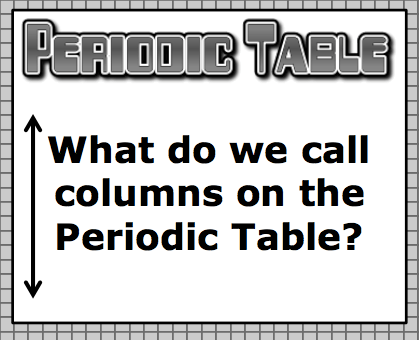
What are the vertical columns on the periodic called?
groups
periods
nonmetals
metals
metalloids

What do the vertical columns on the periodic table tell us?
The number of orbitals
The number of valence electrons (electrons on the outer most shell)

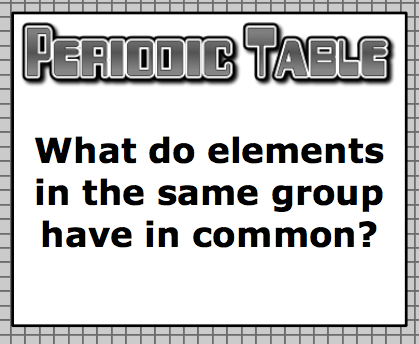
Which elements have properties in common?
elements in a group
elements in a period
What does the atomic mass tell you?
Basically, the number of electrons and protons added together
The number of neutrons
Basically, the number of protons and neutrons added together
The number of protons.
Name of group 17
Noble gases
Alkali metals
Halogens
Alkaline earth metals


Who invented the Periodic Table?
Mendeleev
Bohr
Lewis
Democritus
What happens to the number of shells as you move down a group?
They decrease by 1
They increase by 1
Nothing
What do all elements in the same period have?
same number of shells
same number of electrons
belong in the same family

To which group does this atom belong?
1
3
13
11

True or false: All elements in a family have the same number of valence electrons (except Helium and the transition metals).
True
False
As you look from left to right across a period, ionization energy and electronegativity both
increase
decrease
As you look down a group, ionization energy and electronegativity
increases
decreases

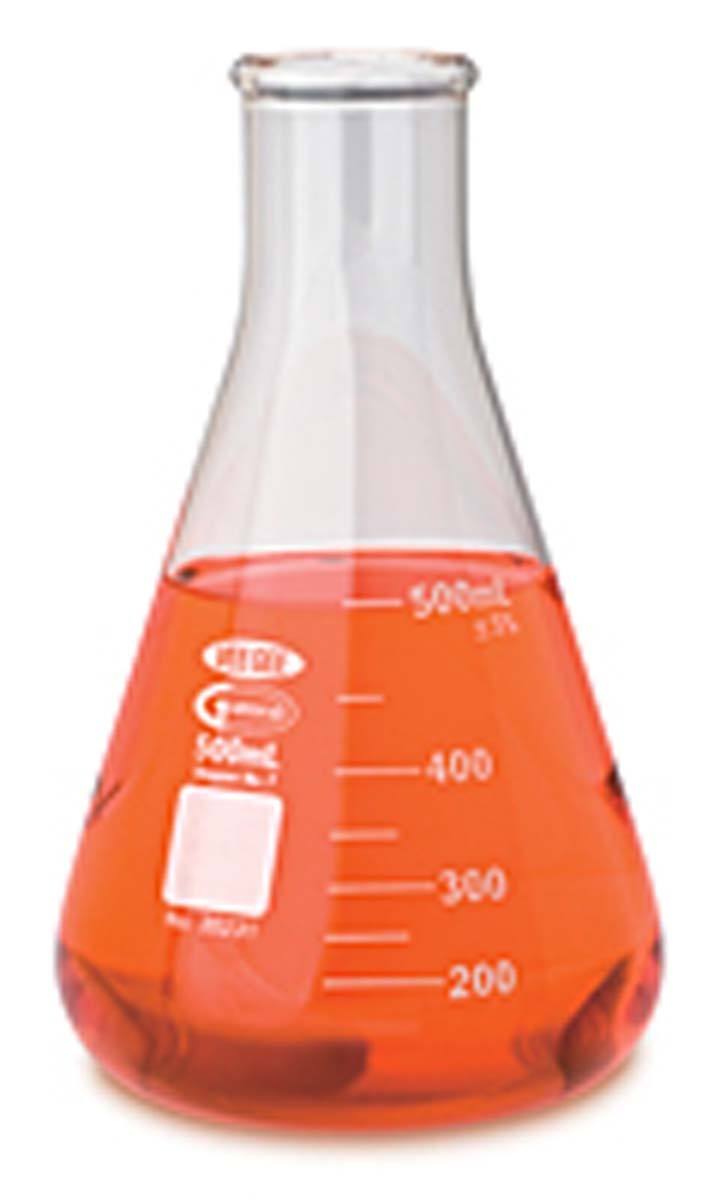
What is used to swirl, mix, or store chemicals?
Beaker
Flask
Test Tube
Graduated Cylinder

All matter is made of what
energy
atoms
electrons
compounds
The positive particles of an atom are
electrons
positrons
neutrons
protons
The central region of an atom where its neutrons and protons are is its
nucleus
electron cloud
core
center
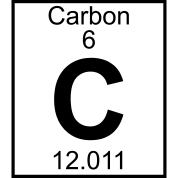
An atom with atomic number 6 would have how many protons
6
12
3
cannot be determined
Particles in an atom that are neutral and have no charge are
negatrons
electrons
neutrons
protons
A particle that moves around the nucleus is a(n)...
Proton
Neutron
Electron
Quark
In the modern periodic table, elements are arranged by:
atomic mass
atomic number
valence electrons
number of isotopes
Protons and electrons balance the charge of an atom.
True
False
What particle uniquely identifies an element?
Number of Valence Electrons
Number of Protons
Number of Electrons
Atomic Mass
Most of the mass in an atom is concentrated in the...
electrons
nucleus
protons
empty space
Electrons are___________
Extremely small even in comparison to protons.
part of the nuclues.
Super Positive, like cheerleaders!
very large
3 subatomic particles that makeup an atom.
Positive, negative, neutral
Positron, Neutral, Electron
Proton. Neutron, Electron
The subatomic particle holds the atom together.
Proton
Neutron
Electron
Nucleus
The subatomic particle that determines reactivity.
Electron
Proton
Shell
Neutron
A neutron has a _____ charge.
Positive
Negative
Neutral
1/2 charge
The atomic number tells you the number of
Neutrons
Protons
Neutrons plus Protons
Electrons are why the atomic mass has a decimal point.
True
False
The atom model that we will use in this class is called ________ model.
Rutherford
Thompson
Bohr
Karen
An isotope has different number of ______.
Neutrons
Protons
Electrons
Nucleus
The Greek philosopher that came up with the idea of the atom.
Reid
Mr. Smith
Joe Biden
Democritus
The building block of everything.
Atoms
Elements
Positive
Biology
Bohr stated that _______ are found in shells orbiting the nucleus.
Electrons
Protons
Neutrons
Clouds


What is the mass number of bromine?
35
45
80
79.904

What is the atomic number of this element?
12
24
23


Is this a physical or chemical change?
Physical
Chemical

This is an example of _____ change.
Physical
Chemical


When was the war of 1812?
2021
1988
1812
The number of protons in the nucleus of an atom is called the --
atom
proton
atomic mass number
atomic number
Who invented the Periodic Table?
Mendeleev
Bohr
Lewis
Democritus
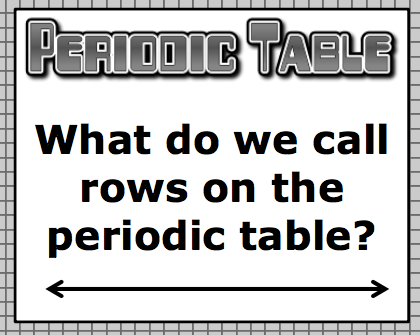
As you move left to right on a row or period what happens?
Atomic number increases by 1
Electrons decrease
Number of shells decrease
Nothing
What happens to the number of shells as you move down a group?
They decrease by 1
They increase by 1
Nothing
The first energy shell can hold ______ electrons.
2
8
18
All elements in the same row have the same number of shells.
True
False
Sometimes
Valence means......
inside
outside
full
What do all elements in the same period have?
same number of shells
same number of electrons
belong in the same family

noble gases