wayground logo

Free Printable Worksheets

Font size

S
M
L
XL
Worksheets

Chemistry A MASSIVE REVIEW 2022

Total questions: 148

Worksheet time: 2hrs 25mins

Name
Class
Date
1.
What are the three states of matter?
a)
solid, volume, mass
b)
density, volume, mass
c)
solid, liquid, gas
d)
density, gas, volume
2.
Something that takes up space and has mass.
a)
volume
b)
matter
c)
mass
d)
density
3.
The amount of space something takes up
a)
density
b)
volume
c)
mass
d)
matter
4.
You can measure ______ with grams.
a)
mass
b)
volume
c)
conductivity
d)
melting point
5.
It is a measure of how close measurements come to each other when they are made in the same way
a)
Accuracy
b)
Precision
c)
Error
d)
Extrapolation
6.

How close a measurement is to the accepted value is called..

a)

Accuracy

b)

Precision

c)

Significant

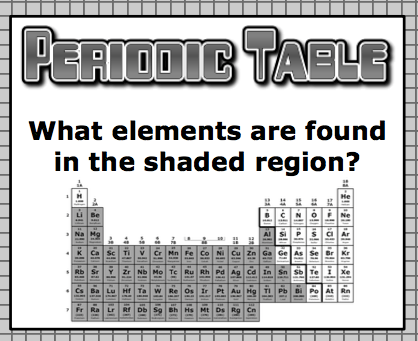
d)

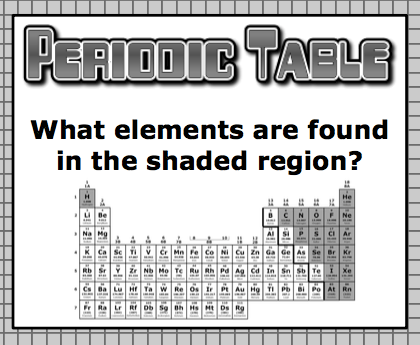
Estimate

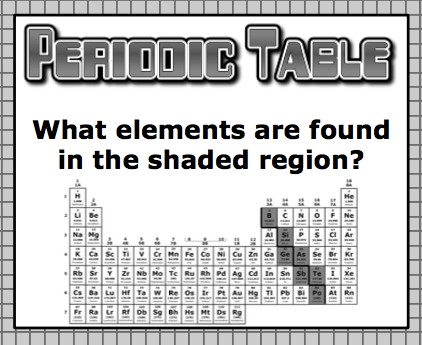
7.
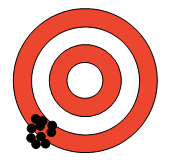
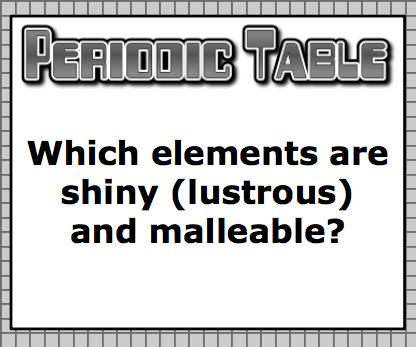
This bullseye demonstrates...
a)
High Accuracy & High Precision
b)
High Accuracy & Low Precision
c)
Low Accuracy & High Precision
d)
Low Accuracy & Low Precision
8.
How many significant figures: 153.0 mL
a)
1
b)
2
c)
3
d)
4
9.
How many significant figures: 1000 mL
a)
1
b)
2
c)
3
d)
4
10.
Water boiling is a _______ change. 
a)
Physical Change 
b)
Chemical Change 
11.
Fireworks Exploding are a ________ change.
a)
Physical Change
b)
Chemical Change
12.
What is a physical property of this table? 
a)
Brown
b)
Flammable
c)
Reactive to Acid
13.
A characteristic that can only be determined by changing the identity of an object. 
a)
Physical Change
b)
Chemical Change
c)
Chemical Property 
d)
Physical Property 
14.
Ice melting is an example of a
a)
physical change
b)
chemical change
c)
physical property
d)
chemical property
15.

Which is a form of heterogeneous mixture?

a)

gravel and water

b)

sugar and water

c)

powdered milk and water

d)

powdered coffee and water

16.

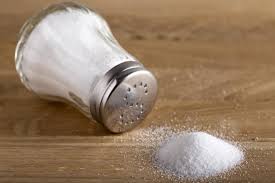
What kind of mixture is shown in the picture?

a)

Homogeneous

b)

Heterogeneous

17.
_____ - made up of two or more elements.
a)
Element
b)
Compound
18.
This picture represents which of the following?
a)
element
b)
compound
c)
mixture
19.
What is gold (Au)?
a)
element
b)
compound
c)
mixture
20.

Valence electrons are transferred

a)

Ionic bonds

b)

Covalent bonds

21.

Valence electrons are shared

a)

Ionic bonds

b)

Covalent bonds

22.

Can be a solid, liquid, or gas at room temperature

a)

Ionic compounds

b)

Covalent compounds

23.

What kind of bonds are shown here?

a)

Covalent

b)

Ionic

24.

What type of bonding does this picture show?

a)

Ionic

b)

Covalent

25.

What type of bonding does this picture show?

a)

Ionic

b)

Covalent

26.
What is a cation
a)
a metal with a negative (-) charge
b)
a non-metal with a negative (-) charge 
c)
a metal with a positive (+) charge 
d)
a non-metal with a positive (+) charge
27.
What is a anion
a)
a metal with a negative (-) charge
b)
a non-metal with a negative (-) charge 
c)
a metal with a positive (+) charge 
d)
a non-metal with a positive (+) charge
28.
NaCl
a)
Ionic
b)
Covalent
c)
Metallic
d)
Polyatomic Ion 
29.
CO2
a)
Ionic
b)
Covalent
c)
Polyatomic Ion 
d)
Metallic 
30.
MgCl2
a)
Ionic
b)
Covalent
c)
Polyatomic Ion
d)
Metallic 
31.
The octet rule means that all valence shells want to have the number...... 
a)
1
b)
9
c)
8
d)
16
32.
How many valence electrons does calcium have?
a)
2
b)
4
c)
6
d)
7
33.
What two types of atoms make a covalent bond?
a)
2 Nonmetals
b)
1 Nonmetal and 1 Metal
c)
2 Metals
d)
2 Noble Gases
34.

If an atom has no charge, which of the following must be true?

a)

It has more neutrons than protons or electrons.

b)

There are only neutrons inside the atom.

c)

Its number of protons is equal to its number of electrons.

d)

The neutrons in the atom outnumber the electrons and protons.

35.

What kind of bond will Potassium form with Sulfur?

a)

ionic

b)

covalent

c)

metallic

d)

no bond

36.
A(n) _________ is an ion with a positive (+) charge.
a)
anion
b)
cation
c)
ion
d)
solute
37.
A(n) _________ is an ion with a negative (-) charge.
a)
anion
b)
ion
c)
cation
d)
solute
38.
This orbital diagram represents:  
a)
C
b)
B
c)
N
d)
O
39.
This orbital diagram represents:  
a)
C
b)
B
c)
N
d)
O
40.
What do you start electron configuration with?
a)
1s2
b)
1d10
c)
1f14
d)
1p6
41.
Why does K become positive when it bonds to Cl to form KCl?
a)
Because it loses an electron to have a full valence shell 
b)
Because it gains an electron to have 2 valence electrons
c)
Because it loses an electron to become negatively charged
d)
Because Cl gives away its 7 electrons to Na to form an equal charge 
42.
What is a double bond?
a)
a bond between two atoms
b)
one pair of electrons shared between two atoms
c)
two pairs of electrons shared between two atoms
d)
James Bond's brother
43.
A covalent bond in which electrons are shared unequally is:
a)
polar
b)
a double bond
c)
ionic
d)
polyatomic
44.
What is the charge on an Aluminum ion?
a)
3
b)
+3
c)
+2
d)
+1
45.
How many valence electrons does nitrogen have?
a)
3
b)
2
c)
5
d)
1
46.
How many valence electrons does hydrogen have?
a)

4

b)
3
c)
2
d)
1
47.

What are the seven diatomic elements?

a)

H2, Cl2, Br2, O2, N2, I2, F2

b)

H2, Cl2, I2, F2, Hg2, Br2, Fe2

c)

H2, Cu2, Ni2, B2, O2, I2, Fe2

48.

What are diatomic elements?

a)

Elements that form two-atom molecules when not combined in a compound.

b)

Two elements that combine with one atom from each element.

c)

Elements that are always in pairs no matter what.

49.

Is O2 a diatomic element?

a)

Yes

b)

No

50.

What type of bond would form between O and H?

a)

Polar Covalent

b)

Non-Polar Covalent

c)

Ionic

51.

What type of bond would form between O and O?

a)

Polar Covalent

b)

Non-Polar Covalent

c)

Ionic

52.

What type of bond would form between Li and O?

a)

Polar Covalent

b)

Non-Polar Covalent

c)

Ionic

53.

The bond between C and Cl is polar covalent. That means

a)

there is a pair of electrons shared equally between them

b)

there is a pair of electrons shared unequally between them

c)

an electron will be stolen from one and given to the other

54.

What type of bond contains atoms with "partial" charges? (Example: δ+)

a)

Polar Covalent

b)

Non-Polar Covalent

c)

Ionic

55.

What type of bond contains cations and anions?

a)

Polar Covalent

b)

Non-Polar Covalent

c)

Ionic

56.

What are valence electrons?

a)

The total number of electrons in an atom

b)

The number of electrons in the outermost shell

c)

The number of electrons in the second shell

d)

The number of protons in the outermost shell
57.

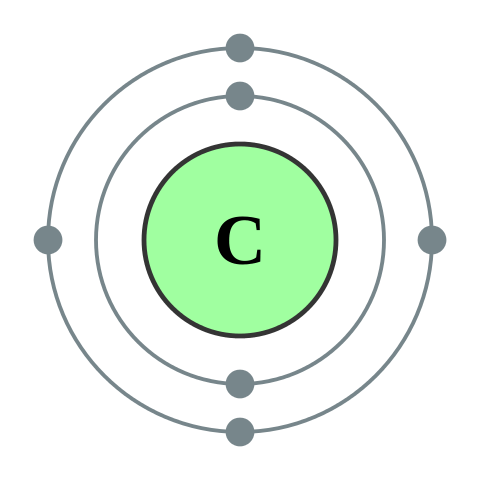
How many valence electrons does carbon have?

a)

4

b)

5

c)

6

d)

7

58.
This could be the dot diagram of 
a)
Ne
b)
Si
c)
Al
d)
Be
59.

This could be the dot diagram of

a)

Mg

b)

Cl

c)

C

d)

O

60.

Which of the following is a correct electron dot structure?

a)
b)
c)
d)
61.

Which of the following is the correct electron dot structure for nitrogen?

a)
b)
c)
d)
62.

What is the correct Lewis Dot Structure for ammonia NH3

a)
b)
c)
d)
63.

Which is the correct molecular structure for carbon dioxide?

a)
b)
c)
d)
64.

NH3 has how many lone pairs?

a)

0

b)

1

c)

2

d)

3

65.
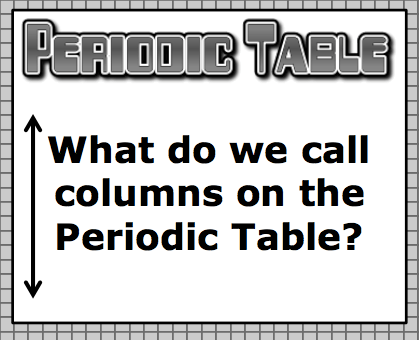
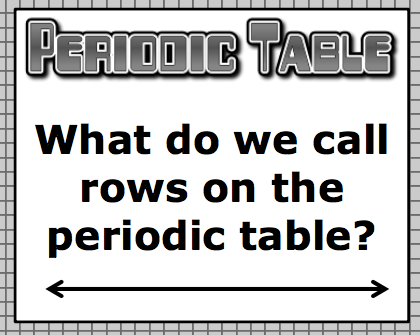
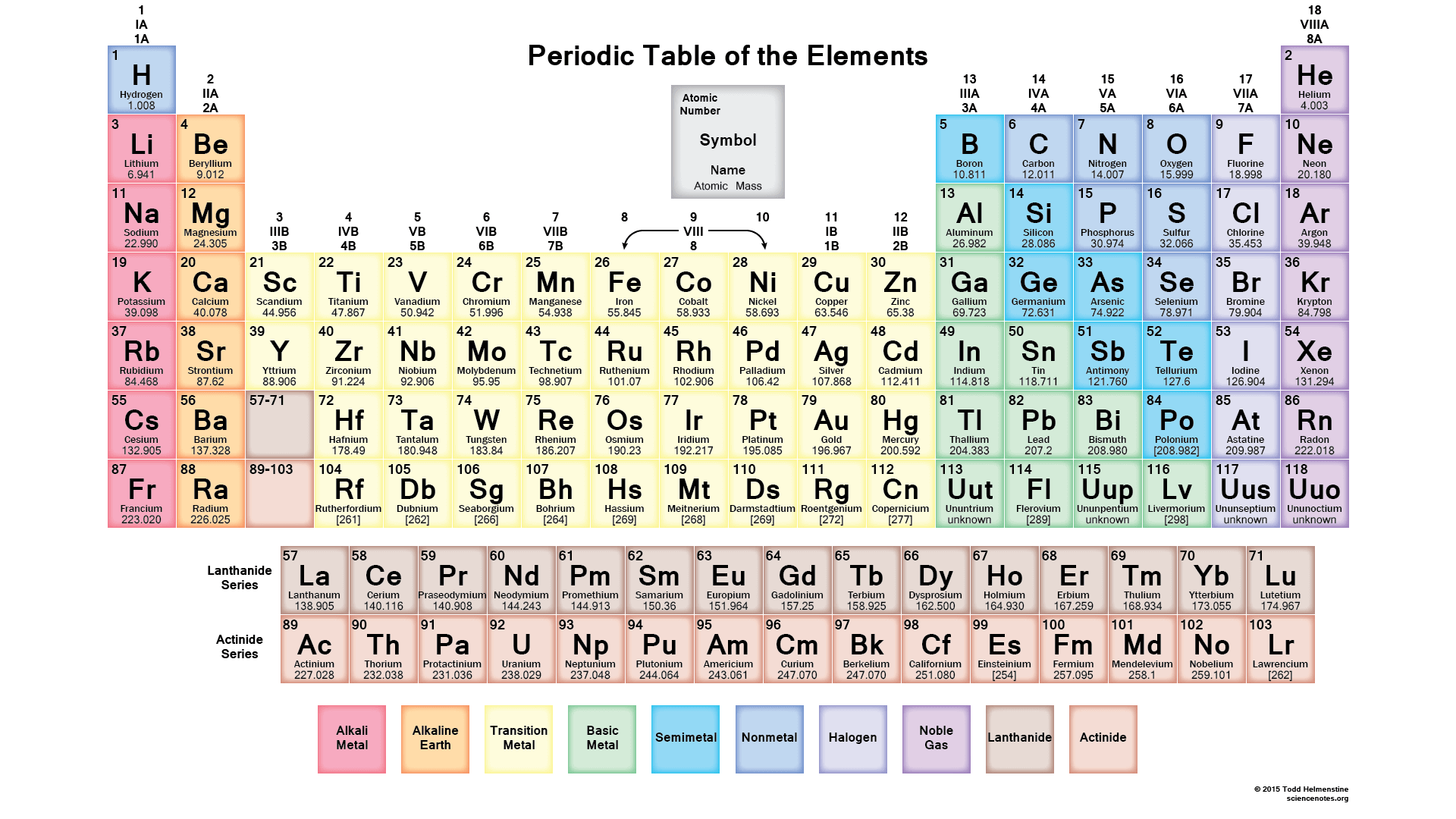
Rows on the period table are called _____ while columns are called _____.
a)
groups, families
b)
groups, periods
c)
periods, groups
d)
families, groups
66.
What's a valence electron?
a)
electrons in the second energy level
b)
electrons in the outermost energy level
c)
the atomic number
d)
electrons in the first level
67.

What is this element?  1s22s22p63s23p64s23d104p6

a)

Argon

b)

Krypton

c)

Selenium

d)

Bromide

68.
a)
Periods
b)
Groups
69.
a)
Periods
b)
Groups
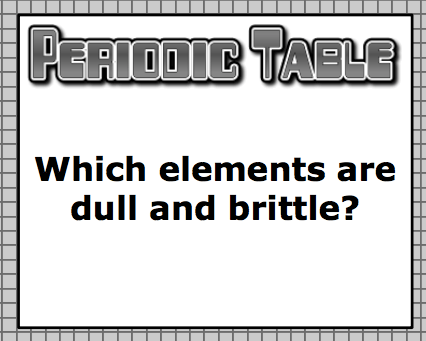
70.
a)
Same group
b)
Same period
71.
a)
Group 1
b)
Group 17
c)
Group 2
d)
Group 18
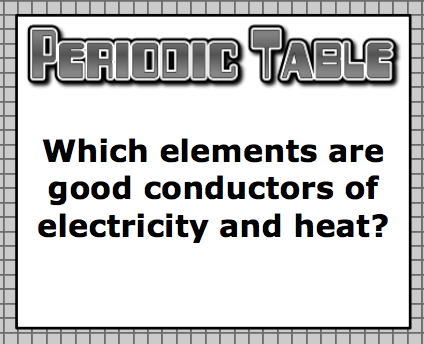
72.
a)
Metals
b)
Nonmetals
c)
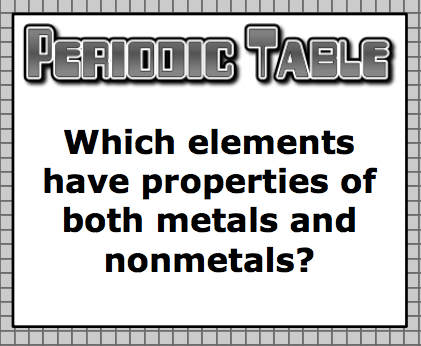
Metalloids
73.
a)
Metals
b)
Nonmetals
c)
Metalloids
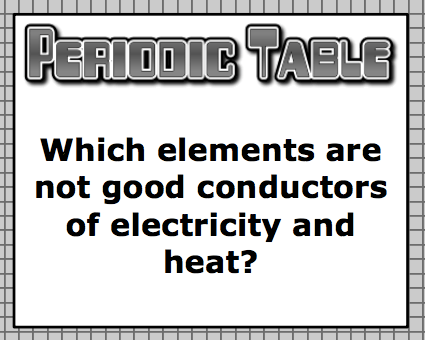
74.
a)
Metals
b)
Nonmetals
c)
Metalloids
75.
a)
Metals
b)
Nonmetals
c)
Metalloids
76.
a)
Metals
b)
Nonmetals
c)
Metalloids
77.
a)
Metals
b)
Nonmetals
c)
Metalloids
78.
a)
Metals
b)
Nonmetals
c)
Metalloids
79.
a)
Metals
b)
Nonmetals
c)
Metalloids
80.
The Modern Periodic Table of Elements is arranged by
a)
atomic mass
b)
atomic number
c)
valence electrons
d)
number of isotopes
81.
Sodium (Na) is found in period 
a)
3
b)
2
c)
4
d)
1
82.
Sodium (Na) is found in group 
a)
1
b)
2
c)
3
d)
4
83.
What does the atomic mass tell you? 
a)
Basically,the number of electrons and protons
b)
The number of neutrons
c)
Basically, the number of protons and neutrons
d)
The number of protons.
84.
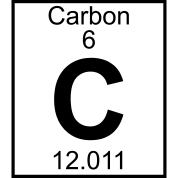
What does the 6 represent?
a)
atomic mass
b)
atomic number
c)
element name
d)
chemical symbol 
85.
What does 12.011 represent?
a)
atomic mass
b)
atomic number
c)
element name
d)
chemical symbol 
86.
What group on the Periodic Table contains the elements of the alkaline earth family?
a)
1
b)
2
c)
17
d)
18
87.
Gold (Au)
a)
Transition Metal
b)
Alkali Metal
c)
Alkaline Earth Metal
d)
Heavy Metal
88.
Which element is not in the Alkali metal family?
a)
Li
b)
H
c)
Fr
d)
Cs 
89.
Argon (Ar)
a)
alkali metal
b)
alkaline earth metal
c)
halogen
d)
noble gas
90.

Sulfur is a...

a)

metal

b)

nonmetal

c)

metalloid

91.
Which is an alkaline earth metal?
a)
Calcium
b)
Rubidium
c)
Carbon
d)
Iodine
92.
Ionization energy is the...
a)
energy needed to remove the outermost electron.
b)
ability of an atom to attract electrons from another atom.
93.
Electronegativity is the...
a)
energy needed to remove the outermost electron.
b)
ability of an atom to attract electrons from another atom.
94.
Which element has the smaller atomic radius: potassium (K) or bromine (Br)?
a)
potassium (K)
b)
bromine (Br)
95.
Which element has the greatest ionization energy: Aluminum (Al)    or    Chlorine (Cl)?
a)
Aluminum (Al)
b)
Chlorine (Cl)
96.
Which element has the greatest electronegativity: Nitrogen (N) or Arsenic (As)?
a)
Nitrogen (N)
b)
Arsenic (As)
97.
The atom with the largest atomic radius in Group 18 is - 
a)
Ar
b)
He
c)
Kr
d)
Rn
98.
Which has the greater Electronegativity: 
N or C?
a)
C
b)
N
99.
all matter is made of what 
a)
energy 
b)
atoms 
c)
electrons 
d)
compounds 
100.
The positive particles of an atom are 
a)
electrons 
b)
positrons 
c)
neutrons 
d)
protons 
101.
the central region of an atom where its neutrons and protons are is its 
a)
nucleus 
b)
electron cloud
c)
core 
d)
center 
102.
an atom with atomic number 6 would have how many protons 
a)
6
b)
12
c)
3
d)
cannot be determined 
103.
Particles in an atom that are neutral and have no charge are 
a)
negatrons 
b)
electrons 
c)
neutrons 
d)
protons 
104.
True or False? Neutrons have a negative charge
a)
True
b)
False
105.
What is the atomic number for an element with three protons?
a)
2
b)
1
c)
3
d)
6
106.
How many neutrons in C-14?
a)
6
b)
7
c)
14
d)
8
107.
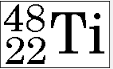
How many protons does this isotope of titanium have?
a)
48
b)
22
c)
26
d)
70
108.
How many neutrons does the isotope of lithium have?
a)
8
b)
3
c)
4
d)
5
109.
In a correctly written symbol what would be located in the "A" position?
a)
number of neutrons
b)
atomic number
c)
number of electrons 
d)
mass number
110.
What quantities vary between isotopes of an element?
a)
protons, electrons, and atomic mass
b)
protons, electrons, and atomic number
c)
neutrons and electrons
d)
neutrons and atomic mass
111.

What is an isotope?

a)

A charged atom

b)

Two atoms of the same element with different amounts of neutrons

c)

Two atoms of the same element with different amounts of protons

d)

A neutral atom

112.

What is the mass of an electron?

a)

1 amu

b)

negligible (basically zero)

113.

how many electrons does an uncharged atom of Neon have?

a)

8

b)

9

c)

10

d)

11

114.
What is the measuring unit for mass?
a)
centimeter 
b)
millimeter 
c)
grams 
d)
pounds
115.
If the exponent on your power of 10 is positive, is your number larger or smaller than 10?
a)
Larger
b)
Smaller
116.
Change from standard form to scientific notation: 12,000,000
a)
12.0  x  107
b)
0.12  x  107
c)
1.2  x  106
d)
1.2  x  107
117.
Try to change the number back to standard form: 3.97  x  10-2
a)
0.000397
b)
0.0397
c)
0.0000397
d)
0.397
118.
The rule of scientific notation is to write all exponents with a base of ____.
a)
50
b)
5
c)
100
d)
10
119.
Which of the following numbers is the SMALLEST?
a)
8.7 x 10³
b)
3 x 10⁴
c)
1.3 x 10⁸
d)
9 x 10²
120.
What atom matches this electron configuration?
1s22s22p63s23p64s23d10
a)
Zinc
b)
Copper
c)
Nickel
d)
Germanium
121.
What electron configuration matches an oxygen atom?
a)
1s22s22p63s2, 3p64s23d104p5
b)
1s22s22p4
c)
1s22s22p6
d)
1s22s22p63s23p64s23d1
122.
The electron configuration of an atom is 1s22s22p6.  The number of electrons in the atom is 
a)
3
b)
6
c)
8
d)
10
123.
Which electron configuration belongs to Chlorine (Cl)?
a)
1s2s2p3s3p5
b)
1s2s2p3s3p6
c)
1s2s2p3s3p7
124.
How many electrons can the d sublevel hold?
a)
14
b)
10
c)
2
d)
6
125.
How many electrons can the s sublevel hold?
a)
14
b)
10
c)
2
d)
6
126.
What atom matches this electron configuration?
1s22s22p63s2
a)
Neon
b)
Magnesium
c)
Aluminum
d)
Potassium
127.

Which of the following is not a correct designation for a sublevel?

a)

zz

b)

p

c)

d

d)

f

128.
How many electrons can the s sublevel hold?
a)
14
b)
10
c)
2
d)
6
129.
There are 4 different types of subshells (orbitals) s,p,d,f.
a)
true
b)
false
130.

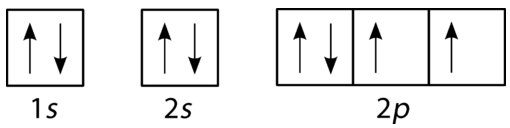
What is incorrect about this orbital diagram?

a)

Both arrows in the 2p box should be pointing up

b)

There is nothing incorrect with this diagram

c)

In the 2p box there should only be 1 electron in the first 2p box and one in the 2nd 2p box pointing in the same direction.

d)

All the arrows should be pointing up.

131.
What is the charge of an atom that has lost one electron?
a)
-1
b)
-2
c)
+1
d)
+2
132.
How many electron can be found in a p orbital?
a)
2
b)
3
c)
4
d)
6
133.
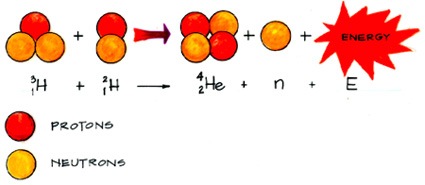
Which process involves the joining of small nuclei?
a)
Beta decay
b)
Alpha decay
c)
Nuclear fission
d)
Nuclear fusion
134.
Which process involves the splitting of large nuclei?
a)
Beta decay
b)
Alpha decay
c)
Nuclear fission
d)
Nuclear fusion
135.
The time taken for half of an amount of radioactive atoms to decay.
a)
Nuclear fusion
b)
Full-life
c)
Dead time
d)
Half-life
136.
The technetium-99 isotope has a half-life of 6.0 hours. If 100.0 mg were injected into a patient how much remains after 18 hours?
a)
33.0 mg
b)
12.5 mg
c)
.33 mg
d)
15.8 mg
137.
What happens to the atomic number during alpha decay?
a)
The atomic number decreases by 4
b)
The atomic number increases by 1
c)
The atomic number decreases by 2.
d)
The atomic number stays the same.
138.
Balance the following equation:
146C --> 0-1e + ________
a)
145B
b)
146C
c)
147N
d)
42He
139.

In the symbol 167N what the 7 stand for?

a)

Mass number

b)

Atomic number

c)

Atomic mass

d)

Number of neutrons

140.
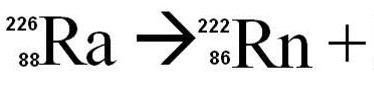
Complete the nuclear equation and determine the type of decay that is occurring in this reaction. 
a)
alpha
b)
beta
c)
gamma
d)
none
141.
Alpha particles have a _____ charge.
a)
+2
b)
0
c)
+1
d)
-1
142.
What does it mean when an element is radioactive?
a)
atom emits radiation
b)
nucei unstable due to uneven p to n ratio
c)
nuclei changes to become stable
d)
all of the above
143.
What would two different isotopes of an atom have in common?
a)
Number of neutrons 
b)
Number of protons
c)
Atomic weight 
d)
Atomic mass
144.
What happens when the number of protons in an atom changes? 
a)
The number of electrons changes too 
b)
Usually nothing happens, unless the atom is radioactive 
c)
The atomic nucleus explodes
d)
It becomes a completely different atom, with different properties 
145.
Which type of nuclear radiation is being emitted here?
a)
Alpha
b)
beta
c)
gamma 
d)
none
146.
Negatively charged particles found outside of the nucleus are called
a)
electron
b)
protons
c)
neutrons
d)
nucleons
147.
Positively charged particles found in the nucleus of an atom are called
a)
protons
b)
neutrons
c)
electrons
d)
isotopes
148.
When nuclei decay, massive amounts of __________ is released.
a)
energy
b)
jello
c)
protons
d)
neutrons