
 Worksheets
Y10 CS EOY_Chem
Total questions: 150
Worksheet time: 3hrs 52mins

Which of the following is true about compounds?
They are made of one element combined in a fixed ratio by weight.
They have the same properties as the elements they are made of.
They are formed when two or more elements combine with one another by chemically bonding.
They are always in the gaseous state.
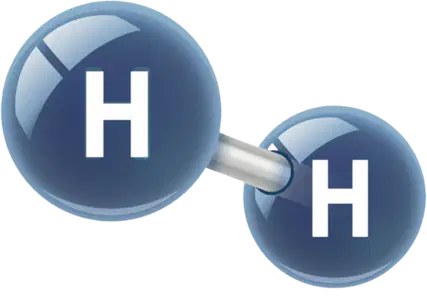
What is the elemental form of hydrogen represented by?
H
H2
H2O
O2

What is the formula for a water molecule?
H2
O2
CO2
H2O
Which particle contains most electrons ?
O3-
Ne
Na-
Mg3+
In an atom, what is the number of protons equal to?
The number of electrons
The number of neutrons
The number of nuclei
The number of molecules
Particles in an atom that are neutral and have no charge are
negatrons
protons
neutrons
electrons
Which element exists as a macromolecule ?
Oxygen
Carbon
Sodium
Hydrogen
Which statement is not correct ?
Ammonia is a compound.
Methane is a compound.
Air is a mixture.
Sea water is a compound.
Which substance, when molten, conducts electricity ?
bitumen
caesium iodide
diamond
sand
Which of these does not exist as a diatomic molecule ?
Neon
Chlorine
Hydrogen
Oxygen
Which terms means...
the number of protons in the nucleus of an atom and the number is the same for all atoms of the same elements
average atomic mass
atomic number
electron cloud
chemical symbol
Which terms means...
in chemistry, a horizontal row of elements in the periodic table
period
group
periodic table
chemical symbol
How many different atoms are there in a compound?
1
always 2
two or more
at least three
The state of matter where the particles are spread out as far as possible is
Solid
Liquid
Gas
Plasma
The state of matter where the particles have no set volume and no set shape is
Solid
Liquid
Gas
Plasma
The phase change where matter changes from solid to liquid is
Freezing/ Solidifying
Melting
Evaporation
Condensation

This is a visualization of an
Solid
Liquid
Gas
How does temperature impact the rate of diffusion in a substance?
Temperature decreases the rate of diffusion by slowing down particle movement
Temperature has no impact on the rate of diffusion
Temperature causes diffusion to occur in the opposite direction
Temperature impacts the rate of diffusion by increasing the kinetic energy of particles, leading to faster diffusion.
What factors can influence the speed of diffusion in a solution?
Time, shape, and texture
Pressure, color, and volume
Temperature, concentration gradient, molecular size, and medium
Density, taste, and odor
Discuss the concept of diffusion in gases versus diffusion in liquids.
Diffusion in gases is slower than diffusion in liquids due to the lower kinetic energy in gases.
Diffusion in gases is faster than diffusion in liquids due to the higher kinetic energy and greater space between particles in gases.
Diffusion in gases is faster than diffusion in liquids due to the lower kinetic energy in gases.
Diffusion in gases is slower than diffusion in liquids due to the greater space between particles in gases.
In what direction does a gas diffuse?
From a low concentration to high concentration
From a high concentration to low concentration
Where ever they want, they are gases
Gases don't diffuse, they stay in one location
How many oxygen atoms have equal mass with two magnesium atoms?
[RAM: O, 16; Mg, 24]
2
3
4
5
Silica gel contains a sodium compound with the formula Na2Si4Oy. If the relative formula mass of the compound is 302, what is the value of y?
[RAM: O, 16; Na, 23; Si, 28]
8
9
10
12
When thermal energy is decreased in a liquid and freezing occurs, what state of matter does the liquid change into?
Gas
Solid
How does the density of a substance affect the rate of diffusion?
Higher density increases the rate of diffusion
Lower density increases the rate of diffusion
Density has no effect on the rate of diffusion
Density decreases the rate of diffusion
Which is a halogen?
Helium
Chlorine
Oxygen
Calcium
Down the group 1, reactivity of metals increases
True
False

Which elements are colored red?
nonmetals
metals
metalloids

Which element conducts electricity the best?
Silicon
Fluorine
silver
Arsenic
Which of the following is the electronic Configuration of Sodium
2,8
2,8,1
2,1,8
8,1,2
An atom has atomic number 4 the number of electrons in its outermost orbit will be ?
2
6
4
1

Which of these is a distinguishing property for the noble gases?
Soft - can cut with a plastic knife
Unreactive - don't give or receive electrons
Shiny - exhibits luster
Poor conductors of electricity
Which of these is a distinguishing property for the nonmetals?
Soft - can cut with a plastic knife
Unreactive - don't give or receive electrons
Shiny - exhibits luster
Poor conductors of electricity
protons and neutrons are the same
protons and electrons are the same
neutrons and electrons are the same
Isotopes of an element have a different number of...
Protons
Neutrons
Electrons

By studying the picture, you can determine that Carbon-13 has ____ protons.
6
13
12
14
Nitrogen, N, will form which of the following ions?
N
N-3
N-5
N+5
Which of the following is NOT a property of ionic compounds?
They conduct electricity when molten
They conduct electricity when in solution
They have high boiling points
They are insoluble in water
Carbon and Oxygen will make a ___________ bond.
ionic
covalent
metallic
MgO
ionic
covalent
metallic
Sodium and Bromine will make a _____ bond.
ionic
covalent
metallic
Nitrogen and Oxygen will make a ____________ bond
ionic
covalent
metallic
When a metal loses electrons, it becomes this type of ion.
anion
cation

Is this compound ionic or covalent?
ionic
covalent
Which of the following proton numbers belongs to an element that does not form chemical bonds?
8
12
18
20
The cation Rb+ has
Had nothing happen to it
Gained 1 electron
Lost 1 electron
Become negative

The electron configuration of Nitrogen is
0, 2, 5
N, 2, 5
7
2, 5
An element with the electron configuration 2, 1 is in which group number?
1
2
3
4
Electrons repel each other and move frantically in their shells because
Their positive charges repel
Their negative charges attract
Their negative charges repel
Their positive charges attract
Which structures conduct electricity as a liquid but not as a solid?
Metallic
Covalent
Ionic
All of the above
Which structure has a sea of free electrons?
Ionic
Covalent
Metallic
All of the above
An atom with 3 valence electrons "wants" a full shell, so it can either gain 5 or lose 3. Which is more likely to occur?
Gain 5
Lose 3
Nothing
Example of giant molecule
carbon dioxide
Silicon dioxide
Why ionic compounds are not volatile? Because they ...................
have high melting and boiling points
have low melting and boiling points
Example of simple molecule
Carbon dioxide
Silicon dioxide
Which substance has the weakest intermolecular forces?
Substance A, boiling point of 75 °C
Substance B, boiling point of 105 °C
Substance C, boiling point of 25 °C
Substance d, boiling point of 45 °C
The weaker the intermolecular forces of a substance the _____________ the boiling point
higher
lower
Which has weak intermolecular forces in between layers?
graphite
diamond
fullerene
none of these
_____ can conduct electricity because it has _____ _____
diamond
graphite
localised electrons
delocalised electrons
Diamond is used for cutting glass because it is
hard and strong
soft
shiny
unreactive
what charge do the metal ions have in metallic bonding?
negative
positive
neutral
what one word describe the electrons in metallic bonding
(a)
The force of attraction between a metal ion and surrounding electrons is a(n)
(a)
Which of the following would have the lowest melting point?
MgCl2
Al2O3
CO2
AlP
Which of the following pairs of elements would NOT react to form an IONIC compound?
sulfur and phosphorus
sodium and iodine
iron and oxygen
aluminum and bromine

The diagram shows metallic bonding.
Which labels are correct?
X: atomic nucleus
Y: outer electron
X: metal atom
Y: mobile electron
X: metal cation
Y: mobile electron
X: positive ion
Y: negative ion

Why do metals conduct electricity?
Metals have shiny surface
Metals have tightly held electrons
Metals have delocalised electron that are able to move
Metals have shared electron between two metal ions
The relative formula mass, Mr, of calcium carbonate, CaCO3, is 100.
What is the mass of carbon present in 100 g of calcium carbonate?
12 g
40 g
36 g
60 g
The compound magnesium nitrate has the formula Mg(NO3)2.
What is the relative formula mass of magnesium nitrate?
86
134
148
172
Propane burns in oxygen.
C3H8 + xO2 → 3CO2 + yH2O
Which values of x and y balance the equation?
x = 5, y = 4
x = 7, y = 4
x = 10, y = 8
x = 13, y = 8

CaCO3 --> CaO + CO2
A
B
C
D

A
B
C
D
I need to add 8 moles of Carbon to the reaction. How many grams of Carbon should I weigh?
4NH3(g) + 5O2(g) --> 4NO(g) + 6H2O(l)
How many grams of oxygen gas are needed to react with 56.8 grams of ammonia?
What is the formula for calculating molar volume?
Molar volume = Molar mass - Density
Molar volume = Molar mass / Density
Molar volume = Molar mass + Density
Molar volume = Molar mass * Density
What is the formula for calculating concentration?
Amount of solute - Volume of solution
Amount of solute / Volume of solution
Amount of solute + Volume of solution
Amount of solute * Volume of solution
What volume of hydrogen will be produced at RTP by the reaction 67.3 g of magnesium with excfess water according to the following reaction?
1Mg + 2H2O --> Mg(OH)2 + H2
Ar values: Mg=24.3, H=1, O=16
66.5 dm3
65 dm3
31 dm3
124 dm3
How many moles of methane gas molecules, CH 4 , are in 12 dm 3 of methane at Room temperature and pressure?
11.2 moles
0.5 moles
179.2 moles
27.2 moles

Rubidium is in Group I of the Periodic Table and bromine is in Group VII.
Rubidium reacts with bromine to form an ionic compound.
Which row shows the electron change taking place for rubidium and the correct formula of the rubidium ion?
A
B
C
D

Lithium is in Group I of the Periodic Table. Nitrogen is in Group V of the Periodic Table.
Lithium reacts with nitrogen to form the ionic compound lithium nitride.
What happens to the electrons when lithium atoms and nitrogen atoms form ions?
A
B
C
D

Which of the following chemical equations is correct for the word equation:
Solid magnesium is burned in oxygen gas to produce solid magnesium oxide.
Mg + O2→ MgO (aq)
Mg+ O→ MgO (s)
Mg + CO2 → MgO (s) + C
Mg + O2→ MgO (s)

Solid sodium reacts with chlorine gas to produce sodium chloride crystals.
NaCl (s)→ Cl(g) + Na(s)
Na (s)+ CO2 (g)→ NaCO2 (s)
Na (s) + Cl2 (g)→ NaCl (s)
Na (g) + Cl (s) → NaCl (s)
The negatively charged ions are attracted to the ________.
anode
cathode
Anions get discharged by ________ electrons at the ___________
gaining, cathode
losing, anode
gaining, anode
losing, cathode
What is the gas produced at the anode during the electrolysis of very dilute hydrochloric acid?
water
oxygen
hydrogen
chlorine
Choose the half-equation that shows the discharge of aluminium ion.
Al3+ - 3e- --> Al
Al2+ + 3e- --> Al
Al3+ + 3e- --> Al
Al3+ --> Al + 3e-
What is the half-equation for the discharge of hydroxide ions?
2O2- --> O2 + 4e-
OH- --> OH + e
4OH- --> 2H2O + O2 + 4e-
2H2O + O2 + 4e- --> 4OH-
What ions are present in molten aluminium oxide?
Al3+, O2-, H+, OH-
Al3+, O2-
Al3+, OH-
Using reactivity series of metals, which of the following metals is the least reactive ?
Potassium
Aluminium
Iron
Gold
Which substance does NOT produce a gas at both electrodes during electrolysis?
concentrated aqueous sodium chloride
concentrated hydrochloric acid
dilute sulfuric acid
molten lead(II) bromide

The diagram shows that two gases are formed when concentrated hydrochloric acid is electrolysed between inert electrodes.
A
B
C
D
Oxidation is the _________ of electrons.
loss
gain
sharing
transfer
Reduction is the ___________ of electrons.
loss
gain
sharing
transfer

What does a Hydrogen fuel cell combine with to make water?
Hydrogen peroxide and oxygen.
Water and heat.
Hydrogen gas & oxygen gas
Hydrogen and O

A
B
C
D

A
B
C
D

Ethanol has a higher boiling point than water.
Ethanol has a lower melting point than water.
Ethanol has a higher melting point than water.
Ethanol has a lower boiling point than water.

A
B
C
D

A
B
C
D

A
B
C
D

Answer the question
D
B
A
C

What is the uses of apparatus on pictures?
measuring of mass
measuring of temperature
measuring of gas
measuring of volume

what is name of apparatus on picture?
measuring pipette
beaker glass
measuring cylinder
funnel
Test for ammonia (NH3)
turns damp, red litmus paper blue
turns limewater milky
'pops' with a lighted splint
damp blue litmus paper turns red, then bleach to white
relights a glowing splint
Test for carbon dioxide (CO2)
turns damp, red litmus paper blue
turns limewater milky
turns acidified aqueous potassium manganate(VII) from purple to colourless
damp blue litmus paper turns red, then bleach to white
relights a glowing splint
Test for chlorine (Cl2)
turns damp, red litmus paper blue
turns limewater milky
'pops' with a lighted splint
damp blue litmus paper turns red, then bleach to white
relights a glowing splint
Test for hydrogen (H2)
turns damp, red litmus paper blue
turns limewater milky
'pops' with a lighted splint
damp blue litmus paper turns red, then bleach to white
relights a glowing splint
Test for oxygen (O2)
turns damp, red litmus paper blue
turns limewater milky
turns acidified aqueous potassium manganate(VII) from purple to colourless
damp blue litmus paper turns red, then bleach to white
relights a glowing splint
I am left behind in the filter paper ]. What Am I?
Filtrate
Solution
Residue
The impurities such as sugar or salt will _____________________________________ the boiling point of the water.
increase
remain the same
decrease

Saltwater solution was separated using a simple distillation set-up. Identify the distillate.
water only
salt only
saltwater

Name number 2 on the diagram using the keywords!
Filter funnel
Filtrate
Filter paper
Residue
What is the filtration method used for?
To separate a liquid from a gas
To separate a liquid from a solid
To separate a liquid from a liquid
To separate a solid from a solid
Which separation technique is used to obtain salt from seawater?
Simple distillation
Filtration
Chromatography
Evaporation
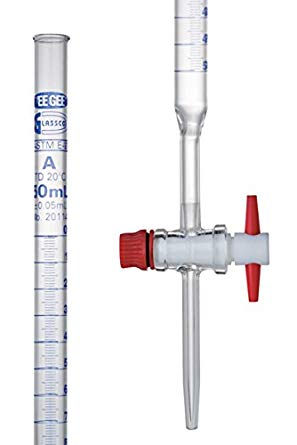
What is this piece of apparatus called
Pipette
Burette
Janette
Cuvette
Why do we perform a titration?
To determine the concentration of an unknown solution
To see if a reaction will occur between an acid and base
To find the mass of an unknown acid
To find the molar mass of an unknown solution
To calculate the viscosity of the solution
The pipette is used to
measure volume of solution
hold the solution
accurately measure volume of solution
measure the mass of solution.
A solution contains chloride ions.
Dilute nitric acid and aqueous silver nitrate were added to the solution.
Observation: ___________________.
yellow precipitate formed
white precipitate formed
cream precipitate formed
no reaction
What compound gives off pinkish red color when heated over a flame?
Lithium
Strontium
Potassium
Calcium

