wayground logo

Free Printable Worksheets

Font size

S
M
L
XL
Worksheets

covalent bonding

Total questions: 145

Worksheet time: 2hrs 59mins
Name
Class
Date
1.
What two types of atoms make a covalent bond?
a)
2 Nonmetals
b)
1 Nonmetal and 1 Metal
c)
2 Metals
d)
2 Noble Gases
2.
How are covalent bonds explained?
a)
When one atom takes the other atom's electron
b)
When the atom shares an electron with an another atom
c)
When the two nucleus merge
d)
When the neutrons leave the nucleus
3.
In chemical compounds, covalent bonds form when
a)
the electronegativity difference between two atoms is very large.
b)
electrons are completely transferred between two metals.
c)
pairs of electrons are shared between two nonmetal atoms.
d)
two nonmetal atoms are attracted to each other by opposite charges.
4.
What region of the periodic table contains atoms that form covalent bonds?
a)
the left side
b)
the middle
c)
the right side
d)
top left
5.
Is carbon considered a metal or a non-metal?
a)
metal
b)
nonmetal
c)
other
6.
How are ionic bonds formed?
a)
When atoms share an electron
b)
When opposite charged atoms attract
c)
When one atom takes a proton
d)
When one atom takes a neutron
7.
Are the atoms more stable when they are bonded together or when they are apart? 
a)
Bonded Together
b)
Apart
8.
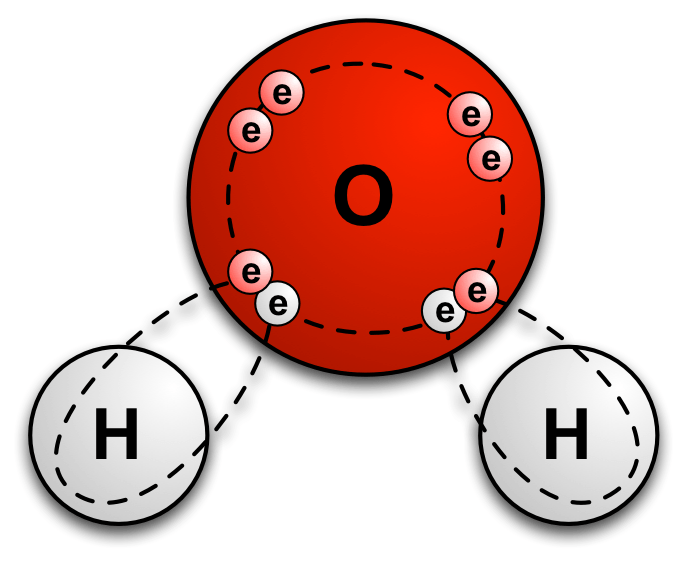
What would you name this molecule?
a)
SNa3
b)
H3O
c)
NaCl
d)
H2O
9.
What molecule is this?
a)
CO
b)
CO2
c)
C2O
d)
C2O2
10.
The desire for an element to have 8 atoms around it is called 
a)
Octet Rule
b)
Resonance
c)
Ionization energy
d)
Electronegativity
11.
How many Valence Electrons are on Oxygen
a)
2
b)
7
c)
6
d)
1
12.
Which of the following elements wants to bond 3 times
a)
Oxygen
b)
Phosphorous
c)
Fluorine
d)
Germanium
13.
Which of the following is a Diatomic Molecule 
a)
K2
b)
C2
c)
S2
d)
N2
14.
What is the formula for this Compound
a)
PCl
b)
PCL5
c)
PCl5
d)
Phosphorous Penta Chloride
15.
Which of these would be covalently bonded
a)
Fr and K
b)
Sc and O 
c)
F and Cl
d)
He and Pt
16.

A bond between a metal and a nonmetal is called a(n)

a)

covalent bond

b)

ionic bond

c)

metallic bond

d)

transfer bond

17.

A bond between a nonmetal and a nonmetal is called a(n)

a)

covalent bond

b)

ionic bond

c)

metallic bond

d)

transfer bond

18.

What type of bond involves the sharing of electrons between atoms?

a)

covalent bond

b)

ionic bond

c)

metallic bond

d)

transfer bond

19.

Identify the following compound as ionic or covalent: MgO

a)

ionic

b)

covalent

20.

Identify the following compound as ionic or covalent: Na2SO4

a)

ionic

b)

covalent

21.

Identify the following compound as ionic or covalent: CF4

a)

ionic

b)

covalent

22.

Identify the following compound as ionic or covalent: SO2

a)

ionic

b)

covalent

23.

Identify the following compound as ionic or covalent: CO

a)

ionic

b)

covalent

24.

Identify the following compound as ionic or covalent: Ca(OH)2

a)

ionic

b)

covalent

25.
How many valence electrons does nitrogen have?
a)
3
b)
2
c)
5
d)
1
26.
What can be generalized about covalent bonds?
a)
Electrons will be exchanged.
b)
Electrons will be transferred.
c)
Electrons will be given and taken.
d)
Electrons will be shared.
27.
What is it called if there are three-pairs of electrons being shared?
a)
Triple bond
b)
Bond length
c)
Tribond
d)
Chocolate Mousse
28.
Which of the following is the correct Lewis dot structure for the molecule fluorine (F2)?
a)
A
b)
B
c)
C
d)
D
29.
How many electrons should Carbon have around its Lewis dot structure?
a)
1
b)
3
c)
4
d)
5
30.
What two types of atoms make a covalent bond?
a)
2 Nonmetals
b)
1 Nonmetal & 1 Metal
c)
2 Metals
d)
2 Noble Gases
31.
What is a diatomic element?
a)
a metal bonded with a nonmetal
b)
2 or more nonmetals bonded together
c)
2 or more metals bonded together
d)
2 atoms of the same element bonded together
32.
How many electrons are shared in a double bond?
a)
2
b)
4
c)
6
d)
8
33.

What bond is formed between a metal and a nonmetal?

a)

Covalent bond

b)

Ionic bond

c)

Hydrogen bond

d)

Metallic bond

34.
The number of bonds an element will form in a covalent compound will be equal to
a)
the number of valence electrons
b)
eight electrons
c)
the number of electrons needed to reach an octet
d)
the group number
35.
How many electrons should Lithium have around its Lewis dot model?
a)
1
b)
2
c)
3
d)
4
36.
According to the octet rule most elements need _______ valence electrons.
a)
2
b)
8
c)
6
d)
18
37.
Hydrogen needs _____ electrons in its valence shell to be stable.
a)
4
b)
6
c)
8
d)
2
38.
What is the correct formula for this molecule?
a)
NH
b)
N3H
c)
NH3
d)
NH4
39.

Which is the correct structure for NH3?

Pictures correspond with a-d.

a)

Option A.

b)

Option B.

c)

Option C.

d)

Option D.

40.
How many covalent bonds does carbon need to form in order to have a full octet?
a)
2
b)
3
c)
4
d)
5
41.
Which of the following is the correct Lewis structure for CH2O?
a)
Option A
b)
Option B
c)
Option C
d)
Option D
42.
In the correct Lewis structure for water, how many unshared pairs of electrons will oxygen have?
a)
1
b)
4
c)
3
d)
2
43.

Which of the following is the correct LD Diagram for Hydrogen Cyanide, HCN?

a)

A

b)

B

c)

C

d)

D

44.
Which LD Diagram is correct for chloromethane (CH3Cl)
a)
A
b)
B
c)
C
d)
D
45.
What is a double bond?
a)
a bond between two atoms
b)
one pair of electrons shared between two atoms
c)
two pairs of electrons shared between two atoms
d)
James Bond's brother
46.
Covalent compounds
a)
Share electrons
b)
transfer electrons
c)
contain a sea of electrons
d)
conduct electricity
47.

What is the correct Lewis Dot Structure for NH3?

a)
b)
c)
d)
48.

Which is the correct molecular structure for carbon dioxide CO2?

a)
b)
c)
d)
49.

NH3 has how many lone pairs?

a)

0

b)

1

c)

2

d)

3

50.
What is the charge on an Aluminum ion?
a)
3
b)
+3
c)
+2
d)
+1
51.
How many valence electrons does nitrogen have?
a)
3
b)
2
c)
5
d)
1
52.
How many valence electrons does hydrogen have?
a)

4

b)
3
c)
2
d)
1
53.
A(n) _________ is an ion with a positive (+) charge.
a)
anion
b)
cation
c)
ion
d)
solute
54.
Name CCl4
a)
carbon carbon tetraiodide
b)
carbon tetrachloride
c)
monocarbon tetrachloride
d)
water
55.
What is the ionic compound formed between Ba and P?
a)
Ba2P3
b)
Ba3P2
c)
BaP
d)
Ba2P2
56.
Give the formula for oxygen dichloride
a)
OCl2
b)

O2Cl2

c)
OCl
d)
O2Cl
57.
An ionic bond happens between what kinds of elements?
a)
metals and metals
b)
metals and nonmetals
c)
nonmetals and nonmetals
58.
name the following ionic compound: NaF
a)
nitrogen fluorine
b)
sodium fluoride
c)
nitrogen fluoride
d)
sodium fluorine
59.

What is the reason why Noble gases are so stable?

a)

They have an even number of electrons

b)

They have no electrons

c)

They have a full outer shell of electrons

d)

They bond with other atoms

60.

A covalent bond...

a)

is when electrons are transferred between atoms

b)

is when an electron is lost from an atom

c)

is when an electron is shared by 2 atoms

d)

is a shared pair of electrons between 2 atoms

61.
Name this compound: 
KF
a)
Potassium fluoride
b)
Potassium fluorite
c)
Fluorine potasside 
d)
Potassium fluorate
62.
What is sugar?
a)
element
b)
compound
c)
mixture
63.
Classify: 
sulfur dioxide, SO2
a)
ionic compound
b)
molecular compound
c)
metallic element
d)
non-metallic element
64.
What types of elements combine to form a molecular compound?
a)
two or more metals
b)
two or more different nonmetals
c)
a metal and a non-metal
d)
two of the same nonmetal
65.
Ionic compounds are bonds between
a)
Metals and Metals
b)
Metals and Nonmetals
c)
Nonmetals and Nonmetals
d)
None of the above
66.
 Li2O
a)
Dilithium oxideDilithium oxide
b)
Lithium oxide
c)
Lithium dioxide
67.
MgS 
a)
Magnesium sulfide
b)
Monomagnesium monosulfide
c)
Magnesium monosulfide
68.
Na2S
a)

Disodium sulfide

Disodium sulfide

b)
Sodium sulfide
c)
Sodium monosulfide
69.
Al2S3
a)
Dialuminum Trisulfide
b)
Aluminum sulfide
70.

Zinc fluoride

a)

ZnF2

b)

Zn2F

c)

ZnF

d)

Zn2F4

71.

Write the correct formula for Sodium Chloride.

a)

SC

b)

SCl

c)

NaCl

d)

NaCl2

72.

What is the correct formula for potassium oxide?

a)

KO2

b)

KO

c)

K2O

d)

OK2

73.
What is the charge of Ni in NiBr3?
a)
+2
b)
+3
c)
-3
d)
+6
74.
Magnesium ion would take a charge of
a)
1+
b)
2+
c)
3+
d)
0
75.
What is an ionic bond?
a)
electrostatic force of attraction that binds oppositely charged ions.
b)
electrostatic force of attraction that binds same charged ions.
76.
A(n) _________ is an ion with a positive (+) charge.
a)
anion
b)
cation
c)
ion
d)
solute
77.
What is the ionic compound formed between LI and N?
a)
Li3N
b)
Li2N2
c)
Li3N2
d)
LiN3
78.
What is the ionic compound formed between Ca and Br?
a)
CaBr
b)
CaBr2
c)
Ca2Br
d)
Ca2Br
79.
Why are alloys generally used to make everyday objects?
a)
Alloys are often stronger and less active than pure metals.
b)
Alloys have higher melting point than pure metals.
c)
Alloys are less expensive to produce than pure metals.
d)
Alloys have ionic bonds instead of metallic bonds.
80.
Metallic bonding is...
a)
a type of covalent bond.
b)
a type of ionic bond.
c)
an attraction between positive and negative ions.
d)
an attraction between positive ions and electrons.
81.
Which of the following is NOT a property of a metal?
a)
ductile
b)
good electrical conductor
c)
good thermal insulator
d)
malleable
82.
At room temperature, most metals are
a)
liquid
b)
solid
c)
gas
d)
an alloy
83.
An attraction between a positive metal ion and surrounding electrons is a(n) ____________bond.
a)
metallic
b)
ionic
84.
Metals typically have ____________melting points.
a)
High
b)
Low
85.
Metals are often used to make wire because they are 
a)
malleable
b)
ductile
86.
Metals are used in electrical wires because they have a high ____________conductivity. 
a)
 electrical
b)
thermal
87.
Nonmetals are unlikely to form metallic bonds because their ____________ are strongly held. 
a)
positive ions
b)
valence electrons
88.
 A lone pair is defined as
a)
A pair of bonding electrons
b)
One non-bonding electron
c)
A pair of non-bonding electrons
d)
A pair of electrons on the central atom
89.
What is the VSEPR theory used to predict?
a)
Bond Strength
b)
Polarity
c)
Molecular Shape
d)
Electronegativity
90.

What 3-D VSEPR shape does this molecule exhibit?

a)

linear

b)

tetrahedral

c)

trigonal pyramidal

d)

trigonal planar

91.

Which Lewis Dot Model drawing correctly shows an O2 molecule?

a)
b)
c)
d)
92.
What is the VSEPR shape of H2S?
a)
linear
b)
trigonal planar
c)
bent
d)
tetrahedral
93.
How many electrons are shared in a double bond?
a)
1
b)
2
c)
4
d)
6
94.

Which type of molecular shape is shown by this molecule?

a)

trigonal pyramidal

b)

tetrahedral

c)

bent

d)

trigonal planar

95.
Low melting point and low solubility in water are general properties of ______________________ compounds
a)
ionic
b)
covalent
c)
chemical
d)
glucose
96.

Which of these Lewis structures is incorrect?

a)
b)
c)
d)
97.

Which is the correct molecular structure for carbon dioxide?

a)
b)
c)
d)
98.
What is the ELECTRONIC geometry of the following?
a)
Linear
b)
Trigonal planar
c)
Tetrahedral
d)
Trigonal Bipyramidal
99.
What is the MOLECULAR geometry of the central oxygen?
a)
Linear
b)
Trigonal Planar
c)
Bent
d)
Tetrahedral
100.
Which of the following molecular shapes would have a bond angle of 180 Degrees?
a)
Bent
b)
Trigonal Planar
c)
Tetrahedral
d)
Linear
101.
Which shapes are altered by unshared pairs of electrons? 
a)
Bent and Pyramidal
b)
Trigonal Planar and Bent
c)
Tetrahedram and Bipyramidal
d)
Pyramidal and Linear
102.
What molecular shape is the structure shown here? (BCl3)
a)
linear
b)
trigonal planar
c)
tetrahedral
d)
trigonal pyramidal
103.
What molecular shape is the structure shown here? (H2O)
a)
tetrahedral
b)
trigonal planar
c)
bent
d)
trigonal pyramidal
104.
What molecular shape is the structure shown here? (NH4+)
a)
linear
b)
trigonal planar
c)
tetrahedral
d)
trigonal pyramidal
105.
VSEPR stands for ________ theory.
a)
Valence Structure of Electron Pyramids and Regression
b)
Varied Structures of Electrons Paired and Replaced
c)
Varied Shell Energy of Protons and Radiation
d)
Valence Shell Electron Pair Repulsion
106.
What VSEPR shape is this
a)
Linear
b)
Line
c)
Tetrahedral
d)
Bent
107.

Which shape best respresents this water molecule?

a)

Linear

b)

Tetrahedral Bent

c)

Trigonal planar

d)

Trigonal pyramid

108.

How many connection points does carbon have to bond?

a)

2

b)

4

c)

6

d)

8

109.

By replacing the element symbol, this could be a diagram of which element?

a)

Li

b)

Al

c)

C

d)

Be

110.

How many valence electrons should boron (B) have around its lewis dot structure?

a)

5

b)

6

c)

4

d)

3

111.

Which geometric molecular shape is shown?

a)

bent

b)

trigonal planar

c)

trigonal pyramidal

d)

tetrahedral

112.

Which geometric molecular shape is shown?

a)

bent

b)

trigonal pyramidal

c)

tetrahedral

d)

trigonal planar

113.

Which is the correct lewis dot structure for Ne?

a)

A

b)

D

c)

F

d)

H

114.
HCl
a)
Polar 
b)
Nonpolar 
115.
N2
a)
Polar 
b)
Nonpolar 
116.
F2
a)
Polar 
b)
Nonpolar 
117.
H2O
a)
Polar 
b)
Nonpolar 
118.
NF3
a)
Polar 
b)
Nonpolar 
119.
Which of the following is a polar molecule?
a)
CH4
b)
Xe
c)
H2O
d)
CO2
120.
Which of the following geometries could be nonpolar?
a)
bent
b)
tetrahedral
c)
trigonal pyrimidal
d)
none of the above
121.
Which formula represents a nonpolar molecule?
a)
HBr
b)
H2S
c)
CBr4
d)
PCl3
122.

Non polar covalent bond is equal sharing of electron. Polar covelent bond is

a)

unequal sharing of electrons

b)

different distribution of electrons

c)

presence of hydrogen bonding

d)

presence of polar atoms

123.

Polarity of a molecule is determined by

a)

shape and charge

b)

symmetry/asymmetry of molecule and difference in EN value

c)

difference in EN value and size

d)

difference in EN value and charges

124.

CO2 has polar bonds but is a NON POLAR molecule. Why?

a)

it has an asymmetrical shape

b)

bond polarity or dipole moment between C and O atoms cancel

c)

there is net dipole moment between C and O atoms in molecule

d)

bond polarity does not exist between C+ and O- atoms

125.

Which is the correct description about van der Waals' forces?

a)

They are the weakest of the intermolecular forces arising from instantaneous dipole - induced dipole interactions.

b)

They are the strongest of the intermolecular forces arising from dipole - dipole interactions.

126.

If van der Waals' forces hold the layers of graphite together, why does it have a high melting point?

a)

The large surface area of the graphite layers make the van der Waals' forces strong.

b)

The carbon atoms within the layers are held together by strong covalent bonds.

127.

Which of the following molecules are held together by van der Waals’ forces and hydrogen bonds?

a)

Ammonia

b)

Carbon dioxide

c)

Chloromethane

d)

Hydrogen sulphide

128.
What explains the very high melting and boiling point of water
a)
Strong dipole-dipole bonds between water molecules
b)
Strong hydrogen bonds between water molecules
c)
Dispersion forces which are present in all molecules
d)
Asymmetrical shape of the polar bonds.
129.
Hydrogen bonding occurs when hydrogen is bonded to N, O, or F.  Which of the following has hydrogen bonding?
a)
CBr4
b)
NO2
c)
H2S
d)
NH3
130.
Does H2O have hydrogen bonding?
a)
yes
b)
no
131.
Does HF have hydrogen bonding?
a)
yes
b)
no
132.
Does HCl have hydrogen bonding?
a)
yes
b)
no
133.
Does CH4 have hydrogen bonding?
a)
yes
b)
no
134.
Which is the second strongest intermolecular force, after hydrogen bonding?
a)
dipole-dipole attraction
b)
London forces
135.

Which substance would have the weakest intermolecular forces of attraction?

a)

CH4

b)

NaCl

c)

H2O

d)

MgF2

136.

________________________ have the strongest intermolecular forces of attraction.

a)

Dipole- Dipole

b)

Dispersion

c)

Hydrogen Bonds

137.

Intermolecular forces for: NH3

a)

Dispersion Force

b)

Dipole dipole

c)

Hydrogen bonding

138.

Intermolecular forces for: CO2

a)

Dispersion Force

b)

Dipole dipole

c)

Hydrogen bonding

139.
Determine the type of intermolecular force present in SiO2.
a)
dipole dipole
b)
dispersion
c)
ionic
d)
covalent network
140.
Which of these is the strongest?
a)
hydrogen bonding
b)
dipole-dipole forces
c)
London dispersion forces
d)
ionic bonding
141.
What is the most important IMF exhibited by water?
a)
hydrogen bonding
b)
dipole-dipole forces
c)
London dispersion forces
d)
ion-dipole forces
142.
What type of IMF is the only one present in all hydrocarbons?
a)
hydrogen bonding
b)
dipole-dipole forces
c)
London dispersion forces
d)
ion-dipole forces
143.
What explains the very high melting and boiling point of water
a)
Strong dipole-dipole bonds between water molecules
b)
Strong hydrogen bonds between water molecules
c)
Dispersion forces which are present in all molecules
d)
Asymmetrical shape of the polar bonds.
144.

Which intermolecular force is present in all molecules and atoms?

a)

dispersion forces

b)

dipole-dipole forces

c)

hydrogen bonding

d)

none of the above

145.

Which intermolecular force is due to the random motion of electrons in an atom, formula unit, or molecules

a)

dispersion forces

b)

dipole-dipole forces

c)

hydrogen bonding

d)

none of the above