
 Worksheets
scientific method,matter, mixtures, solutions, reactions of meta
Total questions: 155
Worksheet time: 1hrs 23mins

Matter is ____________
Anything that has mass and takes up space.
The property of attraction to a magnet.
How dense something is compared with a reference material. Sink or Float
Measurement of the ability of a solid to dissolve in a liquid.
Energy that can be measured by a thermometer.
Matter is ____________
Anything that has mass and takes up space.
The property of attraction to a magnet.
How dense something is compared with a reference material. Sink or Float
Measurement of the ability of a solid to dissolve in a liquid.
Energy that can be measured by a thermometer.

Magnetism is ___________
The amount of matter in something; measured in grams.
Material through which heat or electricity does not easily flow.
How much space something takes up.
The property of attraction to a magnet.

Solubility is __________
How dense something is compared with a reference material. Sink or Float
Anything that has mass and takes up space.
How much space something takes up.
Measurement of the ability of a solid to dissolve in a liquid.

Thermal Energy
The property of attraction to a magnet.
Energy that can be measured by a thermometer.
Measurable characteristics that describe the physical state of something, including mass, magnetism, temperature, density, shape, volume, and conductivity.
How much space something takes up.

Conductor
The amount of matter in something; measured in grams.
Material that allows heat or electrical energy to easily flow through it.
How much space something takes up.
Material through which heat or electricity does not easily flow.

Insulator
The amount of matter in something; measured in grams.
Material that allows heat or electrical energy to easily flow through it.
How much space something takes up.
Material through which heat or electricity does not easily flow.

Volume is __________
How dense something is compared with a reference material. Sink or Float
Anything that has mass and takes up space.
How much space something takes up.
Measurement of the ability of a solid to dissolve in a liquid.
Whether something sinks or floats in water
relative density
solubility
conductivity
state of matter
A physical property that describes matter as a solid, liquid, or gas
relative density
solubility
state of matter
conductivity
A material that is less dense will -
float
sink
A material that is more dense will -
float
sink
Soluble means a material -
Can NOT dissolve
CAN dissolve
Energy made available by the flow of electric charge through a conductor
Heat Energy
Motion
Speed
Electrical Energy

physical combination of substances that can still be separated easily
mixture
solution
solute
solvent

a special type of mixture that forms when one substance dissolves in another
soluble
solution
insoluble
dilute
to form a solution by mixing evenly
filtration
soluble
dissolve
insoluble
Substances that are made up of ONLY one type of atom (element) or compound.
Heterogeneous mixture
Pure substance
Suspension
Homogeneous mixture
Which of the following is classified as a pure substance?
Lemonade
Fruit punch
ketchup
Hydrogen
Gold
Which of the following is NOT a mixture?
milk
lemonade
vegetable salad
carbon
Which of these is an element?
Salt (NaCl)
Water (H20)
Oxygen (O)
Carbon Dioxide (CO2)
Which of these is a compound?
Aluminium (Al)
Carbon Dioxide (CO2)
Nitrogen (N)
Sand
True or False: Elements and compounds are pure substances.
True
False
Identify which images are HETEROGENEOUS MIXTURES! (Check all that apply)


Solutions are ___________ mixtures.
Solid
Homogenous
Heterogeneous
Gas


What type of mixture does this diagram represent?
Homogeneous
Heterogeneous

This separation method is called...
Magnetism
Filtration
Distillation
Evaporation

Which method can you use to separate sand and iron filings?
Distillation
Magnetism
Filtration
Evaporation
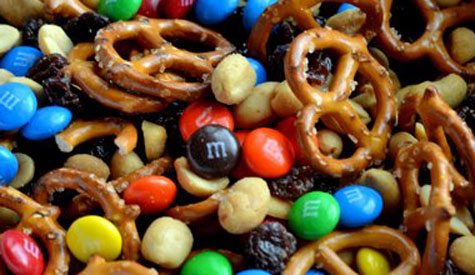
A mixture that contains two or more substances uniformly combined
heterogeneous mixture
homogeneous mixture
suspension
colloid

Matter is classified in...
Elements & Compounds
Homogeneous & Heterogeneous
Colloids & Suspensions
Pure substances & Mixtures

____________ is the amount of matter in an object.
Mass
Volume
Weight
Density
The amount of space that matter occupies:
Mass
Volume
Weight
Density
____________ is a measure of the force of gravity on an object.
Mass
Volume
Weight
Density
A prism has a length of 5 cm, a width of 1 cm, and a height of 2 cm. What is the volume of the prism?
10 cm2
10 cm
10 cm3
8 cm


What is the measurement in the picture?
290.02 g
291 g
292 g
290.2 g
Which of these contains steps in the right order?
Ask a question, research, state your hypothesis, experiment, analyze, draw a conclusion
State your hypothesis, ask a question, research, experiment, analyze, draw a conclusion
State your hypothesis, ask a question, research, draw a conclusion, experiment, analyze
Ask a question, state your hypothesis, research, experiment, analyze and draw a conclusion, share the results
What is a constant/control in an experiment?
Things that do not change in a experiment. It's the variable that stays the same. You can have many variables stay the same.
It's the variables that the scientist changes in the experiment
It's the variables that are being measured in an experiment
A scientist investigates the effect of carbon dioxide on plant height. The scientist grows plants in several closed containers. All the plants receive the same amounts of water and light, but the air in each container has a different amount of carbon dioxide. What is the independent variable in this experiment?
the amount of carbon dioxide in each container
the number of plants in each container
the amount of water provided to the plants
the height of each plant after a period of time
Scientists frequently repeat the experiments of others scientists. Why is this important in science?
Scientists often ask each other for help in performing experiments.
Replication of experiments helps to confirm and verify results.
Scientists frequently perform other scientists’ experiments in order to practice their technique.
Repeating experiments is an effective way to make sure a laboratory is in optimal condition.
Cara read an article on why repetition and replication are so important, but she did not understand the difference between them. Which of the following best explains the two terms?
Repetition is when a scientist repeats an experiment; replication is when a scientist conducts an experiment on genetic material.
Repetition is when a scientist does the same experiment a number of times; replication is when other scientists reproduce a scientist’s experiment.
Repetition is when a scientist publishes in more than one scientific periodical; replication is when another scientist reproduces another scientist’s results.
Repetition is when a scientist commits an error in an experiment the first time and must repeat it; replication is when a scientist repeats an experiment to make sure it is valid.
What is the BEST reason you always repeat an experiment?
Make sure your data is consistent and accurate
Make sure your data supports your prediction
Make sure your experiment is easy to do
Make sure your experiment has lots of data
Which unit is NOT used in the metric system?
Meter
Gram
Liter
Pound
The SI unit for measuring length is the __________.
meter
gram
liter
Newton
second
The SI unit for mass is the ___________.
meter
gram
liter
second
Newton
The SI unit for volume is the __________.
meter
gram
liter
second
Newton
The metric system is based on the number
1
2
10
100

The top of a column of liquid is called a
mathematics
matter
meniscus
maribella

What is the volume of liquid?
4 mL
5 mL
24 mL
25 mL

The mixture shown here -
Maintains its physical properties when combined
Dissolves after being stirred together
Will evaporate after a certain period of time
Cannot be separated into ingredients

Which of the following is NOT happening in the photo
The temperature is rising
Heat is being added
Thermal energy is taken away
A solid is turning into a liquid

The bobber is able to float in the water because -
It has a greater density than the water
It is too heavy to sink to the bottom
It mass will not allow it to sink
Its density is less than water
Which of the following is true about solutions?
The particles of the solute become very small
Evaporation can be used to separate solutions
The substance spreads out evenly
All of these options are true

The oven mitt shown here is being used because
The mitts conduct thermal energy
The pan conducts heat energy
The pan is an insulator
The mitts make the cook look cool

When condensation occurs
Heat energy is being reduced
Thermal energy is added
The temperature is increasing
A solid is turning to liquid
Which term best describes a liquid turning in a gas
Melting
Condensation
Evaporation
Freezing

In order for the wax on the sculpture to melt, what must happen?
The temperature must fall
Energy should be removed
The temperature must stay the same
Heat must be added
Pick two items that you know to be non magnetic
Copper penny
Iron Nail
Paperclip
Aluminum foil
Which of these terms best describe a substances ability to be dissolved?
Density
Solubility
Insolubility
Conductivity
A solution is made using 100 ml of water, and 20 g of salt. What is the best way to separate this solution
Pour the mixture through a strainer
Add 100 ml more of water
Use a coffee filter
Evaporate the water on a hot plate
True or False? A solution can be made by combining vegetable oil and water.
True
False

Which ingredient of the soda has the fastest moving particles?
Ice cubes
Liquid water
Carbon dioxide bubbles
Corn syrup
During condensation -
Solid water is turning to liquid
Water vapor in the air is turning into liquid
Liquid water is becoming a solid
Liquid water is becoming a gas
Students pour 4 different substances into 4 different containers and stir them to see what will happen? Which of the following will be the least likely to dissolve?
Sand
Salt
Food coloring
Sugar
The most ideal way to separate this mixture of sand and water is to -
use a hot plate
pour the mix through a strainer
shake the mixture rapidly
pour the mix through a coffee filter
Which material would not remain very hot after being removed from a pot of boiling water?
Wooden spoon
Silver dollar
Copper tubing
Steel Nail

5 grams of salt is dissolved in 50 milliliters of water. Shortly after, the water is evaporated on a hot plate. How many grams of salt will be left in the container?
0 grams
2.5 grams
5 grams
10 grams
An item has been identified as being a good conductor, magnetic, and not soluble in water. It is also more dense than water. What could it be?
Aluminum can
Iron nail
Copper penny
Rubber eraser

Which of the following would cause the powder to dissolve more quickly?
Let the powder sit in the bottom undisturbed
Reduce the temperature of the water
Stir the powder in the water rapidly
Increase the size of the particles in the mix
The hypothesis can be accepted because the electromagnet with the longer copper wire had greater strength.
problem
hypothesis
conclusion
results
The electromagnet with 60cm of wire picked up six more papaer clips on average as compared to using 30 cm of wire.
problem
conclusion
results
materials
Fill two identical containers with the same amount of room temperature water.
problem
procedure
results
conclusion
one D-cell battery and one battery holder
procedure
results
problem
material
If a longer copper wire is used, then the electromagnet will have greater strength.
question/problem
conclusion
procedure
hypothesis
Does the length of a copper wire affect the strength of an electromagnet?
problem
hypothesis
conclusion
materials
Attach one end of the wire to the negative pole of the battery.
problem
results
conclusion
procedure
Does a bean seed grow more quickly indoors or outside?
problem/question
research
hypothesis
experiment
four bean plants
four identical pots
soil
water
Plant four bean plants in identical pots using the same type of soil. Place two of these in an outdoor location, and place the other two in an indoor location. Try to choose locations where the plants will get a similar amount of sunlight. Care for the plants in an identical way, like giving the same amount of water. Then, each day for the three-week experimental period, observe and measure plant growth. Carefully record the size of each plant in a notebook.
problem
research
hypothesis
experiment
four bean plants
four identical pots
soil
water
hypothesis
research
materials
procedure
Plant four bean plants in identical pots using the same type of soil.
Place two of these in an outdoor location, and place the other two in an indoor location.
Try to choose locations where the plants will get a similar amount of sunlight. Care for the plants in an identical way, like giving the same amount of water. Then, each day for the three-week experimental period, observe and measure plant growth.
Carefully record the size of each plant in a notebook.
problem
conclusion
material
procedure
If there is a relation between listening to music and heart rate, then listening to music will cause a person's resting heart rate to either increase or decrease.
problem
research
hypothesis
experiment
The starting materials of any chemical reactions are called.
products
ingredients
reactants
by products
The chemical name of burning is .....
Displacement
Reduction
Neutralisation
Combustion

Identify a product in this reaction
light energy
water
carbon dioxide
glucose
When metal reacts with oxygen, they form
metal chloride
metal oxide
metal oxygenide
metal hydroxide
What two substance will react together to form sodium oxide
sodium and chlorine
sodium and water
sodium and hydrochloric acid
sodium and oxygen
What is the sign of a chemical reaction when any metal reacts with acid?
precipitate forms
color change
increase in acidity level
fizzing / bubbles of gas
What gas is produced when an acid is poured onto a metal?
chlorine gas
hydrogen gas
ammonia gas
carbondixoide gas
Pick the odd one out
malleable
dull
conductor of electricity
high melting point
Which of the following is NOT a property of non-metals?
brittle
bad condutor of heat
have luster
low melting and boiling points
Which of the following is NOT a salt?
sodium chloride
calcium nitrate
magnesium sulfate
potasium hydroxide
What is the name of salt produced when magnesium reacts with nitric acid?
magnessium nitroxide
Magnesium nitrate
Magnesium nitride
Magnesium sulfate
What two substances will react together to form potassium sulfate?
potassium and sulfur
potassium and water
potassium and hydrochloric acid
potassium and sulfuric acid.
What is used to test the presence of hydrogen gas?
hot iron rod
hot glass rod
lighted splint
paper clip
When metals react with water, what are the products?
metal chlroide + carbon dioxide
metal hydroxide + hydrogen gas
hydrogen gas + metal sulfate
carbondioxide gas + water+ metal chloride
What is the chemical test to confirm the presence of hydrogen gas?
turns lime water milky
relight the glowing splint
turns damp red litmus paper blue
squeaky pop sound on lighted splint.
Complete the general equation:
Metal + Acid ->
Salt + Water
Salt + Hydrogen
Salt
Complete the general equation:
Metal + Water ->
Salt + Water
Metal Hydroxide + Hydrogen
Metal hydroxide + Water
Salt + Hydrogen
Complete the equation:
Sodium + Hydrochloric Acid ->
Sodium Hydroxide + Hydrogen
Sodium Chloride + Hydrogen
Chloric Sodium + Hydrogen
Sodium Chloride + Water
Complete the equation:
Potassium + Nitric Acid ->
Potassium Hydroxide + Hydrogen
Potassium Chloride + Hydrogen
Potassium Nitrate + Hydrogen
Nitric Potassium + Hydrogen
Complete the equation:
Potassium + Water ->
Potassium Hydroxide + Hydrogen
Potassium Chloride + Hydrogen
Potassium Hydroxide + Water
Nitric Potassium + Hydrogen
Will a displacement reaction occur?
Copper Oxide + Magnesium ->
Yes
No
Will a displacement reaction occur?
Magnesium Sulphate + Zinc ->
Yes
No
Will a displacement reaction occur?
Iron Sulphate + Calcium ->
Yes
No
Metal + water ---> metal hydroxide + hydrogen
What are the products for the reaction of metal with water?
Metal + water ---> metal hydroxide + hydrogen
Metal
Water
Metal and water
Metal hydroxide and hydrogen
Hydrochloric acid + magnesium hydroxide -->

Magnesium chloride + Sodium → ?
Sodium chloride + Magnesium
Magnesium chloride + Sodium (No change)
Sodium magnesium + Chlorine

Zinc sulphate + Magnesium → ?
Magnesium + Sulphur + Hydrogen
Zinc sulphate + Magnesium
Magnesium sulphate + Zinc

Lithium chloride + Iron → ?
Lithium chloride + Iron (No change)
Iron chloride + Lithium
Lithium oxide + hydrogen
A displacement reaction will occur when...
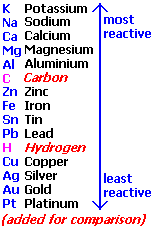
a more reactive metal displaces a less reactive metal from its aqueous salt solution.
A less reactive metal displaces a more reactive metal from its aqueous salt solution.
Displacement only occurs when two of the same metals are reacted
Displacement reactions will only occur in metals above iron in the reactivity series
What is the name of the compound CaS?
Carbon Sulfur
Carbon Sulfide
Calcium Sulfide
Calcium Sulfate
Which of the following is not an element?
Hydrogen
Oxygen
Water
Potassium
What salt forms when magnesium reacts with sulfuric acid?
Magnesium sulfuric
Magnesium sulfate
Sulfur magnide
Sulfruic Magnesium
What gas do you use the "pop" test to find?
Oxygen
Helium
Hydrogen
Nitrogen
Bubbling a gas through limewater is a method of testing for which gas?
Oxygen
Hydrogen
Carbon dioxide
Nitrogen
Which of the following is not a sign that a chemical change is taking place?
Iron melts
Light is produced
Heat is produced
Change in colour
What type of chemical reaction is burning wood?
Oxidation
Neutralization
Heating
Combustion
Metals and acids react to form .....
Salt and hydrogen
Salt and water
Carbon dioxide, salt and water
Hydrogen only
Magnesium + hydrochloric acid-->
Magnesium chloride + water
Magnesium chloride + hydrogen
Magnesium hydrochloride + hydrogen
Magnesium chloride + water + carbon dioxide
Zinc + sulfuric acid -->
Zinc sulfide + hydrogen
Zinc sulfate + hydrogen
Zinc sulfate + Water +Carbon dioxide
Zinc sulfide + water
Iron + hydrochloric acid -->
Iron chloride + hydrogen
Iron chloride + carbondioxide
Iron hydroxide + acid
Iron chloric + hydrogen
What are the reactants for the reaction of magnesium with oxygen
Magnesium + oxygen --> Magnesium oxide
Magnesium
Oxygen
Magnesium oxide
Magnesium and oxygen
Metal carbonates react with acid to form....
Salt, carboxylic acid and water
Salt, carbon dioxide and water
Salt and carbonated water
Salt and hydrogen
Calcium carbonate + hydrochloric acid -->
Calcium chloride + hydrogen
Calcium choride + water
Calcium chloride + carbon dioxide + water
Calcium sulfate + carbon dioxide + water
Copper carbonate + hydrochloric acid -->
Copper chloride + hydrogen
Copper chloride + water
Copper chloride + water + hydrogen
Copper chloride + water + carbondioxide
What gas is always produced when a metal reacts with acid?
Oxygen
Hydrogen
Carbon dioxide
Nitrogen
What gas is always produced when carbonates reacts with acids?
Oxygen
Hydrogen
Carbon dioxide
Nitrogen

